
ISS Veggie Pink Glow: Space Botany for Indian Agriculture
The magenta-pink glow observed in recent timelapses from the International Space Station's Columbus module originates from the Veggie Vegetable Production System, as confirmed by ESA astronaut Sophie Adenot on July 10, 2026. On day 144 of her mission at orbit 2233, the French astronaut shared the revelation via X, reaching 233 likes with her observation: "I love working on the
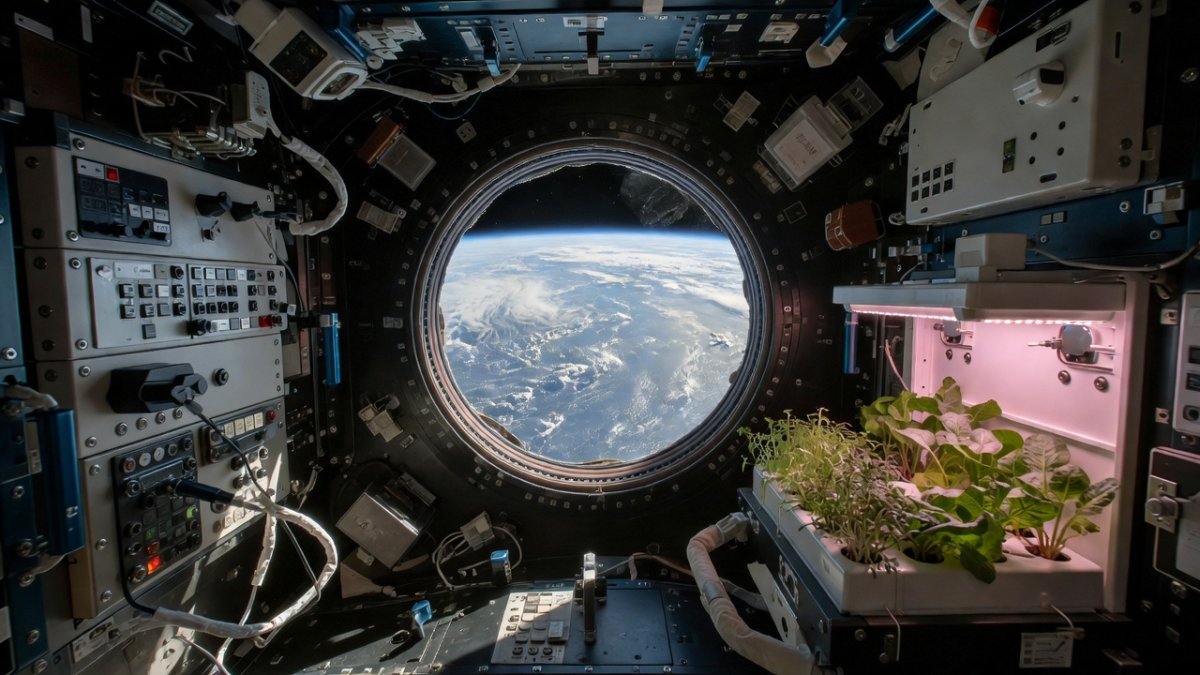
The magenta-pink glow observed in recent timelapses from the International Space Station's Columbus module originates from the Veggie Vegetable Production System, as confirmed by ESA astronaut Sophie Adenot on July 10, 2026. On day 144 of her mission at orbit 2233, the French astronaut shared the revelation via X, reaching 233 likes with her observation: "I love working on the experiment." ESA published the accompanying video, and NDTV covered the story same-day, linking the distinctive hue to ongoing space botany research with direct implications for Indian agriculture and ISRO's future crewed missions.
The Revelation from Orbit 2233
On day 144 of her mission, at orbit 2233 aboard the International Space Station, French ESA astronaut Sophie Adenot shared a striking observation via X. The magenta-pink glow visible in timelapses from the Columbus module originates from the Veggie Vegetable Production System. Adenot's post, which received 233 likes, noted her enthusiasm: "I love working on the experiment." ESA published the accompanying video on its multimedia portal on July 10, 2026, while NDTV covered the story the same day, attributing the post directly to Adenot.
Technical Mechanics of the Veggie LED Array
The Veggie chamber emits a red-plus-blue LED spectrum specifically optimized for plant photosynthesis in microgravity. This combination produces the characteristic pinkish hue observed from Earth-based timelapses. NASA and ESA documentation confirms that the system avoids full-spectrum white light to maximize energy efficiency and growth rates for leafy crops. Data from multiple expeditions show that this targeted illumination supports biomass accumulation without the heat load of traditional lighting, a critical factor in the closed environment of the ISS.
Veg-06 Experiment: Nitrogen Fixation and Lignin Dynamics
During Expedition 74, Veggie hosted the Veg-06 experiment under joint NASA and ESA oversight. The study examines two core processes: alfalfa plants inoculated with rhizobia bacteria to assess nitrogen fixation efficiency in microgravity, and parallel measurements of lignin structural changes in space-grown specimens. Verified NASA and ESA records detail how microgravity alters root nodule formation and cell-wall composition, with alfalfa serving as the model crop due to its rapid growth cycle and symbiotic bacterial partnership. These parameters provide quantitative baselines for future bioregenerative life-support systems.
ISRO Linkages and Indian Agricultural Research
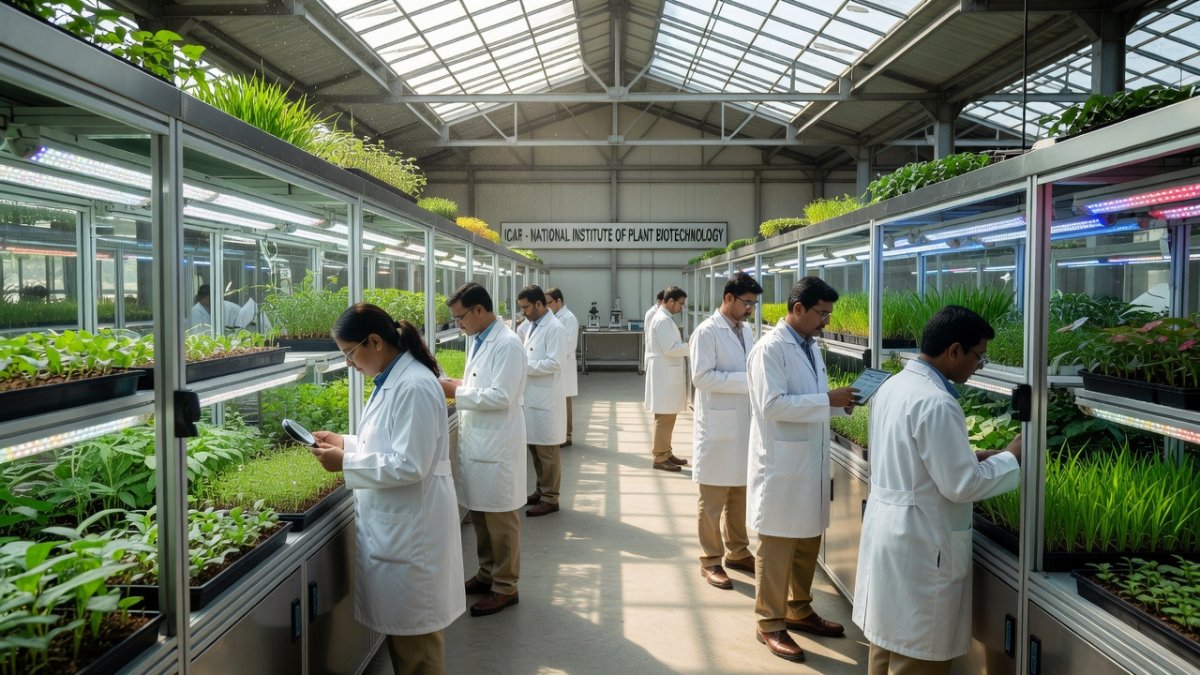
India's ISRO has pursued parallel plant-growth studies through missions such as the 2017 PSLV-C37 deployment of biological payloads and ongoing ground simulations at the Space Applications Centre in Ahmedabad. While direct collaboration on Veggie hardware remains prospective, the Veg-06 nitrogen-fixation data align closely with ISRO's interest in rhizobia-enhanced crops for long-duration missions. Indian agricultural institutions, including the Indian Council of Agricultural Research, can apply lignin-modification findings to develop stress-resilient varieties suited to both terrestrial drought conditions and future crewed lunar habitats. Realistic near-term framing points to data-sharing agreements rather than hardware co-development, allowing Indian scientists to model microgravity effects using existing ISS datasets.
Implications for Indian Citizens, Students and Scientists
For Indian farmers facing soil degradation and water scarcity, insights from space-based nitrogen fixation could inform next-generation biofertilizers that reduce synthetic input dependency. Students in aerospace and plant biology programs at institutions such as the Indian Institute of Science gain concrete case studies for modeling LED-optimized growth chambers. Scientists at ISRO's Human Spaceflight Programme can integrate these metrics into the design of the proposed Bharatiya Antariksh Station modules, ensuring that any onboard plant systems prioritize energy-efficient spectra proven on the ISS. The 233-like social-media reach of Adenot's post also illustrates how public engagement with verified ESA and NASA data can inspire STEM participation among Indian youth.
Future Prospects in Space Farming
Continued Veg-06 data streams will refine predictive models for crop performance beyond low-Earth orbit. Integration of these findings with ISRO's planned biological experiments positions India to contribute validated protocols for sustainable food production in space. The analytical bridge between orbital observations and terrestrial agriculture underscores a shared trajectory: efficient resource use that benefits both astronauts and farmers on Earth.
Verified sources from ESA, NASA and NDTV confirm that the pink glow is not an anomaly but a deliberate engineering choice with measurable scientific returns. As missions extend in duration and distance, the lessons from Columbus module experiments will shape India's own contributions to global space botany.
— By Dr. Raj Patel, Staff WriterThis article was produced with AI-assisted research and editorial support. Reporting is based on sources cited in the article.
What's Your Reaction?
 Like
0
Like
0
 Dislike
0
Dislike
0
 Love
0
Love
0
 Funny
0
Funny
0
 Wow
0
Wow
0
 Sad
0
Sad
0
 Angry
0
Angry
0

Caribbean Correspondent at Global1.News. Based in Port of Spain, Trinidad, covering Caribbean politics, economy, energy, climate, and culture. Amplifying the voices and stories of the Caribbean region.












Comments (0)