
Indo-Pacific Deterrence Without American Anchors: Korea's Strategic Calculus in a Shifting Regional Order
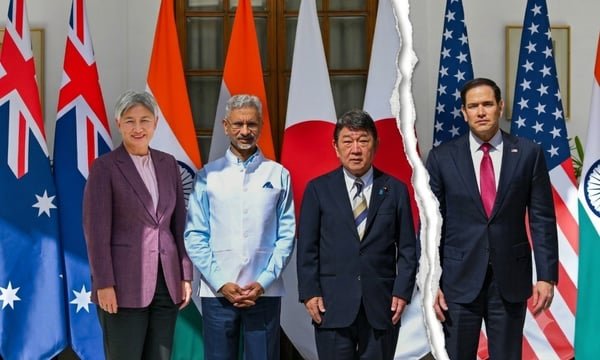
The Reconfiguration of U.S. Indo-Pacific Engagement The decision by the second Trump administration to revert the U.S. Indo-Pacific Command to its earlier designation as Pacific Command signals a deliberate narrowing of strategic focus. This adjustment reverses the institutional expansion initiated in 2018 under the Free and Open Indo-Pacific framework, which had sought to embe
The Reconfiguration of U.S. Indo-Pacific Engagement
The decision by the second Trump administration to revert the U.S. Indo-Pacific Command to its earlier designation as Pacific Command signals a deliberate narrowing of strategic focus. This adjustment reverses the institutional expansion initiated in 2018 under the Free and Open Indo-Pacific framework, which had sought to embed American presence across both the Indian and Pacific Oceans through mechanisms such as the Quad. The elevation of Quad engagement from foreign minister meetings in 2019 to leader-level summits in 2021 had represented an attempt to institutionalize cooperation among the United States, Japan, India, and Australia. Yet the current shift has generated measurable distrust among regional partners, as Washington appears to de-emphasize the broader Indo-Pacific theater in favor of a more limited Pacific orientation.
This retrenchment occurs against the backdrop of China's sustained economic expansion, which continues to enhance Beijing's capacity to project influence across maritime and continental domains. Regional powers have responded with intensified diplomatic activity rather than passive acceptance. Indian Prime Minister Narendra Modi's recent engagements in Indonesia, Australia, and New Zealand, alongside South Korean President Lee Jae-myung's visits to India, Vietnam, and Mongolia, illustrate a pattern of proactive outreach. Japanese Prime Minister Takaichi Sanae's travels to Vietnam, Australia, South Korea, and India further underscore the density of these exchanges. Such calendars reflect an emerging recognition that deterrence calculations must now account for reduced American centrality.
From a Korean perspective, this American adjustment carries particular weight given Seoul's historical reliance on extended deterrence commitments. The 1953 Mutual Defense Treaty with the United States remains the cornerstone of South Korean security architecture, yet the command name change raises questions about the durability of broader Indo-Pacific integration. Korean strategic culture, shaped by centuries of navigating great-power competition on the peninsula, emphasizes the risks of over-dependence on any single external guarantor. Policymakers in Seoul therefore view the current moment as an opportunity to recalibrate alliances without abandoning core bilateral ties.
Regional Diplomatic Momentum Amid American Retrenchment
The packed schedule of high-level visits among Indo-Pacific capitals demonstrates that middle powers are actively constructing alternative networks. These interactions extend beyond symbolic gestures to encompass concrete discussions on capability development and access arrangements. South Korea's defense industry, anchored by firms such as Hanwha and LIG Nex1, has emerged as a central node in these exchanges, supplying artillery systems and armored vehicles to partners seeking to bolster their own inventories. This activity aligns with Seoul's broader foreign policy tradition of leveraging economic and technological strengths to secure strategic autonomy.
Japan's defense budget trajectory toward two percent of GDP, coupled with the introduction of counterstrike missiles, complements similar efforts in Seoul to raise defense expenditure from 2.3 percent to 3.5 percent of GDP by 2035. India's capacity to maintain pressure along the Himalayan frontier while exporting BrahMos systems to Indonesia adds another layer to this distributed posture. Collectively, these developments suggest that the five principal actors—Japan, South Korea, India, Australia, and Indonesia—possess overlapping geographic and material advantages along the First Island Chain and critical straits.
Yet Korean analysts remain attentive to the historical precedent of fragmented regional responses during earlier periods of great-power transition. The absence of unified command structures or mutual defense obligations among these five states limits the translation of individual capabilities into collective effect. South Korean forces, in particular, remain oriented toward contingencies on the Korean Peninsula, constraining their availability for wider maritime operations even as Seoul deepens defense-industrial partnerships.
Maritime Denial Capabilities Among Quad-Plus Partners
The geographic positioning of Japan, South Korea, India, Australia, and Indonesia confers a natural advantage in maritime domain awareness and sea-lane interdiction. These states control access points to the Malacca, Sunda, and Lombok straits, through which the majority of China's energy imports transit. Coordinated intelligence sharing and patrol arrangements could therefore impose significant costs on any attempt by Beijing to project power beyond the First Island Chain without requiring direct confrontation.
Defense-industrial cooperation already provides tangible substance to this denial posture. Korean K9 howitzers produced in India under the Vajra designation, Hanwha's delivery of Huntsman systems and Redback vehicles to Australia, and the anticipated arrival of Japan's Mogami-class frigate in Australian service by 2029 illustrate emerging production networks. These arrangements reduce reliance on American supply chains while enhancing interoperability among the partners themselves.
For Korea, participation in such networks carries implications that extend beyond immediate military utility. The chaebol structure that underpins South Korea's defense sector has historically served as an instrument of national resilience, enabling rapid scaling of production during periods of external pressure. Extending these capacities through co-production agreements with India and Australia reinforces Seoul's ability to maintain technological edges even amid fluctuating American commitments.
Institutional and Operational Gaps in Collective Defense
Despite growing bilateral ties, the institutional architecture among these powers remains uneven and incomplete. The Australia-Japan Reciprocal Access Agreement and Framework for Strategic Defense Coordination, scheduled to take effect across all levels from December 2025, represent the most advanced linkage. India maintains 2+2 dialogues with both Tokyo and Canberra, yet comparable mechanisms with Seoul or Jakarta are absent. Historical frictions between Japan and South Korea continue to complicate intelligence-sharing arrangements, rendering trilateral cooperation politically fragile.
Threat perceptions further complicate alignment. Tokyo confronts an immediate maritime challenge from Chinese naval expansion, while New Delhi faces a continental border dispute. Canberra regards China as a distant yet intensifying economic and strategic concern, and Seoul continues to prioritize North Korean contingencies. Jakarta, despite acquiring BrahMos batteries, deliberately avoids naming China as a specific adversary and maintains robust trade linkages with Beijing.
These divergences echo earlier episodes in Korean diplomatic history when Seoul navigated competing pressures from continental and maritime powers. The current environment demands that Korean policymakers balance peninsula-focused requirements against the need for broader Indo-Pacific engagement, a task made more complex by the absence of any shared war plan or unified operational doctrine among the five states.
Economic Resilience and Supply Chain Diversification
Beijing's capacity to apply economic coercion constitutes perhaps the most immediate vulnerability for these partners. Dependence on Chinese markets and critical mineral processing remains high across the region, creating leverage that military denial capabilities alone cannot neutralize. Coordinated efforts to diversify supply chains in rare earths, semiconductors, and battery materials therefore form an essential component of any collective strategy.
South Korea's experience with Chinese economic retaliation following the 2016 deployment of THAAD provides a concrete reference point. Seoul's subsequent push to secure alternative sources for key inputs has informed its approach to current multilateral initiatives. Extending this logic through joint investment frameworks with India, Australia, and Japan could gradually reduce exposure while preserving commercial opportunities.
Academic analysis of Korean strategic culture highlights a consistent preference for hedging strategies that combine economic openness with security diversification. In the present context, this tradition suggests that Seoul will pursue supply-chain resilience measures not as an anti-China campaign but as a prudent adjustment to structural shifts in global production networks.
Pathways Toward Multilateral Strategic Embeddedness
The most viable path forward lies in incremental institutional development rather than the sudden creation of new alliance structures. Expanding maritime domain awareness through shared operating pictures, widening reciprocal access agreements for ports and airfields, and deepening defense-industrial co-production represent achievable steps that do not require American participation. These measures can accumulate into a web of embedded cooperation capable of raising the costs of Chinese assertiveness even if U.S. extended nuclear deterrence guarantees remain focused on Tokyo and Seoul alone.
India, Japan, and Australia—the Quad minus the United States—stand positioned to anchor such a network and extend it toward South Korea, Indonesia, Vietnam, and the Philippines. Korean participation would add industrial depth and geographic reach, particularly through existing defense export relationships. Yet success will depend on managing historical sensitivities and aligning divergent threat assessments into a coherent, if differentiated, posture.
Ultimately, the deterrent effect will derive not from any single treaty but from the density of these overlapping arrangements. For Korea, this evolution offers both opportunity and risk: an opportunity to exercise greater agency in regional order-building, and a risk that incomplete institutionalization could leave Seoul exposed during future crises. The coming years will test whether these middle powers can convert diplomatic activity into durable strategic effect.
By Prof. David Park, Staff WriterThis article was produced with AI-assisted research and editorial support. Reporting is based on sources cited in the article.
What's Your Reaction?
 Like
0
Like
0
 Dislike
0
Dislike
0
 Love
0
Love
0
 Funny
0
Funny
0
 Wow
0
Wow
0
 Sad
0
Sad
0
 Angry
0
Angry
0

East Asia/Technology Correspondent at Global1.News. Seoul-based voice covering Korean politics, technology, business, and culture. Analyzes how technology and geopolitics intersect across East Asia.















Comments (0)