
Gray Whales Are Dying at Catastrophic Rates Along the West Coast — Here's Why
The Scale of the Crisis Unfolding Folks, let me walk you through what is shaping up as one of the most alarming wildlife die-offs on the West Coast in decades. Gray whales are washing up dead at rates far beyond anything seen in normal years, and the numbers tell a story of accelerating collapse that demands straight answers from the agencies responsible. The migration route it
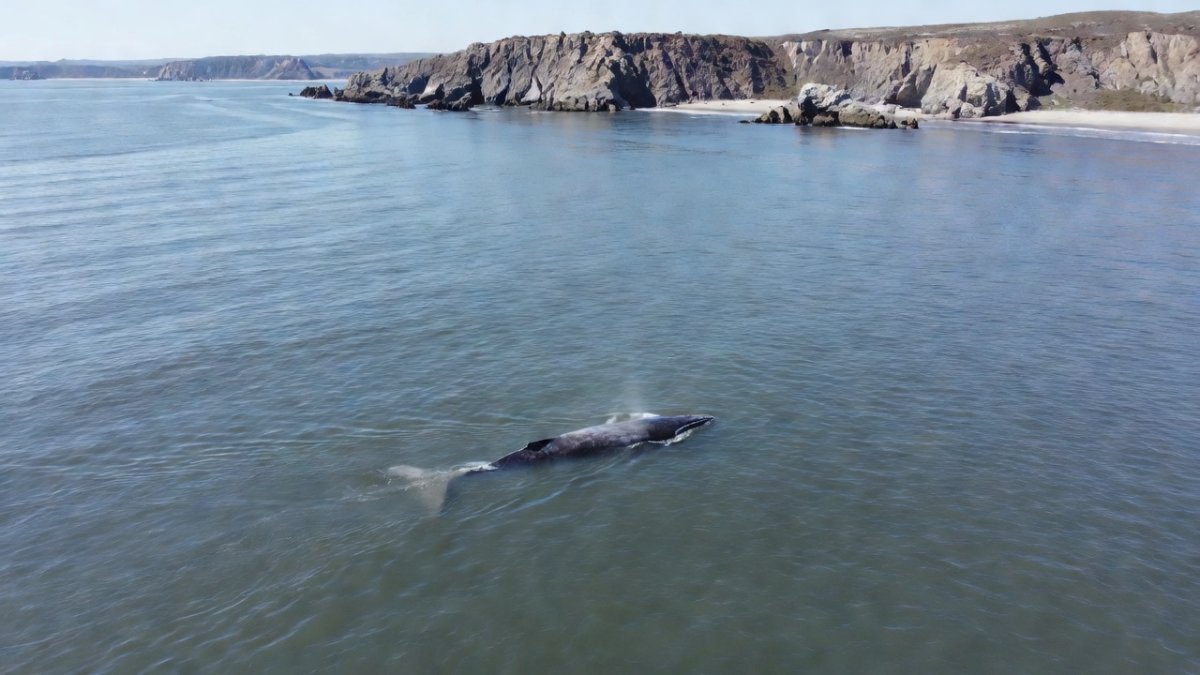
The Scale of the Crisis Unfolding
Folks, let me walk you through what is shaping up as one of the most alarming wildlife die-offs on the West Coast in decades. Gray whales are washing up dead at rates far beyond anything seen in normal years, and the numbers tell a story of accelerating collapse that demands straight answers from the agencies responsible.
The migration route itself spans thousands of miles, with gray whales departing Baja lagoons in late winter and hugging the coastline northward through California, Oregon, Washington, British Columbia, and Alaska before veering into the Bering and Chukchi Seas. Mothers with calves stay closest to shore, placing them directly in the path of busy shipping lanes where food scarcity already weakens their condition.
Every stranded whale undergoes detailed necropsy by marine mammal experts who analyze stomach contents, blubber thickness, and signs of organ damage. These examinations consistently identify starvation as the dominant factor, with secondary issues like vessel trauma appearing far less frequently in the current wave of deaths.
This marks the second catastrophic mortality event in under a decade, an unprecedented sequence that has never before been documented for gray whales and underscores how rapidly Arctic conditions have deteriorated beyond historical recovery thresholds.
Strandings Piling Up Along the Coast
By July 6, 2026, NOAA data compiled through PEER and reported by USA Today showed 145 gray whale strandings already recorded. That figure alone exceeds the long-term average of 43 strandings per year from 2006 through 2023. California has seen at least 20 of those strandings, concentrated around Monterey Bay, Point Reyes, and the Channel Islands. In all of 2025 there were 179 strandings, and 2026 is on pace to surpass that total. Researchers estimate a 9-to-1 ratio of actual deaths to documented strandings, which puts the real toll near 1,450 whales so far this year.
Alaska's 33,904 miles of coastline make it the state with the highest geographic exposure to strandings, yet many carcasses on remote beaches go unreported or unexamined due to limited access and harsh weather. This undercounting means the true scale of losses in northern waters remains even larger than official tallies suggest.
Predator dynamics have shifted as well, with orcas observed preying on gray whale calves more frequently amid changing ocean conditions. This added pressure on young animals compounds the starvation crisis and further reduces recruitment into the breeding population.
The timeline reveals a clear escalation: the first Unusual Mortality Event declared in 2019 after record strandings, followed by a brief lull, and now a second wave surging in 2025-2026 that has already matched or exceeded prior peaks within months.
Population Numbers in Freefall
The population trajectory is equally stark. The count stood at 20,500 in 2019, dropped to 14,526 by 2023, and fell further to an estimated 13,000 in 2025. That is the smallest number recorded since the 1970s. The Center for Biological Diversity notes that 2026 is already tracking as the second deadliest year on record for these whales.
Gray whale tourism in Baja generates tens of millions of dollars annually for local communities that rely on predictable whale returns. A continued population collapse would devastate these economies, turning a once-thriving seasonal industry into a cautionary tale of lost natural capital.
The 1994 delisting from the Endangered Species Act followed decades of recovery after near-extinction from commercial whaling. That success story is now reversing at an alarming pace, with current numbers approaching levels not seen in half a century.
In contrast, the 1970s population of roughly 15,000 animals was the threshold that originally prompted Endangered Species Act listing, meaning today's figures have already slipped back to the very levels that once signaled existential risk.
The Starvation Driver Behind It All
The primary cause is starvation tied directly to Arctic warming. Amphipods, the gray whales' main prey, depend on algae that grows under sea ice. That ice now melts weeks earlier each spring, cutting off the food supply at its source. Woods Hole and NOAA studies document a clear downward trend in blubber thickness beginning in 2018, confirming that the whales are not finding enough to eat before they begin their long migrations.
Sea ice extent in the Bering and Chukchi Seas has declined by roughly 40 percent since satellite records began, with remaining ice forming later and melting earlier each season. This shortened window directly starves the amphipod populations that gray whales depend on during their critical feeding period.
The 2019 Unusual Mortality Event was declared by NOAA after strandings reached record levels that year, revealing the identical starvation pattern now repeating. While the declaration brought temporary monitoring and funding, it failed to produce lasting protective measures that could have buffered the current crisis.
The broader Arctic food chain collapse extends beyond amphipods to include cascading losses in krill and copepod communities, disrupting the entire benthic ecosystem that gray whales rely upon for energy storage before migration.
From Arctic to Baja: The Geographic Toll
The strandings stretch across the entire migration route. California accounts for at least 20 confirmed cases. British Columbia has recorded 10 dead whales, including several near Haida Gwaii according to CBC reporting. Alaska, with its 33,904 miles of coastline, has seen strandings near Kodiak and the Aleutians as noted by Alaska's News Source. Even the Baja California nursery lagoons, critical for calving, now face additional threats from proposed industrial development that could further stress an already weakened population.
Russia continues to permit a limited subsistence harvest of gray whales for indigenous communities, while oil and gas development in the Russian Far East overlaps directly with key feeding grounds. These international pressures add another layer of risk to a population already stressed by climate-driven food shortages.
The full migration corridor exposes whales to cumulative threats from multiple jurisdictions, with mothers and calves remaining especially vulnerable as they travel nearest to shore. Coordinated cross-border monitoring remains limited despite the clear need for unified response along the entire route.
Persistent gaps in international coordination, such as mismatched data-sharing protocols between U.S., Canadian, Mexican, and Russian agencies, continue to delay real-time alerts on feeding-ground conditions and strandings, leaving critical response windows unaddressed.
Shipping Lanes Adding to the Pressure
Commercial shipping along the West Coast has increased more than 50 percent since 2010, raising the risk of vessel strikes in waters where hungry whales are already in poor condition. Where Whale Safety Zones have been implemented with speed restrictions, rerouting, and acoustic monitoring, ship strikes have dropped by 80 percent. Those proven measures remain limited in scope despite the rising traffic.
Container volumes at the ports of Los Angeles and Long Beach have risen more than 50 percent since 2010, intensifying both strike risk and chronic noise pollution that disrupts whale communication and navigation over long distances.
Expanded acoustic monitoring could detect whales in real time and trigger temporary slowdowns, yet current coverage leaves large stretches of the migration corridor unprotected. Scaling these technologies would directly address the growing overlap between shipping lanes and weakened whale populations.
Voluntary speed reductions and lane adjustments have shown modest compliance, yet without mandatory enforcement backed by penalties, many vessels continue at full speed through high-risk zones, undermining the effectiveness of existing safety frameworks.
NOAA's Response Falls Short
Gray whales were delisted from the Endangered Species Act in 1994. NOAA declared an Unusual Mortality Event in 2019 that showed the same starvation pattern now repeating. PEER Board Chair Rick Steiner has called this the second Catastrophic Mortality Event this decade. PEER Science Policy Director Kyla Bennet has stated that further inaction by NOAA will push the West Coast population into an extinction spiral. The agency has not matched the scale of the crisis with expanded safety zones or renewed protections.
The 1994 delisting was celebrated as a conservation milestone after whaling had nearly eliminated the species. Today that recovery has unraveled, yet the agency has not reinstated protections despite clear evidence that the population is once again in steep decline.
Enhanced monitoring and funding followed the 2019 declaration, but these steps proved temporary and did not translate into permanent safety measures. Without sustained policy changes, the same starvation-driven mortality will continue unchecked.
Political obstacles, including industry lobbying from shipping and energy sectors alongside shifting federal priorities, have repeatedly blocked proposals for expanded protections and sustained funding, leaving NOAA's response constrained despite scientific urgency.
Climate Change Accelerating the Decline
2026 is on track to be the hottest year on record, with Arctic temperatures rising at twice the global average rate. That rapid warming directly undermines the sea-ice algae foundation of the gray whale food web. Without decisive intervention on both climate drivers and immediate mortality factors, the downward spiral will continue.
Thinning Arctic ice has shortened the critical feeding season by weeks, forcing whales to begin their southward migration with insufficient blubber reserves. This energy deficit leaves them vulnerable throughout the long journey and reduces reproductive success in subsequent years.
Global temperature trends show no sign of reversal, meaning the underlying driver of prey loss will intensify without aggressive emissions reductions. Local mitigation efforts alone cannot compensate for the systemic collapse of the Arctic food web.
If current trends persist, projections indicate another 20-30 percent drop in sea-ice duration over the next five years, likely pushing the population below 10,000 and triggering irreversible reproductive failure across multiple cohorts.
Expert Voices Demanding Action
Advocates are calling on Congress and NOAA to establish comprehensive Whale Safety Zones along the migration corridor and to relist the population as endangered. The push is building for mandatory speed restrictions, expanded acoustic monitoring, and rerouting of shipping lanes in high-risk areas. These steps have already demonstrated an 80 percent reduction in strikes where tried, yet they have not been scaled to meet the current emergency.
Relisting under the Endangered Species Act would trigger stronger federal oversight and funding for recovery, including mandatory protections that current voluntary measures lack. Advocates argue this step is essential to prevent the population from crossing an irreversible threshold.
International cooperation is also required to address overlapping threats in Russian feeding grounds and to harmonize shipping regulations across the full migration route. Without coordinated action at both domestic and global levels, piecemeal efforts will fall short of reversing the decline.
Relisting would specifically mandate critical habitat designation, require federal agencies to consult on any projects affecting the whales, and unlock dedicated recovery funding streams that voluntary programs have never secured at scale.
By Jessica Ali, Global 1 News
This article was produced with AI-assisted research and editorial support. Reporting is based on sources cited in the article.
What's Your Reaction?
 Like
0
Like
0
 Dislike
0
Dislike
0
 Love
0
Love
0
 Funny
0
Funny
0
 Wow
0
Wow
0
 Sad
0
Sad
0
 Angry
0
Angry
0

Editor-in-Chief at Global1.News. Atlanta-based journalist who cuts through the BS and tells it like it is. Lead anchor, host, and the voice you hear when the spin stops and the truth starts.













Comments (0)