
Typhoon Maysak's Wrath: A Test of Resilience in China
Guangxi Flooding and Human Impact Typhoon Maysak struck southern China starting Sunday in Guangxi province, unleashing torrential rains that rapidly overwhelmed local defenses and transformed communities into isolated islands of water. By Monday dawn, floodwaters submerged first floors of homes in Renhe village, leaving residents with no time to secure food supplies or other es
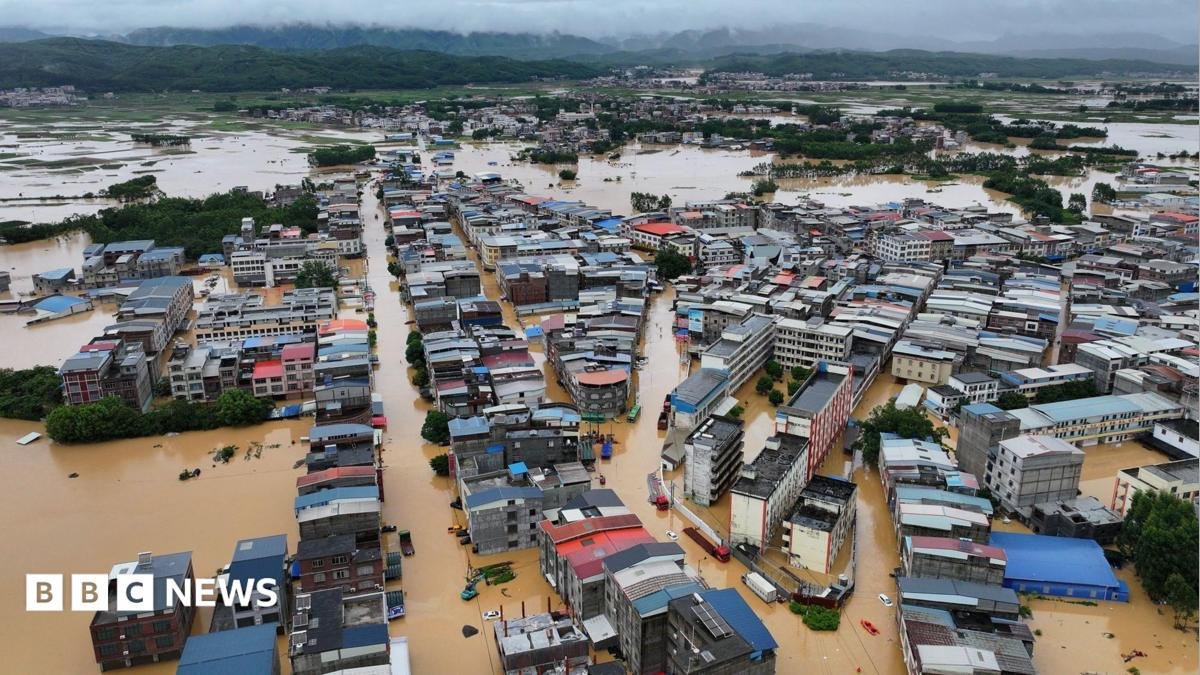
Guangxi Flooding and Human Impact
Typhoon Maysak struck southern China starting Sunday in Guangxi province, unleashing torrential rains that rapidly overwhelmed local defenses and transformed communities into isolated islands of water. By Monday dawn, floodwaters submerged first floors of homes in Renhe village, leaving residents with no time to secure food supplies or other essentials before the deluge arrived. BBC News reported that families like Zhou's found themselves trapped with limited provisions, as her four-month-old niece endured more than a day without milk, highlighting the acute vulnerabilities faced by the youngest and most dependent during such sudden inundations. These personal accounts underscore how the storm's speed left little margin for preparation, amplifying human suffering in rural settings where access to emergency resources remains constrained.
The scale of destruction extended beyond individual households to entire urban centers, with Nanning becoming heavily inundated and residents forced onto rooftops for safety amid rising waters. At least four people died in Guangxi as a direct result of these floods, according to BBC reporting, illustrating the lethal combination of rapid water rise and limited evacuation windows. The Yongjiang river burst its banks after dam water releases broke through existing barriers, a development that compounded the flooding and demonstrated the cascading effects when engineered systems fail under extreme pressure. Such events reveal deeper patterns in how riverine geography interacts with intense precipitation to produce widespread displacement and property loss across the province.
Compounding these challenges, snakes from local farms escaped into the flood waters, introducing additional hazards for both survivors and rescue teams navigating the submerged landscape. BBC News, citing state media, noted that 500 rescue personnel were dispatched to address the crisis, yet the presence of these reptiles added layers of complexity to operations already strained by continuous downpours. Historically, Guangxi has faced seasonal typhoon threats, but the intensity witnessed this week suggests evolving patterns that test longstanding community coping mechanisms. Strategically, the human impact of Maysak emphasizes the need for enhanced early-warning integration with local infrastructure to mitigate future losses in similarly exposed southern regions.
Overall, the flooding in Guangxi serves as a stark reminder of how typhoon landfalls can disrupt daily life at the most basic levels, from infant nutrition to shelter security, while exposing gaps in rapid-response capabilities. The combination of river overflows and escaped wildlife further illustrates the multifaceted risks that extend beyond immediate water damage into secondary threats. As recovery efforts unfold, the experiences of villagers in Renhe and residents in Nanning provide critical insights into building more robust societal safeguards against recurring natural extremes.
Rare Hubei Tornadoes
In Hubei province, two rare tornadoes touched down in Ezhou and Huanggang, marking an unusual meteorological occurrence that compounded the broader impacts of Typhoon Maysak's passage. BBC News highlighted that the last tornado recorded in Hubei occurred in 2021, making these events particularly noteworthy for their infrequency and the surprise they generated among local populations. The tornadoes caused at least 17 deaths and hundreds of injuries, with 60,000 people evacuated and 90,000 others affected across the region, according to BBC accounts. These figures reflect the concentrated destructive power of twisters, which can devastate structures in ways distinct from flooding alone.
One harrowing incident involved a man in Huanggang who was sucked from a high-rise apartment when windows shattered, falling 12 storeys and landing in intensive care, as reported by BBC citing local media. This case exemplifies the extreme physical forces at play during such tornadoes, where even reinforced urban buildings proved insufficient against the winds. The rarity of these phenomena in Hubei adds a layer of strategic concern, as regional preparedness has historically focused more on riverine flooding than on rotational storm systems. Analysis of the 2021 precedent suggests that while awareness exists, the interval between events may have led to diminished specialized training or equipment stockpiles for tornado response.
The human and infrastructural toll in Hubei underscores broader implications for disaster management in central China, where mixed urban-rural landscapes amplify vulnerabilities to hybrid storm effects. Evacuations of 60,000 individuals required coordinated logistics that strained local authorities already monitoring the typhoon's secondary influences. Strategically, these tornadoes highlight the interconnected nature of weather systems, where a single typhoon can spawn multiple hazards across provinces, necessitating integrated forecasting models that account for both flooding and wind phenomena. The injuries and fatalities further emphasize the urgency of public education campaigns tailored to rare but high-impact events.
Contextually, the Hubei tornadoes contribute to a narrative of escalating weather variability that challenges conventional risk assessments in the province. With 90,000 people affected, the economic ripple effects from disrupted livelihoods and damaged properties will likely persist well beyond the immediate crisis. This episode reinforces the value of cross-regional data sharing to anticipate and mitigate the full spectrum of typhoon-induced threats in future seasons.
Xi Jinping's Directive and Rescue Operations
Xi Jinping ordered an "all out" rescue effort in response to the unfolding disasters, directing resources toward the most affected areas in Guangxi and Hubei. BBC News reported that state media prominently featured images of rescuers equipped with life vests and inflatable boats, signaling a high-level commitment to visible and effective intervention. This directive came amid warnings from Nanning that extremely heavy rain could continue to hamper rescue operations, creating logistical obstacles for the 500 personnel already deployed. The emphasis on rapid mobilization reflects a strategic prioritization of life-saving measures during the critical early phases of disaster response.
State media coverage played a key role in disseminating information about the inflatable boats and coordinated teams navigating flooded streets, which helped maintain public awareness while underscoring the challenges posed by persistent downpours. The "all out" order facilitated the dispatch of additional support, yet the ongoing rain in Nanning illustrated how environmental conditions can limit even well-resourced operations. Historically, similar high-level directives have accelerated aid distribution in past typhoon events, though the scale of Maysak's dual impacts tested these mechanisms in new ways. Strategically, such leadership signals aim to foster national unity and resource allocation efficiency across provincial boundaries.
The integration of 500 rescue personnel into affected zones required careful coordination to address both flood victims and those impacted by tornadoes, demonstrating the complexities of multi-hazard scenarios. Inflatable boats proved essential for reaching isolated communities where roads remained impassable, yet the threat of continued heavy rain introduced uncertainties that could prolong operations. Analysis of these efforts reveals the importance of adaptive tactics that account for secondary hazards like escaped wildlife in floodwaters. Overall, the directive underscores a centralized approach to crisis management that seeks to minimize casualties through swift, visible action.
Further examination shows that the rescue operations not only targeted immediate survival needs but also laid groundwork for longer-term recovery by clearing debris and restoring access routes. The challenges in Nanning highlight how urban drainage limitations can extend the duration of response activities, requiring sustained personnel commitments. This phase of the disaster response offers valuable lessons on balancing speed with safety in environments marked by unpredictable weather persistence.
Agricultural and Economic Impact
Climate change threatens China's trillion-dollar agriculture sector, with events like Typhoon Maysak exposing the fragility of food production systems in southern and central provinces. Flooding in Guangxi submerged farmlands and disrupted supply chains, while tornadoes in Hubei damaged storage facilities and transport networks essential for distributing harvests. These disruptions carry strategic implications for national food security, as affected regions contribute significantly to staple crops and livestock that sustain urban populations. The economic ripple effects extend beyond immediate losses to influence pricing and availability in downstream markets.
Under the Dual Circulation strategy, emphasis has been placed on strengthening domestic resilience to external shocks, including those from climate-driven disasters that can interrupt internal production cycles. Maysak's timing as the first typhoon to make landfall in China for 2026 amplifies concerns about how repeated events might strain agricultural output and force reliance on reserves. Historical patterns of typhoon impacts show that recovery in farming communities often takes multiple seasons, affecting rural incomes and migration patterns. Strategically, integrating climate adaptation into agricultural planning becomes essential to safeguard the sector's contribution to overall economic stability.
The inundation of Nanning and surrounding areas further illustrates vulnerabilities in irrigation and drainage infrastructure that support intensive farming, leading to potential soil degradation and reduced yields in subsequent planting cycles. Tornado damage in Hubei compounded these issues by scattering debris across fields and complicating mechanized operations. Analysis suggests that such combined hazards accelerate the need for diversified cropping and insurance mechanisms to buffer against volatility. The broader economic impact includes temporary halts in related industries, from processing plants to export logistics, that depend on steady agricultural flows.
Longer-term, the threats posed by intensifying storms like Maysak call for investments in resilient varieties and early-warning systems tailored to farming calendars. These measures align with efforts to maintain self-sufficiency amid global uncertainties, ensuring that domestic circulation remains robust even when natural events strike key production zones. The sector's trillion-dollar scale makes these adaptations not merely desirable but imperative for sustained growth.
Infrastructure Lessons
The bursting of the Yongjiang river banks after dam water releases broke through existing structures during Typhoon Maysak points to critical lessons in infrastructure design and maintenance across flood-prone regions. In Guangxi, the rapid submersion of homes and urban areas revealed shortcomings in drainage capacity that allowed waters to overwhelm residential zones by Monday dawn. These failures carry strategic implications for urban planning, as expanding cities in southern China must account for increasingly intense precipitation events. Historical precedents of dam-related incidents underscore the risks of inadequate spillway management during peak flows.
Under the 14th Five-Year Plan, provisions for disaster prevention have guided upgrades to key infrastructure, yet the events of this week demonstrate that implementation gaps persist in riverine and drainage systems. Tornado damage to high-rise buildings in Hubei, including shattered windows that led to a 12-storey fall, further highlights deficiencies in building standards for wind resistance in areas not traditionally prone to such phenomena. Strategic analysis indicates that retrofitting older structures and enforcing stricter codes could reduce future casualties and repair costs. The interplay between flooding and wind hazards necessitates holistic assessments that consider compound risks rather than isolated threats.
Urban planning in Nanning and similar cities must evolve to incorporate elevated roadways, improved pumping stations, and green buffers that absorb excess water, lessons drawn directly from the inundation patterns observed. The escape of snakes into floodwaters also signals secondary infrastructure needs, such as secure containment for agricultural facilities near populated zones. These elements collectively point toward a more integrated approach to resilience that anticipates cascading failures. Overall, the infrastructure shortcomings exposed by Maysak offer a blueprint for prioritizing investments that enhance both durability and adaptability.
Contextually, the dispatch of rescue teams using inflatable boats reveals interim reliance on mobile solutions while permanent upgrades lag, emphasizing the value of phased modernization under national planning frameworks. Building standards must now address the full range of typhoon-induced forces to protect residents in high-rises and rural homes alike. Such lessons, if applied systematically, can transform vulnerabilities into strengths for China's expanding urban and agricultural landscapes.
Strategic Outlook
With Super Typhoon Bavi approaching as the second storm of the season, China's preparations for Maysak provide a timely template for managing successive threats in 2026. BBC News noted that Maysak represented the first typhoon to make landfall in the country this year, setting a precedent for heightened vigilance as Bavi advances. The combined effects of flooding, tornadoes, and rescue challenges underscore the strategic imperative of adaptive climate policies that extend beyond immediate response to long-term resilience building. This sequence of events positions China to refine its role in global climate adaptation discussions through demonstrated domestic innovations.
Foreign policy considerations increasingly intersect with disaster management, as effective handling of storms like Maysak can enhance international cooperation on early-warning technologies and humanitarian assistance frameworks. The "all out" rescue directive and deployment of 500 personnel illustrate capabilities that could inform partnerships with neighboring countries facing similar typhoon risks. Analysis of the agricultural and infrastructure impacts reveals opportunities to share best practices in disaster prevention, fostering diplomatic goodwill while addressing shared vulnerabilities. Historically, such events have prompted China to engage more actively in regional forums on climate security.
The rarity of Hubei tornadoes and the scale of evacuations signal evolving weather dynamics that demand sustained investment in forecasting and public communication systems. As Bavi looms, lessons from Nanning's rain-hampered operations and Guangxi's river overflows will prove instrumental in refining contingency plans. Strategically, these experiences reinforce the value of multi-hazard approaches that integrate flood, wind, and secondary risks into unified response protocols. China's climate adaptation role on the world stage benefits from transparent reporting of both successes and shortcomings in these efforts.
Looking ahead, the human stories from Renhe village and Huanggang high-rises emphasize that resilience ultimately hinges on protecting vulnerable populations amid intensifying storms. By leveraging insights from this week's events, policymakers can advance comprehensive strategies that safeguard economic sectors and infrastructure alike. The approaching Bavi serves as both a test and an opportunity to demonstrate progressive adaptation in action.
By Prof. Marcus Chen, Staff Writer.This article was produced with AI-assisted research and editorial support. Reporting is based on sources cited in the article.
What's Your Reaction?
 Like
0
Like
0
 Dislike
0
Dislike
0
 Love
0
Love
0
 Funny
0
Funny
0
 Wow
0
Wow
0
 Sad
0
Sad
0
 Angry
0
Angry
0

World Politics Analyst at Global1.News. Based in Beijing, covering US-China relations, global trade, and geopolitical strategy. Brings deep analytical perspective to the power dynamics shaping international affairs.














Comments (0)