
Trump Promises Turkey Sanctions Relief and F-35 Access as Netanyahu Warns of Regional Threat
<p>In a recent i24NEWS English report, President Donald Trump's meeting with Turkish President Recep Tayyip Erdogan at the 36th NATO Summit in Ankara was detailed, highlighting Trump's announcement that the United States would lift CAATSA sanctions imposed after Turkey purchased the Russian S-400 missile defense system in 2019. This development directly affects Israeli security calculations in the eastern Mediterranean, where Turkish actions have already challenged Israeli offshore gas operation

In a recent i24NEWS English report, President Donald Trump's meeting with Turkish President Recep Tayyip Erdogan at the 36th NATO Summit in Ankara was detailed, highlighting Trump's announcement that the United States would lift CAATSA sanctions imposed after Turkey purchased the Russian S-400 missile defense system in 2019. This development directly affects Israeli security calculations in the eastern Mediterranean, where Turkish actions have already challenged Israeli offshore gas operations at the Leviathan and Tamar fields.
Trump Promises Turkey Sanctions Relief and F-35 Access as Netanyahu Warns of Regional Threat
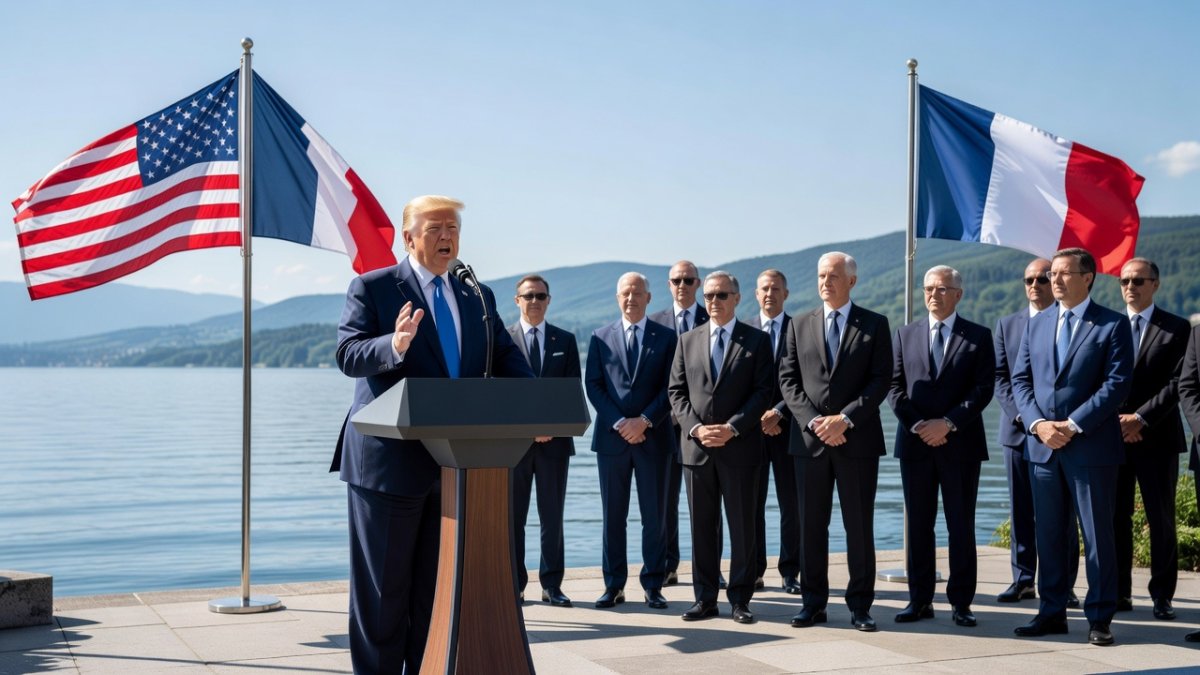
Jerusalem, Israel – July 10, 2026 — President Donald Trump met Turkish President Recep Tayyip Erdogan in Ankara this week during the 36th NATO Summit and announced the United States would lift CAATSA sanctions tied to Turkey's 2019 purchase of the Russian S-400 system. Trump also stated that restoring Ankara's access to the F-35 program was "certainly something we will consider," a development that has raised alarm in Jerusalem.
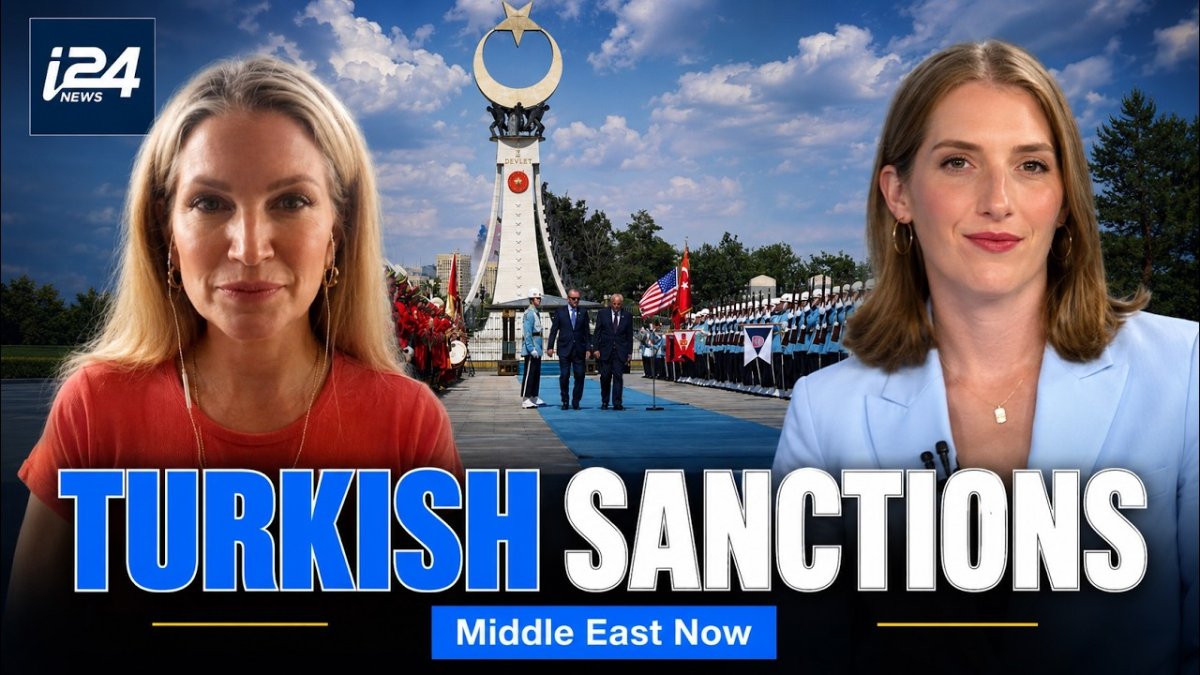
Netanyahu's Pre-Summit Warning on Fox News
Prime Minister Benjamin Netanyahu appeared on Fox News before the Ankara summit to argue against arming Turkey. He described Erdogan's government as "a regime influenced by the Muslim Brotherhood." Netanyahu specifically warned that F-35s or F110 engines would tip the balance of power that rests on Israeli air superiority and the American military presence in the region.
Israeli officials in Jerusalem coordinated with U.S. lawmakers and defense contractors to emphasize these concerns in the days leading up to the summit. Netanyahu's comments aligned with positions held by the Israeli Ministry of Defense and the IDF's intelligence directorate, which track Turkish drone and electronic warfare deployments near Israeli maritime borders.
The Prime Minister's intervention reflected broader Israeli policy linking Turkish actions to threats against the Abraham Accords framework. Gulf states that normalized relations with Israel under those accords have aligned against Iran, yet Turkish support for Muslim Brotherhood-linked networks risks destabilizing that alignment without ever declaring itself Israel's enemy outright.
Turkey's Indigenous Defense Expansion
Turkey has spent the past decade building an indigenous defense base that includes Bayraktar TB2 drones, Aselsan's Koral electronic warfare suite, the TAI KAAN fighter program, and MILGEM corvette class vessels. These systems have reduced Ankara's reliance on Western suppliers while expanding its operational reach across the Mediterranean and North Africa.
What separates the current F-35 discussion from earlier rounds of the same debate is that Turkey is no longer negotiating from a position of pure dependency on American hardware. An F-35 sale would not hand Ankara a new capability so much as validate and extend one it has already built, tested, and exported on third-party battlefields.
Libya as a Testing Ground
Turkish forces have been testing this arsenal in Libya's civil war for seven years. Bayraktar TB2 drones broke Khalifa Haftar's assault on Tripoli in 2019, allowing the Government of National Accord to retain control of the capital. Turkey maintains a naval presence at Misrata and an airbase at Al-Watiya in western Libya, positions that serve as maintenance depots and command nodes for Turkish-supplied platforms.
In December, Ankara extended its military deployment in Libya for two additional years. Turkish personnel continue to operate from these positions even as Ankara has begun hedging by approaching both sides in the conflict. Turkey's intelligence chief Ibrahim Kalin met Haftar and his son Saddam in Benghazi last August. By the following summer, satellite imagery reviewed by Reuters suggested Turkish TB2s had reached an airbase controlled by Haftar's forces for the first time.
For Israeli security planners trying to gauge what Turkey would actually do with expanded access to advanced Western technology, the Libya case study provides a direct answer. Advanced drones and electronic warfare systems sitting with ideologically aligned militias, rather than an accountable state, represents precisely the proliferation risk Israeli officials have raised about Turkish exports elsewhere in the region.
Maritime Claims and Energy Security
Turkey's 2019 maritime boundary memorandum with Tripoli cuts across Greek and Cypriot claims and directly concerns Israel's offshore gas fields at Leviathan and Tamar. Israeli energy companies operating these fields have coordinated with the IDF's naval command to protect infrastructure located east of Cyprus.
The memorandum allows Turkish vessels to conduct surveys in waters Israel views as part of its exclusive economic zone. Israeli naval patrols have increased in the area since 2020, with the IDF deploying Sa'ar 6 corvettes to monitor Turkish movements near the gas platforms that anchor Israel's energy exports to Europe.
These overlapping claims have already prompted diplomatic protests from Israel, Greece, and Cyprus to the European Union and NATO. Turkish drilling operations near the fields raise the risk of incidents that could draw in Israeli forces tasked with protecting strategic energy assets vital to the national economy.
Congressional Reaction and Regional Outlook
Senator John Cornyn said on Tuesday that he hoped Trump's move would prove to be a mistake, even as other members of the bipartisan delegation in Ankara called lifting the sanctions good news for NATO cohesion. That split tracks a question Israeli officials have pressed for years: whether Turkey's value as a NATO ally outweighs what Ankara has already done with the arsenal it built outside NATO's framework, in places like Libya.
Israeli officials continue to monitor whether the announced sanctions waiver will extend to full F-35 reintegration or remain limited to other defense items. The IDF's planning directorate has prepared contingency assessments for scenarios in which Turkish air capabilities improve through renewed U.S. cooperation.
The Ankara meeting and Netanyahu's Fox News intervention underscore the persistent tension between U.S. transactional diplomacy and Israeli security requirements in the eastern Mediterranean. Turkish military infrastructure in Libya and its maritime claims near Israeli gas fields remain central factors in Jerusalem's regional threat assessments. Erdogan has had seven years and two Libyan factions to demonstrate what he does with sophisticated technology once he has it. Jerusalem's task now is convincing Washington that the F-35 question and the Libya question are, in substance, the same question asked in two different theaters.
By Hannah Berg, Staff Writer
What's Your Reaction?
 Like
0
Like
0
 Dislike
0
Dislike
0
 Love
0
Love
0
 Funny
0
Funny
0
 Wow
0
Wow
0
 Sad
0
Sad
0
 Angry
0
Angry
0








Comments (0)