
Amish Tripathi on AI, History & Indian Education Reset
With India's gaming sector projected to reach $7-8 billion by 2030, bestselling author Amish Tripathi warns that rote memorisation in NCERT textbooks is failing to prepare students for an AI-driven future. The former IFS officer, born 18 October 1974, argues in a recent India Today "Booked" interview that storytelling must replace date-based history lessons to spark curiosity a
With India's gaming sector projected to reach $7-8 billion by 2030, bestselling author Amish Tripathi warns that rote memorisation in NCERT textbooks is failing to prepare students for an AI-driven future. The former IFS officer, born 18 October 1974, argues in a recent India Today "Booked" interview that storytelling must replace date-based history lessons to spark curiosity among Indian children aged 8-14.
Amish Tripathi on AI, History, and Why Indian Education Needs a Reset
New Delhi, India – July 10, 2026 — In the India Today interview, Tripathi, one of the fastest-selling authors in Indian publishing history with The Shiva Trilogy and Ram Chandra Series, calls for urgent changes aligned with National Education Policy 2020 goals. His new children's book series begins with Dhruv Tara & The Great Indian History Quiz, targeting ages 8-14 to blend adventure with quiz elements drawn from civilisational narratives.
Reforming History Education Through Storytelling
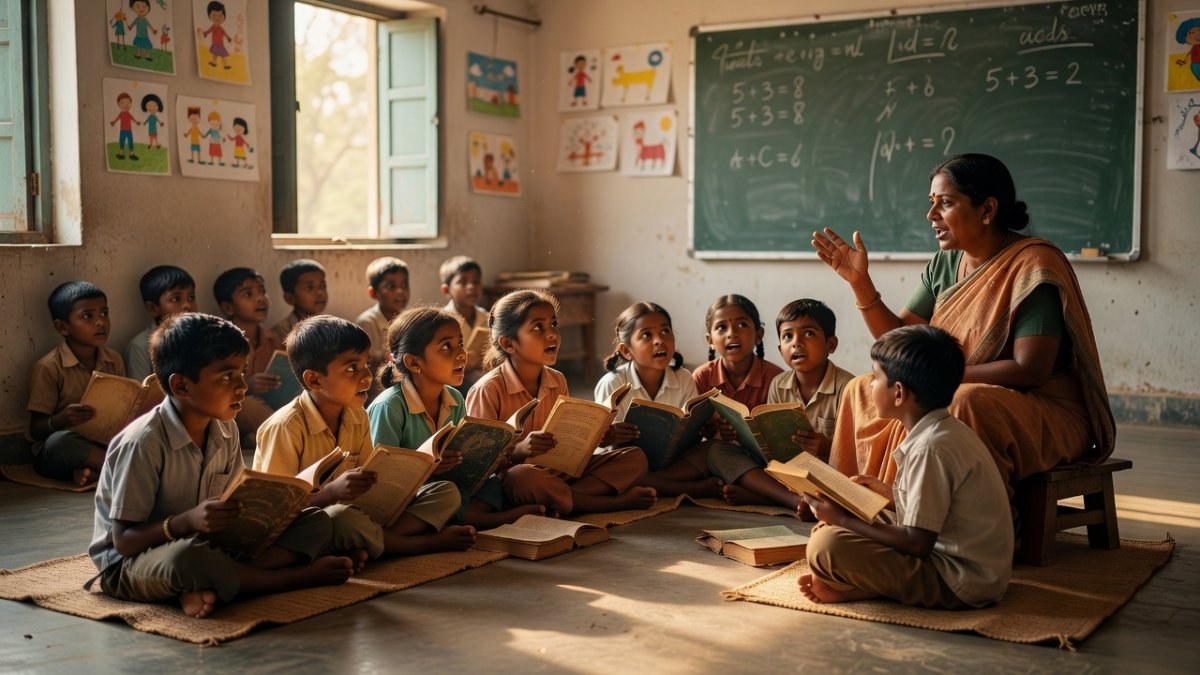
Tripathi criticises NCERT textbooks for emphasising rote memorisation of dates rather than narrative adventure that builds cultural identity. He notes that current approaches under the Ministry of Education leave students disengaged from India's rich mythology. NEP 2020 explicitly promotes experiential and multidisciplinary learning, yet implementation in many states still relies on fact-heavy content that fails to inspire. UGC guidelines encourage universities to integrate storytelling methods, but school-level NCERT frameworks lag. Tripathi highlights how civilisational stories should foster curiosity instead of exam pressure. For Indian students, this means history classes often produce anxiety rather than connection to heritage. Parents and teachers report children viewing history as boring lists instead of living traditions. Research from IITs on cognitive development supports narrative methods for better retention and critical thinking. Tripathi stresses that reforming NCERT content to include adventure formats would align directly with NEP 2020's vision of joyful learning. Without such shifts, generations risk losing touch with the storytelling roots that shaped Indian civilisation.
Dhruv Tara: Making Indian History Engaging for Young Minds
Tripathi's first children's book, Dhruv Tara & The Great Indian History Quiz, launches a planned seven-book series aimed at ages 8-14. It combines adventure storytelling with quiz questions drawn from Indian history to replace dry memorisation. This approach directly addresses gaps in current NCERT curriculum frameworks criticised for lacking narrative depth. NEP 2020 advocates activity-based learning, yet many classrooms continue with textbook drills. The series positions mythology and history as exciting quests, helping young readers develop cultural identity in the digital age. Indian parents increasingly seek alternatives to rote methods that stifle creativity. Teachers note improved engagement when stories replace lists of dates. Tripathi, drawing from his background as a former diplomat, emphasises that early exposure to civilisational narratives builds resilience and curiosity. The book targets the precise age group where cognitive foundations for lifelong learning form. By integrating quiz elements within adventure plots, Dhruv Tara offers a practical model for updating NCERT materials. This initiative could influence broader Ministry of Education reforms if scaled through schools adopting NEP guidelines.
AI's Role in Creativity and the Future of Learning
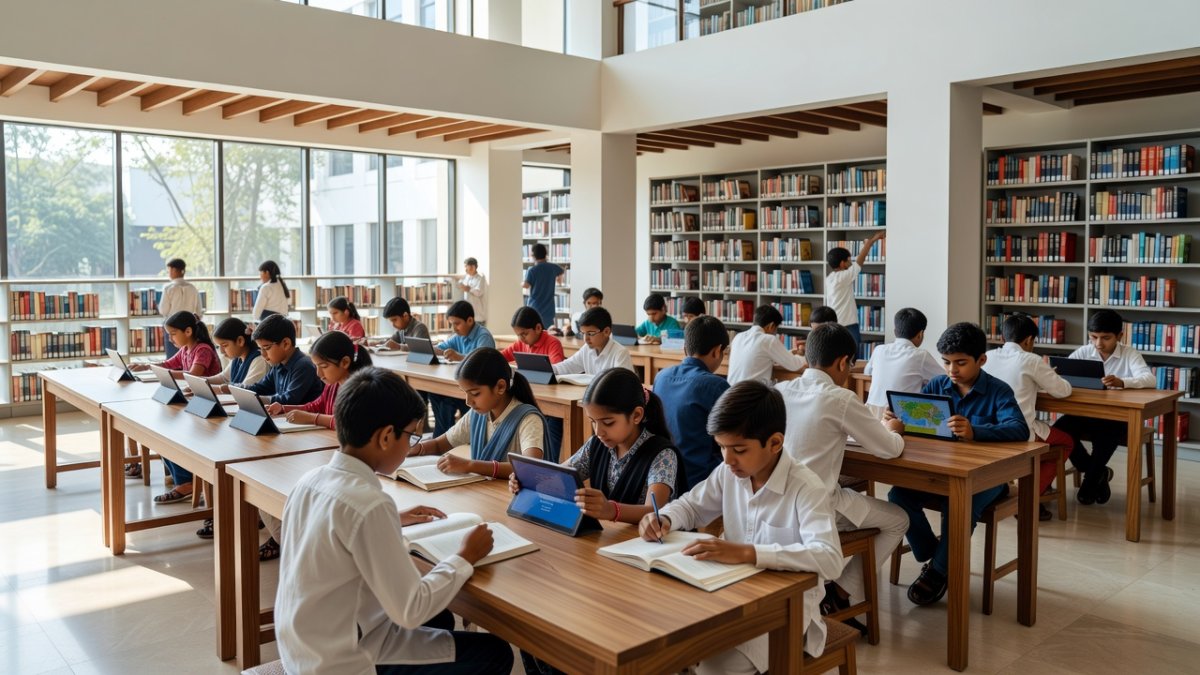
Tripathi states that AI represents potentially humanity's biggest invention, but warns it must not become a crutch that prevents independent thinking. Humans using AI will replace those who do not, he notes, urging creators to master tools rather than fear them. IIT research on AI in education shows that guided integration improves problem-solving when paired with critical thinking exercises. NEP 2020 and UGC guidelines promote digital literacy, yet many Indian students rely on AI for homework instead of developing original ideas. Tripathi highlights risks for younger generations who skip foundational skills. For parents and teachers, this means balancing technology access with activities that build reasoning. Storytelling meets technology when traditional Indian narratives intersect with AI platforms and new media. The author insists storytellers must keep challenging themselves to remain relevant. India's education system, through NCERT updates, could incorporate AI literacy modules that emphasise human creativity first. Without deliberate policy focus, students may graduate with diminished analytical abilities despite access to powerful tools.
Building Resilience in the Next Generation
Modern parenting often shields children from failure, Tripathi observes, yet learning from setbacks remains essential for character and creativity. NEP 2020 stresses holistic development including emotional resilience, but competitive exam culture in India frequently amplifies pressure without recovery mechanisms. Tripathi advocates exposing children to competition and recovery early. Indian parents and teachers see rising anxiety levels when failure is hidden rather than processed. Cognitive development studies linked to IIT programmes confirm that resilience training improves long-term academic outcomes. The author connects this to storytelling traditions where heroes face and overcome obstacles. NCERT materials rarely model such journeys, focusing instead on success narratives. By integrating resilience lessons through mythology-based stories, educators could better support NEP goals. For students, this shift would reduce fear of mistakes and encourage experimentation. Teachers require training under UGC frameworks to facilitate discussions on failure as growth. Tripathi warns that without these changes, India's youth may lack the adaptability demanded by an AI-shaped economy.
From Books to Screens: Adapting Mythology for Modern Media
The Shiva Trilogy, among the highest-selling book series in Indian publishing, is currently under screen adaptation. Tripathi plans a major AAA video game inspired by the Ramayana to bring Indian mythology into the global gaming industry. India's gaming sector, expected to reach $7-8 billion by 2030, offers a platform for cultural storytelling at scale. NEP 2020 encourages creative industries in education, yet few curricula link mythology to digital skills. Tripathi emphasises that storytelling shapes civilisations and must evolve with technology. For Indian students, exposure to such adaptations could strengthen cultural identity while building digital literacy. Parents welcome content that blends entertainment with heritage. Teachers could use game-based modules aligned with UGC digital education guidelines. The intersection of traditional narratives and new media demonstrates how AI tools and platforms can amplify rather than replace human creativity. Tripathi insists creators must continually challenge themselves to keep stories relevant across generations.
India's Gaming Ambitions and Mythological Narratives
Tripathi's vision for a Ramayana-inspired AAA game positions Indian mythology within one of the world's fastest-growing gaming markets. This aligns with NEP 2020 calls for multidisciplinary skills including technology and arts. Current NCERT frameworks rarely connect cultural stories to emerging industries, leaving students unprepared for careers in gaming or digital media. IIT research explores gamification in education, showing improved motivation when mythology drives interactive content. Tripathi notes that storytellers must adapt to digital platforms to maintain influence. For parents and teachers, these developments offer new ways to engage children with history beyond textbooks. The Ministry of Education could support pilot programmes integrating such games into classrooms under NEP guidelines. India's booming sector provides economic opportunity while preserving civilisational narratives. Without proactive curriculum updates, students may miss connections between heritage and future careers in technology-driven fields.
The Bottom Line
Amish Tripathi's insights underscore that India's education system must move beyond rote NCERT methods toward storytelling, resilience, and responsible AI use to match NEP 2020 ambitions. With the gaming industry heading toward $7-8 billion by 2030, integrating mythology through books like Dhruv Tara and planned adaptations offers concrete pathways. Students, parents and teachers stand to gain from reforms that prioritise curiosity and character alongside technology. Forward-looking policy execution at NCERT, UGC and IIT levels will determine whether the next generation inherits both cultural depth and adaptive skills.
— By Dr. Raj Patel, Staff Writer
This article was produced with AI-assisted research and editorial support. Reporting is based on sources cited in the article.
What's Your Reaction?
 Like
0
Like
0
 Dislike
0
Dislike
0
 Love
0
Love
0
 Funny
0
Funny
0
 Wow
0
Wow
0
 Sad
0
Sad
0
 Angry
0
Angry
0

India/South Asia Correspondent at Global1.News. Analytical voice with a background in science and health journalism. Based in New Delhi, covering Indian politics, education, healthcare, technology, and policy. Breaks down complex data into clear, actionable reporting.















Comments (0)