
China and Europe: Where Are Ties Headed After the New Trade Mechanism?
In a recent CGTN report titled "China and Europe: Where are ties headed?", the discussion highlights the delicate balance between economic interdependence and strategic caution that now defines relations between Beijing and Brussels. This interdependence now operates under heightened political scrutiny. European policymakers have articulated a de-risking agenda that seeks to re
In a recent CGTN report titled "China and Europe: Where are ties headed?", the discussion highlights the delicate balance between economic interdependence and strategic caution that now defines relations between Beijing and Brussels. This interdependence now operates under heightened political scrutiny. European policymakers have articulated a de-risking agenda that seeks to reduce vulnerabilities in critical sectors without fully severing commercial links. China, for its part, continues to advance the priorities set out in the 14th Five-Year Plan, emphasizing technological self-sufficiency and the Dual Circulation strategy that balances domestic consumption with calibrated external engagement. The video correctly identifies these structural tensions as the defining features of the relationship going forward.
The following analysis examines how recent institutional and diplomatic developments are shaping this managed competition. It draws on concrete policy instruments, bilateral visits, and multilateral filings to assess whether the current trajectory points toward stabilization or renewed friction.
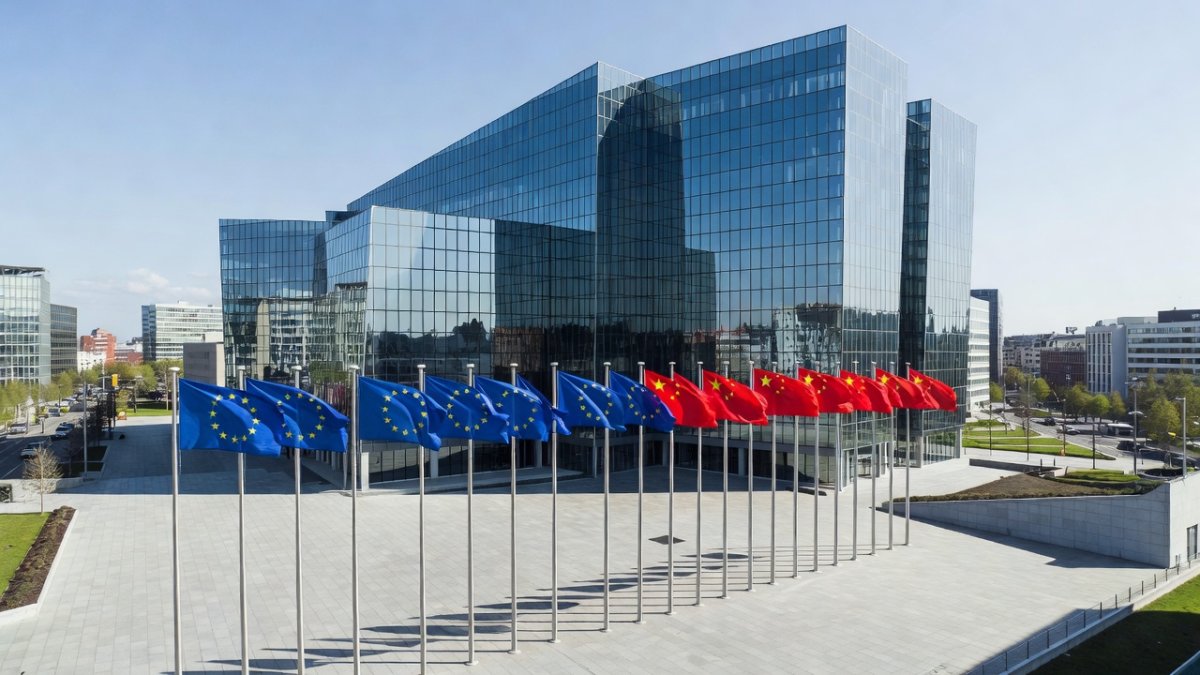
The New Consultation Mechanism: A Framework for Managed Competition
The China-EU Trade and Investment Consultation Mechanism was officially launched on June 29, 2026, with its inaugural meeting held in Brussels. Chinese Minister of Commerce Wang Wentao led the delegation, establishing four dedicated workstreams covering trade and investment balancing, export controls, intellectual property protection, and market access. This structure represents a pragmatic response to accumulated disputes rather than an attempt to restore the comprehensive strategic partnership language of earlier decades.
By institutionalizing regular senior-level exchanges, both sides aim to prevent isolated tariff decisions from cascading into broader trade conflicts. The mechanism’s focus on export controls and intellectual property directly addresses European concerns about technology leakage, while the market-access stream offers China a channel to press for reciprocity in sectors where European firms have long faced regulatory hurdles. Early indications suggest the format will operate on a quarterly basis, allowing technical experts to prepare positions before ministerial oversight.
China’s participation aligns with the 14th Five-Year Plan’s emphasis on stabilizing external economic relations while pursuing technological upgrading. Dual Circulation remains the guiding framework: domestic demand is to absorb more output, yet export markets in Europe continue to provide essential revenue and technology feedback loops. The Brussels mechanism therefore serves as a pressure valve rather than a comprehensive reset.
European officials view the arrangement as consistent with the EU’s broader de-risking doctrine. By creating predictable channels for dialogue, Brussels seeks to avoid the abrupt escalations that characterized 2023–2024 disputes. Whether the workstreams produce measurable progress on investment screening alignment or export-control harmonization will determine the mechanism’s credibility over the coming year.
Tariffs and Trade Balancing: The EV Flashpoint
EU tariffs reaching up to 35 percent on Chinese electric vehicles remain the most visible point of friction. China responded by filing a WTO complaint in late 2024, arguing that the duties violate core non-discrimination principles. The case is still at the consultation stage, and no panel has yet been established, reflecting both sides’ preference for negotiated outcomes alongside formal litigation.
The tariff regime interacts directly with the new consultation mechanism’s trade-balancing workstream. European negotiators have signaled willingness to discuss quota arrangements or local-content thresholds that could mitigate the duties’ impact, while Chinese counterparts emphasize that any such arrangement must preserve access for competitive Chinese producers. The 780 billion euro bilateral trade volume in 2025 provides both parties with strong incentives to contain the dispute.
From China’s perspective, the EV sector exemplifies the 14th Five-Year Plan’s green-development pillar. Overcapacity concerns raised by European industry are acknowledged, yet Beijing maintains that scale advantages and supply-chain integration, rather than subsidies alone, explain price competitiveness. The WTO filing serves to internationalize the issue and preserve negotiating leverage.
European automakers remain divided. Premium German brands with joint-venture exposure in China favor de-escalation, while volume producers without Chinese manufacturing footprints support tighter safeguards. This internal cleavage complicates Brussels’ ability to present a unified position in the new mechanism’s workstreams.
Diplomatic Thaw: Sweden and the Nordic Realignment
Sweden and China renewed diplomatic engagement on July 5, 2026, establishing a framework for regular political consultations. The agreement revives structured dialogue that had been suspended amid earlier human-rights and security disagreements. It signals a broader Nordic willingness to compartmentalize political differences from economic cooperation.
The Swedish move carries regional implications. Other Nordic capitals have watched the restoration of channels with interest, particularly as green-technology supply chains and critical-minerals partnerships gain priority under the EU’s de-risking agenda. Regular consultations provide a venue to discuss both investment screening and potential joint research initiatives in battery materials and offshore wind.
China regards the Swedish framework as consistent with its preference for differentiated bilateral engagement within the EU. By maintaining distinct political tracks with individual member states, Beijing can offset Brussels-level constraints. The timing, shortly after the June 29 launch of the Trade and Investment Consultation Mechanism, suggests coordinated signaling that political dialogue remains possible even where trade tensions persist.
Europe’s De-Risking Dilemma: Interdependence vs. Security
The EU’s de-risking strategy explicitly targets semiconductors, rare earths, and pharmaceuticals. These sectors sit at the intersection of economic efficiency and national-security considerations, prompting new investment-screening mechanisms and stockpiling requirements. Implementation remains uneven across member states, reflecting differing exposure to Chinese supply chains.
China’s 14th Five-Year Plan response has been to accelerate domestic substitution in precisely these areas. Rare-earth processing capacity has expanded, while pharmaceutical active-ingredient production is being diversified geographically. The Dual Circulation approach seeks to reduce import dependence without abandoning export markets that generate foreign exchange and technological learning.
The Carbon Border Adjustment Mechanism (CBAM) is being phased in, adding another layer of regulatory pressure on Chinese exports. Although full financial obligations have not yet commenced, reporting requirements are already shaping investment decisions by European firms sourcing from China. Chinese exporters are responding by accelerating low-carbon production upgrades to maintain competitiveness once the mechanism’s definitive regime applies.
Second-order effects are emerging. European downstream industries reliant on affordable Chinese inputs face higher costs, prompting some firms to explore Southeast Asian or domestic alternatives. These shifts remain gradual, constrained by the absence of immediate scale equivalents in critical minerals refining.
Beyond Brussels: Germany, France, and the Internal EU Divide
German Chancellor Friedrich Merz visited China in February 2026, underscoring Berlin’s continued prioritization of the bilateral economic relationship. The visit produced commitments to expand cooperation in automotive supply chains and vocational training, even as Berlin implements tighter investment screening aligned with EU guidelines.
France has adopted a more assertive stance, emphasizing reciprocity in market access and greater scrutiny of Chinese participation in strategic infrastructure. This divergence within the EU’s core creates negotiating complexity for the new Trade and Investment Consultation Mechanism, as Chinese counterparts must navigate differing national red lines.
The internal divide also affects the de-risking agenda. Member states with large manufacturing bases tend to favor continued engagement, while those more focused on services or security considerations advocate stricter guardrails. The consultation mechanism’s workstreams will therefore serve as a testing ground for whether Brussels can forge a coherent position that accommodates these differences.
Strategic Implications for the Multilateral Order
The China-EU relationship increasingly functions as a laboratory for managed competition within the multilateral trading system. The WTO complaint over EV tariffs illustrates that both parties continue to view formal dispute settlement as a legitimate channel, even while pursuing bilateral fixes. Success or failure of the new consultation mechanism will influence whether similar institutional innovations emerge in other contested trade relationships.
China’s strategic calculus centers on preserving market access while advancing technological self-sufficiency under the 14th Five-Year Plan. Europe’s calculus prioritizes supply-chain resilience without sacrificing the 780 billion euro trade relationship. Both sides recognize that abrupt decoupling would impose severe adjustment costs, yet neither is prepared to accept the status quo of unmitigated interdependence.
Third countries are watching closely. ASEAN economies seek to position themselves as alternative sourcing destinations, while the United States continues to press for tighter transatlantic coordination on export controls. The outcome of the four workstreams launched in Brussels will therefore carry implications beyond the bilateral relationship.
Over the medium term, the durability of the June 2026 mechanism and the July 2026 Swedish framework will indicate whether institutionalization can contain politicization. If technical progress materializes on intellectual property and export-control alignment, the relationship may stabilize around a lower but still substantial level of integration.
What to watch for in the next six months includes the first progress reports from the four workstreams of the Trade and Investment Consultation Mechanism, particularly any movement on EV tariff mitigation. The pace of CBAM reporting compliance by Chinese exporters and any follow-up political consultations under the new Sweden framework will also serve as early indicators. German implementation of updated investment-screening rules following Chancellor Merz’s February visit will reveal whether national-level engagement can coexist with Brussels-level guardrails. Finally, developments in the WTO EV dispute will test whether litigation and negotiation can proceed in parallel without escalation. These discrete milestones will collectively determine whether the current phase of managed competition consolidates or gives way to renewed friction.
By Prof. Marcus Chen, Staff Writer
This article was produced with AI-assisted research and editorial support. Reporting is based on sources cited in the article.
What's Your Reaction?
 Like
0
Like
0
 Dislike
0
Dislike
0
 Love
0
Love
0
 Funny
0
Funny
0
 Wow
0
Wow
0
 Sad
0
Sad
0
 Angry
0
Angry
0
World Politics Analyst at Global1.News. Based in Beijing, covering US-China relations, global trade, and geopolitical strategy. Brings deep analytical perspective to the power dynamics shaping international affairs.












Comments (0)