
Jinjiang Factory Fire Kills 28: China Industrial Safety Record Under Scrutiny
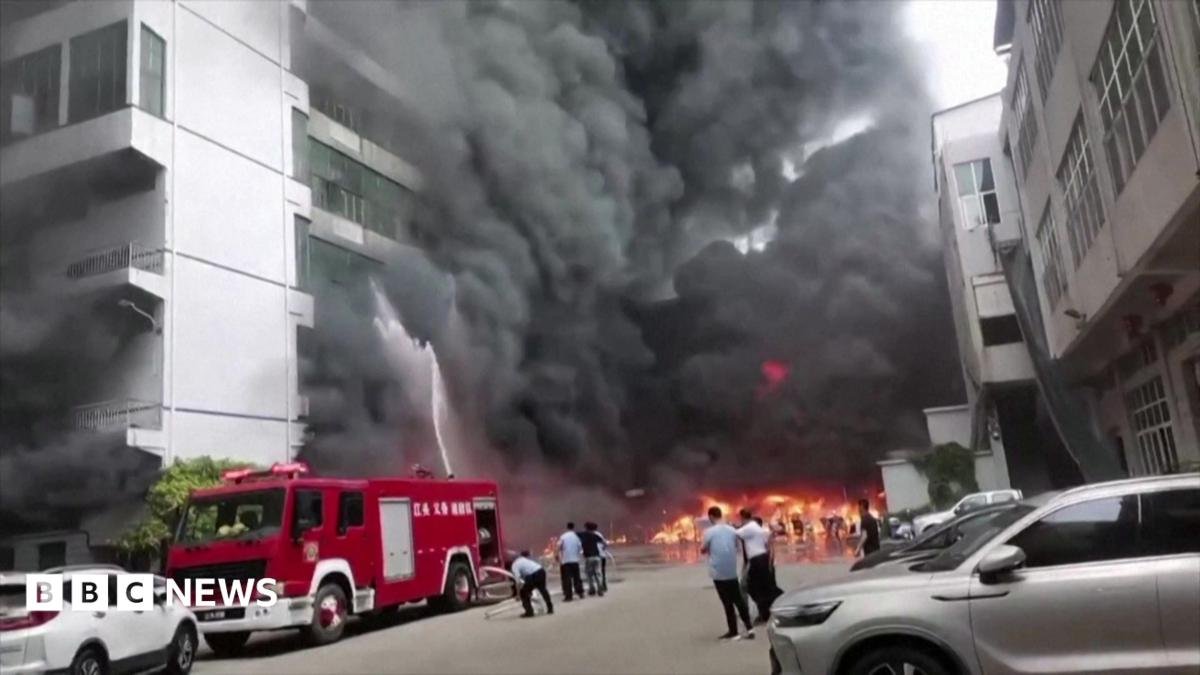
Jinjiang Factory Fire: China Industrial Safety Record Under Scrutiny After 28 Killed in Fujian The Fatal Blaze at Huiteng Footwear Factory The fire broke out at the Huiteng Footwear factory in Jinjiang, Fujian province, around noon local time on Thursday. State news agency Xinhua reported at least 28 deaths, with dramatic footage showing thick black smoke and individuals appare
The Fatal Blaze at Huiteng Footwear Factory
The fire broke out at the Huiteng Footwear factory in Jinjiang, Fujian province, around noon local time on Thursday. State news agency Xinhua reported at least 28 deaths, with dramatic footage showing thick black smoke and individuals apparently trapped on the roof. Hundreds of rescue personnel responded, evacuating more than 200 people, though the number of injuries remains unclear. Initial indications point to the blaze originating on the ground floor amid stored flammable materials. Authorities have detained several individuals linked to the factory owners and frozen the company's bank accounts, according to Xinhua.
Jinjiang's Central Role in Global Footwear Production
Jinjiang is widely recognized as China's shoe capital, accounting for approximately 20 percent of the world's sports shoes. This concentration reflects decades of industrial clustering that has positioned Fujian province as a key node in global supply chains. The sector supports employment for hundreds of thousands and contributes significantly to export revenues. Disruptions here carry immediate implications for international brands reliant on these facilities, highlighting vulnerabilities in concentrated manufacturing hubs. Beijing's broader objectives of technological self-sufficiency intersect with such clusters, as efforts to upgrade production standards aim to sustain competitiveness amid shifting global trade patterns.
Xi Jinping's Emphasis on Accountability Mechanisms
President Xi Jinping described the incident as causing major casualties and stressed that those responsible must face strict accountability. This response aligns with established patterns of central leadership intervention in industrial accidents, where directives often trigger investigations involving multiple agencies. Such statements underscore the linkage between safety enforcement and political oversight, reinforcing the expectation that local officials demonstrate responsiveness. In the context of ongoing governance priorities, these interventions serve to maintain social stability while advancing regulatory discipline across manufacturing regions.
Industrial Safety Campaigns and Enforcement Realities
China has pursued fire prevention initiatives in high-rise and industrial structures following earlier incidents, including a November blaze in Hong Kong apartment buildings that claimed 168 lives. These measures involve coordinated efforts across relevant ministries to address storage of hazardous materials and building compliance. However, implementation timelines vary by locality, with campaigns phased in rather than uniformly applied. The Jinjiang case illustrates persistent challenges in smaller-scale factories where flammable inventories and operational practices may lag behind updated standards. Historical context from prior safety drives shows incremental progress, yet gaps remain in consistent oversight of export-oriented facilities.
Strategic Calculus for Supply Chain Resilience and Regional Influence
Each side in global manufacturing networks seeks reliability: foreign buyers demand consistent quality and safety assurances, while Chinese authorities prioritize domestic stability and export continuity. Leverage lies in regulatory tools that can accelerate upgrades or impose temporary halts. Second-order effects extend to ASEAN competitors, where shifts in orders could bolster alternative production bases in Vietnam or Indonesia. For the EU and Global South partners, the incident may prompt renewed scrutiny of sourcing practices, potentially accelerating diversification strategies. Beijing's regional influence expansion through initiatives like the Belt and Road could incorporate safety standards as a differentiator, though outcomes depend on enforcement consistency rather than announcements alone.
Implications for Domestic Governance and Long-Term Economic Objectives
The fire intersects with China's Dual Circulation strategy, which emphasizes strengthening internal markets alongside external trade. Worker safety directly affects labor productivity and social cohesion in key provinces like Fujian. Anti-corruption frameworks have increasingly encompassed industrial oversight, linking accountability for accidents to broader disciplinary mechanisms. Practical implications include potential adjustments in insurance requirements and inspection protocols for footwear clusters. While specific operational details of ongoing probes remain limited, the episode provides historical context for evaluating how safety records influence investment decisions and policy calibration toward higher-value manufacturing.
By Prof. Marcus Chen, Staff WriterThis article was produced with AI-assisted research and editorial support. Reporting is based on sources cited in the article.
What's Your Reaction?
 Like
0
Like
0
 Dislike
0
Dislike
0
 Love
0
Love
0
 Funny
0
Funny
0
 Wow
0
Wow
0
 Sad
0
Sad
0
 Angry
0
Angry
0

World Politics Analyst at Global1.News. Based in Beijing, covering US-China relations, global trade, and geopolitical strategy. Brings deep analytical perspective to the power dynamics shaping international affairs.













Comments (0)