
Ukraine Drone Kills Infant in Yegoryevsk Amid Strikes
The Massive Drone Barrage Strikes Deep into Russian Territory On June 30, Ukrainian forces launched an unprecedented wave of 419 drones across multiple regions of Russia — the largest single-night drone assault since the war began, according to the New York Times and Russian defense ministry tallies. More than 60 drones were aimed at the Moscow city perimeter while over 200 rea
The Massive Drone Barrage Strikes Deep into Russian Territory
On June 30, Ukrainian forces launched an unprecedented wave of 419 drones across multiple regions of Russia — the largest single-night drone assault since the war began, according to the New York Times and Russian defense ministry tallies. More than 60 drones were aimed at the Moscow city perimeter while over 200 reached the broader Moscow region, Russian officials confirmed. The primary target was the Dubna Satellite Communications Center, already struck once earlier in the week, as part of a deliberate strategy to disrupt Russian military intelligence and battlefield coordination. Russian air defenses intercepted the majority, but enough penetrated to reach civilian zones including the town of Yegoryevsk, roughly 100 miles southeast of Moscow. Moscow regional governor Andrei Vorobyov publicly confirmed casualties and damage at multiple impact sites. This operation formed part of a sustained 40-day pressure campaign ordered by Ukrainian President Volodymyr Zelensky through the HUR intelligence service, reported by the Kyiv Independent and Reuters. The New York Times observed that Ukraine was increasingly “taking the war to Russia” with these deep strikes, shifting the conflict’s geographic scope beyond traditional front lines.
Tragic Civilian Casualties Unfold in Yegoryevsk Residential Area
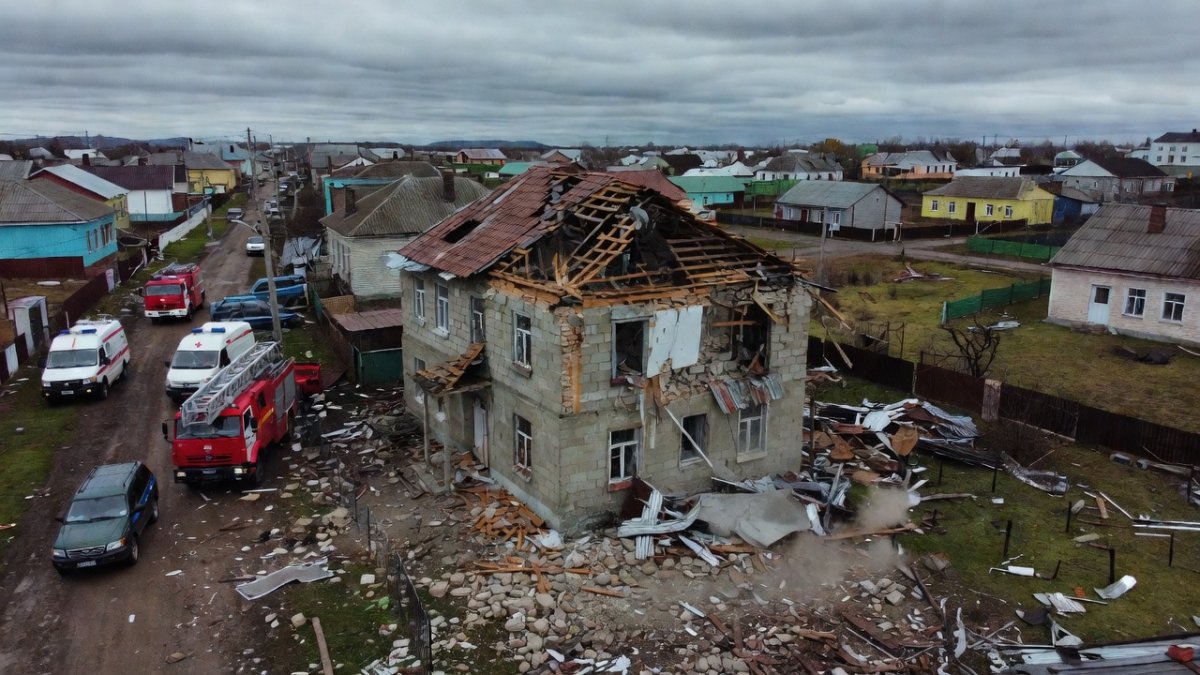
In the quiet Moscow suburb of Yegoryevsk, a single drone struck a private home on June 30, killing a six-month-old infant and severely injuring the child’s mother, whose legs were amputated in the aftermath of the blast — a tragedy confirmed by Governor Vorobyov and reported by NBC News, Meduza, and Reuters. The six-year-old sibling survived with only minor injuries after being shielded by debris in another room of the house. Governor Vorobyov stated that the family had been asleep when the drone impacted the roof. The mother was airlifted to a specialized trauma facility, and Meduza reported, citing the outlet Ostorozhno Novosti, that surgeons performed emergency amputations to save her life. Neighbors described the destroyed residence as a modest two-story structure, now reduced to a charred shell surrounded by emergency vehicles and forensic investigators. Russian officials labeled the strike on civilian housing as a deliberate terrorist act. Community members gathered in the days following to offer support, with local authorities promising compensation and temporary housing for affected families.
Zelensky Orders 40-Day HUR Pressure Campaign to Escalate Strikes
President Zelensky personally directed Ukraine’s Main Directorate of Intelligence to execute a 40-day pressure campaign designed to intensify drone and missile operations deep inside Russian territory, according to multiple reports from Kyiv Independent and other outlets. The directive emphasized sustained targeting of command centers, logistics hubs, and energy infrastructure to degrade Russia’s ability to sustain its offensive operations in eastern Ukraine. Military planners coordinated the June 30 barrage of 419 drones as a centerpiece of this effort, with over 60 aircraft vectored toward Moscow’s defensive perimeter to test and overwhelm air-defense networks around the capital. Officials in Kyiv described the campaign as a necessary response to Russia’s own long-range strikes on Ukrainian cities, arguing that symmetric pressure was essential to force negotiations or compel a withdrawal. Intelligence sources cited in Meduza noted that the Dubna Satellite Communications Center had been selected for repeated hits because of its role in supporting Russian satellite reconnaissance and secure communications for frontline units. The 40-day timeline allowed for phased operations, including follow-on strikes on July 4 against the port of St. Petersburg that ignited a major fire at a key maritime facility. Zelensky’s public statements framed the campaign as a defensive measure to protect Ukrainian sovereignty, while Russian state media portrayed it as escalation that endangered civilians far from the battlefield. Western observers, including analysts at Reuters, highlighted how the campaign reflected Ukraine’s evolving doctrine of long-range asymmetric warfare using low-cost drones to achieve strategic effects previously reserved for expensive cruise missiles.
Russia Responds with Missile Strikes on Kyiv and Heightened Defenses
Following the June 30 drone assault, Russian forces launched a series of missile strikes on Kyiv on July 2, targeting energy and military sites in retaliation for the deep incursions into Russian airspace. Air-raid sirens sounded across the Ukrainian capital as incoming ballistic and cruise missiles were intercepted by Patriot and other Western-supplied systems, though some debris caused localized damage and power outages. Russian Defense Ministry statements claimed the strikes destroyed Ukrainian drone production facilities and command nodes, while Ukrainian officials reported only minor infrastructure impacts and no significant casualties from the barrage. The exchange illustrated the tit-for-tat dynamic that has characterized the conflict, with each side seeking to impose costs on the other’s rear areas. Moscow also accelerated deployment of additional electronic warfare units around key sites such as Dubna to prevent further successful penetrations by Ukrainian drones. International monitoring organizations tracked the July 2 launches as among the largest Russian missile salvos in recent weeks, underscoring how Ukrainian deep-strike operations were prompting measurable shifts in Russian force posture. Ukrainian air-defense crews remained on high alert throughout the period, successfully downing dozens of incoming threats and limiting the effectiveness of the Russian counterattack. The cycle of strikes and counterstrikes continued to draw diplomatic attention from European capitals concerned about the risk of further escalation beyond Ukraine’s borders.
July 4 Ukrainian Drone Strike Ignites Fire at St. Petersburg Port
On July 4, Ukrainian drones struck the port facilities in St. Petersburg, triggering a large-scale fire that engulfed warehouses and fuel storage areas according to reports from The Moscow Times and AP. The attack represented a significant geographic expansion of Ukraine’s drone campaign, reaching Russia’s second-largest city and a major hub for Baltic Sea shipping. Eyewitness videos circulated widely showing thick black smoke rising over the port as firefighters battled the blaze for several hours before bringing it under control. Russian authorities confirmed the incident but downplayed its strategic impact, claiming only limited damage to civilian infrastructure, while Ukrainian intelligence sources suggested the target had been selected for its role in supporting military logistics. The operation aligned with the ongoing 40-day pressure campaign, demonstrating Ukraine’s ability to conduct simultaneous strikes across widely separated regions of Russia. Local residents reported hearing explosions and seeing drones overhead before the fire erupted, prompting temporary evacuations of nearby districts. Shipping schedules at the port were disrupted for days afterward, affecting both commercial and military-related cargo movements. Analysts noted that the St. Petersburg strike further illustrated the broadening scope of the conflict, as Ukrainian forces sought to impose economic and psychological pressure on Russian population centers far from the front lines.
Broader Implications of Ukraine’s Deep-Strike Strategy Emerge
The June 30 attack and subsequent operations have prompted extensive analysis regarding the long-term trajectory of the Russia-Ukraine war, with experts from NBC, ABC, and The New York Times emphasizing Ukraine’s strategic shift toward offensive operations inside Russia. The death of the six-month-old in Yegoryevsk has become a focal point in Russian domestic narratives, fueling calls for harsher retaliation and increased domestic security measures. Ukrainian leadership continues to justify the campaign as a proportionate response to Russian aggression, citing the need to degrade Moscow’s war-making capacity and raise the costs of continued occupation. International reactions have ranged from quiet support among Western allies for Ukraine’s right to self-defense to concerns about potential spillover effects on civilian populations. The 40-day timeline set by Zelensky appears designed to maintain continuous pressure through the summer months, combining drone swarms with other asymmetric tools. Military observers note that both sides are adapting tactics rapidly, with Russia investing heavily in drone interception technologies and Ukraine refining its long-range strike capabilities. The human cost, exemplified by the Yegoryevsk family tragedy, underscores the tragic reality that modern drone warfare increasingly blurs distinctions between military and civilian targets. As the campaign progresses, diplomats are watching closely for signs of negotiation openings or further dangerous escalation that could draw additional actors into the conflict.
The Bottom Line
Folks, let's cut through it. A six-month-old baby is dead in Yegoryevsk. A mother lost both legs. Kyiv is under renewed missile fire. St. Petersburg's port is burning. And the 40-day pressure campaign is far from over. Four hundred nineteen drones in a single night — with more than 60 targeting Moscow proper and over 200 reaching the broader Moscow region, per Russian defense ministry tallies. Those are the verified numbers from NBC News, Reuters, the New York Times, Meduza, the Associated Press, ABC News, and the Kyiv Independent.
Neither Zelensky nor Putin is backing down. Each escalation triggers a counter-escalation. The human toll on both sides keeps climbing while the rest of the world watches and offers calibrated, cautious statements. This conflict has entered a new phase where long-range strikes on the homeland are the norm, not the exception.
The question is no longer whether this war can be contained. It can't. The question is how many more Yegoryevsks it takes before someone finds the off switch.
By Jessica Ali, Global 1 News
This article was produced with AI-assisted research and editorial support. Reporting is based on sources cited in the article.
What's Your Reaction?
 Like
0
Like
0
 Dislike
0
Dislike
0
 Love
0
Love
0
 Funny
0
Funny
0
 Wow
0
Wow
0
 Sad
0
Sad
0
 Angry
0
Angry
0

Editor-in-Chief at Global1.News. Atlanta-based journalist who cuts through the BS and tells it like it is. Lead anchor, host, and the voice you hear when the spin stops and the truth starts.














Comments (0)