
UAE and Iran Hold First Face-to-Face Talks Since War Began
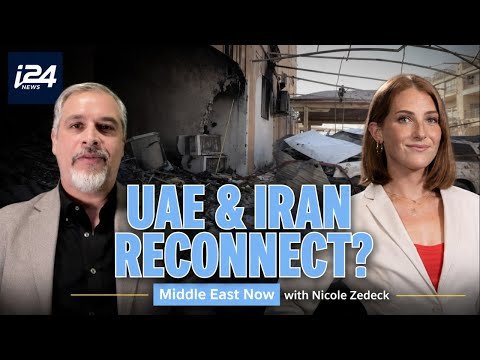
In a recent i24NEWS English YouTube report titled "UAE and Iran reportedly meet to de-escalate tensions" featuring Ahmed Khuzai and Nicole Zedeck on Middle East Now, senior national security officials from the United Arab Emirates and Iran held their first face-to-face meeting since the US-Israeli military campaign against Iran began on February 28, 2026. The encounter occurred
The Face-to-Face Meeting Details
The meeting brought together senior national security officials from both countries in an effort to reduce tensions following repeated Iranian strikes on UAE targets. Iranian proxies and direct actions have focused on Gulf state infrastructure, with the UAE experiencing multiple attacks in recent weeks.
Participants discussed immediate steps to prevent further escalation along the Gulf coast. The UAE side emphasized its consistent policy of promoting regional stability through direct dialogue rather than confrontation.
Officials addressed specific security concerns tied to Iranian missile and drone activity originating from positions in the Strait of Hormuz region. Both sides reviewed mechanisms to avoid additional incidents that could draw in additional actors.
The Financial Dimension - Billions Being Unlocked
The UAE has agreed to release billions of dollars to Iran as part of the de-escalation framework. Reuters reported the figure at $10 billion, with $3 billion already transferred through financial channels. Other sources placed the total commitment closer to $20 billion.
These funds represent a significant shift in Gulf-Iran economic relations that had been frozen since the start of the US-Israeli campaign on February 28, 2026. The transfers aim to address Iranian economic pressures while securing commitments on reduced attacks against UAE territory.
A UAE official stated that the country's foreign policy remains guided by promoting de-escalation and reducing tensions across the region while advancing lasting peace and stability. The financial component forms one concrete element of that approach.
Israeli Perspective and Implications for Israel
Israeli officials in Jerusalem and Tel Aviv are monitoring the UAE-Iran engagement closely because of the 2020 Abraham Accords that normalized relations between Israel and the UAE. The direct talks introduce new variables into Israel's security calculations regarding Iranian capabilities.
The IDF and Shin Bet have tracked Iranian attacks on UAE targets as part of broader assessments of threats to Israeli interests in the Gulf. Any reduction in those attacks could affect operational planning that has been active since the campaign began on February 28, 2026.
Prime Minister's Office sources note that the financial transfers could provide Iran with resources that might influence its proxy activities in other theaters, including areas affecting Israeli security along the northern border and in Gaza. Knesset committees have scheduled briefings on the developments.
Regional Dynamics and the Abraham Accords Context
The Abraham Accords established formal ties between Israel and the UAE in 2020, creating diplomatic channels that have shaped Gulf responses to Iranian actions. The current UAE-Iran meeting tests the resilience of those ties under active conflict conditions.
US efforts to secure a ceasefire with Iran have included recent statements from President Trump indicating that a deal is close and that planned strikes have been canceled. The UAE initiative aligns with American pressure for de-escalation while maintaining the framework of the Abraham Accords.
Other Gulf states have watched the UAE moves for signals on how to manage their own relations with Iran during the ongoing US-Israeli campaign that started February 28, 2026. The financial transfers add an economic layer to what had been primarily security-focused contacts.
Analysis and What This Means Going Forward
The UAE-Iran meeting and associated financial arrangements create a new diplomatic track that runs parallel to US-Israeli military operations. Israeli security institutions will need to adjust assessments of Iranian resource availability and attack patterns in the weeks ahead.
Continued implementation of the $10 billion Reuters figure or the higher $20 billion estimates could stabilize UAE-Iran relations in the short term but may also shift the balance of leverage in broader regional negotiations. The Foreign Ministry in Jerusalem is expected to coordinate with UAE counterparts on next steps.
Longer-term implications include potential effects on the Abraham Accords framework and on Israel's ability to maintain pressure on Iranian proxies operating from Gaza, the West Bank, and Lebanon. The de-escalation steps announced this week will be measured against actual reductions in attacks on UAE territory.
Regional actors including the Palestinian Authority and Hezbollah will interpret the financial transfers as indicators of shifting Gulf priorities during the active phase of the US-Israeli campaign against Iran. Daily security assessments in Tel Aviv will incorporate these changes into ongoing planning.
By Hannah Berg, Staff WriterThis article was produced with AI-assisted research and editorial support. Reporting is based on sources cited in the article.
What's Your Reaction?
 Like
0
Like
0
 Dislike
0
Dislike
0
 Love
0
Love
0
 Funny
0
Funny
0
 Wow
0
Wow
0
 Sad
0
Sad
0
 Angry
0
Angry
0

Israel Correspondent at Global1.News. Based in Tel Aviv, covering Israeli politics, security, technology, and society. Provides balanced, deeply-sourced reporting on one of the most closely-watched regions in the world.














Comments (0)