
Iran IRGC Commanders Deploy to Yemen Houthis Red Sea Crisis
Iran has reportedly flown senior Islamic Revolutionary Guard Corps commanders into Yemen in a high-stakes move that could dramatically intensify Houthi operations against international shipping in the Red Sea. The deployment follows weeks of intelligence warnings and comes as Tehran seeks to project power through its regional proxies amid ongoing conflicts in Gaza and the broader Middle East. This development risks further destabilizing critical maritime chokepoints and global energy routes.
Iran has reportedly flown senior Islamic Revolutionary Guard Corps commanders into Yemen in a high-stakes move that could dramatically intensify Houthi operations against international shipping in the Red Sea. The deployment follows weeks of intelligence warnings and comes as Tehran seeks to project power through its regional proxies amid ongoing conflicts in Gaza and the broader Middle East. This development risks further destabilizing critical maritime chokepoints and global energy routes. The broader context traces back to February 28, 2026, when US-Israeli airstrikes killed several senior Iranian officials including Supreme Leader Ali Khamenei, triggering a new phase of regional confrontation that has prompted Tehran to reinforce its proxy networks across multiple fronts.
Iran IRGC Deployment to Yemen Heightens Red Sea Crisis
Sana'a, Yemen — July 15, 2026 — Fresh intelligence indicates that Tehran has dispatched additional IRGC personnel to Yemen, marking a significant escalation in its support for Houthi forces and raising alarms across global capitals about the future of Red Sea security.
Tehran Dispatches IRGC Personnel to Yemen
The Quds Force, the extraterritorial arm of the IRGC long shaped by the legacy of Qasem Soleimani and now led by Esmail Qaani, has orchestrated the latest flights. Iranian operatives have honed their expeditionary playbook since 2012 in Syria, where they helped recapture Aleppo in December 2016, and since 2014 in Iraq, where they built the Popular Mobilization Forces into a formidable parallel army. These same tactics are now being transplanted to Yemen’s rugged coastline.
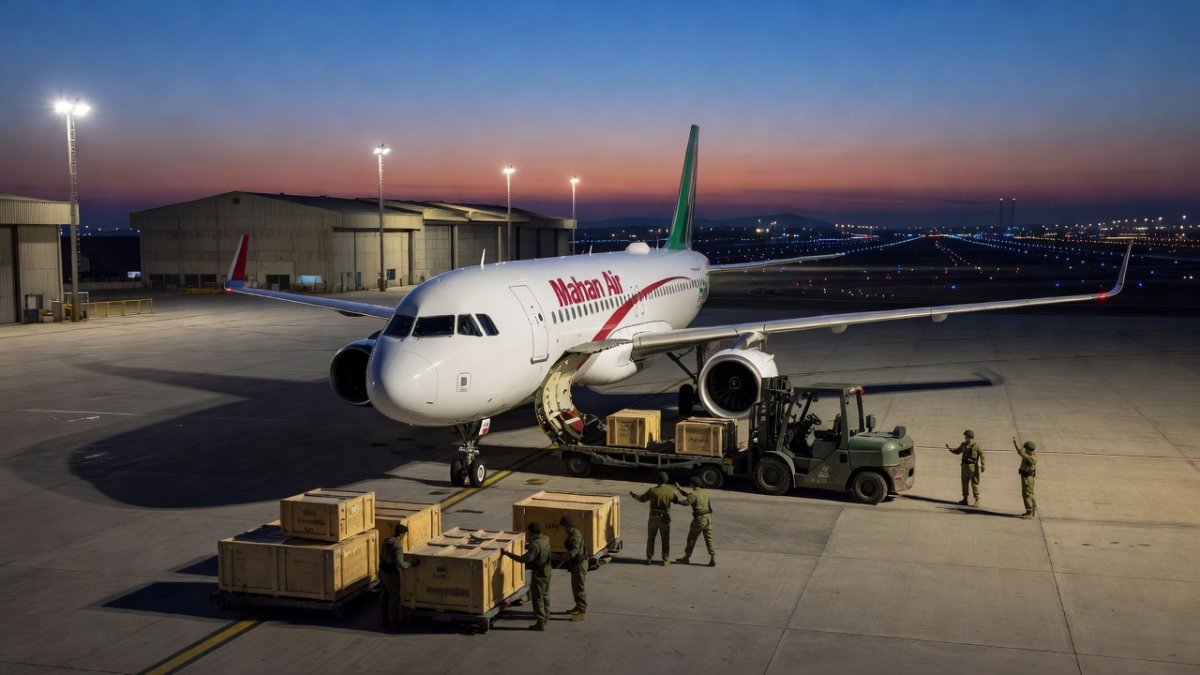
One flight on July 13 reportedly carried approximately 400 kilograms of gold bullion alongside the commanders, a detail that underscores the financial underpinnings of Tehran’s proxy strategy. Mahan Air, repeatedly sanctioned by the US Treasury since 2011 for ferrying weapons and fighters, is believed to have operated the aircraft. Before IRGC trainers arrived, Houthi naval units possessed only rudimentary speedboats and mines; after integration, they demonstrated the ability to seize vessels such as the Galaxy Leader in October 2023, revealing a sharp leap in operational sophistication.
The timing of these deployments aligns directly with the aftermath of the February 28, 2026 US-Israeli airstrikes that eliminated key Iranian leadership figures. In response, Tehran has accelerated efforts to embed advisors within proxy forces to sustain pressure on Western and allied interests. This reinforcement comes after the US imposed a naval blockade on Iranian ports from April 13 to May 29, 2026, which severely restricted Tehran’s ability to move conventional supplies and forced greater reliance on air routes for high-value personnel and equipment transfers.
Analysts note that the IRGC’s Yemen playbook mirrors earlier successes in building parallel military structures elsewhere, allowing Houthi units to transition from coastal harassment to sustained interdiction campaigns. The inclusion of gold bullion on the July 13 flight highlights the economic incentives used to maintain loyalty among local commanders amid prolonged conflict. Such financial transfers help offset the impact of international sanctions that have targeted Iranian aviation and banking networks for over a decade.
Confirmed Intelligence and Official Reactions
Yemen’s Information Minister Moammar al-Iryani publicly confirmed the intelligence, citing multiple corroborating sources. Two anonymous Iranian officials and a regional security analyst described the flights as routine rotations that nevertheless delivered specialized naval and missile expertise. Iran’s foreign ministry offered no comment, while Tehran continued to deny supplying advanced missile capabilities to the Houthis. Houthi spokesmen likewise rejected the proxy label, insisting their weapons are developed domestically.
Two Iranian sources spoke on condition of anonymity due to security concerns and stated that the IRGC personnel traveled specifically to support Houthi operations while providing training on new missile systems recently introduced into the theater. Iran’s foreign ministry was not immediately available to comment on the reports. The Houthis have previously denied being an Iranian proxy and continue to assert that the group develops its own weapons through local engineering efforts.
Regional security analysts emphasize that such denials serve diplomatic purposes while the operational evidence points to deepening integration between IRGC advisors and Houthi naval units. The confirmation by Yemen’s Information Minister adds official weight to earlier intelligence assessments that had circulated among Western and Gulf capitals for weeks. This public acknowledgment has prompted renewed calls for coordinated international monitoring of air traffic into Sanaa.
Houthi Naval Actions Follow Flight
Houthi Red Sea attacks that began in October 2023 in solidarity with Gaza have accelerated since the IRGC arrivals. Notable incidents include the November 2023 assault on the Unity Explorer and the December 2023 downing of a US MQ-9 Reaper. The four-year Riyadh truce signed in April 2022 has effectively collapsed. On July 13, Saudi-led coalition strikes destroyed two runways and three hangars at Sanaa airport in direct response to the Iranian flight.
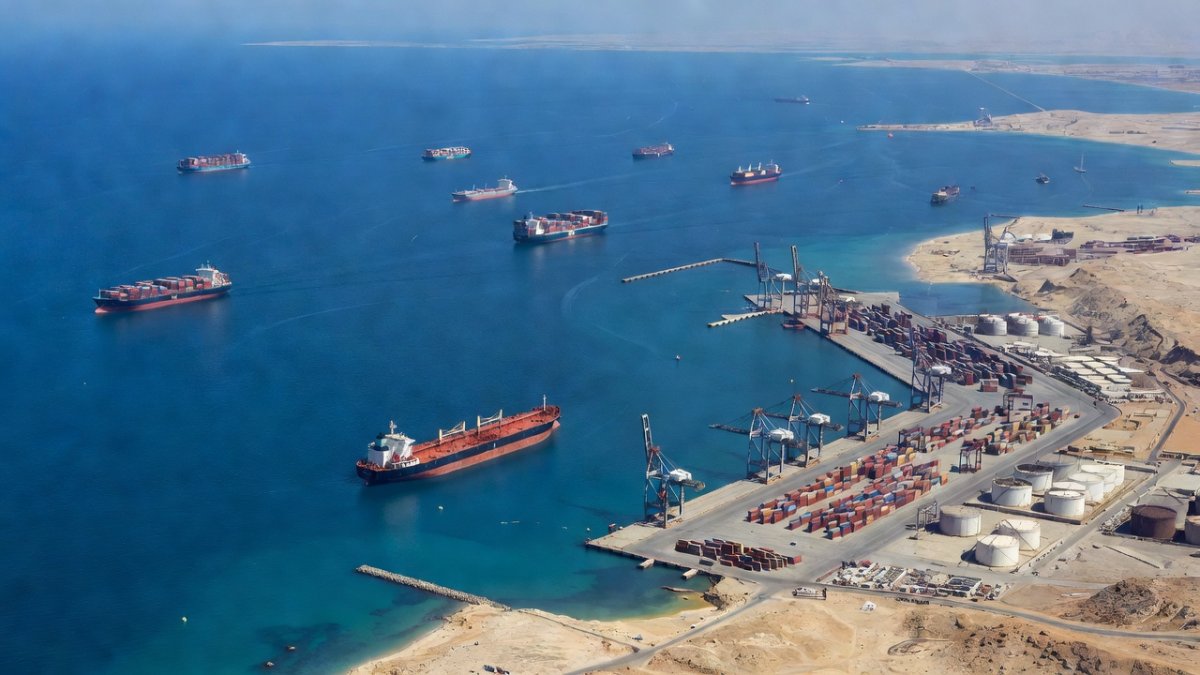
War-risk insurance premiums have surged 34 percent according to Lloyd’s List data, prompting Maersk and MSC to reroute vessels around the Cape of Good Hope. Roughly 12 percent of global container traffic now faces detours adding 10 to 14 days to voyages. Saudi Foreign Minister Faisal bin Farhan warned that further escalation would threaten regional stability and economic recovery.
The Houthi movement maintains an estimated force of 20,000 fighters capable of sustaining operations along Yemen’s western coastline. Saudi warplanes targeted Sanaa airport on July 13, destroying two runways and three hangars in retaliation for the Iranian flight. In response, Houthi forces attacked Saudi Arabia’s Abha International Airport on July 16, demonstrating their ability to project strikes beyond immediate coastal zones.
Energy Markets and US Military Pressure
Daily transit of 21 million barrels through the Strait of Hormuz represents 20 percent of global supply, while 6.2 million barrels pass daily through the Bab el-Mandeb strait. Japan relies on these routes for 75 percent of its crude imports, India for 80 percent, and South Korea for 65 percent. OPEC+ production cuts of 2.2 million barrels per day are scheduled through the third quarter of 2026, compounding supply concerns.
Historical oil shocks in 1973, 1979, 1990, and 2022 illustrate how quickly disruptions cascade into price spikes. The US Strategic Petroleum Reserve stands at 372 million barrels as of July 2026, while Asian central banks are quietly advancing contingency planning for sustained volatility.
CENTCOM completed its 13th consecutive night of strikes on July 23 targeting Iranian drone sites, command centers, and potential threats near the Strait of Hormuz. US B-1 bombers have departed UK bases for the region while additional medical personnel have been deployed to Germany in anticipation of heightened operational tempo. The Pentagon continues to insist the Strait of Hormuz remains open, although merchant traffic has slowed to a crawl amid reports of IRGC units boarding vessels and laying sea mines within the waterway.
Strategic Calculus Across the Region
Iran’s Axis of Resistance network—encompassing Hezbollah, Hamas, Palestinian Islamic Jihad, the Houthis, Iraqi Popular Mobilization Forces, and Syrian allies—now operates with greater coordination. Saudi Arabia’s Vision 2030 projects, including the $500 billion NEOM development, face renewed threats to tourism and foreign direct investment targets. The UAE’s logistics sector, accounting for 13 percent of GDP, and Gulf sovereign wealth funds holding more than $3 trillion in assets are reassessing portfolio allocations. Egypt’s Suez Canal revenues, which reached $9.4 billion annually, have already fallen 22 percent in the first half of 2026.
The Houthi estimated strength of 20,000 fighters provides a resilient base for operations that overlook the Bab el-Mandeb strait geographically. Saudi-led coalition naval forces have deployed additional assets near the strait to counter potential interdiction attempts. Yemen’s Information Minister Moammar al-Iryani publicly confirmed the IRGC transfers citing multiple intelligence sources, underscoring the official recognition of Iranian involvement.
Saudi warplanes struck Sanaa airport on July 13 destroying two runways and three hangars, while Houthi forces retaliated by attacking Abha International Airport on July 16. These exchanges illustrate the rapid cycle of escalation now unfolding across the Arabian Peninsula and Red Sea corridor. Regional capitals are recalibrating defense postures as the conflict risks spilling into previously stable economic zones.
Second-Order Effects on Great-Power Competition
China, which sources half its crude from the Middle East under the 2021 Comprehensive Cooperation Plan with Iran, watches nervously as shipping lanes tighten. Russia benefits from elevated oil prices while continuing to supply drone components for Shahed-136 munitions. India, dependent on the affected lanes for 80 percent of its oil imports, and Turkey, balancing NATO obligations with $7 billion in annual trade with Iran, both seek diplomatic breathing room. UN envoy Hans Grundberg’s ceasefire framework proposal would require a multinational Red Sea monitoring mechanism to serve as a viable off-ramp for all parties.
The IRGC has issued explicit warnings against passage through the Strait of Hormuz and has begun boarding merchant ships while laying sea mines in the waterway. Saudi-led coalition naval deployments near the Bab el-Mandeb Strait aim to secure the southern approaches, yet Houthi-controlled territory continues to overlook the critical chokepoint. These developments have forced major shipping lines to extend voyage times and absorb higher fuel and insurance costs that ultimately reach global consumers.
Great-power actors are now weighing the trade-offs between maintaining freedom of navigation and avoiding direct confrontation with Iranian forces. The combination of IRGC naval activity in the Strait of Hormuz and Houthi strikes in the Red Sea creates overlapping pressure points that complicate diplomatic initiatives. Any viable ceasefire would need to address both the immediate maritime threats and the underlying proxy dynamics fueling the current crisis.
By Malik Hassan, Staff Writer
This article was produced with AI-assisted research and editorial support. Reporting is based on sources cited in the article.
What's Your Reaction?
 Like
0
Like
0
 Dislike
0
Dislike
0
 Love
0
Love
0
 Funny
0
Funny
0
 Wow
0
Wow
0
 Sad
0
Sad
0
 Angry
0
Angry
0

Middle East Correspondent at Global1.News. Based in Beirut, covering politics, conflict, energy, and society across the Middle East. Brings context and depth to a region often reduced to headlines.













Comments (0)