
How South Korea's Africa Pledges Are Faring on the Ground
The 2024 Korea-Africa Summit as Diplomatic Watershed The Korea-Africa Summit convened in Seoul on 4-5 June 2024 stands as the largest diplomatic gathering organized under the Yoon Suk Yeol administration.
The 2024 Korea-Africa Summit as Diplomatic Watershed
The Korea-Africa Summit convened in Seoul on 4-5 June 2024 stands as the largest diplomatic gathering organized under the Yoon Suk Yeol administration. Framed by the theme "The Future We Make Together: Shared Growth, Sustainability, and Solidarity," the meeting brought African leaders and senior officials into direct dialogue with South Korean counterparts at a moment when Seoul was actively recalibrating its global posture. President Yoon Suk Yeol used the occasion to announce two headline financial commitments: US$14 billion in export credits designed to facilitate South Korean corporate entry into African markets, and US$10 billion in official development assistance (ODA) to Africa by 2030. These figures were not presented as abstract aspirations; they were embedded in a Joint Declaration that also scheduled a Foreign Ministers' Meeting for 2026 to evaluate implementation and prepare the subsequent summit cycle.
For South Korea, the summit represented more than an exercise in summit diplomacy. It constituted a deliberate effort to operationalize the "global pivotal state" concept that has guided foreign policy under the Yoon administration. That concept seeks to position the Republic of Korea as a bridge between advanced industrial economies and developing regions, drawing explicitly on the country's own trajectory from aid recipient to donor. The Ministry of Foreign Affairs (MOFA) coordinated the event with support from the Korea International Cooperation Agency (KOICA) and the Export-Import Bank of Korea (Korea Exim Bank), underscoring the whole-of-government character of the initiative. In the months since the summit, attention has shifted from the optics of the Seoul gathering to the more demanding question of delivery on the ground.
Scale and Composition of the Financial Pledges
The dual structure of the pledges—export credits paired with ODA—reflects a long-standing feature of South Korean economic diplomacy. The US$14 billion in export credits is intended to lower financing barriers for Korean firms in infrastructure, manufacturing, and digital sectors across the African continent. Korea Exim Bank, which administers the bulk of such facilities, has historically linked credit lines to the participation of Korean contractors and technology suppliers. The parallel commitment of US$10 billion in ODA by 2030 builds upon an already rising baseline: South Korean ODA to Africa reached approximately US$543.3 million in 2022, accounting for roughly 25 percent of the country's total ODA disbursements that year.
These numbers must be situated within the broader evolution of Korean aid policy. South Korea joined the OECD Development Assistance Committee (DAC) in 2010, formalizing its transition from recipient to donor status. In the intervening years, the share of ODA directed to Africa has grown steadily, yet absolute volumes remain modest relative to those of larger DAC members or to China's financing packages. The 2024 pledges therefore signal an intention to accelerate both the volume and the visibility of Korean engagement. Implementation, however, is being phased in through existing institutional channels rather than through the sudden creation of new instruments. KOICA continues to manage grant aid and technical cooperation, while Korea Exim Bank handles concessional loans and export credits. The Korea Development Institute (KDI) has supplied policy research and knowledge-sharing modules that accompany many of these financial flows.
The Teso Fruit Processing Project as Early Test Case
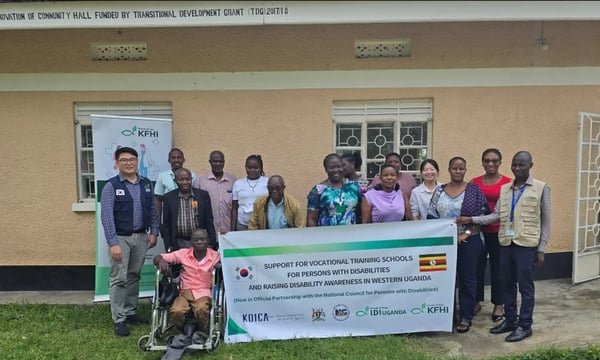
In eastern Uganda's Teso sub-region, a fruit processing factory project jointly financed by KOICA and the Ugandan government offers one of the clearest early illustrations of how summit pledges are being translated into concrete activity. KOICA and Ugandan authorities signed a memorandum of understanding for a US$7.4 million facility. KOICA Resident Representative Kang Younhwa and Uganda's finance permanent secretary Christopher Kassami formalized the agreement, with Uganda contributing an additional US$2.2 million through the Uganda Development Corporation (UDC). The project design includes not only physical plant construction but also the training of marketing planners and production workers in South Korea, thereby linking capital investment to human-capital development.
The choice of a agro-processing facility is consistent with KOICA's emphasis on value-chain upgrading rather than simple commodity extraction. By focusing on fruit processing, the initiative aims to reduce post-harvest losses, raise farmer incomes, and generate formal employment in a region where agricultural livelihoods remain predominant. South Korea has simultaneously expanded KOICA scholarship opportunities for Ugandan students, creating a parallel track for longer-term capacity building. These elements—hardware, training, and education—mirror the integrated approach that characterized South Korea's own rural development programs during the 1970s, most notably the Saemaul Undong movement, albeit adapted to contemporary Ugandan institutional realities.
It would be premature to declare the Teso project a completed success. Construction timelines, procurement of equipment, and the absorption capacity of local counterpart agencies all remain variables under active management. Nevertheless, the project functions as a visible test case for the proposition that South Korea can offer African partners a development partnership distinct from both traditional Western aid models and large-scale Chinese infrastructure packages. The presence of a KOICA resident representative office in Uganda facilitates on-site monitoring and iterative adjustment, a practice that MOFA and KOICA have sought to standardize across priority partner countries.
Historical Resonance: From Han River Miracle to Knowledge Donor
South Korea's contemporary Africa policy cannot be understood without reference to the country's compressed development experience. The transformation commonly labeled the "Miracle on the Han River" saw per capita income rise from levels comparable to many sub-Saharan African economies in the early 1960s to advanced-economy status within a single generation. That trajectory supplies both the narrative legitimacy and the practical templates that Korean officials present to African counterparts. Membership in the OECD DAC in 2010 marked the formal culmination of this shift; the subsequent expansion of ODA volumes and the creation of knowledge-sharing platforms through KDI and KOICA represent its operational extension.
Korean policymakers frequently emphasize that their model privileges industrial policy, export orientation, and human-capital investment over pure resource extraction. In engagements with African governments, this framing is used to differentiate Seoul's offer from Beijing's. Where Chinese cooperation has often centered on resource-backed infrastructure loans and turnkey construction, South Korea highlights technology transfer, vocational training, and the gradual building of local productive capacity. The Teso fruit processing initiative, with its explicit training-in-Korea component, exemplifies this value-added approach. Whether such differentiation proves decisive in African capitals will depend on delivery speed, cost competitiveness, and the ability of Korean firms to navigate complex local political economies.
Historically, South Korea itself benefited from external assistance during critical phases of industrialization, including support from the United States and later from Japanese reparations and loans. That memory informs a rhetorical commitment to "horizontal" partnership rather than hierarchical donor-recipient relations. In practice, power asymmetries remain, yet the shared experience of rapid structural transformation provides a discursive resource that few other DAC donors can claim. MOFA communications surrounding the 2024 summit repeatedly invoked this history, positioning South Korea as a living demonstration that development trajectories can be altered within decades rather than centuries.
Strategic Competition and the China Factor
Any assessment of South Korea's Africa pledges must acknowledge the competitive environment in which they unfold. China has maintained a multi-decade head start through the Forum on China-Africa Cooperation, extensive Belt and Road financing, and a dense network of diplomatic and commercial presence. South Korea neither seeks nor possesses the capacity to match Chinese lending volumes. Instead, Seoul has elected to compete on the terrain of quality, technological sophistication, and alignment with local industrialization strategies. Economic Partnership Agreements (EPAs) and Trade and Investment Promotion Frameworks (TIPFs) currently under negotiation are intended to create more predictable regulatory environments for Korean investors while offering African partners improved market access and standards alignment.
For Korean chaebol and mid-sized enterprises, Africa represents both opportunity and risk. Diversification away from over-concentration in China and Southeast Asia has become a strategic priority amid supply-chain realignments and geopolitical tension. Yet African markets present infrastructure gaps, currency volatility, and governance challenges that require patient capital and political risk mitigation—functions that Korea Exim Bank and trade insurance instruments are being asked to perform. The US$14 billion export credit envelope announced in 2024 is best understood as an attempt to de-risk private-sector entry rather than as a substitute for it.
From the standpoint of inter-Korean relations and broader Northeast Asian security, a more visible Korean presence in Africa also serves indirect strategic purposes. It expands the number of states with a stake in the Republic of Korea's prosperity and diplomatic space, potentially complicating any future attempts at isolation. While such considerations rarely appear in official summit communiqués, they form part of the longer-term calculus inside MOFA and the presidential office. African votes in the United Nations and other multilateral forums remain relevant to Korean peninsula questions, including sanctions enforcement and human-rights resolutions.
Institutional Architecture and Implementation Challenges
Delivery of the 2024 pledges rests on a relatively compact set of Korean institutions. MOFA provides overall foreign-policy coordination and hosts the diplomatic machinery for follow-up meetings. KOICA, established in 1991, executes grant-funded projects and technical cooperation, including the Uganda fruit processing initiative. Korea Exim Bank manages loan and guarantee facilities that underwrite the export-credit component. KDI contributes research, policy dialogue, and training modules that travel under the banner of knowledge sharing. This division of labor is efficient on paper; in practice it requires continuous inter-agency alignment to avoid fragmentation or duplication.
African partner governments, for their part, must navigate their own bureaucratic and fiscal constraints. Uganda's US$2.2 million contribution through the UDC illustrates the co-financing principle that KOICA increasingly favors, yet counterpart funding can be vulnerable to domestic budget pressures. Training programs conducted in Korea generate goodwill and skills, but the reintegration of returnees into local labor markets and institutions determines whether those skills translate into sustained productivity gains. Scholarship schemes face similar absorption questions. These implementation frictions are not unique to Korean aid; they are inherent in any North-South development partnership. What distinguishes the current moment is the explicit linkage of project-level performance to the high-level political commitments made in Seoul.
The Joint Declaration's provision for a Foreign Ministers' Meeting in 2026 supplies a built-in accountability mechanism. That gathering will review progress against the US$10 billion ODA target and the mobilization of export credits, and it will begin shaping the agenda for the next leaders' summit. Preparatory work is already under way inside MOFA's relevant bureaus, with input from KOICA field offices and Korean diplomatic missions across the continent. Early indicators from projects such as the Teso facility will feed into that assessment.
Implications for Korean Foreign Policy and Domestic Constituencies
The Africa initiative carries implications that extend beyond bilateral development cooperation. Domestically, it intersects with debates over the appropriate scale and geographic distribution of ODA at a time when South Korea faces fiscal pressures and demographic headwinds. Public support for aid remains broadly positive when framed in terms of global responsibility and economic opportunity, yet sustained increases will require demonstrable results and careful communication. The chaebol and smaller exporters constitute another critical constituency; their willingness to commit managerial attention and capital to African markets will ultimately determine whether the US$14 billion credit envelope is fully utilized.
In educational terms, the expansion of KOICA scholarships and training programs contributes to the internationalization of Korean universities and vocational institutes, while simultaneously building cohorts of African professionals with first-hand exposure to Korean institutions. Over time, these networks can generate soft-power returns and facilitate commercial linkages. For inter-Korean relations, a successful Africa policy modestly enlarges Seoul's diplomatic repertoire and reinforces the narrative of the Republic of Korea as a responsible middle power capable of contributing to global development—an image that contrasts with the isolation and militarization associated with Pyongyang.
Regionally, other Indo-Pacific actors are watching. Japan has long maintained its own Africa engagement through the Tokyo International Conference on African Development. Alignment or friendly competition between Korean and Japanese approaches could shape the broader landscape of Asian development partnerships on the continent. Southeast Asian states pursuing their own Africa outreach may also look to Korean institutional models. Thus the stakes of effective implementation exceed the bilateral Korea-Africa frame.
Assessing Early Trajectories and the Road to 2026
Two years after the Seoul summit, the record is necessarily preliminary. The Teso fruit processing project and analogous initiatives elsewhere demonstrate that financial commitments are being converted into signed agreements and preparatory activities. Training pipelines and scholarship channels are open. Negotiations on EPAs and TIPFs continue. At the same time, the gap between announced headline figures and disbursed, impact-verified resources remains substantial—an expected feature of multi-year pledges rather than evidence of bad faith. Cautious language is therefore appropriate: the new frameworks are coming into force and being phased in through existing agencies; they are not yet fully mature systems operating at the scale envisioned for 2030.
The 2026 Foreign Ministers' Meeting will constitute the first formal stocktaking. Its deliberations will reveal whether African partners perceive tangible differences in Korean cooperation relative to other external actors, and whether Korean domestic stakeholders continue to view the Africa pivot as strategically and commercially justified. For scholars of Korean foreign policy, the episode offers a real-time case study in the operationalization of middle-power identity under conditions of great-power rivalry and constrained resources. The ultimate measure of success will lie less in the elegance of summit declarations than in the durability of factories, the productivity of trained workers, and the density of institutional relationships that outlast any single administration in Seoul or in African capitals.
South Korea's Africa pledges are thus best understood as an ongoing experiment in translating historical development experience into contemporary diplomatic and economic capital. The Uganda project supplies one data point; many others will be required before firm conclusions can be drawn. What is already evident is that Seoul has moved beyond rhetorical aspiration toward structured, if still incomplete, implementation. The coming years will test whether that implementation can keep pace with both African expectations and the competitive realities of a crowded continental landscape.
By Prof. David Park, Staff WriterThis article was produced with AI-assisted research and editorial support. Reporting is based on sources cited in the article.
What's Your Reaction?
 Like
0
Like
0
 Dislike
0
Dislike
0
 Love
0
Love
0
 Funny
0
Funny
0
 Wow
0
Wow
0
 Sad
0
Sad
0
 Angry
0
Angry
0

East Asia/Technology Correspondent at Global1.News. Seoul-based voice covering Korean politics, technology, business, and culture. Analyzes how technology and geopolitics intersect across East Asia.














Comments (0)