
Greece Approves $4 Billion Israeli Air Defense Deal
The i24NEWS English report captures a pivotal moment in Mediterranean security as Greece's National Security Council greenlights a massive Israeli air defense acquisition. This €3.5 billion agreement not only marks Israel's largest defense export ever but also signals deepening strategic bonds between Athens and Jerusalem at a time of heightened regional volatility. Viewers of the broadcast see how the deal could reshape power balances across the Aegean and eastern Mediterran
Greece Secures €3.5B Israeli Air Defense Deal for Aegean Security
Jerusalem, Israel — Greece's National Security Council, known as KYSEA, approved the €3.5 billion procurement this week, marking Israel's largest defense export contract to date and surpassing the previous record $3.5 billion Arrow missile sale to Germany in 2023. A senior delegation from Israel's Defense Ministry will travel to Athens in the coming days to finalize the government-to-government agreements, with Israeli Aerospace Industries and Rafael Advanced Defense Systems set to lead production alongside Greek defense firms. The transaction forms part of Israel's record $19.2 billion in defense exports for 2025, a nearly 30 percent increase from the prior year, of which government-to-government deals accounted for roughly $10 billion. Analysts note that this surge reflects not only heightened global demand for proven Israeli systems but also a strategic pivot by European nations seeking rapid modernization amid drone and missile proliferation. Data from the Israeli Ministry of Defense shows that European contracts now represent over 35 percent of total exports, up from 22 percent just three years ago, underscoring a shift away from traditional Asian and African markets.
The Deal
Greece's National Security Council, known as KYSEA, approved the €3.5 billion procurement this week, marking Israel's largest defense export contract to date and surpassing the previous record $3.5 billion Arrow missile sale to Germany in 2023. A senior delegation from Israel's Defense Ministry will travel to Athens in the coming days to finalize the government-to-government agreements, with Israeli Aerospace Industries and Rafael Advanced Defense Systems set to lead production alongside Greek defense firms. The transaction forms part of Israel's record $19.2 billion in defense exports for 2025, a nearly 30 percent increase from the prior year, of which government-to-government deals accounted for roughly $10 billion. Beyond the headline figures, the agreement includes long-term maintenance contracts and joint training programs that will embed Israeli technical personnel in Greek bases for at least a decade. This sustained presence is expected to generate additional revenue streams while fostering interoperability between the two militaries at the operational level.
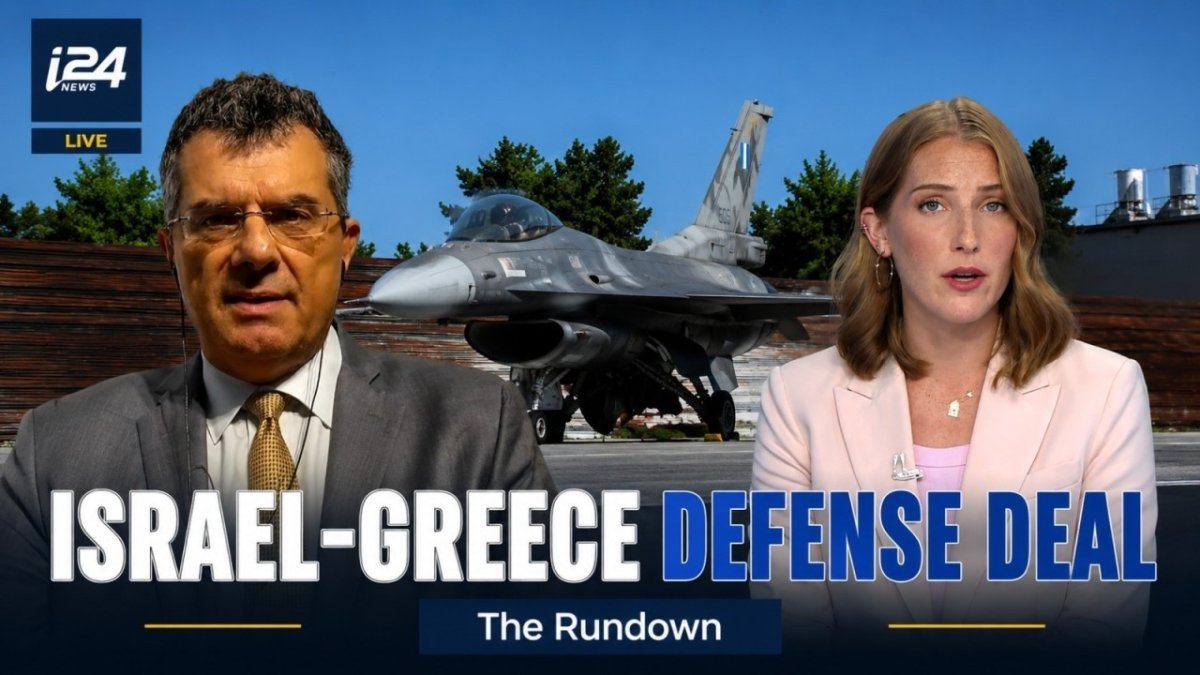
The Achilles Shield System
The integrated multi-layered network, branded Achilles Shield, combines Israel's Barak MX, David's Sling, and SPYDER air defense platforms with UAVs and Embraer aircraft to create a unified command structure. This system will link directly with Greece's F-35 and F-16 Viper aircraft, Belharra frigates, and existing Patriot batteries, allowing real-time coordination across air, missile, and drone threats. Israeli officials describe the package as a strategic partnership rather than a standard sale, with technology transfer provisions enabling Greek industry participation in maintenance and component manufacturing. Independent assessments by the Greek Ministry of National Defense project that the system could reduce response times to incoming threats by up to 40 percent compared with current standalone platforms. The inclusion of Israeli UAVs for persistent surveillance adds a layer of persistent situational awareness that Greek planners have long identified as a critical gap in their Aegean defenses.
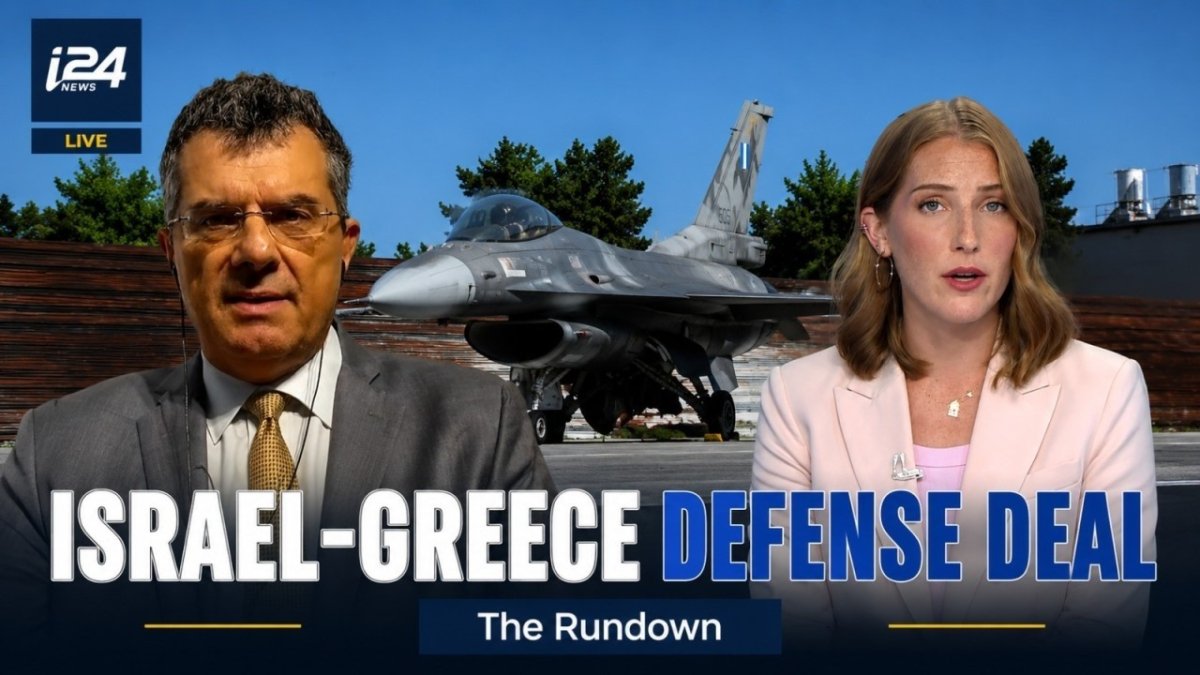
Strategic Implications for Greece-Turkey
The deal directly addresses Greece-Turkey tensions in the Aegean Sea, where disputes over airspace and maritime boundaries have escalated in recent years, prompting Athens to accelerate its defense modernization program. By integrating Israeli systems with NATO-standard platforms, Greece gains enhanced early-warning and interception capabilities that could deter Turkish aerial incursions near islands such as Kastellorizo and Rhodes. Israeli Defense Ministry sources view the agreement as strengthening the eastern Mediterranean security architecture, where shared concerns over Turkish assertiveness align with Israel's own maritime and energy interests in the region. Regional think tanks estimate that the new shield could cover more than 80 percent of Greek sovereign airspace, including critical energy infrastructure in the eastern Aegean. This capability is viewed in Athens as essential insurance against hybrid tactics that blend conventional aircraft with low-cost drone swarms.
Israel's Defense Export Boom
Israel's defense sector, anchored in Tel Aviv and centered around companies like IAI and Rafael, has expanded rapidly, with exports reaching $19.2 billion in 2025 driven by demand for proven systems tested in operational environments. The Greece contract builds on prior successes, including the Arrow-3 sale to Germany, and reflects growing preference among European nations for Israeli technology amid shifting threat landscapes from drones and ballistic missiles. Prime Minister's Office and Foreign Ministry statements emphasize how such deals reinforce Israel's position as a key security partner for NATO members without requiring direct alliance membership. Economic modeling by the Bank of Israel suggests these exports contribute nearly 2 percent to annual GDP growth while supporting over 150,000 high-skill jobs. The Greece deal is expected to sustain production lines for at least five years, providing stability to an industry that has faced cyclical fluctuations in the past.
US and NATO Dimensions
The Achilles Shield architecture incorporates US-origin Patriot batteries already in Greek service, ensuring interoperability with NATO command networks while adding Israeli layers for low-altitude and drone threats. Washington has signaled support for the transaction, viewing it as complementary to Greece's F-35 acquisition and broader efforts to bolster NATO's southeastern flank against hybrid aerial challenges. Israeli officials note that the deal avoids direct competition with American systems by focusing on complementary capabilities, preserving strong US-Israel defense industrial cooperation centered on joint programs like David's Sling. NATO exercises scheduled for 2026 are already incorporating elements of the Achilles Shield concept to test alliance-wide integration. This approach allows Greece to meet its Article 5 commitments while tailoring defenses to its unique geographic vulnerabilities.
What This Means
For Israel, the agreement cements a long-term strategic foothold in the eastern Mediterranean, enhancing intelligence and operational coordination with a key NATO member while generating substantial revenue for domestic defense industries. Greek forces will gain a sovereign multi-layered shield capable of protecting Athens, Thessaloniki, and critical islands from simultaneous missile, aircraft, and drone attacks, directly influencing daily security calculations in the Aegean. The partnership signals a broader realignment where Israeli technology fills capability gaps for European allies facing evolving threats, with follow-on contracts likely to expand cooperation between the IDF, Greek armed forces, and their respective defense ministries. Observers anticipate additional joint ventures in naval systems and cyber defense within the next two years. The landmark transaction underscores how defense cooperation between Israel and Greece has evolved from ad-hoc arms sales into a comprehensive strategic partnership that addresses shared security challenges across the eastern Mediterranean. As both nations navigate an increasingly complex regional environment, the Achilles Shield deal sets a precedent for technology-driven alliances that prioritize interoperability and rapid capability delivery. By Hannah Berg, Staff Writer
This article was produced with AI-assisted research and editorial support. Reporting is based on sources cited in the article.
What's Your Reaction?
 Like
0
Like
0
 Dislike
0
Dislike
0
 Love
0
Love
0
 Funny
0
Funny
0
 Wow
0
Wow
0
 Sad
0
Sad
0
 Angry
0
Angry
0

Israel Correspondent at Global1.News. Based in Tel Aviv, covering Israeli politics, security, technology, and society. Provides balanced, deeply-sourced reporting on one of the most closely-watched regions in the world.















Comments (0)