
China's Humanoid Robot Supply Chain Tests Japanese Firms
China humanoid robots, supply chain, Unitree Robotics, METI, BOJ, FANUC, Yaskawa Electric, Kawasaki Heavy Industries, BYD Yao-Shun-Yu, Tesla Optimus, MIIT data, Japan robotics, BofA Global Research China's Robot Supply Chain Tightens Its Grip Reports published by the Japan Times on June 13, 2026, and the New York Times on June 11, 2026, highlight how Chinese manufacturers have
China's Robot Supply Chain Tightens Its Grip
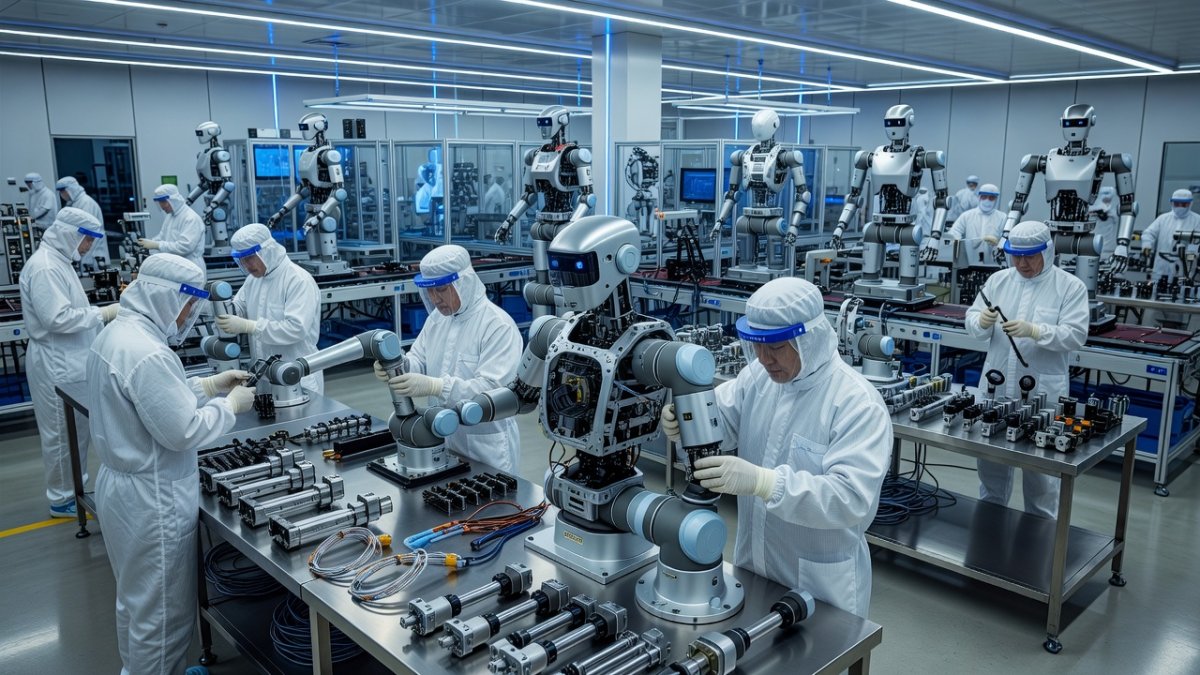
Reports published by the Japan Times on June 13, 2026, and the New York Times on June 11, 2026, highlight how Chinese manufacturers have established a commanding position in the components required for humanoid robots. Ming Hsun Lee of BofA Global Research stated that it is “nearly impossible to build a humanoid robot without parts from Chinese companies.” This assessment rests on concrete data showing that critical elements such as motors, reduction gears, sensors and battery packs are produced at scale inside China.
The concentration is not accidental. Chinese firms supply the majority of rare-earth magnets used in high-torque actuators and the lithium-ion cells that power onboard systems. Japanese robot integrators have confirmed that substituting these inputs with non-Chinese alternatives raises unit costs by at least 25 percent while extending lead times. The June 2026 coverage notes that even prototype machines assembled outside China contain between 60 and 80 percent Chinese-sourced subassemblies.
Corporate Japan is already adjusting procurement strategies. Several trading houses have begun mapping second-source suppliers in Vietnam and India, yet these efforts remain at the pilot stage. METI officials have requested detailed component-level import statistics to quantify exposure before any policy response is formulated.
From Electric Vehicles to Humanoid Robots
China’s electric-vehicle industry created the manufacturing base now supporting humanoid robots. Production lines originally built for EV motors and battery modules have been repurposed for robotic actuators and power-management units. The same precision stamping and winding equipment used for EV traction motors produces the joint motors found in current humanoid prototypes.
Unitree Robotics has leveraged this infrastructure to field dancing humanoids that operate on platforms already adopted by two Japanese firms for software demonstration purposes. These collaborations illustrate how Chinese hardware serves as a testbed even for companies whose core competence lies in motion-control algorithms. The June 2026 reporting indicates that the firms in question are evaluating whether to continue relying on Unitree chassis or to accelerate domestic actuator development.
Supply-chain integration extends beyond individual parts. Chinese contract manufacturers offer complete joint modules that combine motor, gearbox, encoder and driver on a single printed-circuit board. Japanese engineers report that these modules meet or exceed the torque-to-weight ratios previously achieved only by specialized European suppliers, yet at substantially lower prices. This vertical integration reduces assembly complexity for new entrants while raising the bar for established Japanese component makers.
Cost Advantages Reshape the Competitive Landscape
Morgan Stanley analysts cited in the June coverage estimate that Chinese humanoid models reach the market at prices at least 20 percent below comparable foreign offerings. The cost differential arises from integrated EV supply chains rather than labor arbitrage alone. Scale effects in magnet production and cell manufacturing translate directly into lower bill-of-materials costs for robotic systems.
BYD’s entry with the Yao-Shun-Yu humanoid model exemplifies this trend. The company utilizes its own battery cells, motor lines and electronics fabrication capacity, eliminating multiple layers of supplier margins. MIIT data referenced in both the Japan Times and New York Times articles record more than 140 Chinese humanoid manufacturers offering 330 distinct models as of 2025. This density of competition further compresses prices.
Japanese firms such as FANUC, Yaskawa Electric and Kawasaki Heavy Industries face margin pressure on mid-tier industrial robots that share component families with humanoids. Some divisions have begun quoting longer delivery times for customized units, citing the need to qualify non-Chinese sources for certain subassemblies. METI is examining domestic component support measures that could offset these cost disadvantages, though no concrete funding mechanism has been announced.
Japan's Robotics Industry at a Crossroads
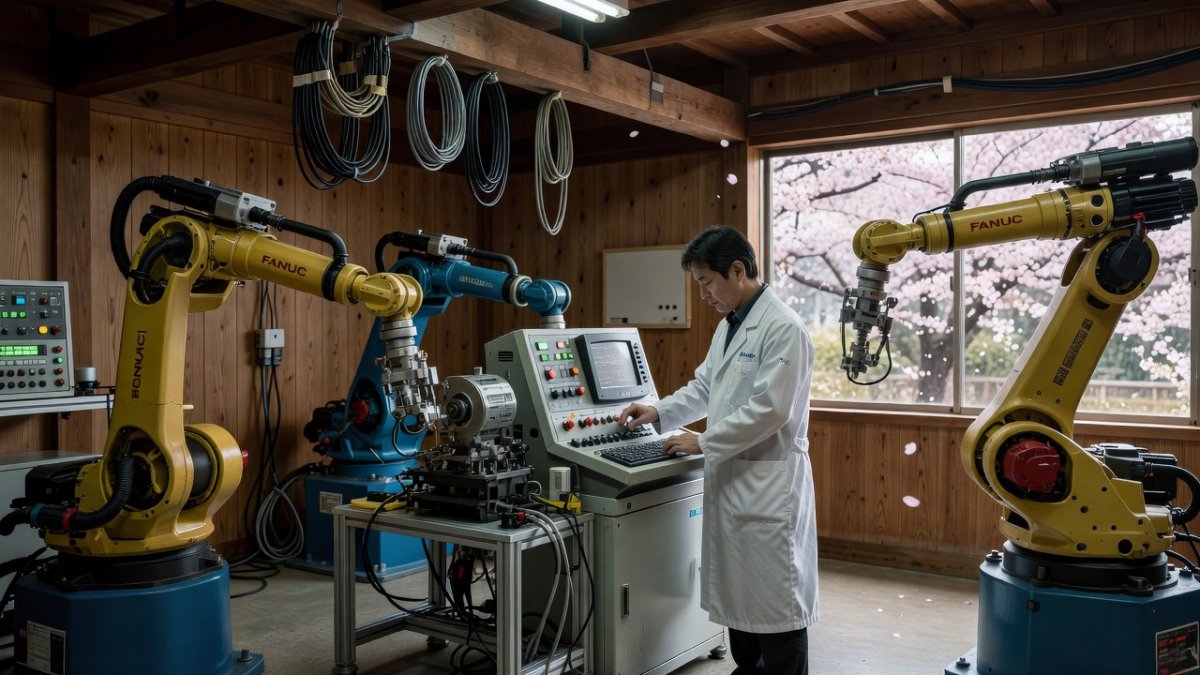
FANUC, Yaskawa Electric and Kawasaki Heavy Industries continue to lead in high-precision industrial robotics, yet the humanoid segment presents a different competitive dynamic. These companies have historically supplied core motion technologies to global markets; however, the rapid maturation of Chinese actuator and sensor production has narrowed their traditional technological edge in lower-torque applications.
Internal strategy documents reviewed by the June 2026 press indicate that several Japanese robotics divisions are increasing sales resources in the United States. The pivot reflects both the availability of venture funding for American humanoid projects and a desire to diversify end-customer exposure away from markets where Chinese price competition is most intense. At the same time, these firms maintain joint-development programs with domestic suppliers to retain critical know-how in reduction gears and servo systems.
METI has initiated consultations with industry associations on potential support measures for domestic component production. The ministry is collecting data on which specific parts—such as harmonic drives or high-resolution encoders—remain difficult to source outside China. BOJ staff, meanwhile, are monitoring how shifts in robot pricing and deployment speed could affect Japan’s measured productivity growth over the medium term. No immediate monetary-policy implications have been identified, but the central bank’s quarterly outlook will incorporate updated capital-spending forecasts that reflect these supply-chain realities.
A Global Race With Implications for Tokyo
Western competitors are advancing in parallel. Tesla’s Optimus program, Figure’s collaboration with OpenAI, and Agility Robotics’ deployments with Amazon illustrate that demand for humanoid platforms exists beyond traditional factory automation. McKinsey analysis referenced in the coverage projects accelerated commercial deployment once supply chains for actuators and batteries reach further maturity, potentially within the next three to five years.
Japan’s exposure is twofold. On the export side, Japanese motion-control technology remains embedded in many Western humanoid prototypes. On the import side, Japanese manufacturers increasingly rely on Chinese components for their own next-generation machines. Any tightening of export controls on rare-earth materials or battery-grade chemicals would therefore affect both directions of trade.
MOFA has begun informal discussions with like-minded governments on possible coordinated approaches to critical-mineral supply security. These talks remain exploratory, yet they signal recognition that humanoid-robot supply chains intersect with broader economic-security objectives. Corporate Japan continues to track regulatory developments in both Washington and Brussels that could alter sourcing requirements for government-funded automation projects.
What to Watch For
Three near-term indicators will reveal how the balance of advantage evolves. First, the outcome of METI’s component-mapping exercise, expected to inform budget requests for fiscal 2027, will show whether targeted subsidies for domestic actuator production are judged feasible. Second, quarterly earnings reports from FANUC, Yaskawa Electric and Kawasaki Heavy Industries will disclose the extent of any margin compression attributable to Chinese humanoid competition. Third, BOJ’s October 2026 Outlook Report will incorporate revised capital-expenditure projections that reflect observed robot-deployment rates in the Japanese manufacturing sector.
Unitree’s continued expansion of platform sales to overseas software developers will also serve as a bellwether. If additional Japanese research institutions adopt Chinese hardware for algorithm testing, the trend toward hardware-software decoupling will accelerate. Conversely, successful qualification of non-Chinese harmonic drives at competitive cost would reduce strategic vulnerability.
Policy signals from Beijing on export licensing for high-performance magnets or advanced battery chemistries remain the most significant external variable. Any restriction would force Japanese firms to accelerate diversification timelines already under internal review. Observers in Tokyo will therefore track both the technical progress of domestic suppliers and the regulatory posture of major trading partners through the remainder of 2026.
By Kenji Tanaka, Staff WriterThis article was produced with AI-assisted research and editorial support. Reporting is based on sources cited in the article.
What's Your Reaction?
 Like
0
Like
0
 Dislike
0
Dislike
0
 Love
0
Love
0
 Funny
0
Funny
0
 Wow
0
Wow
0
 Sad
0
Sad
0
 Angry
0
Angry
0

Japan Correspondent at Global1.News. Tokyo-based voice covering Japanese politics, technology, economy, and culture. Tracks the intersection of tradition and innovation in one of the world's most dynamic societies.















Comments (0)