
Trump's Saudi Nuclear Deal Triggers Israeli Alarm Over Regional Proliferation
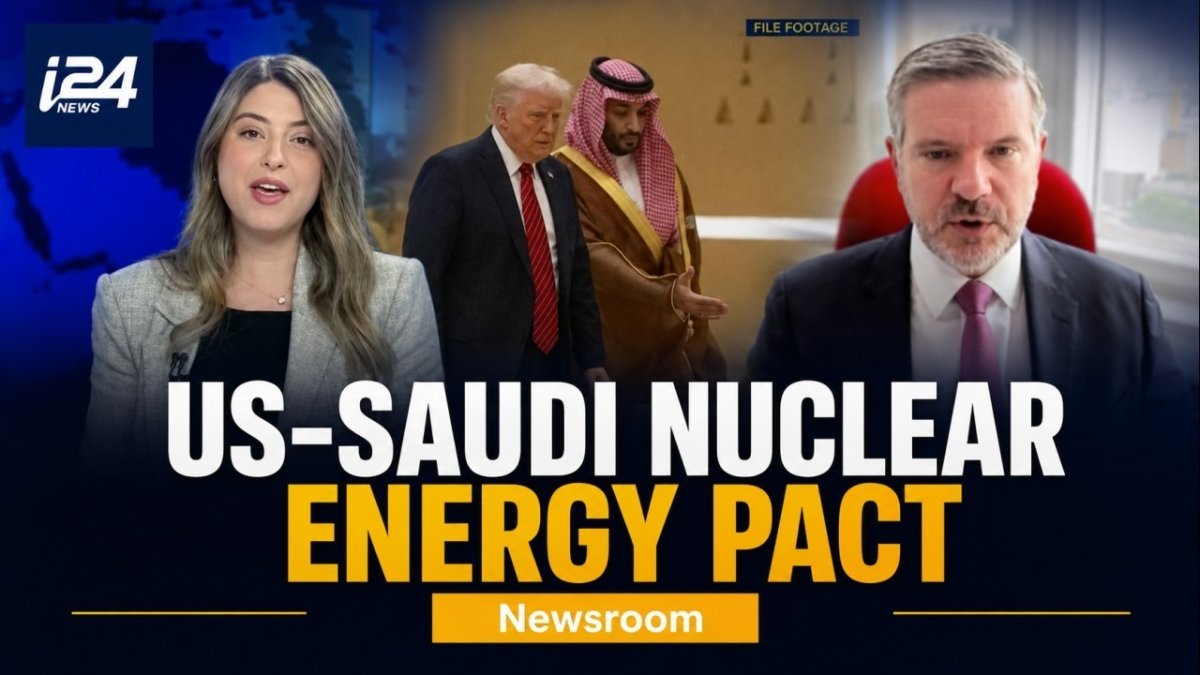
The i24NEWS English video report provides a detailed look at the latest developments in US-Saudi nuclear cooperation, highlighting how the announcement has immediately raised concerns in Jerusalem and across the region. The coverage examines the deal's terms alongside reactions from Israeli officials and experts, underscoring the timing amid ongoing US and Israeli efforts against Iran's nuclear program.
Trump's Saudi Nuclear Deal Triggers Israeli Alarm Over Regional Proliferation Jerusalem, Israel — The announcement this week of a civilian nuclear agreement between the United States and Saudi Arabia has prompted swift and pointed responses from Israeli security figures, who see risks of broader proliferation in the Middle East. Israeli leaders and former officials have stressed that any such arrangement must align with longstanding red lines on enrichment and monitoring, even as the deal moves forward without those elements. The development comes at a sensitive moment when the United States and Israel are engaged in operations against Iran's nuclear activities, adding layers of complexity to regional security calculations.
Core Provisions of the Nuclear Agreement
The civilian nuclear deal announced this week by President Donald Trump with Saudi Arabia runs for a 30-year period and relies on American technology to support Saudi civilian nuclear power efforts. It was signed by US Energy Secretary Chris Wright and Saudi Energy Minister Abdulaziz bin Salman. President Trump posted on Truth Social that there will be no enrichment of material and that the deal will be approved but is totally subject to Saudi Arabia joining the Abraham Accords. Secretary of State Marco Rubio stated that the US is not going to reach any agreement with any country in the world that leads to the risk of proliferation. President Trump also said the United States is not opposed to Civil Non-Enriched Nuclear Facilities. The agreement does not include the IAEA Additional Protocol for enhanced monitoring and now heads to Congress for review under Republican control of both chambers. This framework arrives precisely as the US and Israel conduct operations against Iran's nuclear program. Israeli observers note that the absence of the Additional Protocol leaves open questions about verification, even as the deal emphasizes civilian applications only. The congressional path ahead will test how lawmakers balance these provisions against proliferation concerns raised by allies in the region. Discussions in Jerusalem focus on whether the stated limits on enrichment can hold without stronger inspection regimes in place.
The contrast with the UAE's 2009 123 Agreement is notable, as that earlier pact barred enrichment outright and required the Additional Protocol. The current framework instead permits limited low-level enrichment under bilateral safeguards, a development that raises questions about the overall strength of the NPT regime in curbing potential proliferation pathways.
Israeli Security Establishment Reacts with Alarm
Prime Minister Netanyahu did not immediately comment on the deal. Likud Minister Miki Zohar indicated that Israel has been clear with the US about its red lines but stopped short of saying whether the agreement crosses them, noting that the prime minister is consulting with security experts. Former Defense Minister Avigdor Liberman warned that a civilian nuclear program in Saudi Arabia will end with nuclear weapons and lead to a mad arms race across the entire Middle East. Former Defense Minister Benny Gantz cautioned that a US-Saudi nuclear deal could spark a regional arms race. Opposition leader Yair Golan, who previously served as IDF deputy chief of staff, stated that to give Saudi Arabia nuclear capabilities without stringent monitoring requirements and without a framework of relations with Israel as a condition creates a dangerous reality for the State of Israel. Dan Shapiro, a former senior advisor in the Biden State Department, observed that it appears the Trump administration has given it away without normalization, noting this was supposed to be a major carrot for Saudi Arabia if they were to normalize with Israel and that now the whole incentive structure would have to be redone. These statements reflect deep unease in Israeli security circles over the deal's monitoring gaps and its potential to alter the regional balance.
Regional Proliferation Risks and the Iran Factor
A nuclear Saudi Arabia on the Sunni side could spur Iran on the Shia side to accelerate its own nuclear ambitions, according to assessments shared in the i24NEWS report. This possibility emerges even as the United States and Israel continue their joint campaign against Iran's nuclear program, creating an apparent tension in policy approaches. Israeli analysts point out that the lack of the IAEA Additional Protocol in the Saudi deal weakens assurances against diversion of materials. The same technology that supports civilian power can also support weapons development, a reality that heightens worries about an uncontrolled spread of capabilities. Former officials in Jerusalem have linked these risks directly to the statements from Liberman and Gantz about an arms race that could draw in additional regional actors. The timing of the announcement this week amplifies these concerns, as operations against Iranian facilities continue. Israeli security institutions are evaluating how the absence of enhanced monitoring might affect long-term stability, particularly when enrichment pathways remain a point of contention despite public assurances. The overall effect is to place new demands on Israeli intelligence and diplomatic resources focused on preventing further proliferation.
Normalization: The Missing Link
President Trump brokered the Abraham Accords in 2020, which normalized Israel's ties with the UAE, Bahrain, and Morocco. Saudi demands for normalization have included Palestinian statehood, a condition the Netanyahu government has rejected. Both the Trump and Biden administrations sought to bring Saudi Arabia into the Accords, yet the October 7 attack and the subsequent Gaza war pushed Saudi-Israel normalization further away. The current nuclear deal removes a key incentive that had been tied to normalization, as noted by Dan Shapiro in his analysis of the lost leverage. Senator Lindsey Graham, who recently died, had been an ardent advocate for linking any such deal to Israeli normalization. Israeli officials view this decoupling as a setback that weakens the original structure of the Abraham Accords process. The requirement that the deal be subject to Saudi Arabia joining the Accords remains on the record from President Trump's statements, yet the absence of that step in the immediate framework leaves Israeli planners adjusting their expectations. This shift forces a reassessment of how future normalization efforts might regain momentum amid the new nuclear realities.
Impact on Israeli Public Opinion and Domestic Debate
The vocal opposition from former ministers Liberman, Gantz, and Golan has dominated coverage in Israeli media, with warnings of an arms race and direct threats to security shaping the public discourse. Likud Minister Zohar has affirmed that red lines were communicated to Washington without confirming whether they were crossed, while Prime Minister Netanyahu's silence has left coalition partners navigating a cautious internal debate in the Knesset. Public sentiment reflects tension between longstanding hopes for Saudi normalization and heightened concerns over nuclear proliferation risks, fueling broader Knesset discussions on the balance between diplomatic gains and strategic vulnerabilities.
Congressional and International Implications
The deal now goes to Congress for review, where Republicans control both chambers, providing a pathway that could face limited domestic opposition in Washington. The absence of the IAEA Additional Protocol stands in contrast to the UAE's 2009 123 Agreement, which barred enrichment and required the Additional Protocol. Critics, including voices in Israel, argue that the current framework permits limited low-level enrichment under bilateral safeguards, a point disputed by experts who question President Trump's claim of no enrichment. The deal would provide Saudi Arabia with a facility that would allow it to enrich uranium, technology that can produce fuel for nuclear power plants but can also be used to build nuclear weapons. International reactions are likely to focus on these verification shortfalls and the broader NPT implications. Israeli diplomats are preparing to engage with congressional counterparts to highlight proliferation risks. The Republican majority may streamline approval, yet the concerns voiced by former Israeli defense ministers underscore that regional partners will continue pressing for stronger safeguards before final implementation.
Strategic Options for Israel Going Forward
Israeli officials are weighing diplomatic options including active lobbying of Congress during the review process and seeking supplemental security assurances from Washington to offset the 30-year deal timeline. Additional measures under consideration involve missile defense upgrades and expanded intelligence cooperation with the US focused on monitoring Saudi facilities. These steps align with the Begin Doctrine context and efforts to preserve Israel's qualitative military edge amid the ongoing joint operations against Iran's nuclear program, while red lines previously communicated to Washington continue to guide engagement.
What This Means for Israel's Strategic Posture
The agreement raises questions about Israel's qualitative military edge, as a Saudi enrichment capability without the Additional Protocol could shift regional dynamics over time. Israeli defense planners are revisiting the Begin Doctrine context, which has historically guided responses to proliferation threats in the Middle East. Increased emphasis on missile defense systems and enhanced IDF intelligence priorities will likely follow as officials assess the new landscape. The statements from Liberman, Gantz, and Golan illustrate the consensus that any pathway to weapons must be closed firmly. With Prime Minister Netanyahu consulting security experts and Minister Zohar affirming that red lines have been communicated, Israel is positioning itself to influence the congressional review process. The deal's arrival during active operations against Iran adds urgency to these reviews. Forward-looking analysis in Jerusalem centers on maintaining deterrence while adapting to a Middle East where civilian nuclear programs carry heightened dual-use risks. This posture requires sustained diplomatic engagement with the United States to ensure that stated limits on enrichment translate into verifiable practice on the ground.
By Hannah Berg, Staff WriterThis article was produced with AI-assisted research and editorial support. Reporting is based on sources cited in the article.
What's Your Reaction?
 Like
0
Like
0
 Dislike
0
Dislike
0
 Love
0
Love
0
 Funny
0
Funny
0
 Wow
0
Wow
0
 Sad
0
Sad
0
 Angry
0
Angry
0

Israel Correspondent at Global1.News. Based in Tel Aviv, covering Israeli politics, security, technology, and society. Provides balanced, deeply-sourced reporting on one of the most closely-watched regions in the world.












Comments (0)