
Ukraine Drones Torch Wildberries in St. Petersburg Strikes
Ukrainian drones just punched deep into Russia's heartland again, torching Wildberries warehouses in St. Petersburg and Tver overnight while also hammering occupied Simferopol in Crimea. One person is dead and several more injured in what looks like a calculated escalation that follows last week's deadly hits near Moscow. Folks, this isn't random noise—this is Ukraine showing it can reach wherever it wants, and Russia's excuses are wearing thin.
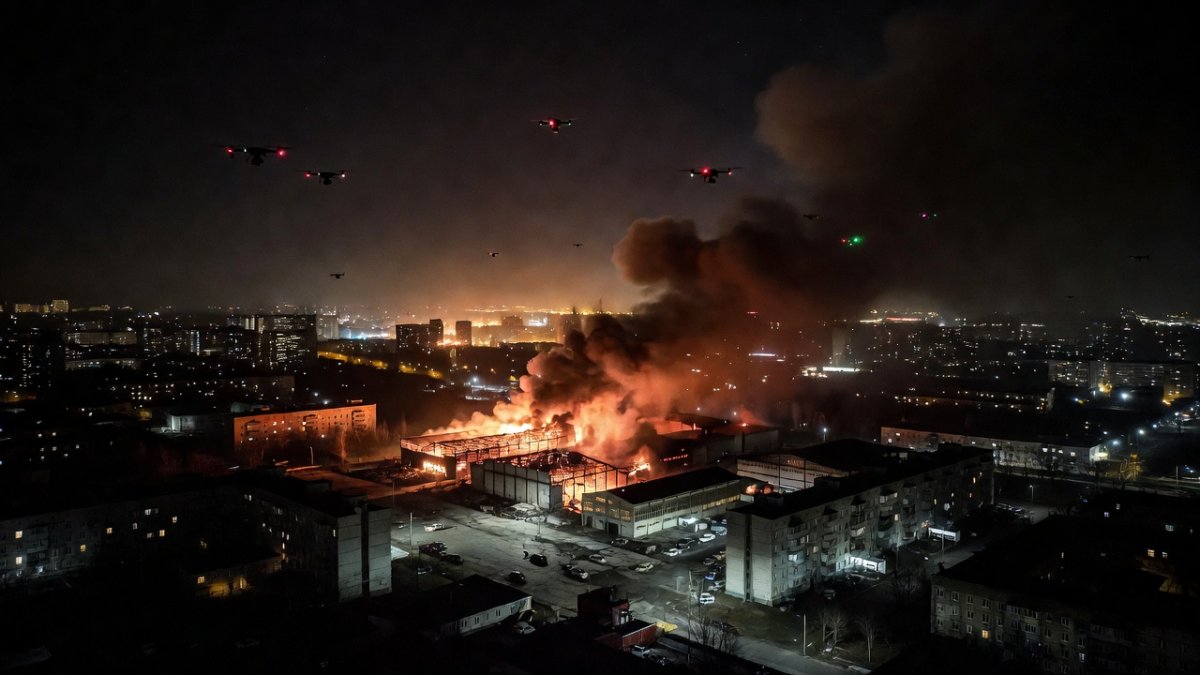
Ukrainian drones just punched deep into Russia's heartland again, torching Wildberries warehouses in St. Petersburg and Tver overnight while also hammering occupied Simferopol in Crimea. One person is dead and several more injured in what looks like a calculated escalation that follows last week's deadly hits near Moscow. Folks, this isn't random noise—this is Ukraine showing it can reach wherever it wants, and Russia's excuses are wearing thin.
Ukraine Drones Torch Wildberries in Russia Strikes
St. Petersburg, Russia — Ukrainian forces launched a massive drone assault overnight from July 23 into July 24, 2026, striking multiple Wildberries facilities across St. Petersburg and Tver regions while also hitting targets in occupied Simferopol, Crimea. The attacks set several warehouses ablaze and mark a clear intensification of long-range strikes into Russian territory.
What Happened: The Attack Timeline
Folks, let's lay this out plain and simple. Drones started buzzing in around midnight on July 23, targeting Wildberries logistics hubs in the St. Petersburg area first. Explosions rocked the night sky as fires erupted across multiple buildings. By early morning on the 24th, similar strikes hit Tver, with reports of drones evading defenses and delivering precise payloads. Then came the Crimea angle—occupied Simferopol took direct hits too, showing the reach extends beyond mainland Russia. This wasn't a scattershot operation; it was coordinated and timed for maximum disruption.
Russian air defenses claimed some intercepts, but clearly not enough. The timeline screams preparation and intent. Last week's Moscow-area strikes set the stage, and this one doubled down. No BS here: Ukraine is proving it can sustain pressure deep inside enemy lines without needing permission or perfect conditions.
Wildberries — Why This Matters
Wildberries isn't some corner shop—it's Russia's largest online retailer, pulling in over $15 billion in annual revenue. These warehouses handle the bulk of e-commerce logistics for millions of Russians who rely on fast deliveries for everything from clothes to electronics. Striking them isn't just about flames; it's about choking supply chains that keep the civilian economy humming.
Let's be real: hitting a commercial giant like this sends a message that no sector is off-limits when the war machine keeps grinding. Wildberries employs thousands and moves goods nationwide. Disrupt that, and you hit everyday life hard. This choice of target shows strategic thinking, not random revenge.
Escalation Pattern — Second Attack on Wildberries in a Week
Remember last week's drone runs near Moscow that killed eight people? Those also zeroed in on Wildberries sites. Now we're seeing round two in St. Petersburg and Tver, plus Crimea. That's no coincidence—it's a deliberate pattern aimed at the same vulnerable network.
Ukraine isn't playing defense anymore. Two strikes in seven days on the same retailer screams escalation with purpose. Russian officials can spin it as isolated incidents all they want, but the facts line up: repeated hits on high-value commercial infrastructure. This is how you wear down an opponent's rear echelon without boots on the ground.
Strategic Significance — Drones Hitting Deep into Russia
Drones reaching St. Petersburg and Tver means Ukrainian capabilities have evolved far beyond border skirmishes. These aren't backyard toys; they're long-range systems punching hundreds of kilometers into defended airspace. The fact that they also tagged occupied Crimea shows flexibility across fronts.
Opinion time: Russia's vaunted defenses are looking leaky. If drones can keep slipping through to industrial and commercial targets, the whole narrative of invulnerability crumbles. This deep reach changes the math of the conflict—Ukraine can now impose costs far from the front lines, forcing Russia to spread resources thin.
Ukraine's drone program has evolved rapidly since 2022 from improvised commercial quadcopters to sophisticated long-range strike platforms capable of penetrating deep into Russian territory. The An-196 Liutyi and UJ-22 models represent key advancements, with the former offering ranges exceeding 800 km and payloads of up to 75 kg of explosives, while the UJ-22 provides enhanced stealth features and modular warheads. These systems have enabled strikes far beyond initial expectations, building on earlier operations that targeted Moscow's financial district, oil infrastructure in Tatarstan over 1,000 km away, and the Engels air base housing strategic bombers.
The St. Petersburg attack underscores this reach, as the city lies approximately 700 km from Ukrainian-controlled territory, requiring precise navigation and fuel-efficient designs to evade Russian air defenses. Compared to previous deep strikes, this operation highlights Ukraine's ability to sustain pressure on economic targets rather than purely military ones, forcing Russia to reassess its rear-area security. Such capabilities signal a maturing indigenous program that combines Western components with local engineering, allowing repeated incursions despite electronic warfare countermeasures.
Casualties and Damage
One person confirmed killed and several injured in the overnight fires and blasts. That's the human toll so far, though Russian reports often undercount. The real damage sits in the charred Wildberries warehouses—structures gutted, inventory lost, operations halted across key regions.
Compare that to last week's eight deaths near Moscow, and the pattern of rising stakes becomes obvious. Property damage alone will run into millions, but the ripple effects on jobs and deliveries will sting longer. No sugarcoating: civilians caught in the crossfire pay the price when warehouses become battlegrounds.
Russian Response
Expect the usual bluster from Moscow—denials, claims of total interception, and finger-pointing at "terrorists." They'll probably promise retaliation while quietly scrambling to patch air defenses. But let's call it what it is: another round of tough talk that hasn't stopped the drones yet.
Officials will lean on state media to downplay the hits, maybe blame weather or technical glitches. In reality, the response so far looks reactive and ineffective. If they can't protect major commercial sites, public confidence takes another hit. Watch for more conscription talk or saber-rattling, but actions speak louder than their propaganda.
Russian Response and Strategic Dilemma
President Putin faces a stark choice between reallocating air defense assets from frontline positions in Ukraine to protect cities like St. Petersburg or accepting deeper Ukrainian strikes that expose vulnerabilities in Russia's heartland. Political fallout in Russia's second-largest city could intensify if residents perceive inadequate protection, potentially fueling criticism from regional elites and amplifying narratives of governmental failure in safeguarding civilian infrastructure.
The Kremlin has historically managed domestic security lapses through information control and scapegoating, yet this strike on a major commercial hub owned by Tatyana Kim may invite internal pressure from business leaders and governors seeking enhanced safeguards. Reallocating resources risks weakening advances elsewhere, while inaction could embolden further Ukrainian operations, creating a dilemma that tests the regime's prioritization of territorial gains over rear-area defense.
War Economy Impact
Wildberries sits at the center of Russia's consumer economy, moving goods that keep households supplied amid sanctions and shortages. Repeated strikes on its facilities add friction to an already strained system. Supply delays mean lost sales, angry customers, and pressure on a war economy that needs steady domestic support.
Folks, this isn't abstract. When logistics hubs burn, it affects truckers, warehouse workers, and small sellers who depend on the platform. Over time, these hits compound—higher insurance costs, diverted security spending, and slower growth. Ukraine is targeting the soft underbelly that funds the fighting machine.
Wildberries, Russia's dominant e-commerce platform generating over $15 billion in annual revenue and employing more than 50,000 workers, plays a central role in the country's wartime consumer economy. Disruptions at its St. Petersburg warehouses could trigger widespread supplier delays, as the facilities handle a significant portion of logistics for goods ranging from electronics to apparel, potentially affecting delivery guarantees across northwestern Russia and eroding customer trust in an already strained retail sector.
Rebuilding costs for damaged infrastructure may run into tens of millions of dollars, compounded by insurance challenges as providers reassess risks in conflict-adjacent regions. This incident risks amplifying consumer confidence erosion amid inflation and sanctions, with ripple effects on small businesses reliant on the platform for sales. Broader economic context reveals how such strikes target the resilience of Russia's parallel import networks, indirectly pressuring the Kremlin's ability to maintain domestic stability during prolonged hostilities.
The Bottom Line — What This Means
Bottom line: Ukraine just demonstrated it can hit Russia's commercial backbone at will, and the previous week's body count proves the stakes are rising fast. One death this round, eight last week, warehouses torched twice in seven days—this is sustained pressure that Russia can't easily shrug off. The war isn't contained to the front; it's bleeding into everyday infrastructure.
Let's be real with each other: these strikes expose vulnerabilities that no amount of state media spin can hide. If Wildberries keeps getting lit up, the economic pain will mount, and public tolerance for endless conflict may crack. Ukraine is playing the long game here, forcing hard choices on a neighbor that thought distance equaled safety. The message is clear—nowhere is truly off the map anymore.
This drone strike illustrates a shifting war trajectory where Ukraine demonstrates sustained long-range strike capacity, potentially influencing Western allies to provide additional support for such asymmetric capabilities. By targeting economic assets in major population centers, Kyiv sends a clear message that Russian civilians cannot remain insulated from the conflict's costs, which may complicate peace negotiation dynamics by raising the stakes for Moscow.
The operation signals to partners that Ukraine can impose meaningful pressure without direct NATO involvement, possibly encouraging calibrated aid increases. Ultimately, it underscores how drone warfare is reshaping the conflict, forcing Russia to confront vulnerabilities that could prolong the war or accelerate diplomatic efforts if domestic discontent grows.
By Jessica Ali, Staff Writer
This article was produced with AI-assisted research and editorial support. Reporting is based on sources cited in the article.
What's Your Reaction?
 Like
0
Like
0
 Dislike
0
Dislike
0
 Love
0
Love
0
 Funny
0
Funny
0
 Wow
0
Wow
0
 Sad
0
Sad
0
 Angry
0
Angry
0

Editor-in-Chief at Global1.News. Atlanta-based journalist who cuts through the BS and tells it like it is. Lead anchor, host, and the voice you hear when the spin stops and the truth starts.















Comments (0)