
US Missile Strike Near Qeshm Island Escalates Conflict
The United States launched a missile strike near Iran's Qeshm Island late on July 23, 2026, according to Iranian media reports. The semi-official Tasnim news agency stated that the missiles struck the area around 11:50 p.m. local time near Masan village.
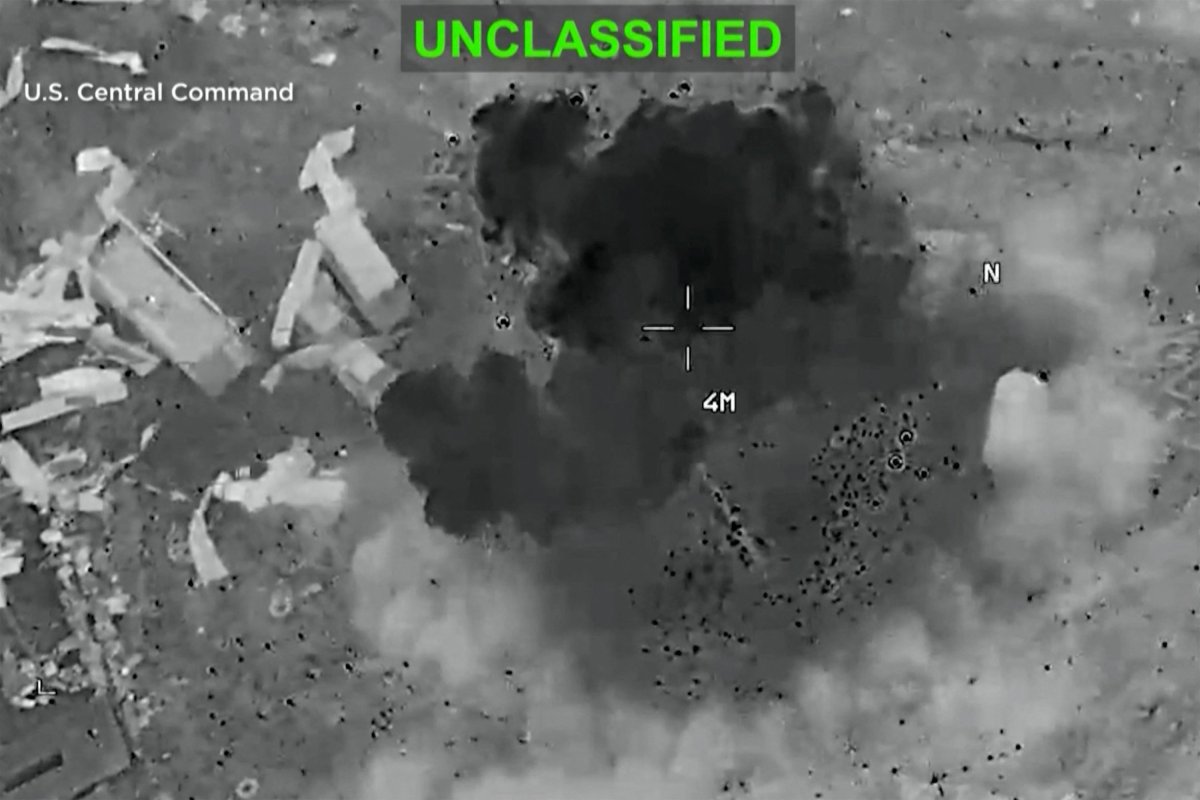
US Missile Strike Targets Strategic Qeshm Island
The United States launched a missile strike near Iran's Qeshm Island late on July 23, 2026, according to Iranian media reports. The semi-official Tasnim news agency stated that the missiles struck the area around 11:50 p.m. local time near Masan village. Iranian authorities are currently investigating the incident and assessing damage. This action forms part of a pattern of US strikes inside Iran, with Iranian responses involving missile and drone attacks on US facilities across the region.
Qeshm Island spans roughly 1,500 square kilometers and hosts a population of about 120,000, positioned directly opposite the key Iranian port of Bandar Abbas at the narrowest point of the Strait of Hormuz. This geography makes the island a linchpin for Iran's oil and gas infrastructure, with pipelines and export terminals nearby that support much of the country's hydrocarbon output. During the Iran-Iraq War, Qeshm served as a forward base for Iranian naval operations and missile launches, underscoring its enduring military value in controlling maritime chokepoints.
Tasnim's reporting carries particular weight given its status as a semi-official outlet closely affiliated with the Islamic Revolutionary Guard Corps, often shaping narratives around IRGC operations and strategic sites. The latest strike thus highlights how Qeshm's dual civilian-military role continues to draw attention in any escalation involving energy routes and naval access.
Naval Blockade Strangles Iranian Ports
CENTCOM has redirected 12 commercial vessels and disabled one since reinstating its naval blockade on Iran nine days ago. The measure aims to prevent ships from entering or departing Iranian ports and coastal waters. The blockade was reinstated after a memorandum of understanding between Washington and Tehran collapsed. A prior embargo from mid-April to mid-June 2026 already cost Iran billions in lost oil revenue. Qeshm Island sits at the choke point of the Strait of Hormuz, making the location particularly sensitive for maritime traffic.
The timeline reveals a mid-April to mid-June 2026 embargo that was briefly suspended under a collapsed memorandum of understanding, only for restrictions to resume in mid-July. CENTCOM's efforts fall under Task Force 55, focused on interdiction and escort operations in the Gulf. Iran retains several retaliatory levers, including the potential to mine the Strait of Hormuz, deploy anti-ship missiles from coastal batteries, or unleash swarms of fast-attack speedboats to harass larger vessels.
These options echo tactics refined during past confrontations, where even limited mining or missile threats forced international shipping to reroute or seek costly escorts. The blockade's renewal therefore risks rapid escalation if Tehran decides to test those asymmetric capabilities in response to sustained pressure on its ports.
Context of the Ongoing US-Iran Conflict
The US-Iran war began on February 28, 2026, when US-Israeli airstrikes killed several Iranian officials, including Supreme Leader Ali Khamenei. Since then, the United States has struck over 11,000 targets in Iran. US Defense Secretary Hegseth has placed the war cost at $375 billion. At least six missiles hit Qeshm Island in an earlier round of strikes reported on July 19, with Iranian state media noting two deaths from previous US actions targeting southern and western Iran. These developments reflect sustained military exchanges between the two sides.
The February 28 trigger involved the killing of Supreme Leader Ali Khamenei alongside other senior figures, fundamentally altering Iran's command structure. IRGC and Quds Force leadership has undergone repeated reshuffles to compensate for losses, while proxy dynamics in Iraq, Syria, and Yemen have intensified with increased arms flows and operational coordination. Civilian casualty tolls have mounted on both sides, with Iranian reports citing hundreds killed in strikes on urban and infrastructure targets.
Iran has answered with retaliatory drone and missile barrages against US bases in Iraq and Jordan, seeking to impose costs without triggering full-scale invasion. These exchanges illustrate how the conflict has expanded beyond direct strikes into a broader regional contest involving layered proxy networks and shifting command hierarchies.
Reactions from Gulf Arab States
Gulf Arab states such as Saudi Arabia and the UAE have monitored the escalation closely due to their proximity to the Strait of Hormuz. Their strategic calculus centers on protecting energy export routes while navigating Sunni-Shia geopolitical competition. These countries maintain diversified economic plans under initiatives like Vision 2030, which could face disruption from prolonged instability. Limited public statements reflect caution as they balance relations with both Washington and regional actors.
Saudi Arabia remains acutely concerned that closure of the Strait of Hormuz could halt roughly 6 million barrels per day of its exports, threatening fiscal stability. The UAE has accelerated development of its Fujairah port on the Gulf of Oman as an alternative outlet less exposed to Hormuz risks. Qatar has positioned itself as a mediator, drawing on prior Doha talks to facilitate back-channel communications between Tehran and Washington.
Internal GCC divisions complicate unified responses, with the UAE pursuing pragmatic normalization steps toward Iran while Saudi Arabia maintains a harder line. These differences risk fragmenting collective Gulf security arrangements at a moment when energy infrastructure faces direct threats from the expanding conflict.
Implications for Global Energy Markets
The blockade and strikes carry direct consequences for energy supplies. Two Chinese supertankers carrying a combined 4 million barrels of Saudi Arabian oil recently exited the Red Sea via the Bab el-Mandeb Strait, apparently avoiding Houthi interference. OPEC+ diplomacy and Gulf state production levels remain under pressure. Disruptions at the Strait of Hormuz could influence global oil prices and force rerouting of shipments, affecting markets beyond the immediate region.
Oil prices have fluctuated within an observed $87–93 per barrel range amid the uncertainty, with analysts warning of sharper spikes if Hormuz traffic is further constricted. Asian economies show heavy dependence on Gulf crude, with Japan relying on the region for 85 percent of its imports, China for 45 percent, and India for 60 percent. War-risk insurance premiums for tanker transit through the strait have risen sharply, adding hundreds of thousands of dollars per voyage.
Discussions in Washington have turned to potential releases from the Strategic Petroleum Reserve to cushion domestic consumers, though such measures would offer only temporary relief against sustained supply disruptions. The interplay of these factors underscores how localized naval actions can transmit volatility across global energy networks.
Outlook for Regional Stability
The combination of the Qeshm Island strike, the active blockade, and the broader war trajectory points to continued volatility. Iran’s proxy networks and the nuclear program add layers to the strategic environment. Great power competition involving the United States, China, and Russia intersects with these dynamics, while Arab-Israeli normalization efforts under the Abraham Accords face additional strain. Second-order effects may include shifts in alliances and sustained pressure on energy infrastructure across the Middle East.
Oman's longstanding mediation role offers one of the few remaining diplomatic channels, with Muscat quietly hosting indirect talks. Russia and China have signaled opposition to further UN Security Council measures against Iran, while EU diplomats continue low-profile efforts to revive limited de-escalation frameworks. The risk of a wider war involving the Hezbollah-Israel front remains acute, given overlapping supply lines and shared command interests.
Previous cycles of tension provide context: the 2019 tanker seizures, the 2020 killing of Qassem Soleimani, and the 2024–25 proxy escalations all followed similar patterns of limited strikes followed by asymmetric retaliation. The current trajectory suggests these historical rhythms may repeat unless external actors succeed in imposing restraints on both sides.
By Malik Hassan, Staff WriterThis article was produced with AI-assisted research and editorial support. Reporting is based on sources cited in the article.
What's Your Reaction?
 Like
0
Like
0
 Dislike
0
Dislike
0
 Love
0
Love
0
 Funny
0
Funny
0
 Wow
0
Wow
0
 Sad
0
Sad
0
 Angry
0
Angry
0
Middle East Correspondent at Global1.News. Based in Beirut, covering politics, conflict, energy, and society across the Middle East. Brings context and depth to a region often reduced to headlines.










Comments (0)