
Trump Declares US-Iran Memorandum of Understanding Over After Hormuz Attacks
In a dramatic escalation that threatens to unravel three months of painstaking diplomacy, President Donald Trump declared the US-Iran Memorandum of Understanding "over" on July 8, 2026, speaking from the NATO Summit in Ankara. The collapse follows Iranian attacks on three commercial vessels in the Strait of Hormuz, massive US retaliatory strikes, and Iran's succession of a new
In a dramatic escalation that threatens to unravel three months of painstaking diplomacy, President Donald Trump declared the US-Iran Memorandum of Understanding "over" on July 8, 2026, speaking from the NATO Summit in Ankara. The collapse follows Iranian attacks on three commercial vessels in the Strait of Hormuz, massive US retaliatory strikes, and Iran's succession of a new Supreme Leader — setting the stage for what could be a renewed confrontation across the Persian Gulf.
Trump Declares US-Iran Memorandum of Understanding Over After Hormuz Attacks
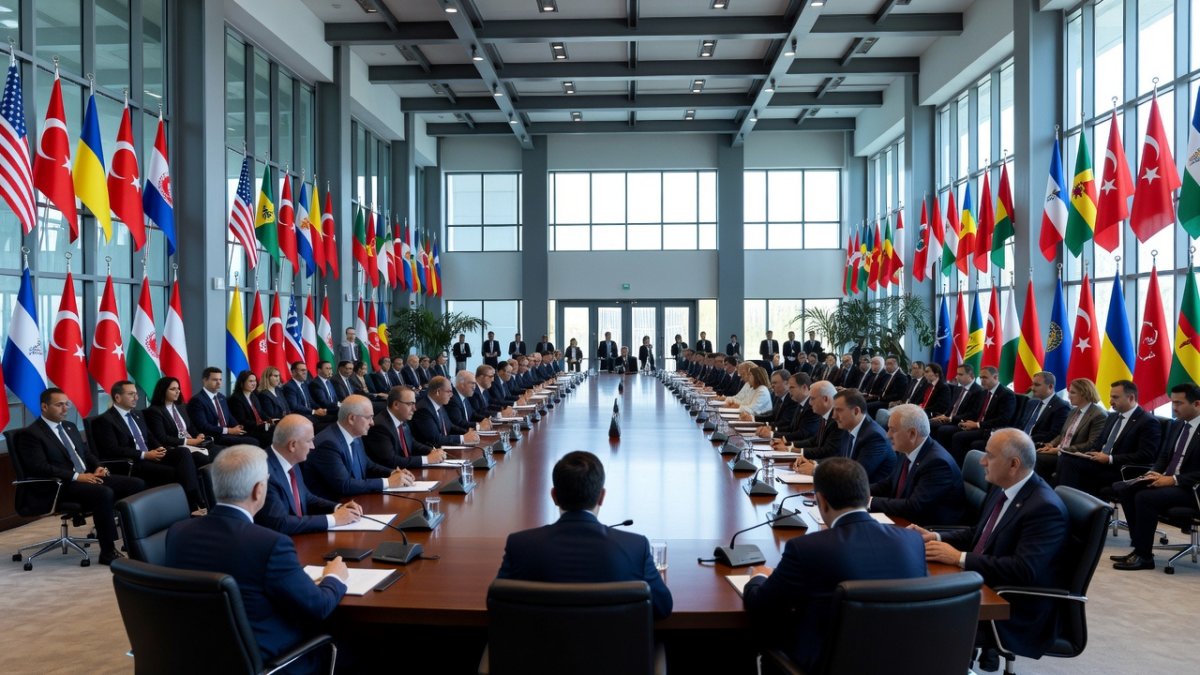
Ankara, Turkey – July 9, 2026 — President Donald Trump's declaration that the Islamabad Memorandum of Understanding is "over" represents the most serious rupture in US-Iran relations since the February 28 launch of Operation Epic Fury. Speaking alongside NATO Secretary-General Mark Rutte in Ankara, Trump stated bluntly: "I think it's over. I don't want to deal with them any more; they're scum."
The Sudden Collapse of the Islamabad Memorandum
The 14-point Islamabad Memorandum of Understanding, signed remotely on June 17 by Trump and Iranian President Masoud Pezeshkian in Switzerland, had established a 60-day negotiation window addressing Iran's nuclear program, Strait of Hormuz administration, and the release of roughly US$6 billion in frozen Iranian assets. The MoU had been hailed as a breakthrough after months of devastating conflict that had claimed tens of thousands of lives and disrupted global energy markets. Under the agreement, the US granted Iran a 60-day oil sanctions waiver in late June, allowing approximately 63 million barrels of Iranian crude to begin moving on tankers across the Persian Gulf and Asian waters. In return, Iran reopened the Strait of Hormuz to commercial traffic — a waterway through which roughly one-fifth of the world's daily oil trade transited prior to the war.
Iranian Attacks on Commercial Shipping
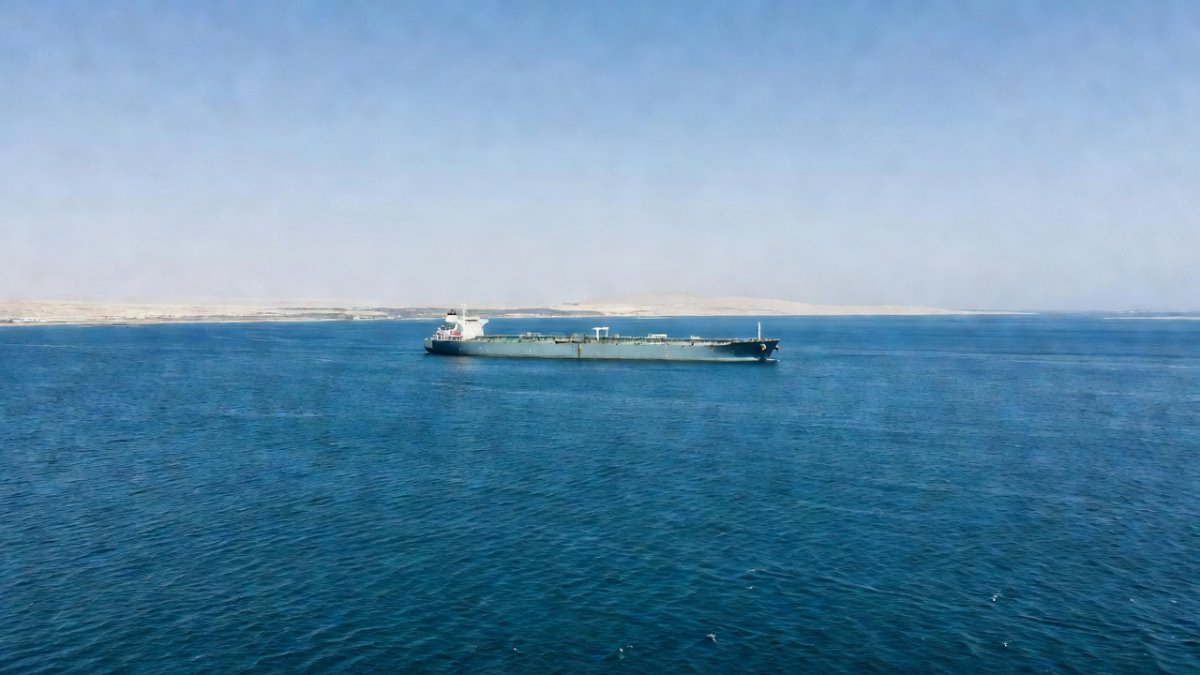
Between July 7 and 8, Iran struck three commercial vessels transiting the Strait of Hormuz. The Qatari LNG tanker Al Rekayyat suffered a port-side fire and engine room damage after being hit by an unknown projectile. A Saudi-flagged crude oil tanker was damaged off the coast of Oman, and a third commercial vessel was struck by an Iranian missile. The United Kingdom Maritime Trade Operations Centre (UKMTO) raised the threat level in the strait to "substantial," warning of continued risks to international shipping. The attacks represented a direct challenge to the MoU's core provision: safe passage through the Strait of Hormuz.
US Retaliation and Escalation
The US response was swift and severe. The Treasury Department revoked the 60-day oil sanctions waiver granted in late June, leaving millions of barrels of Iranian crude aboard tankers without a clear destination. US Central Command (CENTCOM) then launched what it described as "offensive" strikes — a notable shift in terminology from previous "self-defense strikes" — targeting more than 80 Iranian military positions. CENTCOM stated that US forces struck Iranian air defense systems, command and control networks, coastal radar sites, anti-ship missile capabilities, and more than 60 Islamic Revolutionary Guard Corps small boats in and around the Strait of Hormuz. According to Fox News' Liz Friden, the operation was roughly eight times larger than the previous US strikes carried out after Iran attacked commercial shipping on June 27.
Iran's Response and Leadership Transition
Iran's Islamic Revolutionary Guard Corps retaliated by claiming attacks on 85 US military sites in Bahrain and Kuwait. Both Gulf states activated air defenses, and Kuwait's military reported confronting "hostile" missile and drone attacks. The Gulf Cooperation Council, through Secretary-General Jasem Mohamed AlBudaiwi, condemned the Iranian attacks as a "flagrant violation of sovereignty" and a "grave breach of international law." The escalation coincided with a historic leadership transition in Tehran. The death of Supreme Leader Ayatollah Ali Khamenei prompted a massive funeral on July 7, with hundreds of thousands of mourners filling the streets of Tehran calling for "revenge" against the United States and Israel. Supreme Leadership has passed to his son, Mojtaba Khamenei. Iranian Foreign Minister Abbas Araghchi invoked Paragraph 13 of the MoU, warning that final-deal negotiations "will not commence if threats continue." Parliament Speaker Mohammad Baqer Qalibaf declared: "The era of bullying and extortion is over. It leads nowhere. We don't fold."
Energy Market Shockwaves
Oil prices spiked sharply following the waiver revocation and the exchange of strikes. With roughly 63 million barrels of Iranian crude now stranded aboard tankers across the Persian Gulf and Asian waters, global energy markets face renewed uncertainty. Prior to Operation Epic Fury, the Strait of Hormuz carried approximately 20 million barrels of oil per day — roughly 20 percent of global consumption. The reinstatement of the US naval blockade, which Trump has threatened, would effectively shut off Iranian oil exports entirely. Gulf producers, particularly Saudi Arabia and the UAE, face pressure to increase output to stabilize markets, though spare capacity remains a question after months of regional conflict.
Regional Diplomatic Fallout
The collapse of the MoU has thrown a wide range of regional diplomatic initiatives into uncertainty. Pakistan, which had brokered the original ceasefire and the Islamabad MoU, was scheduled to host the next round of US-Iran negotiations on July 11 — a meeting now in serious doubt. The NATO Summit in Ankara saw Trump praise Turkish President Recep Tayyip Erdoğan as a "great ally," signaling possible F-35 fighter jet sales and sanctions relief for Ankara. Hezbollah chief Naim Qassem has reiterated his group's rejection of a US-brokered Lebanon-Israel deal, declaring "not a single clause of this agreement will pass." Meanwhile, the next round of US-led Israel-Lebanon talks is scheduled for Rome on July 14-15, though the Hormuz crisis threatens to overshadow those negotiations.
Strategic Calculus: What Each Side Wants
Trump's threat to resume a naval blockade, target Iranian power plants and water infrastructure, and "take over" Kharg Island — Iran's primary oil export terminal — reflects Washington's overwhelming military leverage over Iran's energy infrastructure. Yet the president's remarks also revealed internal contradictions: despite declaring the MoU "over," he simultaneously stated he did not think "a full-fledged war was going to start again" and allowed that US negotiators "can keep talking if they want." For Iran, the decision to strike commercial vessels after reopening the Strait of Hormuz suggests a deliberate calculation: the IRGC and new Supreme Leadership under Mojtaba Khamenei appear willing to sacrifice the US$6 billion asset release and the oil revenue from 63 million barrels to reassert control over the Strait and demonstrate that Iran cannot be coerced. The question for regional capitals — Riyadh, Abu Dhabi, Manama, Kuwait City, Doha, and Ankara — is whether Washington and Tehran can find a new equilibrium or whether the region is sliding back toward all-out conflict.
Regional Implications
The unravelling of the Islamabad Memorandum represents more than the collapse of a single diplomatic agreement — it signals a fundamental breakdown in Washington-Tehran trust that will take years to rebuild. For Gulf Arab states, the crisis underscores their vulnerability as bystanders caught between two heavily armed adversaries. The GCC's condemnation of Iranian strikes on Bahrain and Kuwait reflects a deeper anxiety: that Iran's retaliation strategy deliberately targets US allies in the Gulf, testing the limits of American security guarantees. Energy markets will remain volatile as long as the Strait of Hormuz remains contested. And the succession of Mojtaba Khamenei — untested as Supreme Leader but inheriting a deeply anti-American political establishment — suggests that any future negotiations will face even steeper obstacles than the ones that have just collapsed.
By Malik Hassan, Staff Writer
This article was produced with AI-assisted research and editorial support. Reporting is based on sources cited in the article.
What's Your Reaction?
 Like
0
Like
0
 Dislike
0
Dislike
0
 Love
0
Love
0
 Funny
0
Funny
0
 Wow
0
Wow
0
 Sad
0
Sad
0
 Angry
0
Angry
0
Middle East Correspondent at Global1.News. Based in Beirut, covering politics, conflict, energy, and society across the Middle East. Brings context and depth to a region often reduced to headlines.












Comments (0)