
Trump Calls Off Strikes Against Iran as Deal Claims Collide With Tehran's Denials
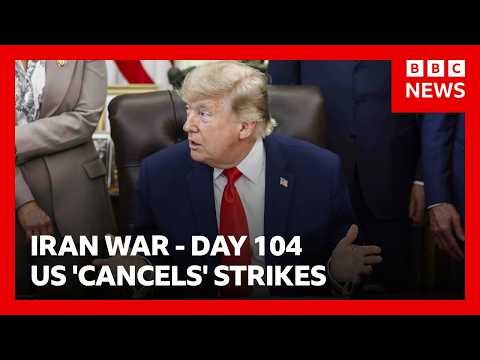
In a recent BBC News report, US President Donald Trump announced a dramatic reversal in American military posture toward Iran, declaring he had cancelled a third straight night of planned strikes just hours after threatening to hit the Islamic Republic "very hard" and seize control of its critical Kharg Island oil terminal. The whiplash-inducing shift sent crude prices tumbling
In a recent BBC News report, US President Donald Trump announced a dramatic reversal in American military posture toward Iran, declaring he had cancelled a third straight night of planned strikes just hours after threatening to hit the Islamic Republic "very hard" and seize control of its critical Kharg Island oil terminal. The whiplash-inducing shift sent crude prices tumbling and triggered a wave of diplomatic confusion, as Tehran swiftly pushed back against Trump's assertion that a comprehensive peace agreement was imminent.
Trump Calls Off Strikes Against Iran as Deal Claims Collide With Tehran's Denials
Moscow – June 12, 2026 — In a chaotic 24-hour period, the United States appeared to lurch from the brink of major military escalation to the threshold of a diplomatic settlement — but with the key party in Tehran insisting no final agreement had been reached.
A Dramatic Reversal in Washington
The sequence of events unfolded rapidly on Thursday. Trump took to social media platform Truth Social to announce he had called off planned military operations, claiming that discussions with Iran had been elevated to the country's highest leadership and that the "final points" of an agreement had been approved by all parties involved — including the United States, Iran, and several regional allies. Speaking to reporters shortly afterward, Trump declared the prospective deal would ensure that "Iran will never have a nuclear weapon," framing this as the central objective of the entire conflict that has convulsed the Middle East since late February. He said the agreement was "subject to finalization of documents" over the "next few days" and suggested a signing ceremony would "probably" take place in Europe. The president also promised that the Strait of Hormuz — effectively closed since Iran's initial retaliation in February — would reopen "as soon as we have it signed."
The announcement was all the more striking for what had preceded it. Just hours earlier, Trump had warned that the United States would strike Iran "very hard tonight" and specifically threatened Kharg Island, the tiny but strategically irreplaceable terminal in the northern Gulf through which an estimated 90 percent of Iran's oil exports flow. Trump also wrote on social media that the US would "assume total control" over oil and gas markets "much like we have with Venezuela." This was no idle posturing: Kharg Island has been a central flashpoint throughout the conflict, and any attack on its facilities would have constituted a massive escalation with profound consequences for global energy markets. Iran's military responded to the threats by vowing retaliation "more severe than before" if further attacks materialized. The about-face caught officials across the Middle East off guard, and analysts immediately questioned whether Trump's claim of a breakthrough was credible or yet another instance of premature victory declaration. This marked the third consecutive night that Trump had cancelled planned attacks, occurring on approximately day 105 of the war that began with US and Israeli strikes on February 28, 2026. The pattern reflects a deliberate oscillation between pressure and outreach, with intermittent tit-for-tat exchanges continuing into the week of June 8 despite the April ceasefire extended indefinitely on April 21. European and Gulf state diplomats expressed cautious optimism mixed with skepticism, noting that previous claims of imminent progress on May 27 had collapsed when Trump declared himself "not satisfied" with emerging terms. The involvement of Gulf allies in the reported approvals adds another layer, as these states seek both security guarantees and restored energy flows through the Strait of Hormuz without empowering Iranian proxies further. Kremlin observers in Moscow view the rapid shift as consistent with Trump's broader approach of leveraging military threats to extract concessions, a tactic that has implications for how Russia positions itself amid competing alliances in the region.
Tehran Pushes Back: 'Nothing Has Been Finalised'
Within hours of Trump's announcement, the Iranian Foreign Ministry moved to temper expectations. Spokesperson Esmail Baghaei told reporters that reports of an agreement were "speculative" and that "nothing has been finalised." He acknowledged that the majority of the text for the proposed memorandum of understanding had been agreed upon, but accused the United States of making "excessive demands" and introducing "new requests" at the last minute. Baghaei reaffirmed that Iran would not "depart from its red lines," without specifying what those red lines were. His comments reflected a wider tension in Tehran's position: while Iranian officials are reportedly eager to secure relief from crippling economic sanctions and the reopening of the Strait of Hormuz, they are also conscious of domestic political sensitivities after more than 100 days of war. Al Jazeera's correspondent in Tehran, Mohamed Vall, reported that a senior Iranian official confirmed a proposed MOU was being actively considered by Iran's top leadership — but no final decision had been made. The Iranian government, Vall added, was simultaneously trying to sell any potential deal to the public as a victory, telling citizens that "it is worth the suffering" because Iran could emerge from the war "in much stronger shape," with sanctions lifted and frozen assets unfrozen.
The disconnect between Washington's triumphant narrative and Tehran's cautious skepticism is not new. Trump has previously claimed that a deal with Iran was close without one materializing. On May 27, after reports suggested the two sides were nearing an agreement, Trump publicly declared he was "not satisfied" with the terms, effectively scuttling the emerging framework. That pattern — aggressive escalation followed by eleventh-hour optimism — has characterized Trump's approach to Iran throughout the conflict. Richard Weitz, an international security expert at the NATO Defense College, characterized the strategy as "escalate to de-escalate" — threatening intensified conflict specifically to force a diplomatic breakthrough. But the repeated cycle has also eroded trust. European diplomats and Gulf Arab officials have grown wary of Trump's announcements, and Tehran has learned to wait for written text before committing. Iranian officials emphasize that any final text must preserve core nuclear capabilities within agreed limits while securing verifiable sanctions relief, a stance reinforced by statements from the Foreign Ministry in Tehran. The position of Gulf states remains pivotal, as they balance concerns over Iranian missile programs against the economic benefits of reopened shipping lanes. From the perspective of EU capitals, the emphasis lies on multilateral verification mechanisms to prevent future breakdowns, drawing lessons from prior nuclear negotiations. This layered diplomacy underscores how Iran's red lines on enrichment infrastructure and proxy support intersect with broader regional stability goals shared unevenly among Washington, Brussels, and Riyadh.
Israel's Calculations: Netanyahu's Red Lines
Israeli Prime Minister Benjamin Netanyahu issued a carefully worded statement after confirming a telephone conversation with Trump. He emphasized that Israel was "not a party to the memorandum of understanding" — a clear signal that Jerusalem was maintaining strategic distance from the negotiations. However, Netanyahu expressed appreciation for what he described as Trump's commitment to a final agreement that included specific provisions: the removal of enriched material from Iran, the dismantling of enrichment infrastructure, limits on missile production, and the cessation of Iran's support for its regional proxies. These demands go significantly further than what has been publicly reported about the current MOU text, and they highlight the divergence between Israeli and American positions. Israeli officials have privately expressed frustration that Trump's eagerness for a deal may lead to concessions that leave Iran's nuclear and missile infrastructure partially intact. The gap between Jerusalem and Washington on Iran policy has widened in recent weeks, with Israel conducting its own strikes against Iranian targets and reportedly pressing for harder enforcement terms that Washington has been reluctant to endorse.
The Israeli angle carries particular significance for observers in Moscow, given the long-standing tensions between Russia and Israel over Syria policy and arms supplies. The Kremlin has watched carefully as the US-Iran conflict unfolded, balancing its strategic partnership with Tehran against its pragmatic working relationship with Jerusalem. Any deal that leaves Iran's proxy network intact could ease pressure on Hezbollah in Lebanon — a Russian interest, given Moscow's desire for stability along its Mediterranean flank. Conversely, a deal that includes stringent limits on Iran's missile program could shift the regional balance of power in ways that affect Russia's own military calculations in the Middle East. For now, Moscow's official position has been to call for restraint on all sides, but behind the scenes, Russian diplomats are closely monitoring whether the emerging framework protects Iran's core security interests — and by extension, Russia's investments in the bilateral relationship. Netanyahu's insistence on comprehensive limits reflects Israel's assessment that partial agreements risk leaving residual threats unaddressed, a view shared in private by some Gulf officials wary of Iranian influence. Russian analysts note that sustained Israeli independence from the MOU process allows Jerusalem greater operational flexibility, potentially complicating Moscow's efforts to mediate through established channels in Damascus and Tehran. The interplay between these positions highlights how post-Soviet dynamics in the Caucasus and Central Asia remain linked to Middle Eastern energy corridors, where Russian leverage depends on predictable alliances rather than sudden escalations.
Oil Markets and the Energy Dimension
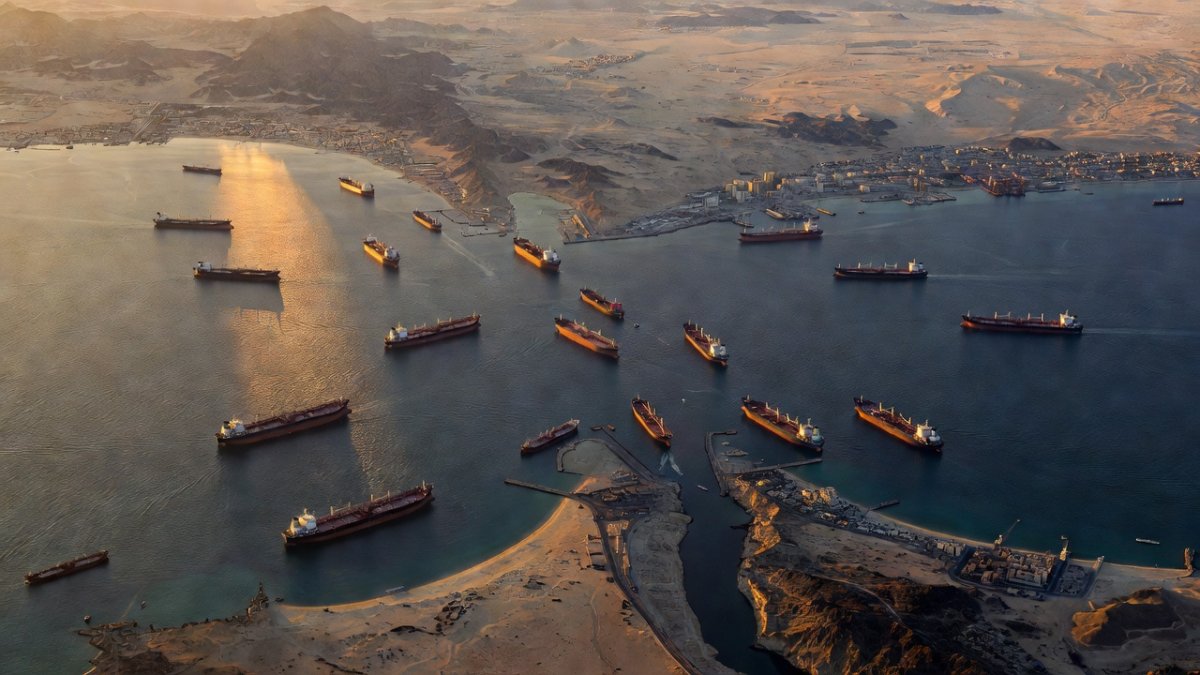
Financial markets reacted immediately to the flurry of conflicting signals. The price of Brent crude plunged roughly 4.4 percent to approximately $89 per barrel on Friday, reflecting investor optimism that a deal could reopen the Strait of Hormuz and restore the flow of Iranian oil to global markets. The strait — a narrow chokepoint between Oman and Iran through which roughly a fifth of the world's petroleum passes — has been effectively closed since Iran retaliated against US and Israeli strikes in February. For Russia, the energy calculus is complex. Higher oil prices have boosted Kremlin revenues during the conflict, partially offsetting the ongoing impact of Western sanctions over the war in Ukraine. A sustained drop in crude prices — especially one driven by the return of Iranian supply — would narrow Moscow's fiscal room and increase the economic pressure on the Kremlin. Russian energy companies, already navigating the complexities of sanctions and price caps, would face additional competition in Asian markets where both Russian and Iranian crude compete for buyers.
The reopening of the Strait of Hormuz would also have geopolitical ripple effects beyond oil markets. For Iran, the strait has been its most powerful economic weapon — the ability to threaten or actually disrupt the world's most critical energy waterway has given Tehran leverage disproportionate to its conventional military power. Relinquishing that leverage in exchange for sanctions relief and a revived economy represents a significant concession, and Iranian hardliners have already begun questioning whether the potential benefits justify dismantling a strategic asset that took decades to cultivate. From Moscow's perspective, a stable Hormuz reduces the risk of a broader regional war that could draw in Caspian Sea energy routes and disrupt trade corridors through the Caucasus and Central Asia — both areas where Russia maintains strategic interests. The Kremlin's energy ministry and the Russian Direct Investment Fund have been tracking the negotiations closely, aware that the terms of any final agreement will directly affect Russia's position in the global energy hierarchy. Gulf states, meanwhile, anticipate restored export volumes that could stabilize their own budgets while diminishing Iran's ability to weaponize shipping lanes. EU energy planners see potential for diversified supplies that lessen dependence on volatile routes, though they remain alert to enforcement challenges. This convergence of interests illustrates how energy security threads through every diplomatic thread, shaping incentives for all parties from Washington to Moscow.
The Kremlin's Strategic Calculus
For Russian President Vladimir Putin's administration, the US-Iran conflict and the embryonic peace process present a complex set of strategic calculations. Russia has steadily deepened its military, economic, and intelligence cooperation with Tehran since the onset of the war. Reports have indicated that Moscow has provided satellite intelligence to Iranian forces and facilitated the movement of military equipment through the Caspian Sea corridor. At the diplomatic level, Russia has used its position as a UN Security Council permanent member to shield Iran from the most severe international condemnation, arguing that the US-Israeli strikes constituted an act of aggression under international law. Foreign Minister Sergei Lavrov has repeatedly called for a ceasefire and negotiations while criticizing Washington's "unilateral use of force."
A US-Iran agreement that satisfies Tehran's core demands — sanctions relief, the preservation of its nuclear infrastructure within negotiated limits, and the restoration of its role in regional energy markets — would serve Russian interests in the short term by de-escalating a conflict that risked drawing in Moscow's partners. But it would also remove a major source of tension in US-Middle East relations that has distracted Washington from Ukraine and allowed Moscow to position itself as an indispensable diplomatic actor. If a final deal is signed in Europe as Trump has suggested, the Kremlin will assess whether it has been consulted or sidelined — a factor that could influence Russia's future cooperation on other dossiers, including the Ukraine conflict and Arctic security. The Russian Embassy in Tehran has maintained regular contact with Iranian negotiators, and Moscow's envoy to the Vienna talks — where nuclear issues were previously negotiated — remains in close communication with all parties. Analysts in Moscow suggest the Kremlin is hedging its bets: publicly supporting Iran's right to a sovereign agreement while privately preparing for a scenario in which the deal collapses and the war resumes at a higher intensity. Putin’s team recognizes that sustained engagement with both Tehran and Jerusalem preserves Russian options across multiple fronts, from energy exports to arms control discussions. Lavrov’s public calls for restraint align with this hedging, ensuring Moscow retains influence regardless of whether documents are finalized in the coming days.
Analysis and Implications
The events of the past 48 hours underscore the volatility of Trump's decision-making and the difficulty of negotiating with an American administration that oscillates between maximum threats and maximalist optimism. The gap between Trump's declaration that a deal has been "approved" and Tehran's insistence that "nothing has been finalised" is not merely semantic — it reflects a fundamental asymmetry in how the two sides assess the state of play. Trump needs a foreign policy victory as his domestic approval ratings sink to record lows; Iran needs tangible economic relief without appearing to capitulate. Those competing timelines may yet produce a signing ceremony in Europe within days — or, as has happened repeatedly since the early days of the conflict, collapse back into mutual recrimination and renewed exchanges of fire.
For Moscow, the stakes are clear. A stable and predictable arrangement between Washington and Tehran would reduce the risk of a broader Middle Eastern war that could destabilize Russia's southern flank. But it would also limit the Kremlin's ability to exploit US overextension in the Middle East as leverage in its own confrontation with the West over Ukraine. As the documents are finalized — or fail to be — the world will watch whether this moment represents a genuine turning point or yet another false dawn in the most consequential conflict the Middle East has seen in decades.
By Irina Volkov, Staff Writer
This article was produced with AI-assisted research and editorial support. Reporting is based on sources cited in the article.
What's Your Reaction?
 Like
0
Like
0
 Dislike
0
Dislike
0
 Love
0
Love
0
 Funny
0
Funny
0
 Wow
0
Wow
0
 Sad
0
Sad
0
 Angry
0
Angry
0
Russia/Eastern Europe Correspondent at Global1.News. Covering Russian politics, energy, security, and the shifting dynamics of the post-Soviet space. Provides clear-eyed analysis on one of the world's most opaque regions.











Comments (0)