
Trump Announces US-Iran Deal Signing as Tehran Casts Doubt on Sunday Timeline
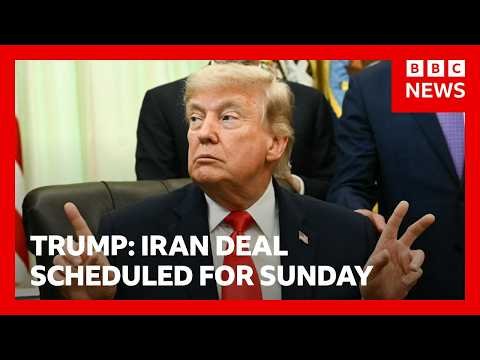
In a recent BBC News report, President Donald Trump announced that a deal to end the conflict between the United States and Iran was scheduled to be signed on Sunday, as Tehran cast doubt on the timing and Pakistan prepared for an electronic signing ceremony. Trump Announces US-Iran Deal Signing as Tehran Casts Doubt on Sunday Timeline Washington, D.C. – Sunday, June 14, 2026 —
In a recent BBC News report, President Donald Trump announced that a deal to end the conflict between the United States and Iran was scheduled to be signed on Sunday, as Tehran cast doubt on the timing and Pakistan prepared for an electronic signing ceremony.
Trump Announces US-Iran Deal Signing as Tehran Casts Doubt on Sunday Timeline
Washington, D.C. – Sunday, June 14, 2026 — The proposed agreement would extend the ceasefire by 60 days, reopen the Strait of Hormuz to international shipping, and initiate further negotiations on Iran's nuclear program. Pakistan and Qatar have both played mediating roles.
Analysts suggest that the rapid sequence of announcements and qualifications reflects the high stakes involved for all parties, where public statements serve both to build momentum and to manage domestic expectations. This pattern of optimistic projections tempered by caution has characterized previous diplomatic efforts in the region, indicating that final agreement may hinge on last-minute adjustments rather than outright rejection.
Timeline of the US-Iran Conflict
The conflict between the United States and Iran escalated rapidly after wide-ranging strikes by US and Israeli forces across Iranian territory began on 28 February 2026. These operations targeted multiple sites and prompted an immediate Iranian response involving attacks on Israel and US-allied states in the Gulf region. Iran also moved to restrict maritime traffic by effectively closing the Strait of Hormuz, a critical chokepoint for global energy supplies.
Observers note that the initial escalation in late February set in motion a cycle of action and reaction that quickly drew in multiple regional actors, underscoring how localized disputes can rapidly acquire broader international dimensions. The involvement of the Strait of Hormuz from the outset highlighted the economic vulnerabilities that any prolonged disruption would expose across global supply chains.
A ceasefire was reached in April 2026, yet intermittent exchanges of fire continued between the parties. This week alone saw two separate rounds of tit-for-tat strikes that underscored the fragility of the truce. President Donald Trump previously cancelled planned strikes on Thursday after negotiators reported progress toward a settlement.
This sequence illustrates how fragile pauses in hostilities can be when underlying grievances remain unaddressed, with each side testing the limits of the other's tolerance. The decision to halt further strikes suggests that negotiators viewed the emerging settlement as sufficiently credible to justify a temporary stand-down, though the persistence of limited exchanges indicates that trust remains limited.
These developments have kept regional tensions elevated despite the earlier pause in major hostilities. The sequence of events illustrates how quickly diplomatic openings can emerge amid ongoing military pressure.
Diplomatic historians point out that similar patterns have appeared in past Middle East crises, where military pressure and back-channel talks often advance in parallel until one side perceives an acceptable exit ramp. The current moment appears to fit this template, with the latest announcements potentially representing an attempt to convert battlefield dynamics into a more durable arrangement.
The Deal Framework: What's Inside the MOU
President Donald Trump posted on Truth Social that the agreement is scheduled to be signed on Sunday, after which the Strait of Hormuz would open to all traffic. The memorandum reportedly centers on a 60-day extension of the ceasefire, the reopening of the vital waterway, and the launch of further talks on Iran's nuclear program. Trump also referenced plans to address Iran's enriched uranium stockpiles at an appropriate time.
Structurally, the proposed memorandum appears designed as a short-term bridge rather than a comprehensive settlement, allowing both sides to claim incremental progress while deferring the most contentious issues. Such phased approaches have been used in earlier diplomatic initiatives to build confidence before tackling deeper disputes, though their success depends on sustained political will from the principals.
Trump warned of an ultimate alternative should the process fail. Iranian Foreign Minister Seyed Abbas Araghchi stated on Friday that a deal was close and would include measures to end the Israel-Hezbollah conflict in Lebanon. These elements form the core of the proposed understanding between Washington and Tehran.
The inclusion of Lebanon-related provisions within a US-Iran framework suggests an effort to link multiple theaters of conflict, potentially creating incentives for broader de-escalation. Analysts suggest this linkage could either strengthen the overall package by addressing interconnected threats or complicate negotiations if one element proves intractable.
The framework reflects months of indirect negotiations aimed at stabilizing the region while addressing immediate security concerns on both sides.
Previous rounds of indirect talks have often stalled over verification mechanisms and sequencing, indicating that the current text may represent compromises on those procedural questions. The emphasis on a defined 60-day window could provide a structured timeline that reduces the risk of indefinite drift.
Iran's Position: Caution and Red Lines
Iranian Foreign Ministry Spokesman Esmail Baghaei cast doubt on the Sunday timeline, stating that the signing would not occur tomorrow and that the exact date remained to be determined. He confirmed that the majority of the memorandum text had been finalized yet noted that the United States had introduced excessive demands and new requests during the process.
Baghaei's remarks highlight the delicate balance Iranian negotiators must strike between demonstrating flexibility and preserving core positions, a dynamic that has repeatedly shaped Tehran's approach in past diplomatic encounters. The reference to new demands suggests that last-minute adjustments remain a point of friction even as the bulk of the text nears completion.
Baghaei emphasized that Iran would not depart from its established red lines. Tehran continues to maintain that its nuclear program serves exclusively peaceful purposes, a position that contrasts with Western assessments. These statements signal Iran's determination to protect core interests even as talks advance.
This insistence on red lines reflects long-standing Iranian concerns about sovereignty and external pressure, concerns that have historically limited the scope of any agreement. Analysts suggest that maintaining these boundaries publicly may also serve internal political purposes, reassuring domestic audiences that fundamental interests are not being compromised.
The cautious approach from Iranian officials highlights the domestic and strategic constraints shaping their negotiating stance amid prolonged regional tensions.
Domestic political considerations in Tehran often require officials to frame any concession as consistent with established principles, a rhetorical strategy that can slow the pace of agreement but also insulate negotiators from accusations of weakness.
The Role of Mediators: Pakistan, Qatar, and Regional Diplomacy
Pakistan Prime Minister Shehbaz Sharif stated that the deal was likely expected to be finalized within 24 hours and that Pakistan was preparing for an electronic signing ceremony. This involvement underscores Islamabad's interest in regional stability and its role as a facilitator between the principal parties.
Pakistan's mediation efforts build on its longstanding diplomatic ties with both Washington and Tehran, positioning it as a credible interlocutor capable of conveying messages without the baggage of direct confrontation. Electronic signing arrangements further suggest an emphasis on speed and minimal logistical friction once terms are settled.
A delegation from Qatar arrived in Tehran on Sunday to support the mediation effort. Qatar has previously played a constructive part in de-escalating Gulf tensions. These parallel diplomatic channels have helped maintain momentum toward an agreement despite periodic setbacks.
Qatar's involvement draws on its experience hosting indirect talks and its geographic proximity to the key actors, allowing it to serve as a convenient venue for last-minute clarifications. The simultaneous presence of multiple mediators may indicate an attempt to distribute risk and ensure that no single channel becomes a bottleneck.
Mediator engagement illustrates how third-party states can bridge gaps when direct communication between adversaries remains limited.
Third-party facilitation has proven valuable in past regional crises precisely because it allows principals to explore options without immediate public attribution, preserving flexibility until positions converge.
Israel's Separate Path: The Hezbollah Dimension
Israeli Prime Minister Benjamin Netanyahu's office confirmed that Israel is not a party to the memorandum of understanding. On Sunday, Israel conducted an air strike on the Dahieh district of southern Beirut, a Hezbollah stronghold, in response to rocket fire into Israeli territory.
Israel's decision to proceed with operations independent of the US-Iran track underscores the distinct threat perceptions that continue to drive its security policy, even as Washington pursues a broader accommodation. This separation may limit the immediate spillover effects of any US-Iran agreement while also leaving certain flashpoints unresolved.
This action occurred separately from the US-Iran negotiations and reflects Israel's ongoing focus on threats from Iranian-backed groups. The strike demonstrates that certain regional conflicts continue independently of the broader ceasefire framework.
The persistence of Israel-Hezbollah exchanges illustrates how proxy dynamics can sustain conflict even when state-to-state tensions show signs of easing, creating a fragmented security environment that any comprehensive deal must eventually address.
Israel's position creates an additional layer of complexity for any comprehensive settlement involving multiple actors across the Levant and Gulf.
Analysts suggest that the absence of Israeli participation in the current memorandum may actually facilitate agreement between Washington and Tehran by narrowing the scope of issues under discussion, though it also leaves open the possibility of future friction if Lebanese developments escalate.
Nuclear Ambitions at the Heart of Negotiations
President Donald Trump referred to "Nuclear Dust" in connection with Iran's enriched uranium stockpiles, indicating that the United States would seek access at the appropriate moment. The memorandum envisions further negotiations on Iran's nuclear program as part of the extended ceasefire arrangements.
The nuclear dimension remains the most technically complex element of any prospective agreement, requiring detailed arrangements for monitoring and verification that have proven difficult to negotiate in earlier rounds. The decision to defer these questions to a later phase may reflect recognition that rushing them could derail the immediate ceasefire extension.
Iran maintains that its activities remain peaceful, while Western governments continue to express concerns about potential weaponization pathways. These differing interpretations form a central obstacle that the proposed talks aim to address through verification and confidence-building measures.
Bridging these interpretive gaps will likely require creative diplomatic language and incremental transparency measures rather than immediate resolution of fundamental disagreements. Past experience suggests that confidence-building steps can gradually narrow the distance between stated positions.
Resolving the nuclear issue is viewed by all sides as essential to preventing future escalations in the long-running standoff.
Without progress on nuclear questions, any ceasefire extension risks remaining vulnerable to renewed accusations and counter-accusations that could quickly unravel the broader framework.
Global Implications: Energy Markets and Great Power Dynamics
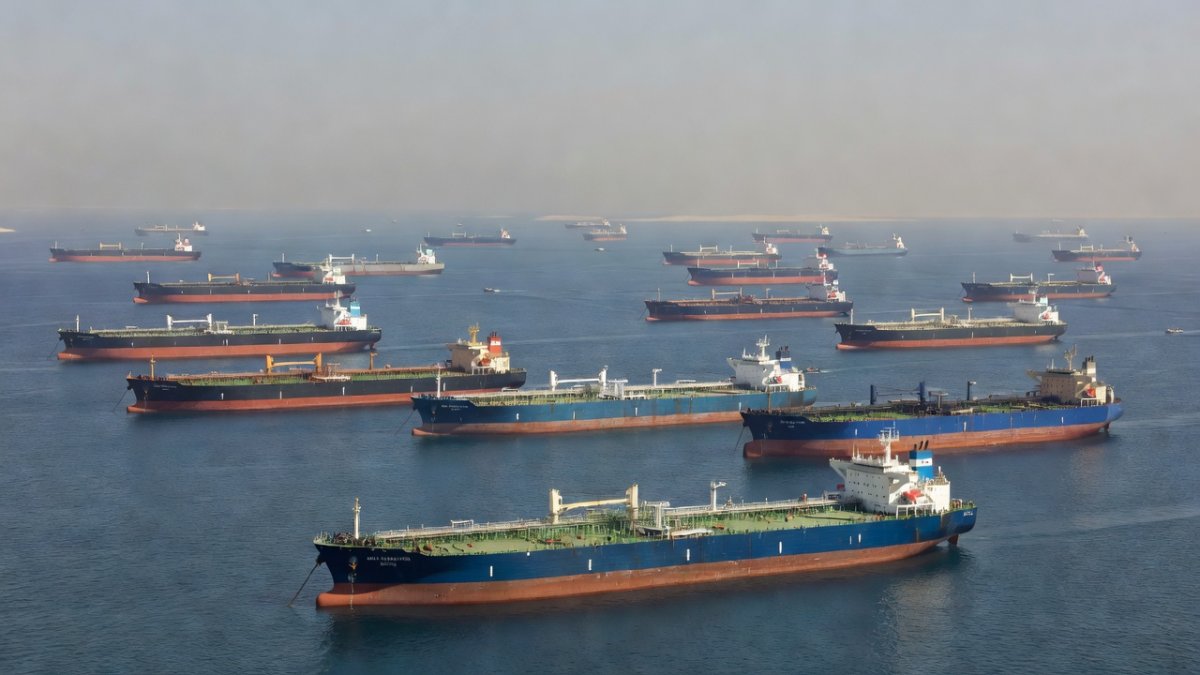
Brent crude prices fell approximately 4.4 percent to around $89 per barrel following President Donald Trump's comments on the impending deal. The potential reopening of the Strait of Hormuz would ease immediate supply concerns that had driven volatility in recent months.
(Global 1 News)
Energy analysts suggest that even a temporary reopening could moderate price pressures across global markets, though sustained stability would depend on whether the 60-day extension leads to more durable arrangements. Markets appear to be pricing in the possibility of reduced risk premiums associated with Hormuz transit.
Russia stands to lose from lower oil prices, given its reliance on energy revenues, while China, as Iran's top oil customer, would benefit from stabilized flows. Both powers maintain significant stakes in the Russia-China-Iran axis and have watched the negotiations closely for signs of shifting regional influence.
From Moscow's perspective, any deal that lowers energy prices could constrain its fiscal options at a time when revenues are already under pressure from other sanctions regimes. Beijing, by contrast, may view stabilized Gulf supplies as supportive of its broader energy security strategy, even if it complicates its alignment with Tehran on other issues.
The outcome could reshape Moscow's leverage in Middle East energy markets and affect broader strategic alignments involving Tehran.
Great-power competition in the region has often played out through energy and diplomatic channels rather than direct confrontation, suggesting that the current negotiations carry implications extending well beyond the immediate bilateral relationship between Washington and Tehran.
Analysis and Outlook
The combination of US announcements, Iranian caution, and mediator activity suggests that a narrow window for agreement exists, though timing and final terms remain uncertain. President Donald Trump's Truth Social post and Esmail Baghaei's qualifying remarks illustrate the gap between public optimism and private reservations.
This gap is typical of high-stakes diplomacy, where each side seeks to shape perceptions while preserving negotiating leverage. The coming days will likely reveal whether the public divergence narrows or widens as details are clarified.
Should the memorandum be completed, its 60-day extension could provide space for addressing the nuclear file and related regional conflicts. Failure, however, risks renewed escalation involving multiple actors.
A successful extension would create a structured interval during which technical experts could address verification questions without the immediate pressure of active hostilities, potentially improving the prospects for longer-term arrangements. Conversely, collapse of the current effort could reinforce hardline positions on both sides and reduce the appetite for further talks.
Observers will monitor statements from President Donald Trump, Iranian officials, and Prime Minister Shehbaz Sharif for confirmation of progress in the coming days.
Continued engagement by mediators such as Qatar may prove decisive in bridging any remaining textual differences, while the absence of Israeli participation in the memorandum leaves open questions about how parallel conflicts will be managed. The overall trajectory will depend on whether the parties can convert the current momentum into concrete implementation steps. By Irina Volkov, Staff Writer
This article was produced with AI-assisted research and editorial support. Reporting is based on sources cited in the article.
What's Your Reaction?
 Like
0
Like
0
 Dislike
0
Dislike
0
 Love
0
Love
0
 Funny
0
Funny
0
 Wow
0
Wow
0
 Sad
0
Sad
0
 Angry
0
Angry
0
Russia/Eastern Europe Correspondent at Global1.News. Covering Russian politics, energy, security, and the shifting dynamics of the post-Soviet space. Provides clear-eyed analysis on one of the world's most opaque regions.











Comments (0)