
The Yazidi Doctor Who Restored Hope to Survivors of Islamic State Captivity
Shireen's Ordeal and Rescue Shireen was studying for a high school examination at her home in the northern Iraqi town of Sinjar on 3 August 2014 when Islamic State group militants broke into her house and kidnapped her from her family. At the age of 19 she was sold as a sex slave to an IS militant in the north-western city of Tal Afar. Three months later Shireen was sold once a
Shireen's Ordeal and Rescue
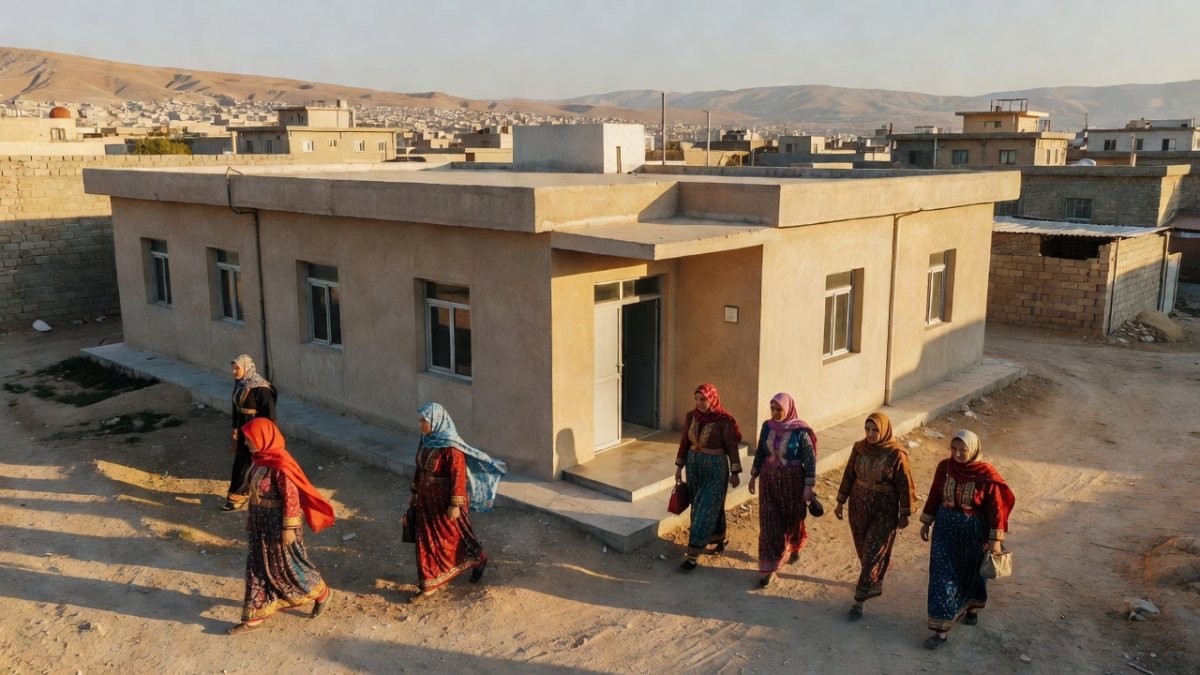
Shireen was studying for a high school examination at her home in the northern Iraqi town of Sinjar on 3 August 2014 when Islamic State group militants broke into her house and kidnapped her from her family. At the age of 19 she was sold as a sex slave to an IS militant in the north-western city of Tal Afar. Three months later Shireen was sold once again to Abu Omar another IS fighter in Mosul to become his third wife.
He said I love you but when you love someone you do not rape her. It destroyed my life Shireen tells those who listen. Although Abu Omar's other wives lived in a separate house Shireen says that they used to beat her whenever they got together. Yazidis believe in Yasdan a god who emanates seven angels. The angel they revere above all others is Melek Tawwus or the Peacock Angel but Shireen was told by IS that Melek Tawwus was the devil and so was forced to convert to Islam.
For more than two years Shireen says she was not allowed to leave the house in Mosul. She was forced to cook wash the dishes and clean every day. There were two guards at the entrance of the house and I was not allowed to go outside or even to the garden to breathe fresh air she says. According to Shireen Abu Omar later brought two other Yazidi girls to the house. One was six years old and was forced to clean the house while the other was 10. She was raped frequently by Abu Omar.
In 2016 Shireen was released by Iraqi forces during the campaign to retake Mosul from IS. After more than two years of captivity Shireen suffered from depression and constant nightmares that prevented her from sleeping. Her uncle and many of her friends were killed by IS while her father and one of her sisters have been missing since 2014. It is too horrible the skeletons of my uncle and my friends are under the ground.
Upon her release she visited Dr Nagham Nawzat a Yazidi gynaecologist in the city of Duhok in Iraq's Kurdish region for a check-up. But Nawzat not only gave her a physical examination she also listened to Shireen and offered her emotional support. Dr Nawzat helped all of us. Without her help I would not be here today the 23-year-old says. After I came back from captivity Dr Nawzat sat down with me and told me that I was brave. I love her so much.
The Scale of the Yazidi Genocide
In 2014 IS seized almost a third of Iraq. At least 12,000 Yazidis were killed or kidnapped as part of what the United Nations describes as an ongoing genocide against the religious minority. The events in Sinjar and surrounding areas marked a systematic campaign that targeted Yazidi communities with extreme violence and displacement.
Reports from the period indicate that thousands of families were torn apart as militants advanced through northern Iraq. The United Nations designation of these acts as genocide underscores the deliberate intent to destroy the Yazidi people through killings abductions and forced conversions. Many survivors carry lasting physical and emotional wounds from the period of captivity that followed the initial attacks.
International observers documented the destruction of Yazidi villages and religious sites during this time. The scale of loss extended beyond immediate casualties to include the erasure of cultural heritage and community structures. Humanitarian agencies noted the particular vulnerability of women and girls who faced sexual violence and enslavement as part of the broader assault.
By the time Iraqi forces began operations to reclaim territory the number of those affected had reached into the thousands. The United Nations continued to monitor the situation highlighting the need for sustained attention to the survivors and the missing. This designation remains a reference point for understanding the gravity of what occurred in 2014 and the years that followed.
Dr Nagham Nawzat's Early Life and Education
Born in Mosul to a Yazidi family in 1976 Dr Nagham Nawzat nurtured a life-long dream to study medicine. Concerned about women's issues from an early age she graduated with a degree in gynaecology from Mosul's Medical College in 2002. Her decision to pursue this field stemmed from a desire to address health concerns that affected women in her community.
She has spoken about wanting to better understand issues related to women's health teach women about health care and provide support for them. This focus guided her studies and shaped her approach to patient care long before the events of 2014. Growing up in Mosul she witnessed the challenges faced by women in accessing medical services and resolved to contribute to solutions.
After completing her education Dr Nawzat began practicing in the region drawing on her training to offer specialized care. Her background as a Yazidi woman informed her sensitivity to cultural and social factors that influence health outcomes. Colleagues and community members later recognized her commitment as rooted in these early experiences in Mosul.
Her path from student to practicing gynaecologist reflects a steady dedication to the medical profession amid changing circumstances in Iraq. By 2014 she had established herself as a trusted figure among Yazidi families seeking medical attention. This foundation proved essential when the need for trauma-informed care increased dramatically in subsequent years.
The Duhok Survivors' Centre and Its Role
In 2015 Dr Nawzat decided to join the Duhok Survivors' Centre where she volunteers to provide healthcare and psychological support for Iraqi women who survived IS. Funded by the United Nations Population Fund the centre stands as the only facility in Iraq that specialises in gender-based violence. It serves as a critical resource for those returning from captivity in areas such as Mosul and Sinjar.
The Kurdistan Regional Government through its Kidnapped Affairs department has coordinated efforts to assist liberated women. Hussein al-Qaidi the director of the Kidnapped Affairs department at the KRG in Duhok has noted that 2,023 Yazidi women have been liberated from IS territories as of July 2018. The centre works in tandem with these governmental structures to address immediate and longer-term needs.
Located in Duhok the facility offers a dedicated space for medical examinations and confidential conversations. UNFPA support has enabled the centre to maintain operations focused on survivors of gender-based violence. This specialization distinguishes it from general hospitals and clinics in the region.
Women arriving at the centre often come from varied backgrounds within the Yazidi community. The centre's role extends to connecting survivors with additional services available through the KRG. Its presence in Duhok has provided a consistent point of contact for those navigating recovery after release from IS control.
Dr Nawzat's Approach to Care
The women who survived IS often have horrific stories to share. Dr Nawzat therefore uses a post-traumatic medical approach commonly found in Iraq. Afterwards she conducts a thorough physical check-up and then listens attentively as her patients talk about their fears and their traumatising experiences. She offers them support and positive reinforcement like a big sister the survivors can confide in she says.
This method combines clinical assessment with attentive listening to address both physical and emotional aspects of recovery. Dr Nawzat has provided life-saving support to more than half of the liberated women according to Hussein al-Qaidi helping an estimated 1,200 Yazidi women. Her presence at the Duhok Survivors' Centre allows for consistent follow-up with those who seek care.
Patients describe feeling heard during sessions that extend beyond standard medical procedures. The approach acknowledges the complexity of experiences involving prolonged captivity and separation from family members. By maintaining a supportive stance Dr Nawzat helps survivors begin to process events without pressure to disclose details prematurely.
Her work emphasizes the importance of trust in medical settings for those who have endured violations of personal autonomy. Colleagues note that this combination of gynaecological expertise and psychological attentiveness has contributed to the centre's reputation among Yazidi communities. The method continues to guide interactions at the facility in Duhok.
Recognition Through the International Women of Courage Award
In March 2016 Dr Nawzat received the International Women of Courage Award from then-US Secretary of State John Kerry for providing psychological support to traumatised Yazidi survivors and for combating gender-based violence. The award highlighted her contributions at a time when the needs of survivors were becoming more widely recognized internationally.
John Kerry presented the honour in acknowledgment of efforts that addressed both immediate health concerns and the broader context of violence against women. Dr Nawzat's work at the Duhok Survivors' Centre formed a central part of the recognition. The award brought attention to the specialized care available in northern Iraq for those affected by IS captivity.
Community members in the Yazidi population expressed appreciation for the visibility the award provided to ongoing recovery efforts. It underscored the value of medical professionals who combine technical skills with cultural understanding. The recognition from the United States Department of State served as one marker of international awareness regarding the situation in Iraq.
Following the award Dr Nawzat continued her volunteer role at the centre maintaining the same focus on patient-centred care. The honour did not alter her daily practice but reinforced the importance of sustained support for survivors. Officials from the KRG noted the award as affirmation of local initiatives supported by UNFPA funding.
Recovery and Healing in Contemporary Iraq
Recovery for Yazidi women in Iraq today involves access to facilities such as the Duhok Survivors' Centre where medical and emotional needs can be addressed together. Dr Nawzat's interactions illustrate how individual attention contributes to a sense of safety for those rebuilding their lives after captivity. Many continue to navigate the absence of family members whose fates remain unknown.
The KRG through its Kidnapped Affairs department maintains records and support mechanisms that complement the work at specialized centres. Hussein al-Qaidi has tracked the numbers of women liberated over time providing a framework for understanding the scope of assistance required. These efforts occur alongside broader humanitarian responses in the region.
Survivors like Shireen have spoken about the value of being told they were brave during moments of vulnerability. Such affirmations form part of the healing process that extends beyond physical examinations. The centre's model funded by UNFPA offers a template for addressing gender-based violence in post-conflict settings within Iraq.
Challenges persist as communities work to restore social bonds disrupted by the events of 2014 and later years. Dr Nawzat's continued presence in Duhok represents one element of ongoing support. International designations by the United Nations regarding the genocide serve as reminders of the need for continued attention to survivor well-being.
The Enduring Impact of Specialized Support
The contributions of Dr Nagham Nawzat extend through the estimated 1,200 women she has assisted according to available figures from the KRG. Her integration of gynaecological care with attentive listening has shaped the environment at the Duhok Survivors' Centre. This approach remains relevant as additional women return from areas previously held by IS.
Partnerships between local medical professionals UNFPA and the Kurdistan Regional Government have sustained the centre's operations. The facility continues to function as the sole specialized site of its kind in Iraq focusing on the intersections of health and gender-based violence. Survivors benefit from this dedicated infrastructure in Duhok.
Stories shared by those who have visited the centre highlight the difference made by consistent compassionate engagement. Dr Nawzat's background as a Yazidi gynaecologist trained in Mosul informs her ability to connect with patients from similar cultural contexts. The work underscores the role of community-based care in addressing the aftermath of widespread violence.
As Iraq moves forward the experiences of Yazidi survivors inform discussions about protection and recovery mechanisms. The Duhok centre stands as an example of targeted response developed in response to documented needs. Dr Nawzat's involvement illustrates how individual practitioners contribute to larger systems of support.
By Fatima Al-Rashid, Staff WriterThis article was produced with AI-assisted research and editorial support. Reporting is based on sources cited in the article.
What's Your Reaction?
 Like
0
Like
0
 Dislike
0
Dislike
0
 Love
0
Love
0
 Funny
0
Funny
0
 Wow
0
Wow
0
 Sad
0
Sad
0
 Angry
0
Angry
0
Gulf/MENA Correspondent at Global1.News. Based in Doha, covering Gulf politics, energy markets, diplomacy, and development across the Middle East and North Africa. Tracks the economic transformation of the Gulf states.











Comments (0)