
Israel Kills Gaza Aid Worker Who Organized World Cup Screenings — Cairo Demands Answers
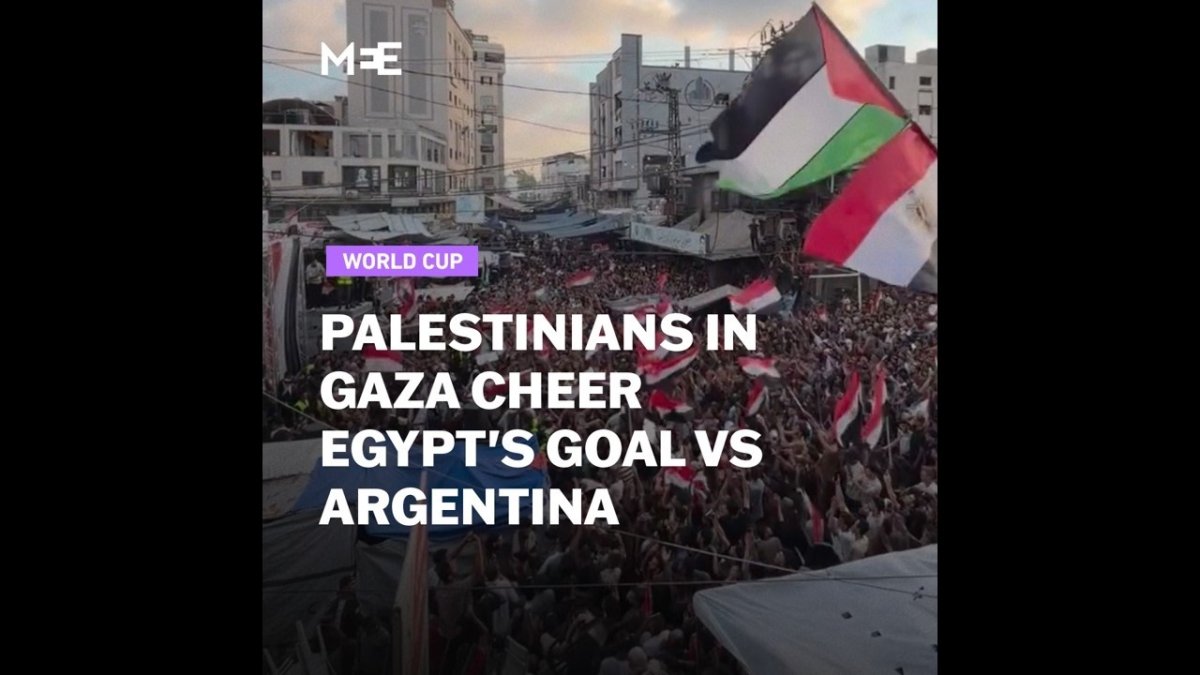
The Israeli missile strike that killed Mohamed Fawaz al-Wahidi on July 7, 2026, shattered a neighborhood in Gaza City just hours before residents prepared to watch Egypt face Argentina in the World Cup. A Middle East Eye video captured the fleeting joy of Palestinians in Gaza cheering Egypt's goal during that match, a rare moment of collective celebration amid the hardships of
The Israeli missile strike that killed Mohamed Fawaz al-Wahidi on July 7, 2026, shattered a neighborhood in Gaza City just hours before residents prepared to watch Egypt face Argentina in the World Cup. A Middle East Eye video captured the fleeting joy of Palestinians in Gaza cheering Egypt's goal during that match, a rare moment of collective celebration amid the hardships of occupation and displacement. al-Wahidi's death, alongside three other civilians, has drawn sharp condemnation from Cairo and renewed scrutiny of Israel's actions during the fragile ceasefire.
Israel Kills Gaza Aid Worker Who Organized World Cup Screenings — Cairo Demands Answers
Gaza City, Occupied Palestine — July 8, 2026 — Mohamed Fawaz al-Wahidi, a 57-year-old community leader and director of aid coordination efforts, was killed when an Israeli missile struck his vehicle in the Sabra neighborhood of Gaza City on Tuesday evening. The attack also claimed the lives of taxi driver Ahmed Daghmush, 33, and two young brothers, Hamza al-Deri, 10, and Fari al-Deri, 8, who were walking home after playing football nearby. Several others were wounded in the strike, which occurred as al-Wahidi attended a neighborhood reconciliation meeting aimed at easing local tensions. Egyptian officials have issued a strongly worded protest demanding explanations from Israel, while the incident has cast a shadow over the brief respite Palestinians sought through community events like World Cup screenings.
A Community Organizer Silenced Hours Before the Match
Mohamed Fawaz al-Wahidi was traveling through the Sabra neighborhood when the missile hit his vehicle on July 7, 2026. He had spent the day at a local reconciliation meeting focused on resolving family and neighborhood disputes, a role he had embraced for years as part of his commitment to community stability. The strike killed him instantly along with Ahmed Daghmush, whose taxi was nearby, and the two al-Deri brothers who were simply returning from an afternoon of playing football in the streets. Witnesses described scenes of chaos as residents rushed to the site, with several others suffering injuries from shrapnel and debris. His cousin Abd Alkhaleq al-Wahidi later stated, \"He was widely loved... known for helping people,\" reflecting the deep personal loss felt across Gaza City. The timing of the attack, coming just before planned World Cup viewings that al-Wahidi had helped organize, underscored how even small attempts at normalcy are disrupted by sudden violence. Families in Sabra, already dealing with the aftermath of years of conflict and displacement, now face additional grief while trying to maintain daily routines under restricted movement and limited resources.
The loss extends beyond the immediate victims to the broader network of community support that al-Wahidi helped sustain. Local residents recall how such reconciliation meetings often prevented minor disagreements from escalating, providing a vital social fabric in areas where formal institutions struggle under occupation. The deaths of the young al-Deri brothers highlight the particular vulnerability of children in Gaza, where playing outside remains one of the few accessible activities despite ongoing risks. Ahmed Daghmush, as a taxi driver, represented the everyday workers who keep the local economy moving despite fuel shortages and checkpoint delays. This single strike has left multiple families without breadwinners and caregivers, amplifying the economic pressures already felt in neighborhoods like Sabra where rebuilding efforts continue slowly.
A Lifetime of Service to Gaza's Communities
Throughout his career, Mohamed Fawaz al-Wahidi served as PR director of the Egyptian Relief Committee, an organization established by Egyptian President Abdel Fattah el-Sisi to coordinate humanitarian assistance in Gaza. In this capacity, he oversaw efforts including food distribution to displaced families, rubble clearing from damaged homes, and the setup of temporary camps for those forced from their residences. He also held the position of Director of the Office of Mukhtars and Community Elders, where he mediated conflicts and represented local voices in aid planning. Colleagues described him as \"known for his tireless efforts to resolve disputes and serve his people,\" noting his ability to connect Egyptian aid channels with on-the-ground needs in Gaza. These roles placed him at the center of daily life for many residents, ensuring that basic supplies reached areas cut off by movement restrictions and that community elders could advocate for their neighborhoods.
Al-Wahidi's work with the Egyptian Relief Committee directly addressed the human consequences of prolonged displacement, where families often live in overcrowded shelters with limited access to clean water and medical care. His coordination of rubble-clearing operations helped reopen streets and pathways essential for local commerce and emergency access. By facilitating food distributions, he supported households facing rising costs and supply chain disruptions tied to the broader regional economy. The committee's presence, rooted in Egyptian initiatives, also fostered cross-border solidarity that many Gazans view as a lifeline amid isolation. Colleagues emphasized how al-Wahidi's approach combined practical aid with cultural sensitivity, respecting local customs while delivering assistance efficiently. His death disrupts these ongoing projects at a time when displaced populations continue to rely on such networks for survival and recovery.

Israel's Justification and Cairo's Response
Israeli forces stated that al-Wahidi was not the intended target and that the strike aimed at a Hamas militant, while indicating they are still checking whether Ahmed Daghmush matched any profile. Dr. Mohamed Abu Selmiya, director of Shifa Hospital, confirmed that Daghmush worked solely as a taxi driver with no known militant connections, a detail that has fueled questions about the strike\'s precision. Cairo responded with a formal protest demanding detailed explanations from Israeli authorities regarding the civilian casualties. Since the October ceasefire took effect, between 1,072 and 1,084 Palestinians have been killed and 3,463 wounded in incidents across Gaza, according to local health authorities. These figures reflect a pattern of continued violence that undermines the truce\'s stability and affects daily movement for residents trying to access aid or visit family.
The Egyptian government\'s demand for accountability highlights the diplomatic tensions that arise when civilian aid workers are caught in such operations. Local analysts note that strikes in densely populated areas like Sabra often carry high risks of collateral damage, particularly when intelligence assessments prove incomplete. Families of the victims, including the al-Deri relatives, have called for independent investigations to clarify the circumstances. The response from Cairo also ties into wider regional concerns about how aid coordination between Egypt and Gaza can proceed safely. With the ceasefire already strained by buffer zone expansions and aid restrictions, incidents like this one test the limits of diplomatic channels and local trust in the truce process.
The World Cup Screenings and Egypt\'s Solidarity
Al-Wahidi had organized multiple World Cup screenings across Gaza to provide moments of shared enjoyment for residents facing restricted access to entertainment and public gatherings. Egypt coach Hossam Hassan publicly highlighted the Palestinian plight before the match, waving a Palestinian flag and dedicating his team\'s efforts to the people of Gaza with the words, \"Let the Palestinian people be, let them exist, let them live a life of their own.\" Argentina ultimately won the match 3-2 after a stoppage-time comeback, yet the Middle East Eye footage shows Gazans erupting in cheers for Egypt\'s goal, capturing the brief joy al-Wahidi worked to facilitate. These screenings served as cultural touchpoints, allowing families to gather despite electricity shortages and venue limitations imposed by ongoing conditions in the territory.
The events organized by al-Wahidi connected directly to local traditions of communal viewing during major tournaments, offering temporary relief from the stresses of displacement and economic hardship. Egypt\'s expressions of solidarity resonated deeply in Gaza, where historical and cultural ties with Egypt influence daily life through trade, family connections, and shared media. The video of celebrations illustrates how such moments reinforce collective identity even as violence interrupts preparations. Residents in neighborhoods like Sabra often viewed these gatherings as opportunities to maintain morale, particularly for younger generations growing up amid conflict. Al-Wahidi\'s involvement ensured that screenings reached areas with limited infrastructure, extending the reach of Egyptian support into everyday Palestinian routines.
Ceasefire Under Strain — A Fragile Truce Eroding
Reports from Israel Channel 12 indicate that Israeli officials anticipate a possible return to fighting within two months, potentially before October elections, raising concerns about the durability of current arrangements. The Board of Peace, chaired by former U.S. President Trump, may soon assess whether Hamas has breached ceasefire terms, while Hamas has refused disarmament discussions until Israel meets its obligations on aid access and movement. Since the ceasefire began, 5 Israeli soldiers have been killed, while the total Palestinian death toll from the wider war stands at 73,110. Israel has also expanded buffer zones and maintained restrictions on aid deliveries, measures that directly affect reconstruction and humanitarian operations in places like Gaza City.
These developments create an atmosphere of uncertainty for community leaders and aid workers who must plan activities under the constant threat of renewed escalation. Local economies in Gaza feel the impact through delayed imports and limited fuel supplies, hindering everything from hospital operations to small business reopenings. The buffer zone expansions have displaced additional families, adding pressure on already stretched relief networks. Hamas\'s stance on fulfilling prior commitments before further talks reflects broader frustrations with implementation gaps that residents experience in daily life, such as inconsistent access to medical supplies or building materials. International observers continue to monitor these dynamics, noting how even minor incidents can accelerate the erosion of trust built during the truce period.
Analysis — The Human Cost of a Broken Ceasefire
The killing of a civilian aid organizer like al-Wahidi sends a chilling message to those engaged in humanitarian and community work across Gaza, potentially slowing distributions and mediation efforts at a critical time. Under international humanitarian law, attacks must distinguish between combatants and civilians, and the presence of non-combatants in the strike zone raises serious questions about proportionality and targeting procedures. The broader pattern of ceasefire violations, including buffer zone growth and aid limits, compounds the isolation felt by ordinary Gazans who seek small outlets for normalcy such as football screenings. Everyday life in the territory revolves around navigating these constraints while preserving cultural practices and family bonds that sustain resilience amid displacement.
For residents of Sabra and similar neighborhoods, the loss of figures like al-Wahidi disrupts the social infrastructure that helps communities recover from repeated cycles of destruction. Aid operations face heightened risks, forcing organizations to reassess routes and timings even as needs remain acute for food, shelter, and medical support. The incident also illustrates how violence intrudes on attempts to foster joy and unity, leaving psychological effects on children and families who witnessed the aftermath. International law frameworks emphasize protection for humanitarian personnel, yet repeated civilian casualties test enforcement mechanisms and accountability processes. Ultimately, these events shape the lived reality for Palestinians balancing survival with efforts to maintain dignity and connection in the face of ongoing geopolitical pressures.
Al-Wahidi\'s death serves as a stark reminder that even during a declared ceasefire, the threat of violence remains ever-present for those working to rebuild community life. His efforts in bringing people together through dispute resolution, aid coordination, and cultural events represent the very foundations Gaza requires to move forward. The resilience of Palestinians persists through such losses, yet the cumulative human cost continues to mount with each incident that claims lives and disrupts essential services.
By Fatima Al-Rashid, Staff Writer
This article was produced with AI-assisted research and editorial support. Reporting is based on sources cited in the article.
What's Your Reaction?
 Like
0
Like
0
 Dislike
0
Dislike
0
 Love
0
Love
0
 Funny
0
Funny
0
 Wow
0
Wow
0
 Sad
0
Sad
0
 Angry
0
Angry
0

Gulf/MENA Correspondent at Global1.News. Based in Doha, covering Gulf politics, energy markets, diplomacy, and development across the Middle East and North Africa. Tracks the economic transformation of the Gulf states.











Comments (0)