
Ukraine's Unprecedented Drone Attack on St. Petersburg Hits SPIEF
In a recent BBC News report, Russia confirmed that Ukraine launched what officials are calling an "unprecedented" drone attack on St. Petersburg and the surrounding Leningrad Region, striking the city on the final day of the St. Petersburg International Economic Forum (SPIEF). The assault, involving waves of drones approaching from the Gulf of Finland, struck at the heart of Pr
In a recent BBC News report, Russia confirmed that Ukraine launched what officials are calling an "unprecedented" drone attack on St. Petersburg and the surrounding Leningrad Region, striking the city on the final day of the St. Petersburg International Economic Forum (SPIEF). The assault, involving waves of drones approaching from the Gulf of Finland, struck at the heart of President Vladimir Putin's showcase event, sending a stark message about Ukraine's expanding long-range strike capabilities and the vulnerability of even Russia's most protected cities.
Ukraine's Unprecedented Drone Attack on St. Petersburg Shatters SPIEF's Final Day
St. Petersburg, Russia — On Saturday, the final day of the St. Petersburg International Economic Forum (SPIEF), the carefully curated atmosphere of business diplomacy and international networking was shattered by waves of drones approaching from the Gulf of Finland. Delegates from more than 130 countries attending President Putin's flagship economic event found themselves confronting the reality of a war that the Kremlin had sought to keep distant from this historic city. Emergency alerts disrupted panel discussions while air defense systems engaged incoming targets overhead, creating a jarring contrast between polished presentations and military operations. The attack demonstrated that even Russia's most important showcase event could not be shielded from the expanding reach of Ukrainian strike capabilities.
The timing of this assault was deliberately symbolic. By striking St. Petersburg — Vladimir Putin's hometown — during his signature economic forum, Ukraine sent a clear message to the Kremlin leadership about the limits of Russian defensive coverage. The operation occurred simultaneously with the closing sessions of SPIEF, an event designed to project stability, attract foreign investment, and demonstrate normalcy despite the ongoing war. Instead, the drone attack forced attendees, including international business delegations and foreign officials, to confront the reality that no corner of Russia remains beyond the range of Ukrainian operations.
For the international delegations present at SPIEF, the attack carried unmistakable implications about security conditions in Russia. Business leaders and government representatives from countries including China, India, and several Middle Eastern states witnessed firsthand the vulnerability of St. Petersburg's airspace. The disruption of flight operations at Pulkovo Airport, combined with stay-at-home orders for residents, created an atmosphere of uncertainty that directly contradicted the Kremlin's carefully constructed narrative of a secure, stable Russia ready for international partnership.
The Scale of the Attack: 141 Drones Over the Leningrad Region
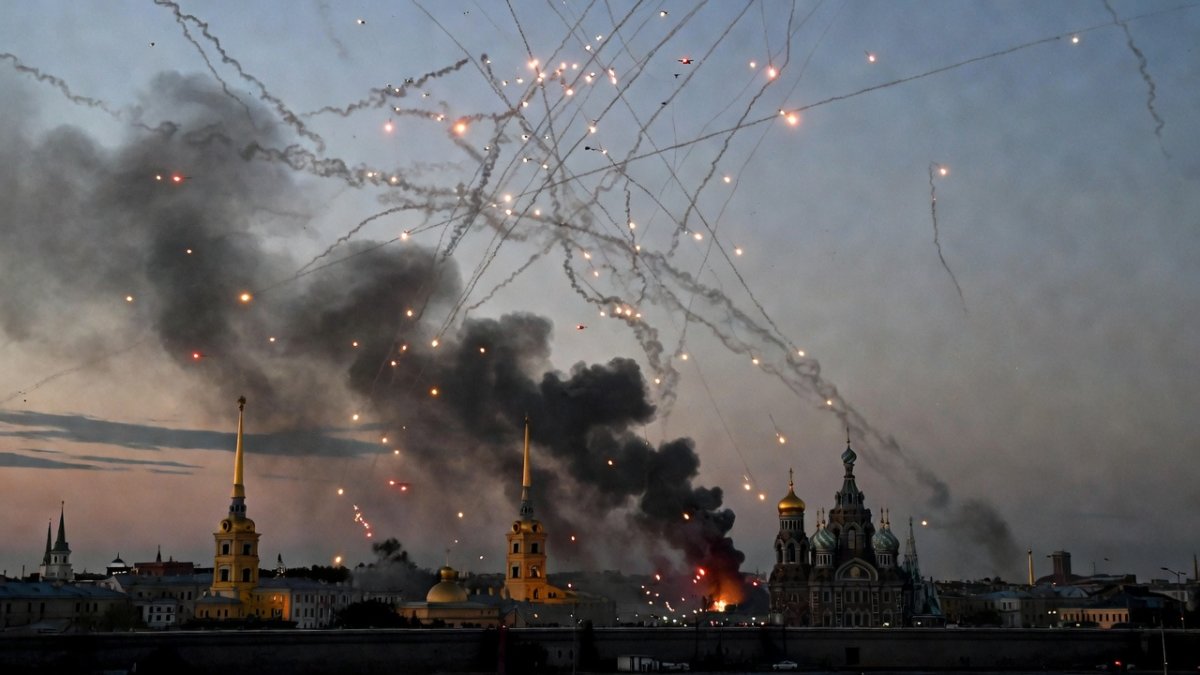
Alexander Drosdenko, the governor of the Leningrad Region which surrounds St. Petersburg, confirmed that Russian air defenses shot down 141 drones during the assault. He described the incident as unprecedented in scale for the region, emphasizing the coordinated nature of the attack which involved successive waves approaching from multiple directions over several hours. The geographic coverage extended across coastal districts along the Gulf of Finland as well as inland areas south of the city, demonstrating careful advance planning by Ukrainian forces. Drosdenko's official statement sought to reassure residents about the effectiveness of air defense systems while acknowledging the extraordinary scope of the operation.
St. Petersburg's municipal governor, Alexander Beglov, issued urgent warnings through Telegram instructing residents to remain inside their homes and avoid unnecessary movement on the streets. His messages also warned of possible interruptions to mobile internet service as authorities managed communications during the emergency. The sense of alarm in a city that has experienced remarkably few direct attacks throughout the conflict, despite its strategic location near the Baltic Sea and NATO member borders, was unmistakable. Residents accustomed to viewing the war as a distant occurrence suddenly confronted active air defense operations above their own neighborhoods.
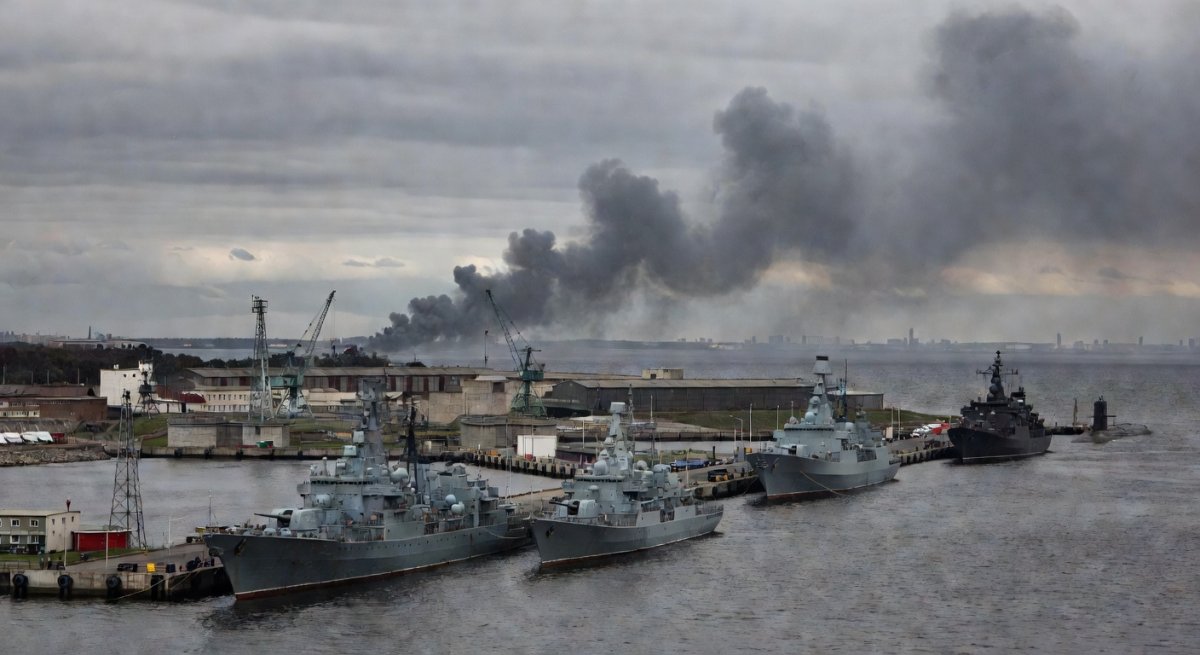
The nearby island of Kronstadt, situated in the Gulf of Finland and serving as the headquarters of Russia's Baltic Fleet, came under direct attack during the operation. The Ukrainian Security Service (SBU) claimed responsibility for striking missile and ammunition storage facilities at the naval base, stating that such special operations weaken the Baltic Fleet's operational capacity. A fire was reported at one of the targeted locations, providing confirmation that at least some munitions reached their intended objectives. This focus on naval infrastructure reveals a strategic dimension to the attack that extends beyond symbolic messaging and aims at degrading Russian military capabilities in the strategically important Baltic theater.
Collateral Disruption: Evacuations and Airport Shutdowns
Six hundred residents were evacuated from the coastal town of Bolshaya Ishora, located south of Kronstadt along the Gulf of Finland coastline. Local authorities organized the movement due to the proximity of targeted areas and concerns about potential secondary explosions or fires spreading from the affected oil and military infrastructure. Pulkovo International Airport, St. Petersburg's primary aviation hub and the main arrival point for SPIEF delegates, temporarily suspended all flight operations. This halt stranded business delegations, government officials, and journalists who had been scheduled to depart following the forum's conclusion, creating significant logistical complications and forcing last-minute rearrangements of travel plans.
The attack also ignited a fire at oil storage infrastructure in the region, sending columns of smoke visible across parts of the city. The combination of mass evacuations, airport shutdowns, and visible fires produced scenes that directly contradicted the official narrative of security and stability. The Kremlin had invested heavily in presenting St. Petersburg as a safe, prosperous venue for international engagement during SPIEF, yet the events on the ground revealed a very different reality.
A Broader Wave: 376 Drones Across Russia
The Russian Defense Ministry reported that a total of 376 Ukrainian drones were intercepted across more than a dozen regions of the country, demonstrating the nationwide scope of the operation. The affected areas included Belgorod, Bryansk, Kaluga, Kursk, Leningrad, Novgorod, Oryol, Pskov, Rostov, Ryazan, Smolensk, Tver, Tula, the Moscow region, Crimea, Abkhazia, and the waters of the Azov and Black Seas. This extraordinary geographic spread, covering thousands of kilometers of European Russia, highlighted Ukraine's ability to conduct concurrent operations across widely separated regions and to stretch Russian air defense resources across multiple axes simultaneously.
One civilian was killed in the western Tver region when struck by debris from an intercepted drone, according to local officials. The broader pattern of simultaneous strikes across multiple regions is significant because it forces Russian air defense units to operate in dispersed locations, reducing the concentration of defensive coverage available for any single target. On the same night, Russia launched 272 drones against Ukraine, of which Ukrainian forces reported shooting down 249. This reciprocal escalation in long-range strikes underscores the growing centrality of drone warfare in the conflict and the intensifying competition between offensive and defensive systems on both sides.
Putin's Response: Acknowledging Damage While Rejecting Talks
Speaking at SPIEF on Friday evening, President Vladimir Putin acknowledged that the drone strikes were causing some damage to the Russian economy. "These attacks naturally lead to nothing good," he admitted, in remarks that represented a relatively rare public acknowledgment of the material impact of Ukrainian operations. However, he firmly rejected Ukrainian President Volodymyr Zelensky's call for direct peace negotiations, declaring that there was "no point" in holding a meeting under current conditions. This was the second drone attack to target St. Petersburg during the forum — the first having occurred on the opening day, June 3 — and Putin's refusal to engage in talks despite the escalating strikes suggests a hardening of the Kremlin's negotiating position.
President Zelensky described the strikes as a "just response" to ongoing Russian aggression against Ukrainian territory and civilian infrastructure. In social media posts, he wrote: "It is time to end this war but Russia's ruler wants to keep fighting," adding that "Ukrainian sanctions against this aggression are working." His comments framed the drone campaign not merely as a military operation but as part of a broader strategy of imposing sustained costs on the Russian economy and military infrastructure.
Russian Air Defense Under Strain
The repeated drone penetrations reaching St. Petersburg — a city located approximately 1,000 kilometers from Ukrainian territory — raise fundamental questions about the effectiveness of Russian air defense coverage. Despite the deployment of advanced S-400 surface-to-air missile systems, extensive electronic warfare capabilities, and multiple layers of radar coverage, Ukrainian drones have consistently reached strategic targets including oil terminals, naval bases, and now the outskirts of Putin's hometown. The Russian Defense Ministry continues to report high interception rates, but the frequency of successful approaches reveals persistent gaps in the network protecting key population centers and military installations across northwestern Russia.
Analysts monitoring the conflict suggest that Ukraine has significantly refined its long-range drone capabilities and identified exploitable weaknesses in Russia's electronic warfare and radar coverage along the Baltic approach corridors. Reports indicate that Ukrainian drones are flying at extremely low altitudes over the Gulf of Finland, using the water surface to reduce radar visibility and exploiting potential blind spots between different air defense sectors. This methodical pattern of tactical adaptation demonstrates a learning curve in Ukrainian strike planning that continues to challenge Russian efforts to maintain comprehensive protective coverage over its western regions and critical infrastructure assets.
Analysis and Implications: A New Phase in the War
The St. Petersburg attacks mark a significant strategic evolution in the conflict. Ukraine has moved decisively beyond limiting its long-range strikes to border regions or purely military targets and is now directing operations at Russia's second city — the birthplace of the current Kremlin leadership and the site of the country's most important annual economic forum. The message to the Kremlin is unmistakable: no location in Russia can be assumed safe from Ukrainian retaliation.
For ordinary residents of St. Petersburg, a city of more than five million people, the war has become an immediate, tangible reality rather than a distant event happening somewhere else. Evacuation orders, airport closures, official warnings to stay indoors, and the visible presence of air defense activity overhead have collectively shattered the carefully maintained illusion of normalcy that the Kremlin has sought to preserve throughout the conflict. These experiences may gradually influence public sentiment in ways that reach beyond purely military calculations and could affect perceptions of security and confidence in the leadership's ability to protect the population.
The SPIEF attacks also send a powerful signal to international investors and foreign governments that Russia cannot guarantee security even in its most protected and prestigious urban center. As the war continues into its fifth year, the operational front lines have effectively expanded to encompass large portions of European Russia. No major population center — including Vladimir Putin's hometown of St. Petersburg — remains beyond the demonstrated reach of Ukrainian strike capabilities. This new strategic reality forces all parties to reassess assumptions about the geographic boundaries of the conflict and its potential trajectory in the months ahead.
By Irina Volkov, Staff Writer
This article was produced with AI-assisted research and editorial support. Reporting is based on sources cited in the article.
What's Your Reaction?
 Like
0
Like
0
 Dislike
0
Dislike
0
 Love
0
Love
0
 Funny
0
Funny
0
 Wow
0
Wow
0
 Sad
0
Sad
0
 Angry
0
Angry
0

Russia/Eastern Europe Correspondent at Global1.News. Covering Russian politics, energy, security, and the shifting dynamics of the post-Soviet space. Provides clear-eyed analysis on one of the world's most opaque regions.














Comments (0)