
Strait of Hormuz Shipping Shows Tentative Rebound but Demining Dispute and Shadow Fleet Risks Cloud Outlook
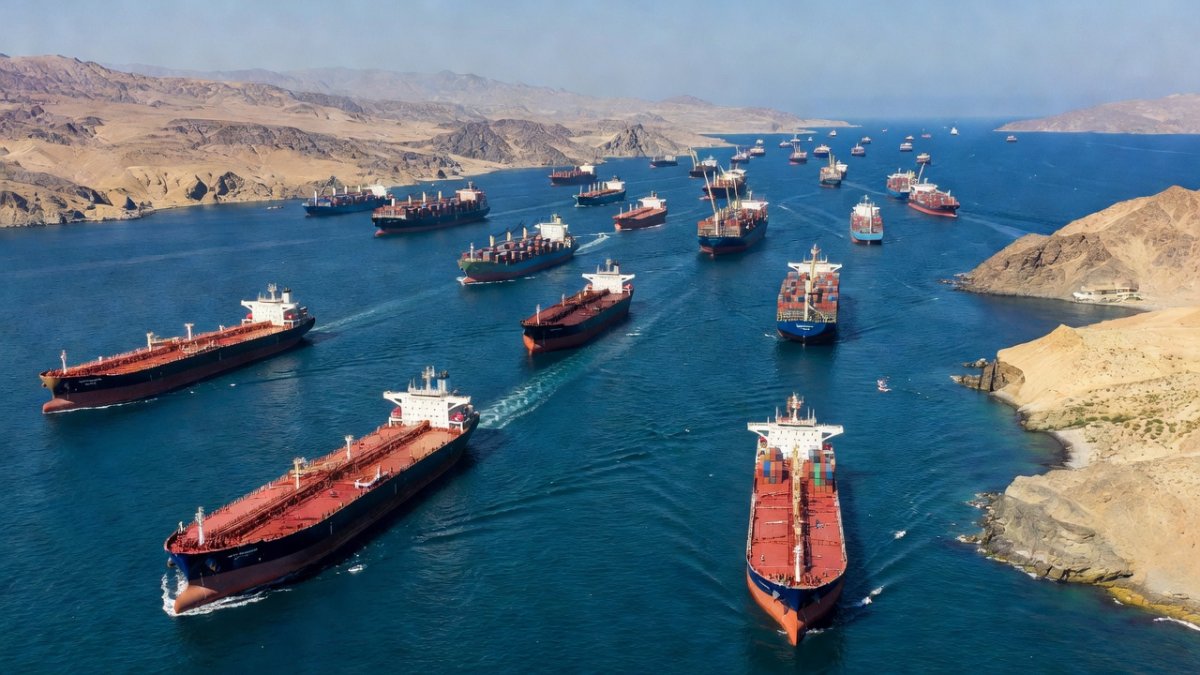
The Strait of Hormuz, the world's most critical energy chokepoint, transformed from a vital global artery into a contested and dangerous waterway after the February 28, 2026 US-Israel air war against Iran and the assassination of Supreme Leader Ayatollah Ali Khamenei. What was once a conduit for 20 percent of the world's oil and 25 percent of its liquefied natural gas became a
The Strait of Hormuz, the world's most critical energy chokepoint, transformed from a vital global artery into a contested and dangerous waterway after the February 28, 2026 US-Israel air war against Iran and the assassination of Supreme Leader Ayatollah Ali Khamenei. What was once a conduit for 20 percent of the world's oil and 25 percent of its liquefied natural gas became a near-complete blockade zone, with daily commercial transits plunging from the peacetime average of 100-140 vessels to single digits within days. More than four months later, a fragile recovery is underway following the historic US-Iran peace deal signed in Islamabad on June 14-15, yet the waterway remains a barometer of unresolved regional power struggles involving Gulf security architecture, energy market stability, Iran's nuclear ambitions, and the evolving alignments born of Arab-Israeli normalization.
Strait of Hormuz Shipping Shows Tentative Rebound but Demining Dispute and Shadow Fleet Risks Cloud Outlook Beirut, Lebanon – July 5, 2026 — The Strait of Hormuz is cautiously reopening after the US-Iran ceasefire, but the pace and durability of the recovery remain uncertain as Iran asserts exclusive control over demining operations, vessels continue to "go dark" by disabling tracking systems, and the shipping industry remains deeply skeptical about safety assurances from both Washington and Tehran.
Geopolitical Context: The Strait of Hormuz After the US-Iran War
The February 28 US-Israel air campaign struck more than 180 Iranian military sites across Khuzestan, Bushehr, and Hormozgan provinces, destroying launch complexes, command nodes, and naval infrastructure that had enabled Iran's rapid strait-closure capability. The precision strike that killed Supreme Leader Ayatollah Ali Khamenei in a Tehran bunker created an immediate leadership vacuum, prompting Iranian naval forces to seal the western approaches with naval mines and patrol vessels under Article 51 self-defense provisions. Average daily transits collapsed from 125 vessels in January 2026 to fewer than ten by March 10, the lowest level since the Iran-Iraq War of the 1980s. Brent crude spiked above $140 per barrel for eleven consecutive trading sessions, forcing Japan, South Korea, and India to release 180 million barrels from strategic petroleum reserves to stabilize domestic fuel prices.
The crisis accelerated a profound realignment of Middle Eastern security architecture. Saudi Arabia and the United Arab Emirates quietly expanded intelligence-sharing protocols with Israel through the Negev coordination cell, accelerating the accession of Oman and Bahrain to the Abraham Accords framework by late April. Washington's overriding priority became restoring the flow of roughly 20 million barrels per day of Gulf crude exports before the November 2026 midterm elections, a goal that Treasury officials linked to potential sanctions carve-outs for Iranian oil sales. Meanwhile, Gulf sovereign wealth funds including Saudi Arabia's Public Investment Fund (PIF) and the Abu Dhabi Investment Authority (ADIA) recorded combined portfolio valuation swings exceeding $310 billion between March and June, underscoring the direct fiscal exposure of Gulf economies to Hormuz stability.
The Fragile Recovery: Confirmed Crossings and the Data
The 14-point ceasefire framework negotiated in Islamabad and signed on June 14-15, 2026, produced the first measurable uptick in maritime traffic through the strait. The deal included an immediate cessation of hostilities, the reopening of the Strait of Hormuz to commercial shipping, temporary sanctions relief for Iranian oil exports, the return of International Atomic Energy Agency (IAEA) inspectors to Iranian nuclear facilities, and a framework for renewed nuclear talks. Kpler, the commodities analytics firm, recorded 70 confirmed crossings on June 24, representing a 105 percent increase from the May nadir, of which 57 were commercial tankers and LNG carriers. Throughput reached approximately 20 million barrels per day, roughly 50-60 percent of the 34 million barrels recorded in January 2026. The International Energy Agency (IEA) reported that the UAE restored 85 percent of its pre-war crude export capacity through the Fujairah pipeline bypass system, which allows some volumes to bypass the narrowest and most heavily mined sections of the strait.
Professor Derek Grossman of International Relations at the RAND Corporation cautioned that "the strait is open but not back to normal," noting that increased Automatic Identification System usage signals cautious commercial re-engagement but cannot substitute for verified demining. Oil prices stabilized near $95 per barrel in early July, yet war-risk insurance premiums remain elevated at approximately $850,000 per very large crude carrier (VLCC) transit. Industry sources indicate that at least 12 VLCCs remain anchored off Fujairah awaiting demining guarantees before resuming direct Hormuz passages, and any renewed Iranian mine-laying or harassment incident could push crude benchmarks above $120 per barrel within days.
The Demining Standoff: Iran's Exclusive Claim
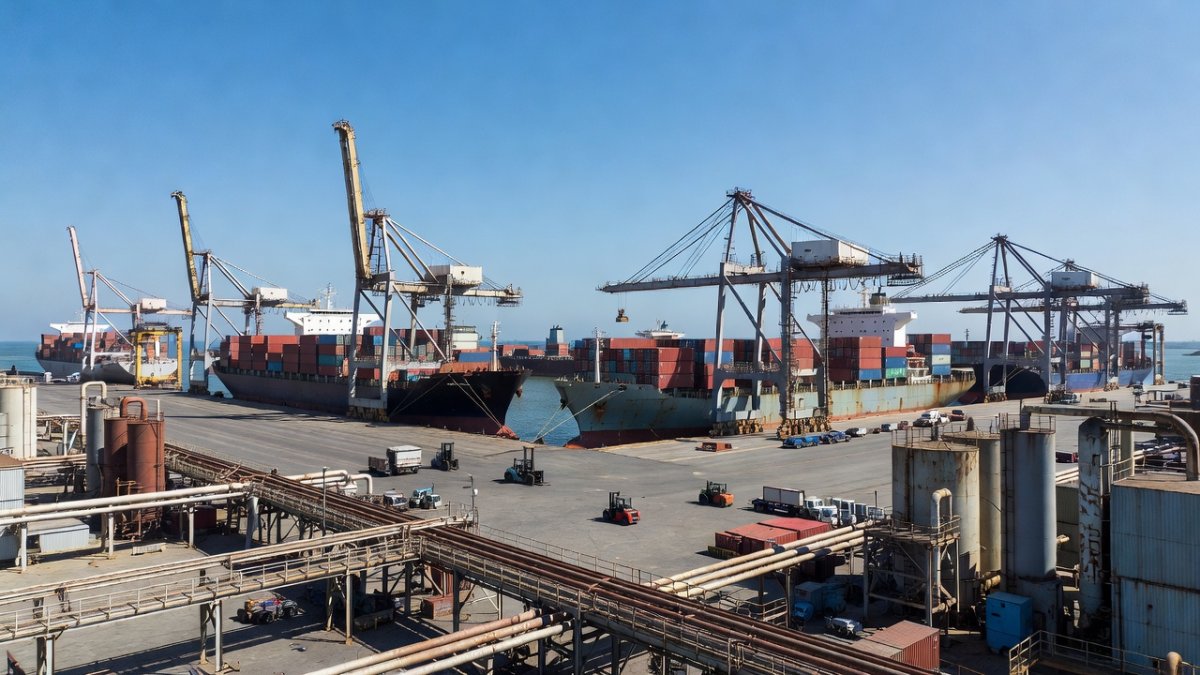
The most immediate obstacle to a full recovery is the dispute over who will clear the hundreds of naval mines believed to litter the strait's shipping lanes. Iran's Deputy Foreign Minister Kazem Gharibabadi declared on June 28 that demining operations constitute Iran's exclusive sovereign responsibility under the Islamabad Memorandum of Understanding, explicitly rejecting any multilateral or foreign presence inside Iranian territorial waters. Tehran dismissed French President Emmanuel Macron's proposal for a France-Oman joint demining partnership, labeling it an infringement on national jurisdiction. "The demining of the Strait of Hormuz is an operation that will be carried out exclusively by Iran, in accordance with the MoU between Tehran and Washington," Gharibabadi stated.
UK Foreign Secretary Yvette Cooper publicly called for "full and immediate resumption of freedom of navigation" during a June 30 address to the UN Security Council, while French Admiral Jean-Louis Lechat warned that residual minefields near the Musandam Peninsula still pose a credible hazard to vessels drawing more than 18 meters. Lechat confirmed that at least three acoustic mines were detected by NATO minehunters in the past fortnight, and cautioned that "the fear of mines alone is sufficient to disrupt shipping traffic even after the official reopening." Without independent third-party verification of mine clearance, war-risk premiums have climbed to approximately $1.2 million per VLCC transit, according to leading London insurance syndicates. Chatham House senior fellow Dr. Sanam Vakil emphasized that "freedom of passage remains the central unresolved concern," noting that Iranian Revolutionary Guard Navy patrols continue to shadow commercial traffic despite the ceasefire framework.
The Omani Corridor and the 'Going Dark' Problem
Oman has emerged as the reluctant facilitator of a southern corridor hugging its territorial waters, allowing limited tanker traffic to avoid the most heavily mined sections of the main shipping lanes. Despite Iranian naval warnings broadcast on June 22 cautioning vessels against using unapproved routes, shipping companies have increasingly routed cargoes through Omani waters. However, a persistent and troubling trend has emerged: approximately one in four tankers now disables its Automatic Identification System transponders when approaching the strait, a practice the International Maritime Organization terms "going dark." This complicates collision avoidance, undermines sanctions enforcement regimes, and makes it difficult for analysts to accurately assess the true volume of traffic.
The IMO estimates that 11,000 seafarers remain affected by rerouting decisions and delayed crew changes, with average crew-change delays stretching to 23 days. The UN-coordinated evacuation of stranded mariners concluded on June 23 after weeks of negotiations with port authorities in Fujairah and Salalah. Industry bodies remain deeply skeptical of former President Donald Trump's June 27 assertion that the strait is "fully open, safe, and pristine," citing persistent insurance surcharges and the lack of third-party verification. Muscat hosted Iranian-Omani technical talks on July 2 focused on joint hydrographic surveys, but Tehran continues to insist that any demining map must remain classified. Shipping analysts at Clarksons Research calculate that the Omani corridor route adds an average of 2.8 days and $340,000 in fuel costs per VLCC voyage compared with pre-war routing through the center of the strait.
Strategic Calculus: What Tehran, Washington, and the Gulf States Want
Iran's strategic calculus is multi-layered. Tehran seeks phased sanctions relief to revive an economy battered by years of restrictions, formal recognition of its demining authority to reassert sovereign control over the waterway, and continued leverage through its proxy networks in Iraq, Yemen, Lebanon, and Syria to offset domestic economic pressures. At the nuclear level, Iran aims to ensure that the talks framework does not impose constraints beyond the 2015 Joint Comprehensive Plan of Action while retaining its enrichment capabilities and regional influence.
Washington's priorities center on verifiable IAEA access to three undeclared Iranian sites by late July, followed by incremental sanctions easing calibrated to energy-market stability ahead of the November midterms. The Biden administration has framed the Islamabad deal as a diplomatic victory, but the slow pace of recovery and Iran's exclusive demining claim complicate that narrative. Saudi Arabia and the UAE require secure, uninterruptible export lanes to underwrite Vision 2030 diversification programs and ADIA-funded projects valued at a combined $1.2 trillion. Oman positions itself as the indispensable neutral broker, offering Muscat as a venue for follow-on talks and maintaining relationships with both Washington and Tehran. Turkey and Israel maintain parallel monitoring cells watching for shifts in the maritime security regime, while China and Russia have separately offered demining equipment and technical personnel, underscoring the great-power competition over influence around critical energy chokepoints. The nuclear talks framework remains fragile; any Iranian refusal to accept IAEA inspectors could collapse the Islamabad ceasefire within weeks.
Regional Implications: Energy Markets, Alliances, and the Long Road Ahead
The full restoration of Strait of Hormuz traffic to pre-war levels will have profound implications for global energy markets, regional alliances, and the credibility of the US-Iran ceasefire framework. With Brent crude anchored at $95 per barrel, markets remain acutely sensitive to any renewed closure threat. LNG cargoes destined for Japan, South Korea, and India have been partially rerouted via the Cape of Good Hope, adding an estimated 18 days to typical voyage times and increasing delivered costs by approximately 22 percent. China has increased spot purchases from Qatar and the United States to offset potential Iranian supply shortfalls, accelerating a broader diversification of its energy import portfolio away from exclusive reliance on Hormuz transits.
The IAEA's scheduled return to Iranian nuclear facilities in late July will serve as the first major test of the Islamabad framework's durability. A credible, multilateral demining resolution under some form of UN or international auspices is widely viewed as essential to locking in the fragile recovery, but Tehran's insistence on exclusive control remains the principal obstacle. The episode has laid bare the structural fragility of global energy chokepoints when regional rivalries intersect with great-power competition. It has also accelerated Gulf states' investment in alternative infrastructure, including overland pipelines, floating storage capacity, and strategic petroleum reserves designed to mitigate the impact of any future closure. Absent a comprehensive political settlement that addresses both the nuclear question and the maritime security architecture of the Gulf, the Strait of Hormuz will remain a latent flashpoint capable of disrupting 20 percent of global oil trade and a quarter of LNG supply with minimal warning.
By Malik Hassan, Staff Writer
This article was produced with AI-assisted research and editorial support. Reporting is based on sources cited in the article.
What's Your Reaction?
 Like
0
Like
0
 Dislike
0
Dislike
0
 Love
0
Love
0
 Funny
0
Funny
0
 Wow
0
Wow
0
 Sad
0
Sad
0
 Angry
0
Angry
0

Middle East Correspondent at Global1.News. Based in Beirut, covering politics, conflict, energy, and society across the Middle East. Brings context and depth to a region often reduced to headlines.












Comments (0)