
Gaza Fades in US-Iran Diplomacy as Mideast Priorities Shift
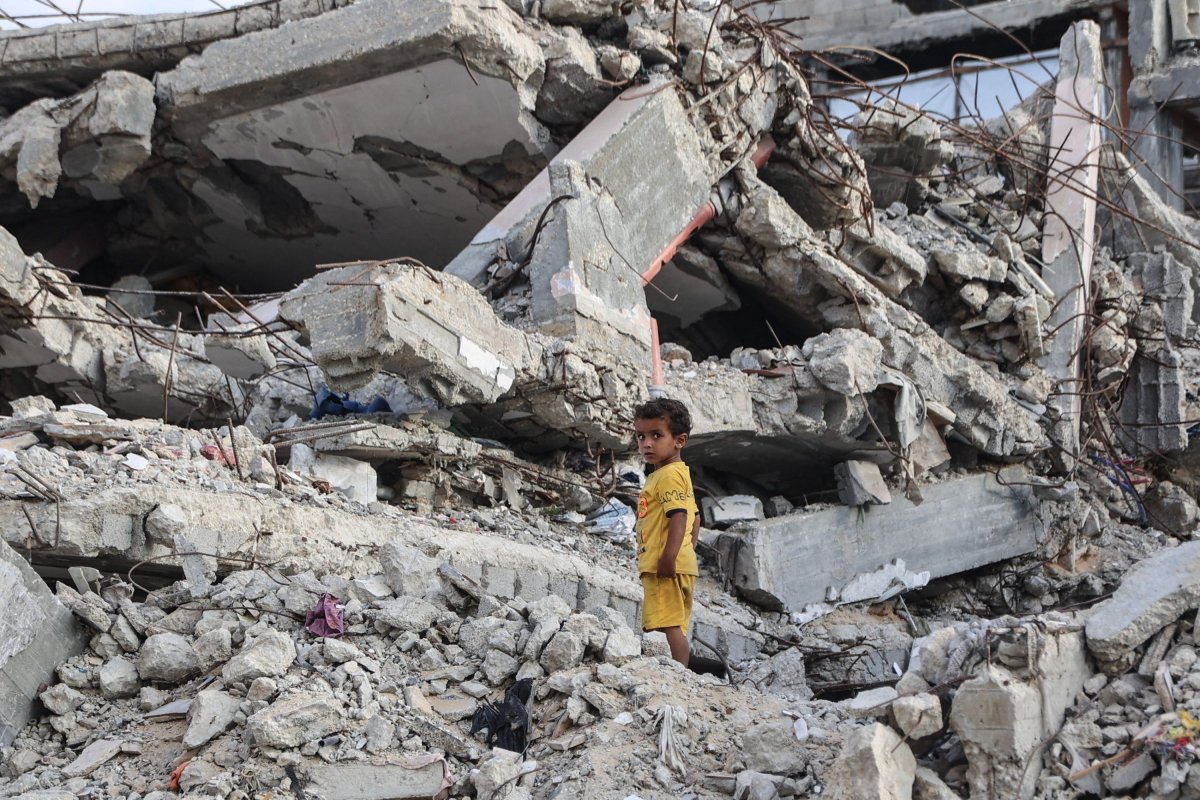
Regional Priorities Shift Away from Gaza The cascade of events that began with Hamas's October 2023 incursion into Israel eventually produced direct confrontation between the United States and Iran. This sequence has pushed the devastated Palestinian territory into the background of international diplomacy. Washington and Tehran now negotiate terms for a fragile peace that cont
Regional Priorities Shift Away from Gaza
The cascade of events that began with Hamas's October 2023 incursion into Israel eventually produced direct confrontation between the United States and Iran. This sequence has pushed the devastated Palestinian territory into the background of international diplomacy. Washington and Tehran now negotiate terms for a fragile peace that contains no reference to Gaza in its preliminary text.
Palestinians inside the territory notice the change immediately. Ahmed Jamali, a 53-year-old resident of a displacement camp, told Agence France-Presse that the world has forgotten Gaza since the United States entered talks with Iran. He described a situation in which Israel continues operations without external restraint.
Analysts interpret the omission as evidence that regional capitals now rank other files higher. The European Council on Foreign Relations' Hugh Lovatt observed that the absence signals Hamas's declining strategic value in Iranian calculations. This reordering leaves local populations exposed to prolonged uncertainty.
International actors appear to accept that short-term solutions for Gaza remain elusive. Diplomats involved in the broader talks report a shared view that the territory's issues resist quick resolution. Such assessments reinforce the sense that attention has moved elsewhere.
Second-order effects include reduced leverage for Palestinian factions seeking reconstruction funds. Without sustained external pressure, Israeli conditions on disarmament gain greater weight in any future framework. The resulting imbalance shapes daily life for residents still awaiting basic services.
The October 2023 Chain of Events
Hamas launched its incursion on 7 October 2023 without prior coordination that would have aligned Iranian timelines. The attack triggered an extended Israeli military campaign inside Gaza that drew in Hezbollah forces from Lebanon and Houthi operations in Yemen. Those escalations ultimately produced direct exchanges between Tehran and Washington.
Israeli military expert Eado Hecht noted that Iranian leaders had not sought open conflict at that moment. Hamas therefore acted with a degree of independence that surprised its nominal backers. The resulting chain exposed the limits of Tehran's operational control over every proxy element.
Each subsequent stage widened the geographic scope. Hezbollah's involvement along the northern border created a second front that required Israeli resources. Houthi attacks on shipping lanes then internationalized the crisis further by threatening global trade routes.
The progression from localized fighting to great-power friction illustrates how proxy networks can generate unintended momentum. Washington responded by reinforcing its regional posture while Tehran sought to manage multiple simultaneous commitments. This dynamic left Gaza's original grievances submerged beneath larger strategic calculations.
Sunni-Shia competition added another layer, as Arab states watched Iranian influence expand through non-state actors. The episode demonstrated both the reach and the fragility of the so-called axis of resistance when one component moved ahead of the others.
Humanitarian Crisis and Diplomatic Neglect
More than two and a half years after the initial outbreak, Gaza continues to face severe shortages despite the fragile ceasefire reached in October 2025. Reconstruction projects remain stalled because no transitional authority has taken shape. International fatigue has compounded the problem by reducing donor engagement.
A veteran diplomat based in Jerusalem explained to Agence France-Presse that Gaza's absence from current agreements stems from the lack of any credible political framework for the day after. This paralysis prevents both disarmament steps and the formation of alternative governing structures.
Israeli requirements that Hamas fully disarm before any transition clash with Hamas's insistence on guarantees for a replacement authority. Neither an international stabilization force nor a workable mechanism has emerged in the months since the ceasefire took effect. The resulting deadlock keeps basic services at risk.
Negotiations in Cairo continue among Palestinian factions, the Board of Peace established by US President Donald Trump, Qatar, and Türkiye. Progress remains limited to technical discussions rather than binding commitments. Residents therefore experience little visible change on the ground.
The combination of stalled diplomacy and ongoing humanitarian strain risks renewed escalation if external actors do not re-engage. Fatigue among governments has not eliminated the underlying drivers of instability inside the territory.
Iran's Recalibration of Proxy Networks
Tehran has adjusted its priorities among regional partners following the October 2023 events. Analysts note that Hezbollah now receives greater emphasis as a pillar of Iran's deterrent posture. This shift reduces the resources and attention previously directed toward Hamas.
Hugh Lovatt of the European Council on Foreign Relations stated that the change reflects Hamas's declining strategic value in Iranian eyes. Michael Milshtein, an Israeli military analyst, added that Tehran places higher value on preserving Hezbollah to maintain regional balance. Both assessments point to a deliberate reallocation of support.
Eado Hecht observed that Hamas functioned as an ally rather than a direct instrument of Iranian policy. The October 2023 attack occurred earlier than Iranian preferences allowed, creating friction within the relationship. Subsequent Iranian statements have avoided strong commitments to Gaza's reconstruction.
The recalibration carries implications for Sunni-Shia dynamics across the Levant. Arab states observe that Iran's proxy network is not monolithic and can be influenced by differing timelines among its components. This realization affects their own calculations about engagement with Tehran.
Great-power competition further shapes these choices, as Iran seeks to conserve capabilities amid rivalry with the United States. Prioritizing Hezbollah over Hamas represents one method of preserving leverage without overextending across every front simultaneously.
The US-Iran Diplomatic Track
Washington has pursued pragmatic engagement with Tehran aimed at reducing the risk of renewed direct confrontation. Preliminary texts focus on sanctions relief and security understandings rather than comprehensive regional settlements. This narrower scope deliberately excludes Gaza to maintain momentum.
Both sides recognize that broader issues such as nuclear limits and maritime security require sustained attention. The United States seeks to prevent further entanglement that could divert resources from competition with China and Russia. Iran, for its part, aims to secure economic breathing room without conceding core regional positions.
The absence of Gaza from the current framework does not indicate resolution but rather a sequencing decision. Diplomats calculate that addressing immediate bilateral flashpoints first may create conditions for later discussion of Palestinian issues. Whether that sequencing holds remains uncertain.
Second-order effects include reduced pressure on Israel to advance political transitions inside Gaza. Without active US insistence tied to the Iran track, Israeli positions on disarmament gain additional room. Palestinian actors therefore face a narrower set of external supporters.
Great-power rivalry adds complexity, as Russia and China monitor the talks for opportunities to expand their own influence. Any perception that Washington has sidelined Gaza could be used to court Arab public opinion.
Gulf State Calculations
Saudi Arabia and the United Arab Emirates continue to prioritize economic diversification under Vision 2030 and similar programs. Stable energy markets and secure shipping lanes remain essential to those plans. Prolonged instability in Gaza risks distracting attention and capital from these domestic agendas.
Qatar maintains its role as a mediator by hosting talks that include Palestinian factions and Turkish representatives. This position allows Doha to preserve channels with both Hamas and Western governments. Türkiye similarly leverages its diplomatic presence in Cairo to influence outcomes.
Arab-Israeli normalization efforts, already slowed by the Gaza conflict, face further uncertainty while governance questions remain unresolved. Gulf capitals prefer frameworks that separate their bilateral security interests from Palestinian internal disputes. This preference contributes to the current diplomatic sidelining of Gaza.
Each state weighs the costs of renewed fighting against the benefits of a durable US-Iran understanding. Saudi and Emirati officials have signaled willingness to support reconstruction only after credible security arrangements emerge. Qatar and Türkiye, by contrast, emphasize the need for inclusive Palestinian participation.
The resulting divergence among Gulf actors limits the formation of a unified regional position. This fragmentation further reduces external leverage on the Cairo process.
Energy Markets and OPEC+ Dynamics
Continued deadlock over Hamas disarmament keeps Red Sea shipping lanes exposed to potential disruption. Houthi capabilities remain intact, creating ongoing risks for energy transit even after the broader ceasefire. Markets therefore price in a persistent volatility premium.
OPEC+ members, including Saudi Arabia, monitor these risks while managing their own production quotas. Any resumption of large-scale fighting could tighten supply and push prices higher, benefiting producers but harming global growth. This tension influences how Gulf states approach Gaza-related diplomacy.
Iranian participation in OPEC+ discussions adds another variable. Tehran seeks to maximize oil revenues while navigating sanctions relief talks with Washington. The two tracks intersect because energy stability forms part of the broader US-Iran agenda.
Second-order effects include pressure on non-OPEC producers to increase output if disruptions intensify. Such shifts could alter long-term market shares and affect investment decisions across the region. Palestinian reconstruction needs remain secondary to these macroeconomic calculations.
The interplay between proxy conflicts and energy security demonstrates how local disputes generate global consequences. Until governance arrangements in Gaza stabilize, shipping and price risks are likely to persist.
Prospects for Renewed Conflict or Resolution
Israeli media have reported contingency planning for a possible summer 2026 offensive should political negotiations fail. Military expert Eado Hecht cautioned that operational readiness alone does not guarantee renewed fighting. Political will remains the decisive factor in any decision to resume large-scale operations.
The Cairo process offers one narrow pathway toward gradual Hamas disarmament paired with transitional authorities. Sources close to the talks indicate that US President Donald Trump may allow the effort additional time. Success, however, depends on bridging the gap between Israeli security demands and Palestinian governance requirements.
If the talks collapse, the absence of an international stabilization force increases the likelihood of renewed clashes. Both Israeli and Hamas positions have hardened around core red lines that have not shifted since the October 2025 ceasefire. External actors appear unwilling to impose solutions at present.
Regional powers continue to weigh the costs of renewed escalation against the benefits of a limited US-Iran understanding. Hezbollah's preserved strength and Iran's recalibrated priorities suggest that any new round of fighting would differ in character from previous phases. Palestinian civilians would again bear the immediate consequences.
Longer-term resolution requires a credible political framework that currently does not exist. Without renewed international engagement, Gaza's trajectory points toward prolonged stagnation rather than decisive movement toward either war or peace.
By Malik Hassan, Staff WriterThis article was produced with AI-assisted research and editorial support. Reporting is based on sources cited in the article.
What's Your Reaction?
 Like
0
Like
0
 Dislike
0
Dislike
0
 Love
0
Love
0
 Funny
0
Funny
0
 Wow
0
Wow
0
 Sad
0
Sad
0
 Angry
0
Angry
0

Middle East Correspondent at Global1.News. Based in Beirut, covering politics, conflict, energy, and society across the Middle East. Brings context and depth to a region often reduced to headlines.










Comments (0)