
Santiago Xalitzintla: Guardians of Popocatépetl Volcano
Santiago Xalitzintla: Guardians of Popocatépetl Volcano Discover how Santiago Xalitzintla's 2,000 residents keep Popocatépetl calm through traditions, UNAM monitoring, and daily resilience at 2,600 meters altitude. **Keywords:** Santiago Xalitzintla, Popocatépetl, Puebla, Don Goyo, UNAM volcanology, INEGI census, Mexican volcano traditions, Iberoamericana anthropology, communit
The Guardians of Popocatépetl
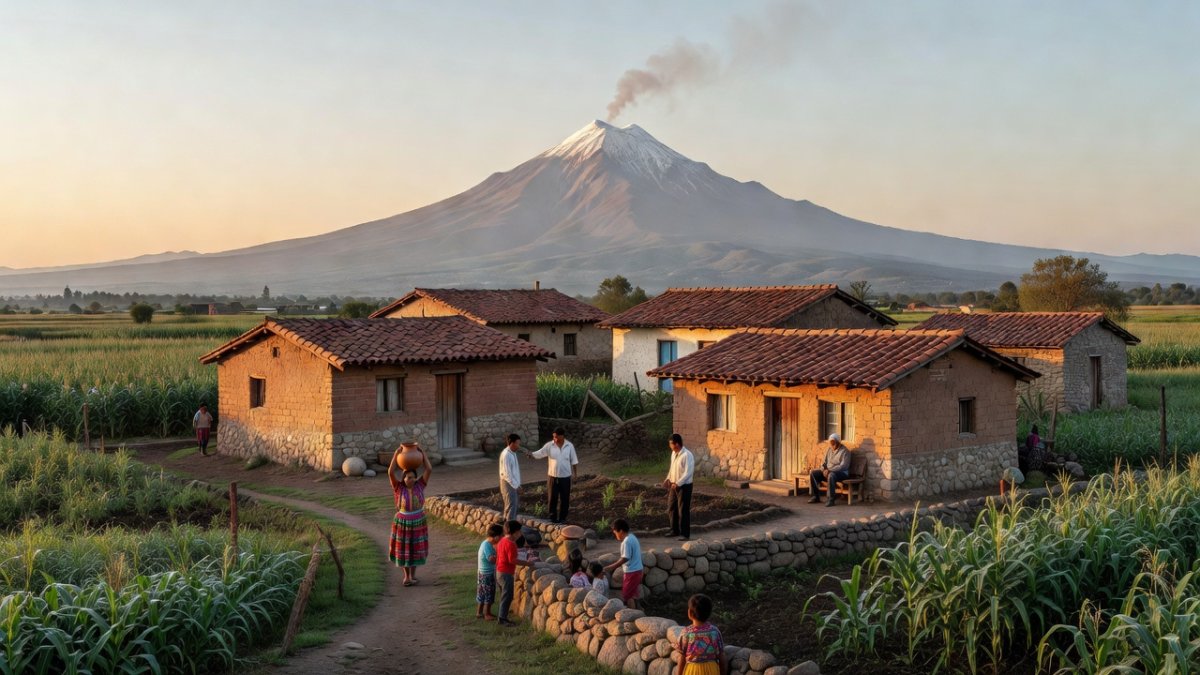
Two volcanoes crown Mexico City: Popocatépetl and its sleeping lover, Iztaccíhuatl. As Mexicans from the central region of the country, we are very used to seeing them guarding the capital—when the smog allows it, of course. None of this would be possible, according to local folk stories, if it were not for the villagers of Santiago Xalitzintla in the central state of Puebla, who were entrusted with keeping Popocatépetl calm.
Nestled near the volcano’s crater, Santiago Xalitzintla is a town of just over 2,000 inhabitants, according to the most recent INEGI census. Belonging to the municipality of San Nicolás de los Ranchos, the community sits at an average altitude of approximately 2,560 to 2,626 meters above sea level, with the Popocatépetl crater about 12 kilometers away. Thanks to the shamans who live there, says the local legend, the volcano remains calm. These guardians, though legendary, are indeed real people.
In Santiago Xalitzintla, volcanologists and civil protection specialists regularly conduct field visits aimed at documenting daily practices of forest care and response to wildfires, according to records from the Department of Social Anthropology at the Universidad Iberoamericana in Mexico City. Ordinary families here carry forward this responsibility with quiet pride, passing knowledge from grandparents to children about how to live respectfully beside the mountain they call Don Goyo.
Life at the Foot of a Volcano
The people of Santiago Xalitzintla face a semi-cold climate for much of the year given the altitude, along with intense summer rains and the risk of frost in winter. Despite these challenges, daily life continues with the same rhythms that have sustained Mexican families for generations—tending small plots, preparing meals, and watching the sky for signs from the great mountain that looms just 12 kilometers from their doorsteps.
At 2,560 to 2,626 meters above sea level, the air is thinner and the nights cooler, yet residents have adapted over centuries. Children walk to school while elders share stories of how the shamans help maintain balance with Popocatépetl. The INEGI census figure of just over 2,000 inhabitants reflects a tight-knit population that chooses to remain, drawing strength from both Indigenous traditions and Catholic faith.
Universidad Iberoamericana researchers have noted how these families combine practical forest care with cultural respect for the land. Their routines include clearing underbrush to prevent wildfires and teaching younger generations the signs that Don Goyo may be restless. This blend of observation and tradition forms the backbone of community life at the volcano’s edge.
The Science Behind the Legend — A Conversation with UNAM’s Dr. Hugo Delgado Granados
MND spoke to volcanologist Hugo Delgado Granados, from the Institute of Geophysics at UNAM. A specialist in volcanic hazard and risk assessment, he has dedicated years to monitoring volcanic emissions. Dr. Delgado began his scientific research in 1983. He knows that the volcano’s most ancient rocks are 538 million years old. However, the volcano is older than that: “This volcano is actually a volcanic complex made up of four volcanoes that have been created and destroyed: Tlamacas Volcano, Nexpayantla Volcano, Ventorrillo Volcano, El Fraile Volcano and Popocatépetl itself, which is the current volcano.”
The last violent eruption happened more than 1,300 years ago, “and a similar eruption could happen again in the future, but not in the near future,” Delgado clarifies. Regarding how dangerous the volcano still is: “In the case of Popocatépetl, low-magnitude eruptions are the most likely.” “Yes, it is a dangerous volcano because it is highly likely to develop low-magnitude eruptions.” Families in Santiago Xalitzintla listen to these scientific updates while continuing their own protective customs.
UNAM monitoring teams work alongside local knowledge keepers, creating a partnership that respects both data and tradition. Dr. Delgado’s decades of work since 1983 have helped residents understand the complex history of the volcanic system without dismissing the cultural role of the shamans who have watched over Don Goyo for generations.
A Tradition of Resilience
The people of Santiago Xalitzintla are resilient: in addition to facing a semi-cold climate for much of the year—given the altitude—they deal with intense summer rains and the risk of frost in winter. Despite the real risks of living in the jaws of the volcano, they have repeatedly refused to abandon the town, even in the face of its furious activity. The last serious alert was in May 2023, when “Don Goyo” began to spew gas, water vapor, ash and igneous rocks.
Ordinary Mexican families here demonstrate remarkable steadiness. They prepare their homes, check on neighbors, and rely on the same community networks that have supported them through past episodes of activity. The INEGI-recorded population of just over 2,000 continues to thrive because residents view the volcano not only as a threat but as part of their identity.
Universidad Iberoamericana documentation highlights how daily forest care practices contribute to this resilience. By maintaining the surrounding woodlands, residents reduce additional hazards such as landslides during heavy rains, showing how practical actions and cultural guardianship work together.
Celebrating Don Goyo
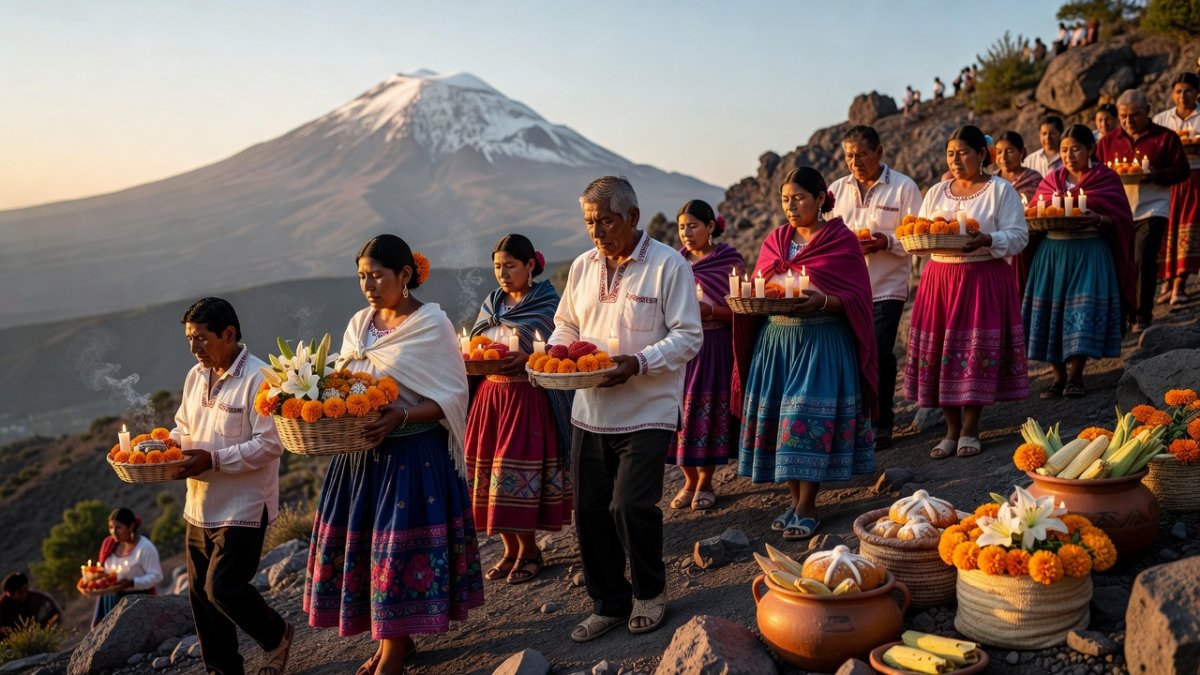
Every year, the townspeople at Santiago Xalitzintla celebrate Popocatépetl’s birthday on March 12. This is a special day for the community, as it coincides with the feast day of Saint Gregory the Great. On this day, the inhabitants climb the volcano with offerings, food and flowers to ask “Don Goyo” for peace and a good harvest.
In addition to the traditional offerings made to the volcano—which blend elements of local Indigenous tradition with Catholic customs—they sing “Las Mañanitas” to the volcano and prepare mole with rice, supposedly Popocatépetl’s favorite dish. Children and elders alike participate, strengthening family bonds and passing the custom to the next generation.
The March 12 celebration transforms the mountain into a place of joyful connection rather than fear. Families carry flowers and food up the slopes, their voices rising in song, reinforcing the belief that respectful attention helps keep the volcano calm. These gatherings remain central to community life in Santiago Xalitzintla.
Living Memory, Living Risk
The May 2023 alert reminded everyone that Popocatépetl remains active, releasing gas, water vapor, ash and igneous rocks. Yet residents stayed, drawing on centuries of experience living 12 kilometers from the crater at altitudes between 2,560 and 2,626 meters above sea level. Their decision reflects deep roots rather than denial of risk.
Dr. Delgado’s research since 1983 at UNAM underscores that low-magnitude eruptions are the most probable future events. Santiago Xalitzintla families combine this scientific understanding with their own observations and the guidance of local shamans. The result is a layered approach to safety that honors both modern data and ancestral wisdom.
Records from the Universidad Iberoamericana show how ongoing forest care supports this balance. By protecting the woodlands around the town, residents reduce secondary dangers and maintain the natural environment that has sustained their community for generations.
What to Watch For
Residents and scientists alike monitor Popocatépetl for changes in emissions and seismic activity. The volcanic complex—comprising Tlamacas, Nexpayantla, Ventorrillo, El Fraile, and the current Popocatépetl—requires continued attention, as noted by Dr. Delgado. Low-magnitude events remain the primary concern for the near term.
For families in Santiago Xalitzintla, watching the mountain is both a daily habit and a cultural duty. They note the direction of plumes, listen for unusual sounds, and prepare offerings on March 12 to ask for continued peace. The INEGI census figure of just over 2,000 people represents a community committed to staying informed and united.
Universidad Iberoamericana fieldwork continues to document these practices, ensuring that traditional knowledge of forest care and volcano response is recorded for future generations. In this way, Santiago Xalitzintla remains a living example of how Mexican communities can honor both science and heritage while living beside one of the country’s most powerful natural landmarks.
Tags: Santiago Xalitzintla, Popocatépetl, Don Goyo, Puebla, UNAM, INEGI, Universidad Iberoamericana, Mexican volcano traditions, central Mexico families, March 12 celebration
By Rosa Martinez, Staff Writer
This article was produced with AI-assisted research and editorial support. Reporting is based on sources cited in the article.
What's Your Reaction?
 Like
0
Like
0
 Dislike
0
Dislike
0
 Love
0
Love
0
 Funny
0
Funny
0
 Wow
0
Wow
0
 Sad
0
Sad
0
 Angry
0
Angry
0
Latin America/Andes Correspondent at Global1.News. Based in Bogota, covering politics, environment, energy, and social movements across the Andean region. Passionate about environmental journalism and communities protecting their land.














Comments (0)