
Marcos, Duterte Trade Sharp Barbs on Independence Day
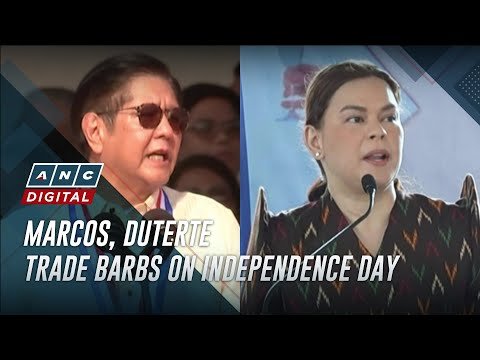
In a recent ANC 24/7 report by Katrina Domingo, President Ferdinand Marcos Jr. and Vice President Sara Duterte exchanged pointed remarks in separate Independence Day messages on June 12, 2026 — exposing the deep fractures within the former UniTeam alliance that swept the 2022 elections. The President warned from Luneta Park against leaders who prioritize personal agendas, while
In a recent ANC 24/7 report by Katrina Domingo, President Ferdinand Marcos Jr. and Vice President Sara Duterte exchanged pointed remarks in separate Independence Day messages on June 12, 2026 — exposing the deep fractures within the former UniTeam alliance that swept the 2022 elections. The President warned from Luneta Park against leaders who prioritize personal agendas, while the Vice President declared from Davao City that she wants Filipinos to see "hanggang sa dulo kung gaano ka walanghiya si BBM."
The barbs come as the country marks 128 years since the proclamation of Philippine independence in Kawit, Cavite, at a time when ordinary families face rising fuel prices, inflation, and uncertainty over who leads the Senate — and whether the country's top officials can govern together at all.
Marcos and Duterte Trade Sharp Barbs on Independence Day as Senate Leadership Crisis Throws Governance Into Turmoil
Manila, Philippines – June 12, 2026 — President Ferdinand Marcos Jr. and Vice President Sara Duterte spent the country's 128th Independence Day trading thinly veiled attacks in separate events, as an ongoing Senate leadership crisis and Duterte's impending impeachment trial cast doubt on the stability of the national government. The former running mates under the UniTeam banner — which swept the 2022 presidential and vice presidential races — are now openly at odds, with Duterte facing trial before the Senate beginning July 6 on charges of graft, corruption, misuse of confidential funds, bribery, and grave threats tied to her public remarks about Marcos and First Lady Liza Araneta-Marcos.
Vice President Duterte Denies Wanting to Overthrow Marcos — Then Calls Him Shameless
Speaking at Independence Day commemorations in Davao City on Friday, June 12, Vice President Sara Duterte denied any interest in extra-constitutional means to remove President Marcos Jr. from office. "Wala sa aking mga kamay ang pagsasagawa ng any extra-constitutional means to overthrow the current administration, at hindi ko rin gusto 'yon. Hindi ko gustong agawin ang posisyon ni Bongbong Marcos," Duterte said, emphasizing that she took an oath to defend the 1987 Constitution and serves only as the constitutional successor.
But she immediately followed that denial with a blistering attack, telling reporters she wants the Filipino people to see the full extent of what she called Marcos's shameless leadership. "Gusto ko makita ng taumbayan hanggang sa dulo kung gaano ka walanghiya si BBM," Duterte declared. She described corruption under the current administration as more than just theft of public money, saying in her speech: "Ang korapsyon ay hindi lamang pagnanakaw ng pera. It steals opportunity, it steals dignity, and it steals hope. And ultimately, it steals freedom itself."
The Vice President's remarks carry particular weight in Davao City and across Mindanao, where the Duterte political dynasty has deep roots in local barangays and sari-sari store owners, jeepney drivers, and farming communities continue to feel the strain of rising prices. Her impeachment — approved by a majority of the House of Representatives on May 11, marking the second impeachment filing against her since 2025 — now moves to the Senate, where a pre-trial conference is scheduled for June 18 and the full trial is expected to begin on July 6.
President Marcos Calls for Truth, Warns Against Personal Agendas at Luneta Park
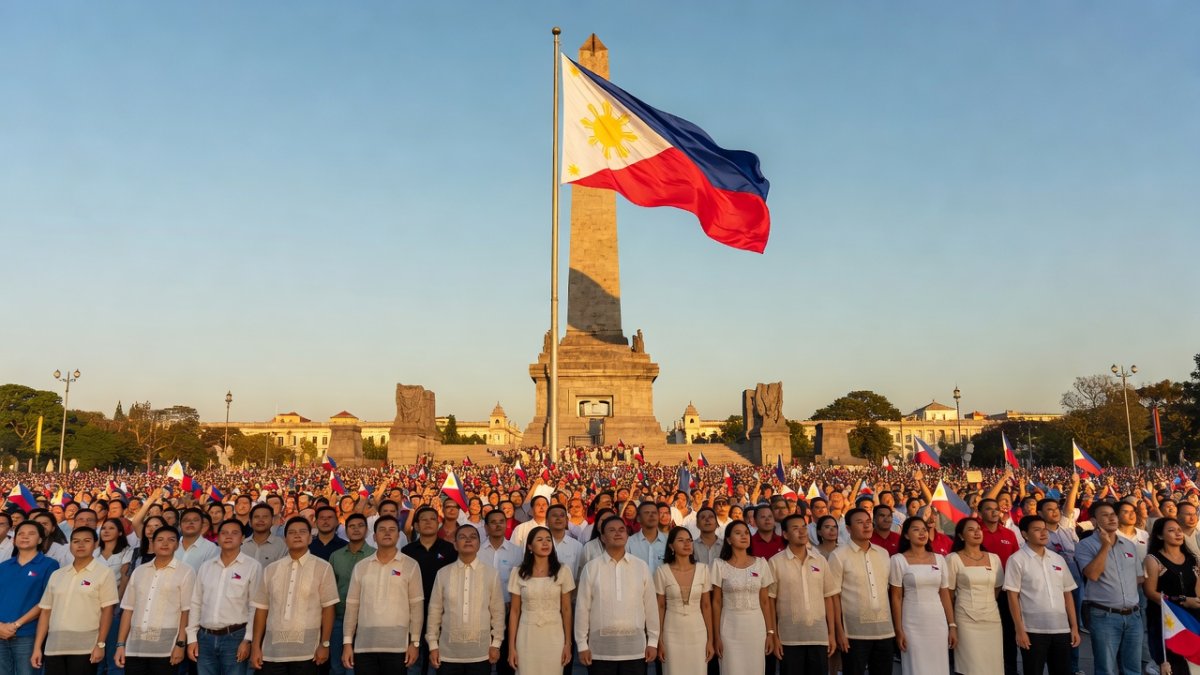
President Marcos Jr. addressed the nation from Luneta Park in Manila, where he led flag-raising and wreath-laying ceremonies at the Rizal Monument. In his speech, he urged Filipinos to remain vigilant and critical of the truth. "Huwag po tayong mapagod na mahalin, piliin at ipaglaban ang Pilipinas. Ipalalim natin ang ating kamalayan, maging mapanuri sa katotohanan," Marcos said, calling on citizens to draw lessons from the sacrifices of Filipino heroes who resisted colonial rule in 1898.
Marcos also took a clear swipe at leaders pursuing personal interests over national welfare. "Sapagkat hindi sapat na lingunin lang natin ang nakaraan, kailangan magsilbing pundasyon ang mga aral nito sa ating kasalukuyan at sa ating kinabukasan," he said, urging that the lessons of history must serve as the foundation for present and future governance. His remarks were widely interpreted as a response to the escalating public attacks from his Vice President.
In a notable political move, Marcos publicly recognized Senate President Pro Tempore Sherwin Gatchalian as the leader of the Senate during the Independence Day event — the clearest acknowledgment yet of the chamber's new leadership following the June 3 shake-up. Gatchalian and Marcos exchanged a handshake at the ceremony, signaling the executive branch's full support for the new Senate leadership.
Senate Leadership Crisis: Two Claimants, One Chamber, No Resolution
The Senate leadership dispute began on June 3, when 12 senators — consisting of the former minority bloc joined by Senator Francis "Chiz" Escudero — declared a quorum based on the Supreme Court's 1949 ruling in Avelino v. Cuenco. They then declared all elected Senate positions vacant. Senator Sherwin Gatchalian was elected Senate president pro tempore and subsequently recognized by those present as acting Senate president.
Palace Press Officer Claire Castro has been unequivocal: "Wala kikilalanin ang Palasyo, walang kikilalanin ang Ehekutibo kundi ang liderato lamang po ni Acting Senate President Sherwin Gatchalian." She added that any coordination with the executive branch, including requests for special sessions, should be coursed through the Gatchalian-led bloc. Castro also dismissed concerns about a constitutional crisis, stating, "In the eyes of Malacañang, in the eyes of the Executive, we have nothing that can be called a constitutional crisis."
Despite this, Senator Alan Peter Cayetano continues to assert that he remains the "legitimate, legal, moral Senate president." The competing claims have left legislative functions in limbo at a critical time, as families across the country look to Congress for measures to address rising fuel prices and inflation. The leadership vacuum directly affects the processing of bills that could ease the burden on Filipino households.
Economic Strain Deepens as Political Uncertainty Grows
The political turmoil comes at a time when Filipino families are already feeling the weight of rising costs. Fuel prices continue to climb, jeepney drivers in Quezon City and Metro Manila struggle with daily operating expenses, and sari-sari store owners in provincial barangays report shrinking margins as inflation eats into household budgets. The United Nations Development Programme has warned that the ongoing crisis could push the national poverty rate from 16.9 percent to 17 percent, leaving more than 20 million Filipinos below the poverty line.
House Speaker Faustino "Bojie" Dy III delivered a separate Independence Day message addressing this reality: "Hindi sapat na tayo ay malaya kung marami pa rin ang hindi nabibigyan ng pagkakataon na maging bahagi ng pag-unlad." His words underscore how the political infighting risks diverting attention from the urgent economic policies that working families need — from Department of Budget and Management allocations for local infrastructure to Department of Education funding for public school students.
For OFWs sending remittances home to provinces like Batangas, Baguio, and Cebu, the stability of national leadership directly affects the peso's value and the cost of sending money to their families. For farmers in the rice-producing regions of Central Luzon and the Visayas, delayed Senate action on agricultural support programs could mean another season of uncertainty.
Progressive Groups Stage 'Hindependence' Day Protests in Manila
As the nation's top leaders traded barbs, progressive groups took to the streets of Manila on June 12 for what they called "Hindependence" Day protests. Demonstrators denounced both American and Chinese influence on Philippine sovereignty, arguing that foreign powers continue to shape national decisions despite the country's formal independence. These protests echoed long-standing debates about whether true independence has been achieved when external dependencies persist.
The demonstrators drew direct connections between the day's political drama and the erosion of national sovereignty. They argued that internal divisions between Marcos and Duterte weaken the country's ability to assert independent policies on issues ranging from the West Philippine Sea to trade agreements. The protests served as a reminder that for many Filipinos, Independence Day is not just a commemoration of 1898 but a reckoning with ongoing struggles for genuine self-determination.
What the Impeachment Trial Means for the Nation
The impeachment trial of Vice President Sara Duterte, set to begin before the Senate on July 6 with a pre-trial conference on June 18, will be a defining moment for Philippine democracy. It will test whether the country's institutions can hold the second-highest official accountable while navigating the unprecedented scenario of a President and Vice President who were elected as running mates but are now openly hostile toward each other.
The trial also creates a constitutional paradox: the Senate that will judge Duterte is the same chamber mired in a leadership dispute. Which Senate president presides over the proceedings — Gatchalian or Cayetano — could shape the trial's outcome and legitimacy. For the more than 20 million Filipinos living in poverty, the resolution of these political conflicts determines whether the government can focus on the economic relief measures they urgently need.
What to Watch For
The June 18 pre-trial conference at the Senate will set the ground rules for Duterte's impeachment trial, including the timeline for presentations, witness lists, and evidence submission. The trial itself, beginning July 6, is expected to dominate the political landscape for weeks. Meanwhile, the Senate leadership dispute remains unresolved, with both Gatchalian and Cayetano claiming authority. The Supreme Court may ultimately be called upon to settle the question of who legitimately leads the chamber.
On the economic front, all eyes are on whether the legislative gridlock will delay the passage of the national budget and fuel subsidy programs. For Filipino families from the barangays of Mindanao to the sari-sari stores of Quezon City, the coming weeks will determine whether their leaders can set aside personal rivalries and deliver the stability and opportunity that true independence demands.
By Bella Reyes, Staff Writer
This article was produced with AI-assisted research and editorial support. Reporting is based on sources cited in the article.
What's Your Reaction?
 Like
0
Like
0
 Dislike
0
Dislike
0
 Love
0
Love
0
 Funny
0
Funny
0
 Wow
0
Wow
0
 Sad
0
Sad
0
 Angry
0
Angry
0

Philippines/Southeast Asia Correspondent at Global1.News. Manila-based journalist covering Philippine politics, environment, maritime security, and social issues. Passionate about marine conservation and the communities protecting the Philippines' natural heritage.










Comments (0)