
US Strikes Iran for 11th Consecutive Night as War Costs Hit $37.5 Billion and Diplomacy Falters
CENTCOM Broadens Assault on Iranian Military Infrastructure The United States military has now wrapped its 11th straight night of airstrikes against Iran, with U.S. Central Command zeroing in on maritime assets, drone production sites, and aircraft hangars.
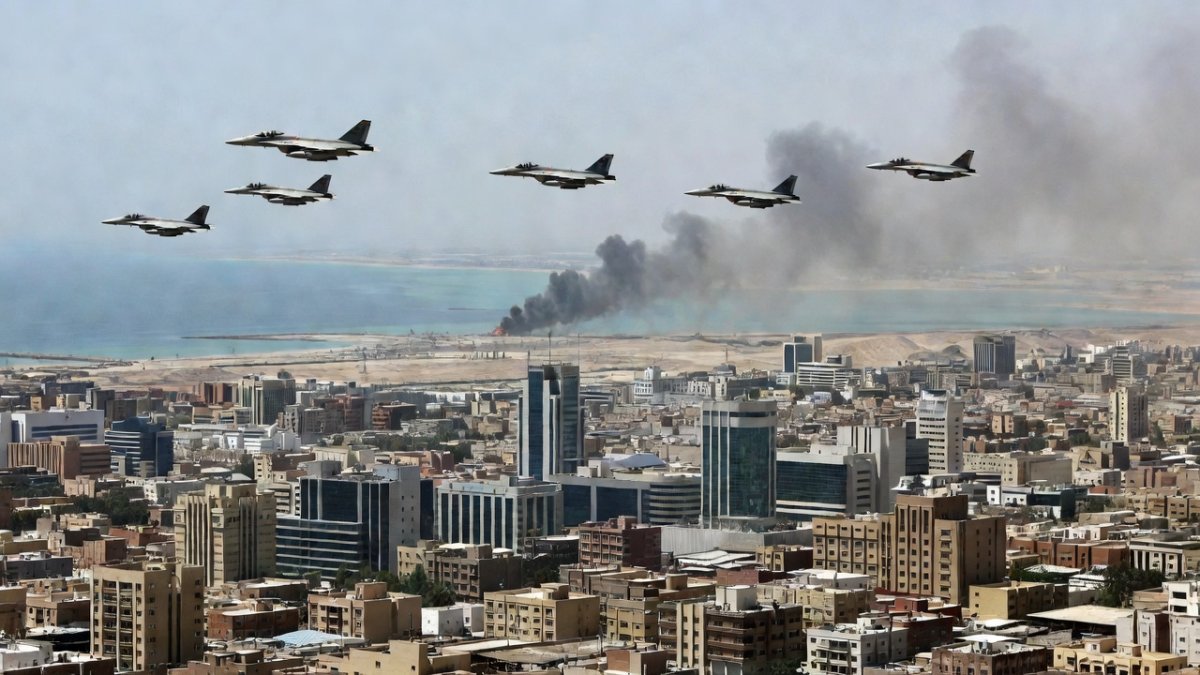
CENTCOM Broadens Assault on Iranian Military Infrastructure
The United States military has now wrapped its 11th straight night of airstrikes against Iran, with U.S. Central Command zeroing in on maritime assets, drone production sites, and aircraft hangars. For the first time since the fighting intensified two weeks ago, American forces hit a military installation near the northwestern city of Tabriz, marking a clear geographic expansion of the campaign. This is no longer a limited set of pinprick raids; it is a sustained pounding of Iran's ability to project power across the region.
Defense officials have framed the Tabriz strike as necessary to degrade capabilities that could threaten shipping lanes and U.S. partners. Yet the decision to push operations that far north signals Washington is prepared to keep widening the map if Tehran refuses to stand down. High-octane warfare like this burns through munitions and political capital at a ferocious rate, and the American public deserves straight talk about where it leads.
CENTCOM's focus on maritime targets underscores the central fear hanging over every capital from Riyadh to Tokyo: any prolonged disruption in the Persian Gulf quickly becomes a global economic crisis. The 11-night streak shows operational tempo remaining high even as diplomatic channels go dark. Facts first—these strikes are real, the targets are expanding, and the costs are compounding by the hour.
Opinionated take: dragging this into a third week without a clear off-ramp is reckless. Precision is impressive; endless escalation without an endgame is not strategy, it is inertia dressed up as resolve.
Pentagon Price Tag Climbs Sharply in Senate Testimony
Defense Secretary Pete Hegseth informed the Senate that the conflict has already drained $37.5 billion from U.S. coffers, a steep jump from the $29 billion figure reported in May. That $8.5 billion surge in a matter of weeks lays bare how quickly modern air campaigns devour resources. Every Tomahawk, every tanker sortie, every damaged aircraft adds another line item that taxpayers will ultimately cover.
Hegseth's testimony offered no sugarcoating. The numbers are public, the trajectory is upward, and Congress now owns the oversight responsibility. When a two-week escalation can add billions, the long-term fiscal exposure becomes impossible to ignore. This is not abstract budgeting; it is real money pulled from other national priorities.
The jump from $29 billion to $37.5 billion should jolt every appropriator on Capitol Hill. Sustained operations at this intensity will push the total far higher if the nights keep stacking up. Facts remain stubborn: the meter is running, and it is running fast.
My view is blunt—Americans were told early costs would stay contained. That promise is already broken. Transparency from the Defense Secretary is welcome; a credible plan to cap the bleeding is still missing.
Oil Benchmarks Spike as Supply Fears Mount
Brent crude climbed to $92 per barrel as traders priced in the risk of wider disruption. Energy markets have little patience for 11-night bombing campaigns near the world's most critical oil chokepoints. Every additional night of strikes feeds the premium, and consumers will feel it at the pump and in heating bills.
The $92 level is not a random blip; it reflects accumulated anxiety over maritime targeting and Iranian threats. Refiners, shippers, and governments are all recalculating exposure. When crude jumps like this, inflationary pressure follows close behind, hitting households that have nothing to do with the targeting decisions in the Gulf.
Market reaction is the purest real-time verdict on the conflict's economic spillover. $92 Brent is the number that matters today, and it will keep climbing if diplomacy stays frozen. Facts first: energy prices are the transmission belt that turns a regional war into a kitchen-table problem for millions.
Iranian Drones Target U.S. Ammo Stores in Kuwait
Iran claimed it launched drone strikes against American ammunition storage facilities at Camp Doha in Kuwait. The assertion, whether fully verified or not, demonstrates Tehran's intent to answer U.S. raids with attacks on regional basing. Camp Doha has long served as a logistics hub; turning it into a target raises the stakes for every partner hosting U.S. forces.
Retaliatory drone swarms are cheaper for Iran than matching American airpower, yet they force the United States to divert scarce air-defense assets. Nearly 100 U.S. troops have already been injured in Iranian counterattacks since the fighting began, a human toll that rarely leads the headlines but sits heavily on military families.
The Camp Doha claim fits a pattern of asymmetric replies designed to raise political costs in Washington. Kuwait now finds itself deeper in the crossfire, and other Gulf hosts are watching nervously. This is the ugly arithmetic of escalation: each U.S. strike invites a reply that endangers American personnel and partner territory alike.
Hardline Rhetoric Shuts Door on Immediate Talks
President Trump stated flatly that the United States has no interest in talks with Iran. That position leaves little room for the back-channel diplomacy that has historically cooled Gulf crises. When the commander-in-chief closes the door so publicly, intermediaries lose leverage and hardliners on both sides gain oxygen.
Secretary of State Marco Rubio, speaking to ASEAN ministers in Manila, warned that Iranian control of the Strait of Hormuz would set a "dangerous precedent." Rubio's language was deliberate: the strait remains the jugular of global energy trade, and any attempt to dominate it invites broader confrontation. His audience in Manila understood the message—Asia's economies would pay dearly for a closed strait.
Meanwhile Pakistan's Prime Minister Shehbaz Sharif has urged revival of the collapsed ceasefire talks. Sharif's intervention shows that not every regional capital has abandoned diplomacy, yet without American buy-in his effort faces long odds. The contrast is stark: one side pushing to restart conversations, the other declaring them pointless.
Opinion here is straightforward—refusing all talks may feel tough, but it also removes the off-ramp. Rubio's Hormuz warning is factually grounded; Trump's blanket rejection of negotiation is a choice that keeps the meter and the casualty count rising.
London Green-Lights Bases for American Missions
Britain's new Prime Minister Andy Burnham has approved the use of British bases for certain U.S. strikes. That decision ties the United Kingdom more tightly to the operational tempo and the political consequences. Access to those facilities improves American reach and loiter time, but it also makes British territory a potential Iranian target.
Burnham's approval arrives at a moment when European capitals are split between solidarity and fear of open-ended war. By saying yes, London has chosen sides in a concrete, logistical way. The move will be debated fiercely at Westminster, yet the operational benefit to CENTCOM is immediate.
Allied basing has always been a quiet force multiplier. Making it public during an 11-night campaign removes any ambiguity about British involvement. Facts remain: without such access the strike pace would be harder to sustain. The political bill for that access will come due later.
Human Cost Climbs for U.S. Personnel
Nearly 100 U.S. troops have been injured in Iranian retaliatory attacks since the conflict began. Those injuries range from blast trauma to shrapnel wounds, and each one represents a family receiving a difficult phone call. The figure is not abstract; it is the direct result of the cycle of strike and counter-strike now in its third week.
Military medicine has improved survival rates, yet the cumulative burden on units rotating through the region grows heavier every night. Commanders must balance mission requirements against the steady drip of casualties that erode readiness and morale. Nearly 100 injured is already a significant number for a conflict that has not been formally declared a war.
Washington cannot keep celebrating successful strikes while soft-pedaling the human ledger on the other side of the ledger. These service members are paying in real time for decisions made far from the flight line. The number will keep rising if the 11-night pattern becomes a 20-night pattern.
Diplomatic Vacuum Leaves Region on Edge
With ceasefire talks collapsed and the White House uninterested in new negotiations, the diplomatic track is effectively frozen. Pakistan's Shehbaz Sharif can push all he wants; without movement from Washington and Tehran the effort stalls. Marco Rubio's warning about the Strait of Hormuz still hangs in the air as the clearest articulation of the strategic risk.
The combination of 11 consecutive nights of strikes, a $37.5 billion price tag, $92 Brent crude, and nearly 100 injured Americans paints a grim picture. Andy Burnham's base decision adds allied muscle but also allied exposure. Every actor is now locked into positions that make de-escalation harder, not easier.
This is the reality check: military success in destroying hangars and drone sites does not automatically produce political success. The longer the diplomatic vacuum persists, the greater the chance of a miscalculation that draws in more capitals. Facts first—the war is costing blood and treasure at an accelerating rate while the off-ramps remain blocked.
High-octane truth: endless nights of bombing without a negotiating strategy is not strength. It is a failure to connect means to ends. The region, the markets, and American troops themselves need leaders who can fight and talk at the same time. Right now only one of those is happening.
By Jessica Ali, Staff WriterThis article was produced with AI-assisted research and editorial support. Reporting is based on sources cited in the article.
What's Your Reaction?
 Like
0
Like
0
 Dislike
0
Dislike
0
 Love
0
Love
0
 Funny
0
Funny
0
 Wow
0
Wow
0
 Sad
0
Sad
0
 Angry
0
Angry
0

Editor-in-Chief at Global1.News. Atlanta-based journalist who cuts through the BS and tells it like it is. Lead anchor, host, and the voice you hear when the spin stops and the truth starts.















Comments (0)