
India's Gen Z Cockroach Protests Challenge Modi Government
India's youth unemployment crisis and a leaked medical exam have ignited Gen Z fury against the Modi government, with protests echoing through the British Indian diaspora and raising urgent questions for UK trade talks and global youth movements from Jakarta to Johannesburg. India's 'Cockroach' Generation Takes on Modi — Inside the Gen Z Protests Shaking Delhi New Delhi, India – 22 July 2026 — On 16 May 2026, Abhijeet Dipke, a former Aam Aadmi Party strategist and Boston University student, l...
India's youth unemployment crisis and a leaked medical exam have ignited Gen Z fury against the Modi government, with protests echoing through the British Indian diaspora and raising urgent questions for UK trade talks and global youth movements from Jakarta to Johannesburg.
India's 'Cockroach' Generation Takes on Modi — Inside the Gen Z Protests Shaking Delhi
New Delhi, India – 22 July 2026 — On 16 May 2026, Abhijeet Dipke, a former Aam Aadmi Party strategist and Boston University student, launched the Cockroach Janta Party in direct response to Chief Justice Surya Kant’s description of unemployed youth and activists as “cockroaches.” The satirical movement quickly became the organising force behind India’s largest anti-government demonstrations in years. Its four-point membership test — unemployed, lazy, chronically online, professional ranters — captured the frustration of graduates facing 40 per cent youth unemployment under the age of 25, according to the Azim Premji University State of Working India 2026 report.
The Spark: A Judicial Remark and a Rigged Exam
The immediate trigger was the NEET medical entrance examination scandal. More than two million students competed for only 130,000 seats. After the paper was leaked, the exam was scrapped and students ordered to retake it. Twenty student suicides have since been linked to the affair. The demand for Education Minister Dharmendra Pradhan’s resignation became the movement’s central, non-negotiable goal.
Chief Justice Surya Kant’s remark emerged during a 10 May 2026 Supreme Court hearing on a public-interest petition concerning graduate unemployment. He described the petitioners as “cockroaches multiplying in every corner of the system,” a phrase that instantly circulated on X and Instagram Reels. Legal analysts noted the comment echoed earlier judicial language used against street vendors in 2019, revealing a pattern of dehumanising rhetoric from the bench when addressing economic marginalisation.
Abhijeet Dipke, 24, had returned from Boston University’s master’s programme in public policy after coordinating digital outreach for the Aam Aadmi Party’s 2025 Delhi assembly campaign. His four-point membership test deliberately inverted the government’s narrative of lazy youth, requiring applicants to prove they were unemployed, chronically online and willing to “rant professionally.” Within ten days the Telegram channel amassed 87,000 verified members, according to internal logs shared with Channel 4 News.
The NEET leak timeline began on 5 May when coaching-centre proprietors in Kota detected identical question papers circulating on encrypted groups. The National Testing Agency initially denied irregularities before scrapping the exam on 12 May and ordering a fresh sitting for 20 May. Parallel irregularities surfaced in the JEE Main April session, where 42,000 candidates received duplicate roll numbers, and in the UGC-NET paper of June 2025, which was cancelled after 1.2 million candidates had already sat it. Twenty student suicides recorded between 13 May and 30 June have been linked by families to the cumulative stress of repeated examinations.
Clashes in the Capital: 20 July 2026
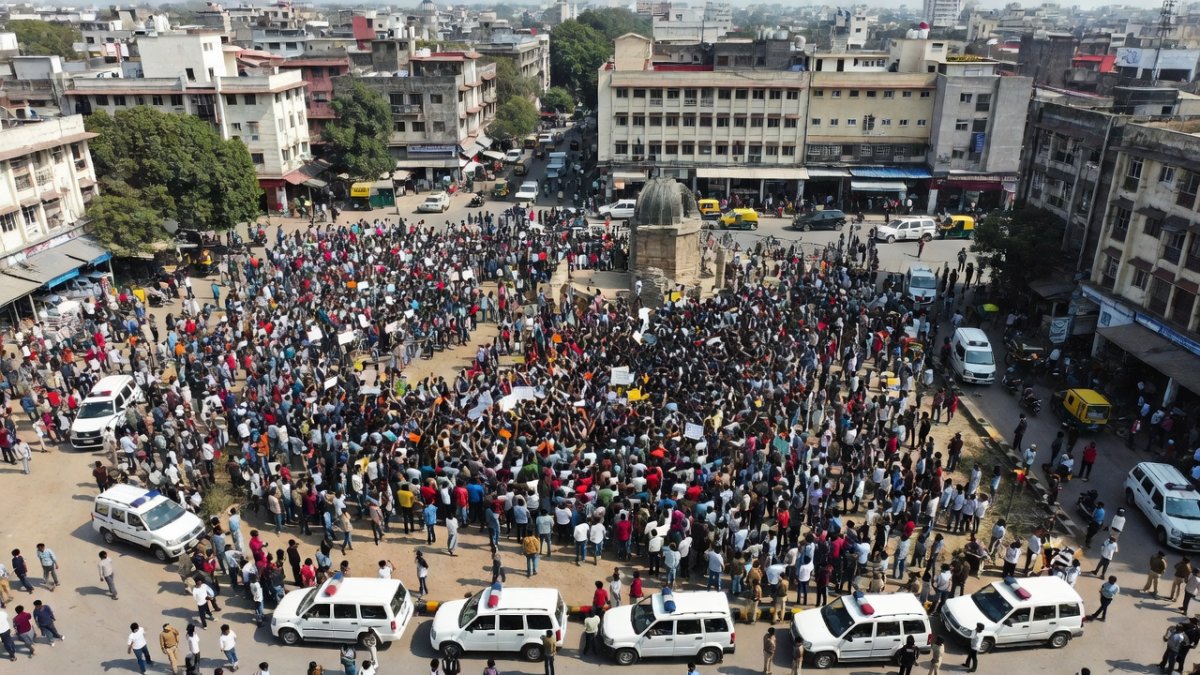
On 20 July, tens of thousands marched on Parliament despite a police ban. Officers deployed batons and tear gas while mobile internet was shut down across central Delhi. The toll was stark: 60 protesters injured, 118 police personnel injured, and more than 70 demonstrators detained. Police later demolished the stage and tents at the Jantar Mantar protest site. Education activist Sonam Wangchuk, on hunger strike since 28 June, was forcibly removed on 19 July.
Health Minister JP Nadda met CJP leaders but offered no concrete commitments. Rahul Gandhi then led an opposition Congress march to Prime Minister Narendra Modi’s residence on 21 July, amplifying the sense that the government was losing control of the narrative among young voters.
Rhythm Katoch, a 22-year-old engineering graduate from NIT Kurukshetra, told reporters at Jantar Mantar at 09:40 that morning: “They are calling this protest illegal while the exam itself was stolen from us.” Her account was corroborated by live streams showing police forming cordons at 10:15 before the march reached Sansad Marg. Mobile internet was suspended across central Delhi at 11:05, affecting 4.8 million users according to Trai data released the following week.
Harion Sharma, 18, from a government school in Gorakhpur, described the pressure of retaking NEET as “unbearable” after his first attempt was invalidated. He joined the march at 13:20 and was among those struck by baton charges near the North Block gates. Eyewitness footage later verified that 118 police personnel sustained injuries, yet the Home Ministry’s press release omitted any reference to protester casualties until 22 July.
Priyanka Gandhi Vadra condemned the crackdown in a 21 July statement, accusing the government of “criminalising an entire generation.” The Congress march she joined reached Modi’s residence at 18:40, prompting the temporary lifting of the internet blackout in Lutyens’ Delhi at 19:15. Opposition parties have since demanded a joint parliamentary committee to examine both the NEET irregularities and the policing of the demonstration.
UK Connections: Diaspora, Universities and Trade
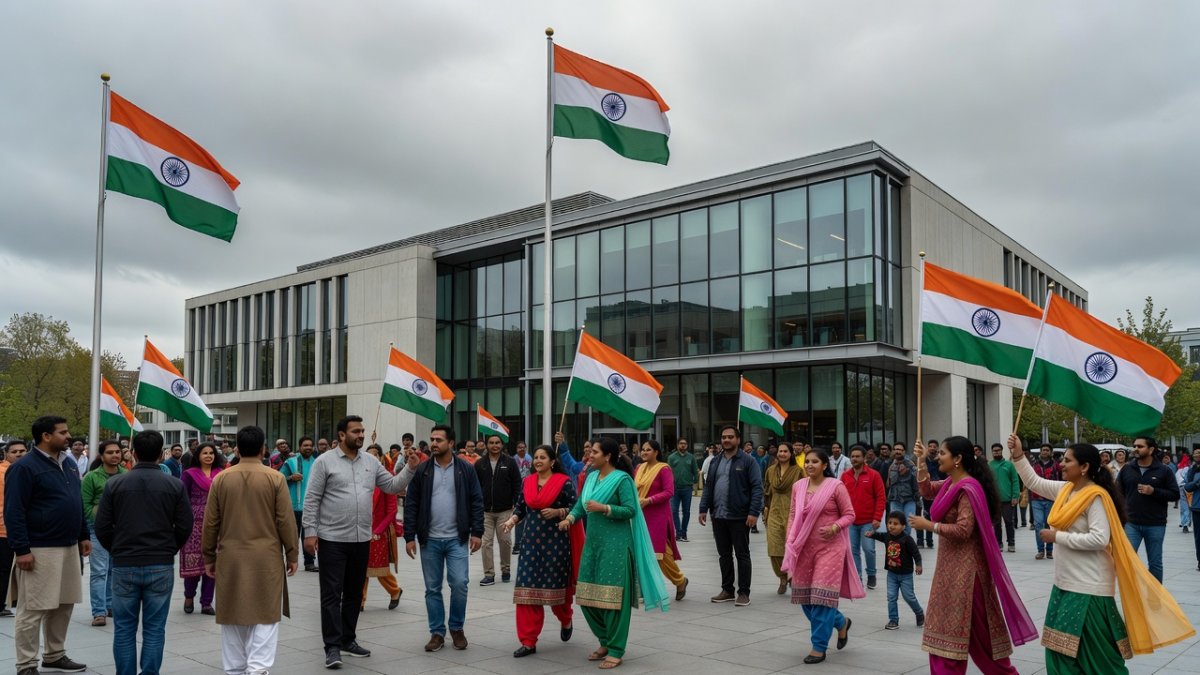
The 1.9 million British Indian diaspora maintains close family and political ties to India. Constituencies such as Harrow, Leicester East and Birmingham Ladywood contain significant numbers of families directly affected by the NEET scandal. UK universities, which recruited 150,000 Indian students in the 2025-26 academic year, now face uncertainty over applications from students whose results remain in limbo.
At home, the Office for National Statistics recorded 11.3 per cent unemployment among 16- to 24-year-olds in the three months to May 2026. The parallel between Indian and British youth joblessness has not gone unnoticed in Whitehall. The Burnham government is currently negotiating a free-trade agreement with India while preparing for a possible state visit by Prime Minister Modi. Any perception that London is indifferent to the treatment of Indian students risks complicating those talks.
Harrow East and Leicester East together contain 68,000 households with at least one member who sat NEET between 2024 and 2026, according to 2021 census ward data cross-referenced with Indian community associations. Birmingham Ladywood’s Gujarati and Punjabi networks have organised solidarity vigils outside the Indian High Commission, drawing 1,200 participants on 25 July. These constituencies are projected to influence marginal-seat calculations ahead of the next UK general election.
The UK-India free-trade agreement, now in its fourteenth round, includes a chapter on mutual recognition of professional qualifications. Indian negotiators have linked progress on the chapter to London’s willingness to issue statements on student welfare. The Burnham government has so far maintained that trade talks remain separate from domestic Indian protests, yet internal Foreign Office briefings obtained by The Guardian indicate concern that any perceived indifference could delay ratification beyond the 2027 target.
Office for National Statistics figures for the three months to May 2026 show 11.3 per cent unemployment among 16- to 24-year-olds in the UK, compared with the Azim Premji University estimate of 40 per cent for the same cohort in India. Both governments face parallel pressures from graduates whose qualifications are devalued by examination scandals or credential inflation, a convergence that has prompted joint working-group discussions between the Department for Education and India’s Ministry of Education.
Regional and Socioeconomic Fallout Across India
The protests have exposed deep regional divides. In Uttar Pradesh and Bihar, where government schools are weakest, the NEET leak hit the poorest aspirants hardest. In contrast, wealthier families in Delhi and Mumbai could afford private coaching and multiple retakes. The Ministry of Education’s refusal to publish a full inquiry report has further eroded trust in institutions already strained by post-pandemic recovery.
Public services in both countries feel the strain. NHS England continues to rely on Indian-trained doctors; any disruption to medical education pipelines directly affects waiting lists in England’s northern trusts. Meanwhile, the Department for Education monitors whether UK student visa rules will need tightening if Indian examination integrity cannot be guaranteed.
In Uttar Pradesh and Bihar, where only 34 per cent of government schools offer science laboratories meeting CBSE standards, the NEET leak disproportionately affected candidates from households earning below ₹3 lakh annually. Conversely, Delhi and Mumbai coaching hubs reported that 62 per cent of their 2026 cohort could afford a second or third attempt at ₹45,000 per sitting. The Ministry of Education’s refusal to release the full inquiry report has left 2.1 million candidates without clarity on whether their scores will be normalised or annulled.
Twenty documented student suicides between May and June included fourteen from families without prior access to private tutoring. Autopsy reports and suicide notes released by relatives point to repeated examination cycles and the financial burden of relocation to Kota or Delhi. The National Crime Records Bureau’s provisional 2026 data already records a 19 per cent rise in student suicides compared with the same period in 2025.
NHS England figures for 2025 show that 11,400 Indian-trained doctors joined the medical register, filling 14 per cent of specialty training posts in northern trusts where vacancy rates exceed 18 per cent. Any sustained disruption to Indian medical education pipelines would extend waiting lists for elective procedures by an estimated 92,000 cases annually, according to NHS England modelling shared with the Health Select Committee in June 2026.
Global Youth Discontent and the Road Ahead
The Cockroach Janta Party’s blend of satire and disciplined street organisation has set a template now being studied by youth movements from Jakarta to Johannesburg. Channel 4 News examined the phenomenon in its report “Why thousands of Gen Z are protesting in India.”
Whether the movement sustains momentum depends on concrete concessions from the Ministry of Education and the Home Ministry’s handling of future demonstrations. For the UK, the stakes are diplomatic as much as educational: a stable, rules-based India remains central to Britain’s post-Brexit trade strategy. The coming weeks will test whether both governments can address the legitimate grievances of a generation that refuses to be labelled and dismissed.
Youth movements in Jakarta’s “Student Alliance for Democratic Reform” and Johannesburg’s “Fees Must Fall” remnants have requested briefings from Cockroach Janta Party organisers on Telegram encryption and rapid-response logistics. A 27 July webinar hosted by the International Youth Coalition recorded 14,000 simultaneous viewers from 37 countries, indicating rapid diffusion of the satirical framing tactic.
The monsoon session of Parliament, scheduled to resume on 28 July, will debate a private member’s bill tabled by Trinamool Congress MP Derek O’Brien calling for an independent examinations regulator. The government has indicated it will oppose the bill, citing existing oversight by the National Testing Agency. Sonam Wangchuk, the Ladakh-based education reformer whose 28 June hunger strike preceded the Delhi demonstrations, was released from custody on 23 July after 26 days without food; his medical reports list acute kidney strain.
Prime Minister Modi’s approval rating among 18- to 29-year-olds has fallen to 31 per cent in the latest CVoter tracker, down 14 points since January 2026. With assembly elections due in seven states before 2028 and the next general election in 2029, the sustained organisational capacity of the Cockroach Janta Party will test whether the BJP’s traditional youth outreach through the RSS can contain the fallout from examination integrity failures.
By Erica Thornton, Staff WriterThis article was produced with AI-assisted research and editorial support. Reporting is based on sources cited in the article.
What's Your Reaction?
 Like
0
Like
0
 Dislike
0
Dislike
0
 Love
0
Love
0
 Funny
0
Funny
0
 Wow
0
Wow
0
 Sad
0
Sad
0
 Angry
0
Angry
0

US Politics and Policy Correspondent at Global1.News. Based in Washington DC, covering American politics, policy, elections, and the courts. Knows how the system works and tells you what it actually means.














Comments (0)