
China Blocked Medevac of Wounded Filipino Troops at Ayungin Shoal, AFP Rejects Claim
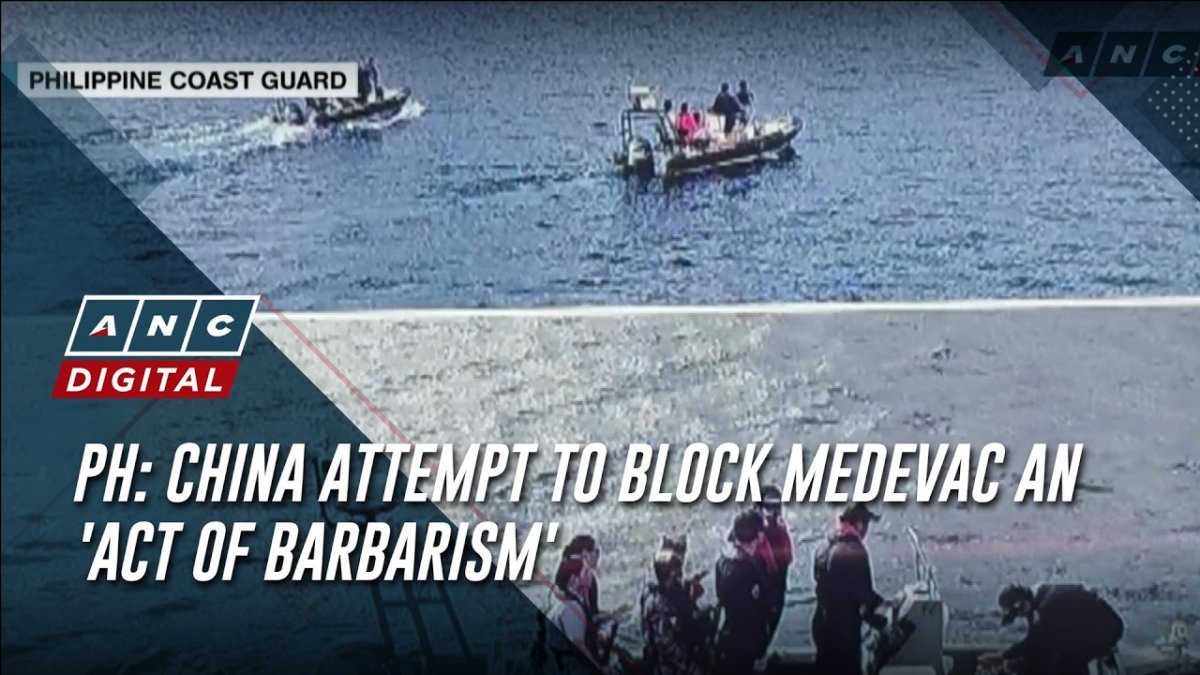
A video report from ANC 24/7 titled "PH: China attempt to block medevac an act of barbarism" has exposed how China Coast Guard personnel used force to obstruct a humanitarian medical evacuation for wounded Filipino troops at Ayungin Shoal. The footage shows rigid-hull inflatable boats deployed to block Philippine vessels on July 21 after two Armed Forces of the Philippines personnel were injured the previous day.
A video report from ANC 24/7 titled "PH: China attempt to block medevac an act of barbarism" has exposed how China Coast Guard personnel used force to obstruct a humanitarian medical evacuation for wounded Filipino troops at Ayungin Shoal. The footage shows rigid-hull inflatable boats deployed to block Philippine vessels on July 21 after two Armed Forces of the Philippines personnel were injured the previous day. This development has intensified calls for accountability while underscoring the daily risks faced by those safeguarding Philippine waters.
China Blocked Medevac of Wounded Filipino Troops at Ayungin Shoal, AFP Rejects China Claim
Manila, Philippines — The Armed Forces of the Philippines continues to operate within the country's exclusive economic zone despite repeated obstructions from Chinese vessels at Ayungin Shoal.
China's Blockade of Medevac at Ayungin Shoal Sparks Outrage
In a recent ANC 24/7 report titled "PH: China attempt to block medevac an act of barbarism," details emerged of how China Coast Guard personnel struck a Philippine Navy sailor with a wooden baton at Ayungin Shoal on July 20. The incident left two Armed Forces of the Philippines personnel injured while aboard the BRP Melchora Aquino in the West Philippine Sea. Philippine Coast Guard vessels later attempted a humanitarian medical evacuation on July 21 using the BRP Melchora Aquino and BRP Malapascua, only for China Coast Guard rigid-hull inflatable boats to deploy and obstruct the path.
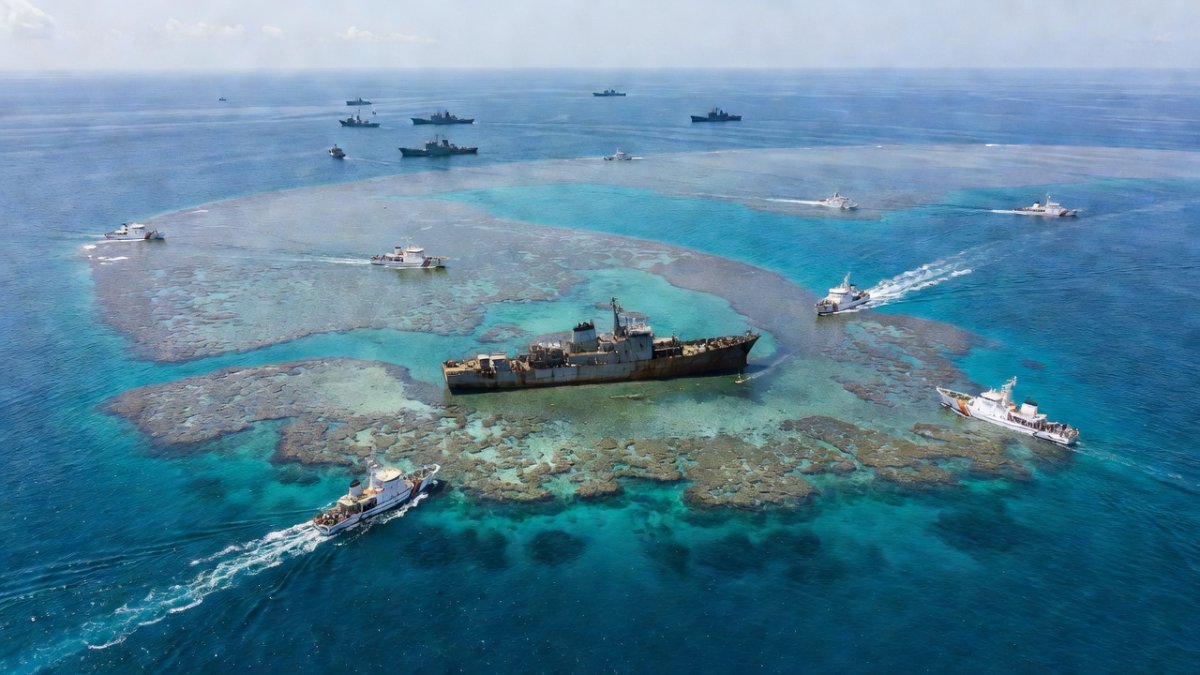
The blockade occurred near the grounded BRP Sierra Madre, a commissioned Philippine Navy vessel that has served as a forward outpost since 1999. Local fishing communities in Palawan have reported increased sightings of Chinese vessels in the days following the event, raising fears that resupply missions will face further delays. Philippine officials noted that the obstruction violated established protocols for humanitarian operations at sea.
Residents in coastal barangays across the country expressed shock upon viewing the ANC 24/7 footage, with many linking the incident to broader patterns of interference in the West Philippine Sea. Community leaders organized small gatherings to discuss how such events affect morale among families with relatives in the armed forces. The report has circulated widely on social media platforms used by overseas Filipino workers who monitor developments back home.
Specific Injuries to AFP Personnel
One AFP member sustained a lacerated wound on the parietal area of the head from blunt trauma along with a contusion hematoma on the medial arm. The second suffered a lacerated wound on the index finger from blunt trauma and decreased grip strength in the right hand. Both remain in stable condition aboard the BRP Melchora Aquino, a Philippine Navy vessel operating within the country's 200-nautical-mile exclusive economic zone as affirmed by the 2016 Arbitral Award under UNCLOS.
Medical personnel aboard the vessel provided immediate first aid before the attempted evacuation, following standard protocols for injuries sustained during maritime patrols. The sailors' conditions were monitored continuously as the ship remained on station to support ongoing operations near Ayungin Shoal. Families received updates through official military channels that emphasize transparency during such incidents.
These injuries highlight the physical toll on personnel who conduct routine missions to assert Philippine presence in the exclusive economic zone. The 2016 Arbitral Award continues to serve as the legal foundation for these operations, allowing the Philippines to maintain vessels without seeking external approval. Community health centers in provinces with high numbers of military recruits have begun preparing support programs for returning personnel.
AFP Rejects China's Permission Claim
China claimed it had "permitted" the medical evacuation near the BRP Sierra Madre at Ayungin Shoal. The Armed Forces of the Philippines rejected this outright, stating that the Philippines does not ask for nor require the permission of any foreign nation to conduct operations within its own exclusive economic zone. AFP officials described any claim by the China Coast Guard that it "permitted" the operation as a false narrative intended to project illegitimate authority where none exists. The BRP Sierra Madre stands as a commissioned Philippine Navy ship, and sustaining the vessel while providing humanitarian care remains a sovereign responsibility of the Philippines.
Defense officials stressed that all Philippine maritime activities at Ayungin Shoal fall under domestic command structures established after the 2016 ruling. The rejection of the permission narrative aligns with long-standing policy that treats the area as sovereign territory for operational purposes. Military spokespersons reiterated that coordination occurs only with allied nations under existing defense agreements.
This stance reinforces the Philippines' position in ongoing diplomatic exchanges at regional forums. The BRP Melchora Aquino and BRP Malapascua continue their assigned duties without alteration to their patrol schedules. Local government units in affected provinces have issued statements supporting the AFP's assertion of independent operational rights.
Defense Secretary Teodoro Calls It Part of a Script
Defense Secretary Gilberto Teodoro Jr. stated that China's latest provocation forms part of a repeated "script" of aggression at Ayungin Shoal. This follows multiple recent incidents that have escalated tensions in the area. The Philippine Coast Guard condemned the dangerous and unlawful actions as violations of international law, UNCLOS, and the 2016 Arbitral Award. President Ferdinand Marcos Jr. earlier condemned the assault on the sailors.
Secretary Teodoro's remarks came during a press briefing where he outlined the pattern of similar obstructions documented over the past year. The Department of National Defense has directed additional monitoring of vessel movements around Ayungin Shoal to ensure personnel safety. These measures include enhanced coordination with the Philippine Coast Guard for future humanitarian missions.
President Marcos Jr.'s condemnation has prompted discussions in Congress about increased funding for maritime defense capabilities. The Philippine Coast Guard has filed formal protests through established channels while maintaining its presence in the area. Community organizations in Manila have scheduled forums to discuss the implications for national security policy under the current administration.
Global Allies Condemn Actions
US State Department spokesperson Pigott condemned China's dangerous and aggressive actions and called on China to cease its destabilizing conduct. Australian Foreign Minister Penny Wong expressed concern and assured that Australia stands with the Philippines. DFA Secretary Enrique Manalo raised the Ayungin incident directly with Chinese Foreign Minister Wang Yi during the ASEAN foreign ministers meeting, though the bloc offered no collective response. Code of Conduct discussions between ASEAN and China continue amid these events.
The United States has reaffirmed its defense commitments to the Philippines through existing mutual defense treaties that cover attacks on Philippine forces. Australia has signaled readiness to participate in joint maritime exercises that strengthen interoperability among regional partners. These statements arrive as Manila seeks to broaden its network of security cooperation in the Indo-Pacific.
DFA Secretary Manalo's bilateral engagement with Chinese officials represents the latest effort to manage tensions through direct dialogue. The absence of a collective ASEAN statement has led analysts to examine the challenges of achieving consensus within the regional bloc on South China Sea issues. Philippine diplomats continue to advocate for stronger language in future Code of Conduct negotiations.
Human Cost on Filipino Families and Communities
The two injured sailors serve aboard vessels that protect Philippine waters, leaving their families in communities across the country to worry about their safety during routine resupply and patrol duties. Such incidents affect not only the personnel but also barangay networks that support military families through bayanihan traditions when loved ones face risks at sea. Workers in coastal areas from Cebu to Davao feel the ripple effects as tensions disrupt fishing routes and economic activities tied to the West Philippine Sea.
Family members of the injured personnel have received support from military welfare programs that provide counseling and financial assistance during recovery periods. These programs draw on established practices within the armed forces to maintain morale among service members and their dependents. Local churches and civic groups in home provinces have organized prayer vigils for the safe return of all personnel at sea.
Fishing communities dependent on access to traditional grounds near Ayungin Shoal report reduced catches as vessels reroute to avoid confrontation zones. The economic impact extends to markets in Manila where seafood prices have shown slight increases in recent weeks. Government agencies have begun assessing compensation mechanisms for affected fisherfolk under existing livelihood programs.
Why This Matters for Philippine Sovereignty
The attempted blockade during a humanitarian medical evacuation underscores ongoing challenges to Philippine authority in its exclusive economic zone. DFA actions at the ASEAN meeting highlight efforts to seek regional support, yet the lack of collective response leaves Manila to navigate bilateral talks alone. For students and farmers who rely on stable maritime borders for trade and food security, these events carry direct implications for daily life and national defense priorities under the Marcos administration.
The 2016 Arbitral Award remains central to Philippine legal arguments in international forums, providing the framework for rejecting external claims of authority over operations in the exclusive economic zone. Educational institutions have incorporated discussions of these maritime issues into civic education modules to raise awareness among younger generations. Agricultural planners in provinces bordering the West Philippine Sea monitor developments closely due to potential effects on export routes.
National defense priorities have shifted toward enhancing the capabilities of vessels like the BRP Melchora Aquino to operate independently during medical emergencies. The Marcos administration continues to balance diplomatic engagement with firm assertions of sovereign rights in public statements. These policy choices directly influence budget allocations for the armed forces and coast guard in the coming fiscal year.
What to Watch For
Diplomatic observers expect the Philippines to raise the Ayungin Shoal incident at upcoming bilateral meetings with the United States and Australia to coordinate responses. The Department of Foreign Affairs may issue additional protests through ASEAN mechanisms ahead of the next foreign ministers gathering. These steps aim to maintain pressure on China while preserving channels for de-escalation.
Maritime analysts will monitor whether China Coast Guard vessels maintain their presence near the BRP Sierra Madre in the weeks ahead. The Armed Forces of the Philippines has indicated plans to review operational procedures for medical evacuations to reduce future risks. Any adjustments will likely incorporate lessons from the July 21 blockade attempt.
Regional Code of Conduct negotiations between ASEAN and China are scheduled to resume later this year, with the Ayungin incident expected to feature in preparatory discussions. Philippine officials have signaled intent to push for stronger provisions on humanitarian access during these talks. The outcome could shape how similar incidents are addressed in future agreements.
By Bella Reyes, Staff WriterThis article was produced with AI-assisted research and editorial support. Reporting is based on sources cited in the article.
What's Your Reaction?
 Like
0
Like
0
 Dislike
0
Dislike
0
 Love
0
Love
0
 Funny
0
Funny
0
 Wow
0
Wow
0
 Sad
0
Sad
0
 Angry
0
Angry
0

Philippines/Southeast Asia Correspondent at Global1.News. Manila-based journalist covering Philippine politics, environment, maritime security, and social issues. Passionate about marine conservation and the communities protecting the Philippines' natural heritage.















Comments (0)