
Russia's September Parliamentary Vote: United Russia Seeks Mandate Amid War Strain and Regional Unrest
Russia's September Parliamentary Vote: United Russia Seeks Mandate Amid War Strain and Regional Unrest The Context of a High-Stakes Election Russians will head to the polls in September to elect a new State Duma and regional officials. The ruling United Russia party is expected to dominate the outcome. Yet the vote could offer insight into how four years of war in Ukraine have
Russia's September Parliamentary Vote: United Russia Seeks Mandate Amid War Strain and Regional Unrest
The Context of a High-Stakes Election
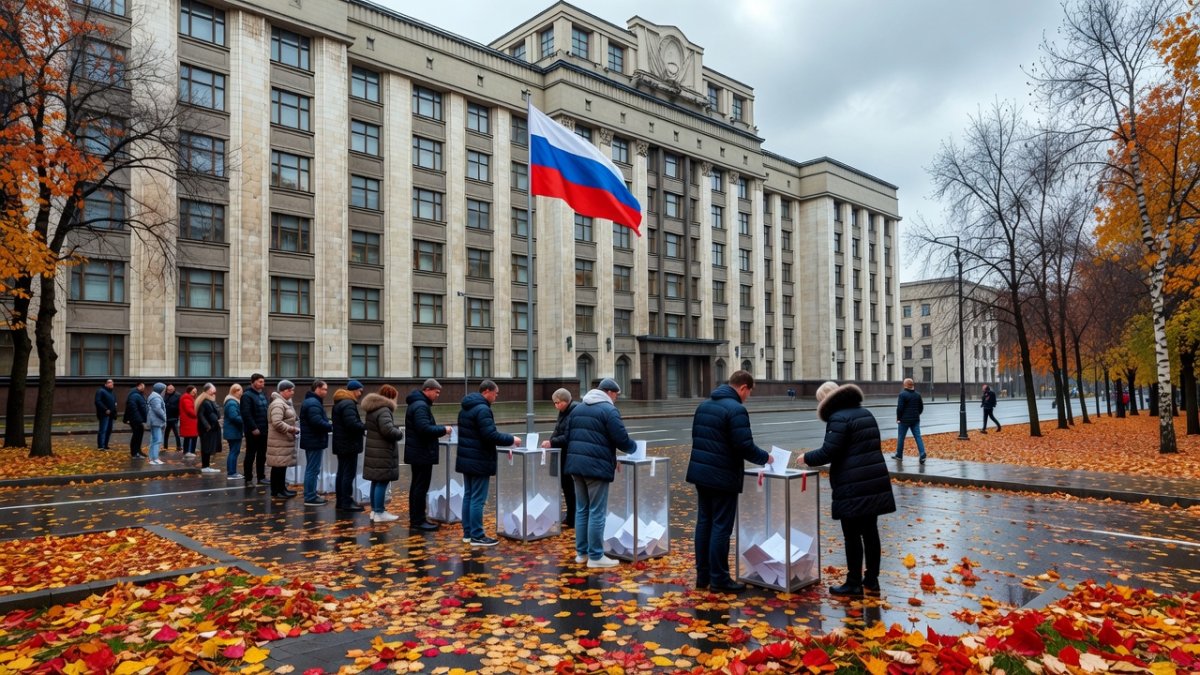
Russians will head to the polls in September to elect a new State Duma and regional officials. The ruling United Russia party is expected to dominate the outcome. Yet the vote could offer insight into how four years of war in Ukraine have reshaped the country's political landscape. The timing places the elections at a moment when economic pressures from the conflict intersect with security concerns inside Russia itself.
Half of Russians now describe the political climate as tense. This assessment comes as long-range Ukrainian drone strikes have contributed to a widespread fuel crisis. Regional officials have reportedly been instructed to secure high voter turnout and a majority win for United Russia. The Kremlin views the results as an instrument to project popular legitimacy for President Vladimir Putin and the ruling party.
Electoral Mechanics and Geographic Scope
The State Duma and regional lawmakers, as well as the heads of 11 regions, will be elected on the country's Unified Voting Day. The three-day State Duma elections will select 225 lawmakers in single-member constituencies and another 225 through party lists. This year's parliamentary vote marks the first time residents of the Russian-occupied regions of Ukraine will take part.
Direct elections are scheduled in the Tver, Belgorod, Bryansk, Penza and Ulyanovsk regions, as well as in the republics of Mordovia, Tyva and Chechnya. In Dagestan, North Ossetia and Karachayevo-Cherkessia, regional leaders will be chosen by local legislatures. Voters in 39 regions will also elect members of regional parliaments. The Central Election Commission has confirmed that 17 political parties are eligible to participate.
United Russia's Internal Challenges
United Russia, which holds 321 out of 450 seats in the current State Duma, faces questions about its approval ratings. Support for the party currently stands at almost 34 percent and fell to 29.3 percent in March. Polling by the Anti-Corruption Foundation estimates United Russia's support at 16 percent. The party enters the elections with a reported lack of clear political direction, which has caused frustration among the presidential administration, regional governors and party members.
Authorities have lowered target benchmarks for United Russia's projected performance, especially in regions where its support is weaker. Formally led by former President Dmitry Medvedev, the party did not present its list of approved candidates until after its pre-election congress. These adjustments reflect efforts to manage expectations amid mounting economic pressures and internet restrictions.
Opposition Parties and Their Limited Space
The five major parties — United Russia, the Communist Party, the Liberal Democratic Party, A Just Russia – For Truth and New People — are all automatically qualified. The Communist Party and LDPR have historically positioned themselves as systemic opposition while maintaining varying degrees of alignment with Kremlin priorities on foreign policy. A Just Russia – For Truth and New People offer additional channels for voters seeking alternatives within the approved spectrum.
Perspectives from these parties will likely focus on domestic economic grievances rather than direct challenges to the war effort. The Communist Party has at times highlighted inequality and the costs borne by ordinary Russians, while LDPR rhetoric often emphasizes national strength. New People has sought to appeal to younger and urban voters with calls for modest reforms. Their performance could indicate whether dissatisfaction with economic conditions translates into measurable shifts within the controlled political system.
Turnout Targets and Voting Methods
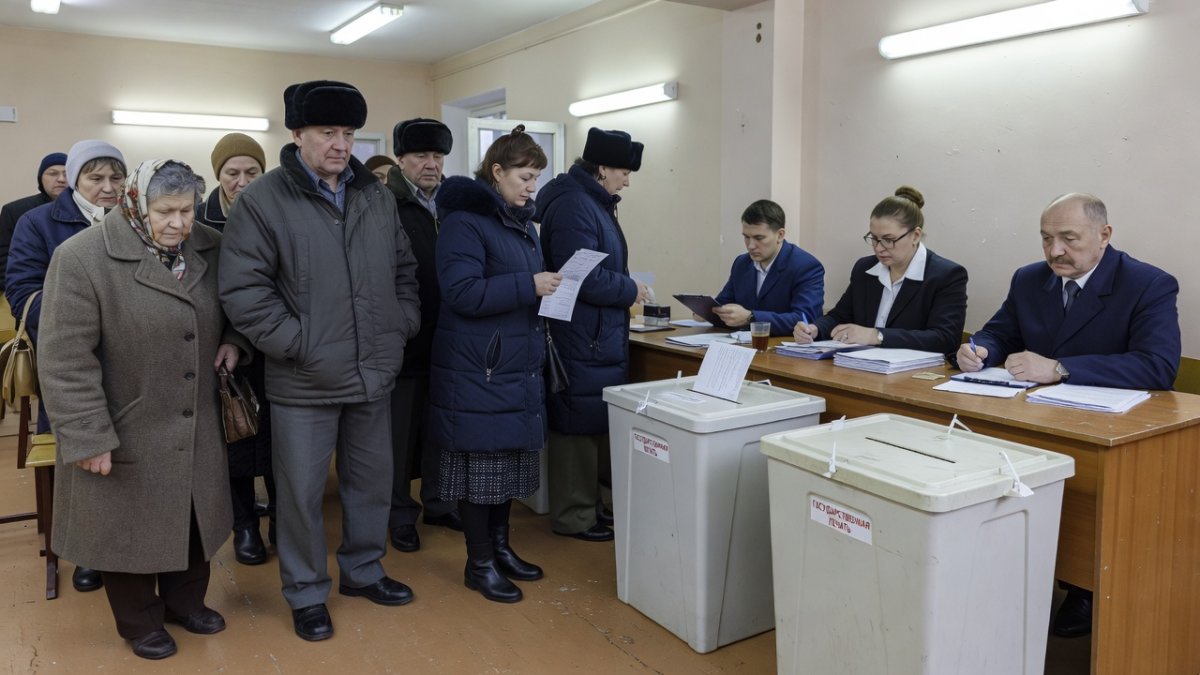
Russia has about 111 million registered voters. VTsIOM reported that 66 percent of respondents said they planned to vote. At the same time, 66 percent said in May they did not know when the election would take place. Regional officials have reportedly been instructed to keep turnout at around 50 percent. Electronic voting has been approved in 33 regions covering roughly 48 million eligible voters.
Critics have accused electronic voting of serving as a tool for vote rigging. The combination of multi-day voting and expanded electronic options will shape how results are interpreted both domestically and internationally. The Kremlin's emphasis on demonstrating support for Putin and United Russia makes these technical arrangements politically significant.
Economic Pressures and Security Developments
The war continues to take a mounting toll on the economy. Ukrainian drone strikes have led to fuel shortages that affect daily life in multiple regions. Reports have suggested the Kremlin could announce another round of mobilization after the elections. A convincing electoral victory is therefore viewed as politically important for the ruling party to maintain stability ahead of any such decision.
Other reports claim that senior officials were allegedly seeking to convince Putin to postpone the State Duma elections due to the Ukrainian drone campaign. The Kremlin has denied these claims. The interplay between security conditions and electoral timing underscores how the conflict influences domestic political calculations.
Implications for Ordinary Russians and Regional Dynamics
The outcome will affect how resources are allocated across regions already feeling the strain of the war economy. In areas such as Belgorod and Bryansk, proximity to the conflict zone adds direct security concerns to voters' calculations. In republics including Chechnya and Dagestan, local power structures will influence both turnout and results.
For ordinary Russians, the elections occur against a backdrop of restricted information flows and economic uncertainty. The Kremlin's need to project legitimacy through the vote reflects awareness that approval ratings, while still above 65 percent for Putin even in unfavorable polls, show signs of softening. The results may therefore serve as a barometer for how sustainable current policies remain in the eyes of the population.
By Irina Volkov, Staff WriterThis article was produced with AI-assisted research and editorial support. Reporting is based on sources cited in the article.
What's Your Reaction?
 Like
0
Like
0
 Dislike
0
Dislike
0
 Love
0
Love
0
 Funny
0
Funny
0
 Wow
0
Wow
0
 Sad
0
Sad
0
 Angry
0
Angry
0
Russia/Eastern Europe Correspondent at Global1.News. Covering Russian politics, energy, security, and the shifting dynamics of the post-Soviet space. Provides clear-eyed analysis on one of the world's most opaque regions.









Comments (0)