
Roger Cook, Pioneering Investigative Journalist, Dies at 83
Roger Cook, the fearless investigative journalist who invented the doorstep confrontation technique and spent three decades chasing down criminals, fraudsters, and con artists on camera, has died at the age of 83. His family confirmed the news Monday, saying the veteran broadcaster passed away peacefully after a short illness. ITV, which aired The Cook Report for 12 years, rele
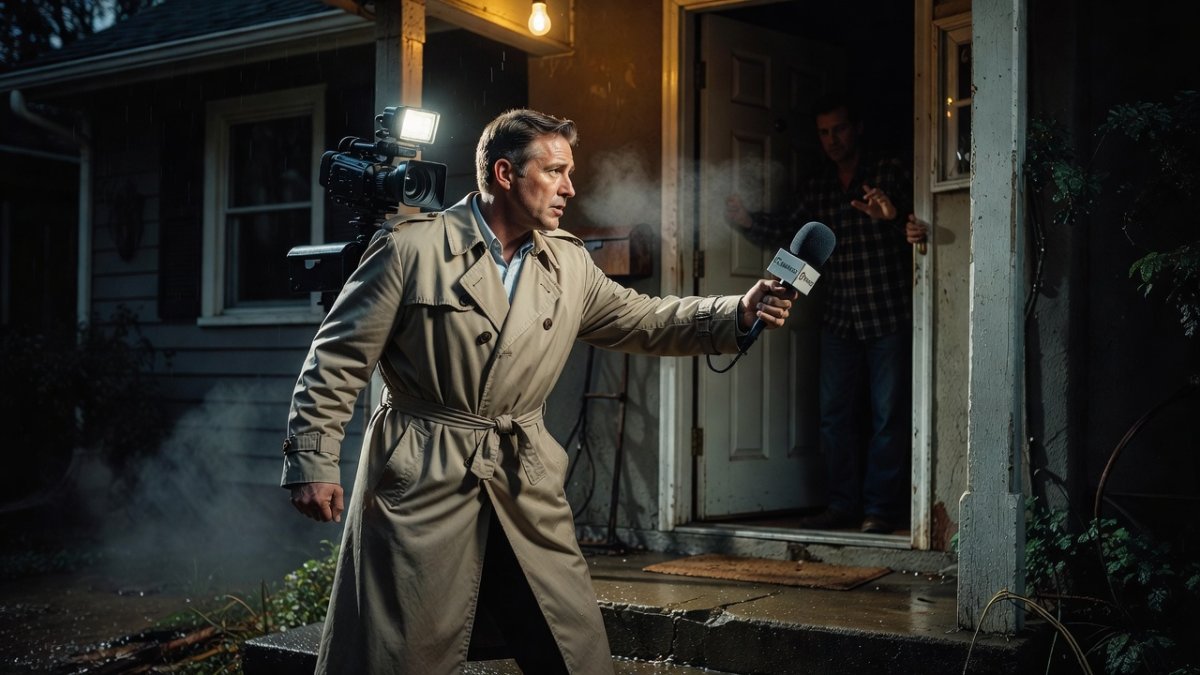
Roger Cook, the fearless investigative journalist who invented the doorstep confrontation technique and spent three decades chasing down criminals, fraudsters, and con artists on camera, has died at the age of 83.
His family confirmed the news Monday, saying the veteran broadcaster passed away peacefully after a short illness. ITV, which aired The Cook Report for 12 years, released a statement mourning the loss of a man they called "one of the most fearless journalists in British television history." BBC News, Sky News, and The Guardian all led their Monday coverage with tributes to the man who redefined investigative reporting for a generation.
The Knock That Changed Television
If you were a criminal in Britain in the 1980s and 1990s, the worst sound you could hear was a firm knock followed by Roger Cook's unmistakable voice demanding answers. His signature approach — confronting fraudsters, con artists, and organized crime figures on their own doorsteps, microphone in hand, camera rolling — didn't just make for gripping television. It fundamentally changed how investigative journalism was done, and its echoes are still felt in newsrooms around the world today.
Born on April 6, 1943, in Bristol, England, Cook began his journalism career in print journalism before moving into broadcasting. In 1973, he created and presented Checkpoint on BBC Radio 4, a program that already showcased his tenacious approach to holding power to account. The show earned a reputation for hard-hitting investigations that went where other programs feared to tread. But it was The Cook Report, which aired on ITV from 1987 to 1999, that cemented his legacy as one of the most formidable investigative journalists of his generation — and one of the most-watched figures on British television.
The show was relentless. Week after week, Cook would identify wrongdoers — from rogue car dealers selling dangerous vehicles to unlicensed surgeons performing illegal procedures, from benefits fraudsters to international arms dealers — and then confront them directly. No warning. No polite request for an interview. Just Roger Cook, a camera crew, and a set of questions they really, really didn't want to answer. The ratings often topped 10 million viewers, a staggering number for a current affairs program in any era.
The Birth of Doorstep Journalism
Before Roger Cook, investigative journalism in Britain was largely done through document analysis, whistleblower interviews, leaked files, and carefully researched written exposés. Cook added a new weapon to the arsenal: accountability delivered in real time, face to face, with nowhere to hide.
"The idea was simple," Cook once explained in a 1998 interview with The Guardian. "If you've done something wrong and I can prove it, I'm going to ask you about it face to face. That's harder to spin your way out of than a letter or a phone call. It's harder to lie to someone who's standing right there looking at you."
The technique was controversial from the start. Media critics called it "ambush journalism." Civil liberties groups questioned whether it violated privacy rights. Cook's response was characteristically blunt: "What privacy rights does a man have when he's selling cancer patients fake medicine? When he's stealing pensions from elderly people? When he's running an illegal gambling operation that funds organized crime? I'll tell you: none."
What's not in dispute is that the approach worked. The Cook Report led to dozens of criminal convictions, exposed widespread fraud in industries ranging from timeshare sales to medical malpractice, prompted changes in government policy, and forced multiple corporations to overhaul their practices. The show's production team maintained a wall of convictions in their office — a running tally of the criminals Cook had helped put behind bars.
Career-Defining Investigations
Some of Cook's investigations became the stuff of television legend. In one of his most famous episodes, he confronted a group of men involved in an illegal puppy smuggling ring — a cruel operation that trafficked sick and dying animals across European borders. The suspects tried to flee across a field as Cook pursued them on foot, microphone still in hand, demanding answers. The footage became emblematic of his relentless style and is still taught in journalism schools today as a masterclass in accountability reporting.
In another landmark investigation, Cook exposed a surgeon who was performing unnecessary and dangerous operations on vulnerable patients, many of them elderly. The surgeon had been preying on people's fears for years, and Cook's investigation — built on months of undercover work, medical record analysis, and interviews with former patients — led directly to the doctor being struck off the medical register and facing criminal charges.
He took on timeshare fraud in Spain, chasing British expats who had built a lucrative business selling worthless holiday properties to retirees. He exposed the illegal trade in human kidneys, traveling to Turkey to confront middlemen who were exploiting desperate donors. He investigated bogus charity collectors who were pocketing donations meant for children's hospitals. No target was too dangerous, no story too complex, no journey too far.
His producer during those years once reflected: "Roger had a simple rule: if the story was worth doing, it was worth doing properly. He would spend six months on a single investigation, reading every document, interviewing every witness, checking every fact. And then, and only then, would he plan the confrontation. He knew that once he knocked on that door, there was no going back — so he made damn sure every fact was bulletproof."
A Legacy That Spans Generations and Continents
Roger Cook's influence extends far beyond his own show. The doorstep confrontation technique he pioneered has become a staple of investigative journalism worldwide. Programs like 60 Minutes in the United States, Dateline NBC, Australia's Four Corners, Canada's The Fifth Estate, and the BBC's Panorama all regularly use variations of the method Cook perfected. The DNA of The Cook Report can be found in undercover investigations from New York to New Delhi, from London to Lagos.
In the UK, his direct stylistic descendants include the BBC's Watchdog, Channel 4's Dispatches, and the investigations carried out by The Sunday Times Insight team. The template is unmistakable: find the wrongdoing, gather the evidence, verify every claim, then bring the confrontation. Twenty-five years after The Cook Report went off the air, his approach remains the gold standard for television investigative journalism.
Journalist and former Channel 4 News anchor Jon Snow paid tribute Monday, writing: "Roger Cook was the hardest working journalist I ever knew. He didn't just report on injustice — he walked up to its front door and rang the bell. And when no one answered, he rang again. Television journalism has lost one of its authentic giants."
Former ITN anchor Sir Trevor McDonald called him "a journalist of absolute fearlessness. Roger understood something that many in our profession forget: journalism is not a spectator sport. If you uncover a wrong, you have a moral and professional duty to confront it. He never flinched from that duty, not once, in thirty years."
The Man Behind the Camera
Those who worked with Cook describe a man who was intensely private off-screen, deeply committed to the craft of journalism, and surprisingly gentle with colleagues. The aggressive on-screen persona, they say, was a tool he deployed deliberately — a weapon for breaking through the walls that powerful and dishonest people build around themselves.
His longtime producer recalled in a 2019 documentary: "Roger off-camera was thoughtful, kind, meticulous. He read every document three times. He checked every fact with multiple sources. He rehearsed every confrontation, not because he didn't know the case, but because he wanted to make sure nothing was left to chance. And then, when the cameras rolled, he became this force of nature that wrongdoers simply couldn't escape. It was a performance, but it was a performance entirely in service of the truth."
Cook was awarded the OBE for services to journalism in 1999 and received a lifetime achievement award from the Royal Television Society in 2005. He stepped back from frontline investigative work in the early 2000s but remained active in journalism, occasionally appearing on television to comment on major investigations and mentoring a new generation of investigative reporters. He never stopped reading the news, never stopped following the stories, and never stopped believing in the power of journalism to change things.
An Industry in Mourning
Tributes poured in Monday from across the journalism world and beyond. The BBC called him "a trailblazer who redefined what investigative reporting could achieve." Sky News said he was "the reporter who changed the rules of engagement between journalists and the powerful." The Guardian noted that "few journalists can genuinely claim to have invented a new form of reporting. Roger Cook was one of them, and British journalism is poorer for his loss."
Downing Street issued a statement saying the Prime Minister was "saddened to learn of the passing of Roger Cook, a journalist whose fearless investigations made Britain a fairer country." The statement highlighted his work exposing fraud against the elderly and vulnerable as "journalism at its finest."
ITV's director of news and current affairs said: "Roger Cook was the embodiment of fearless journalism. He held the powerful to account when no one else would. He gave a voice to victims when no one else was listening. He inspired an entire generation of journalists to ask the hard questions and not accept easy answers. His legacy will endure in every journalist who ever picks up a camera, knocks on a door, and refuses to walk away."
His family released a brief statement through ITV: "Roger passed away peacefully on Monday morning, surrounded by his family, after a short illness. He was a devoted husband, father, and grandfather. He loved journalism to his very last day. He was proud of the work he did and the difference it made. We ask for privacy at this difficult time and thank everyone for their kind words and tributes."
What We Lose With Roger Cook Gone
Roger Cook's death marks more than the passing of a great journalist. It marks the end of an era in British television — an era when investigative programs commanded prime-time audiences of millions, when the public deeply trusted journalists to hold power to account, and when a single reporter with a camera crew could take on organized crime and win.
In an age of clickbait headlines, AI-generated news content, shrinking newsroom budgets, and a media landscape fractured by algorithm-driven feeds, Cook's brand of shoe-leather investigative journalism feels increasingly endangered — and increasingly necessary. His career stands as a powerful reminder of what the profession can achieve when resources, determination, and moral clarity come together in the service of the public.
"Journalism is not a job," Cook once said. "It's a public trust. People give you their time, their attention, their trust. You owe them the truth in return. Not a version of the truth. Not the convenient truth. The truth, in full, no matter where it leads."
Today, the journalism world has lost someone who lived by those words every single day. But his legacy isn't just the hundreds of hours of television he produced, or the dozens of convictions he helped secure, or the policies he forced governments to change. It's every reporter since who, faced with a closed door and a powerful person who doesn't want to answer questions, remembers Roger Cook — and knocks anyway.
By Jessica Ali, Lead Anchor — Global 1 News
This article was produced with AI-assisted research and editorial support. Reporting is based on sources cited in the article.
What's Your Reaction?
 Like
0
Like
0
 Dislike
0
Dislike
0
 Love
0
Love
0
 Funny
0
Funny
0
 Wow
0
Wow
0
 Sad
0
Sad
0
 Angry
0
Angry
0

Editor-in-Chief at Global1.News. Atlanta-based journalist who cuts through the BS and tells it like it is. Lead anchor, host, and the voice you hear when the spin stops and the truth starts.













Comments (0)