
Thailand Marks Somber Anniversary of Border Clash
first anniversary of the border conflict with Cambodia, Prime Minister Anutin Charnvirakul stood at Government House on Friday to affirm that there is nothing to celebrate, even as life along the frontier slowly returns to a fragile calm. His measured words reflect the deep longing of border families for peace, shared markets, and the gentle rhythms of daily life that once connected Thai and Cambodian communities.
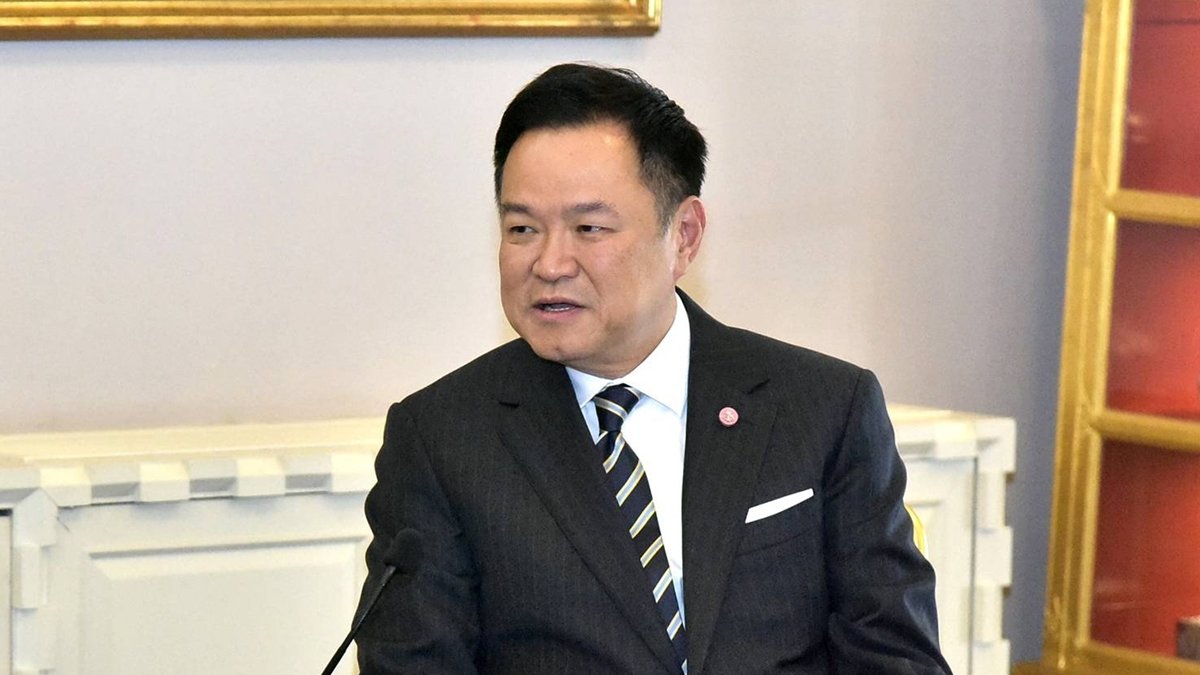
As Thailand quietly marks the first anniversary of the border conflict with Cambodia, Prime Minister Anutin Charnvirakul stood at Government House on Friday to affirm that there is nothing to celebrate, even as life along the frontier slowly returns to a fragile calm. His measured words reflect the deep longing of border families for peace, shared markets, and the gentle rhythms of daily life that once connected Thai and Cambodian communities. Yet the memory of lost loved ones and displaced homes lingers like morning mist over the hills near Preah Vihear.
Prime Minister Anutin Addresses Anniversary at Government House
Prime Minister Anutin Charnvirakul spoke on Friday at Government House in Bangkok and stated there was nothing to celebrate on the first anniversary of the Thai-Cambodian border conflict that began on July 24 2025. He told reporters that Thailand remains committed to protecting its sovereignty while confirming the security situation has returned to normal across the border provinces.
Anutin emphasized that the government would continue to monitor developments near the Preah Vihear temple area and in Si Sa Ket Province. He noted that more than 100 deaths occurred during the fighting and over half a million civilians were displaced before the initial ceasefire took effect on July 28 2025.
Background of the Preah Vihear Temple Dispute
The long-standing territorial disagreement centers on land surrounding the ancient Preah Vihear temple which sits on the border between Thailand and Cambodia. Thai authorities have maintained that the area falls within Thai sovereignty and local communities in Si Sa Ket Province have long farmed and visited the surrounding hills.
Cultural ties run deep in these border districts where families on both sides share Khmer and Thai heritage and visit the same markets on weekends. The escalation one year ago disrupted these daily routines and closed schools in several tambons for months.
The Preah Vihear temple dispute traces its modern roots to the 1962 International Court of Justice ruling that awarded sovereignty over the temple to Cambodia, a decision that has continued to shape Thai-Cambodian relations for over six decades. Successive Thai governments have approached the issue with varying degrees of firmness and diplomacy: Thaksin Shinawatra sought economic cooperation to ease tensions, Abhisit Vejjajiva faced domestic protests that hardened the stance, Prayut Chan-o-cha emphasized military readiness while pursuing dialogue, and the current administration under Anutin Charnvirakul balances security concerns with calls for peaceful resolution. Nationalist sentiment in Thai domestic politics often amplifies these disputes, with opposition groups and civil society organizations framing any perceived concession as a loss of national pride, thereby influencing policy decisions and public discourse around border sovereignty.
Local communities in Si Sa Ket province, particularly those living near the disputed areas, experience the conflict not only through occasional skirmishes but also through disrupted daily life and restricted access to ancestral lands. Farmers and traders in villages such as Kantharalak have long depended on cross-border movement for markets and family ties, yet heightened security measures have limited these interactions, creating economic strain and emotional separation. Cultural heritage sites like Preah Vihear hold deep spiritual significance for both nations, and residents often express a quiet hope that shared Buddhist traditions might one day foster greater understanding, even as political narratives on both sides continue to emphasize historical grievances and territorial integrity.
Chronology of Ceasefires and Renewed Fighting
An unconditional ceasefire was reached on July 28, 2025, with United States mediation, bringing a temporary halt to the deadliest fighting between the two nations in decades. The initial truce allowed displaced families to begin returning to their villages and opened a window for diplomatic talks.
That diplomatic effort culminated on October 26, 2025, when Prime Minister Anutin and Cambodian Prime Minister Hun Manet signed a formal truce in Kuala Lumpur, Malaysia. The agreement, facilitated in part by former U.S. President Donald Trump's mediation, pledged respect for the ceasefire and established joint patrol mechanisms along the disputed border. For a few weeks, hope flickered that the worst was behind both nations.
The fragile peace collapsed on December 7, 2025, when hostilities resumed in Si Sa Ket province. Renewed artillery exchanges near contested ridges, fueled by accusations of troop movements and construction activities that violated the Kuala Lumpur agreement's spirit, shattered the truce. Thai forces seized several towns during the renewed clashes. In the December operations, 47 Thai military personnel and 12 civilians lost their lives, while over 8,500 people were displaced from their homes in Si Sa Ket and Oddar Meanchey provinces. Economic damage to local agriculture and small businesses was estimated at $42 million. Prime Minister Anutin dissolved parliament in December 2025 as the situation worsened, and the Royal Thai Army deployed additional units to secure high ground while coordinating humanitarian corridors for affected villagers.
Current Security Situation Along the Border
Military officials report that the border remains under control this week with no active fighting reported in Si Sa Ket or neighboring provinces. Joint patrols have resumed in designated zones and local markets in the area have reopened for Thai and Cambodian traders.
Residents in border tambons have begun rebuilding homes damaged during the clashes and the Ministry of Interior has allocated funds for temporary shelters in affected districts. Schools in Si Sa Ket reopened in phases starting earlier this year.
Thailand Raises Concerns Over Arms Deliveries
Thailand recently expressed concerns to China regarding the delivery of tanks to Cambodia's military. Government House confirmed that these discussions took place during routine diplomatic channels and stressed the need for transparency in regional arms transfers.
Anutin also rejected a proposed 50:50 maritime boundary split with Cambodia during recent talks. Thai officials maintain that any agreement must respect existing maps and protect fishing communities along the Gulf of Thailand coast.
Thailand has voiced particular concern over recent Chinese tank deliveries to Cambodia, including Type 99A main battle tanks and VT-4 variants that enhance Phnom Penh's armored capabilities near the border. These acquisitions raise questions about military balance in a region where Thailand has traditionally maintained a qualitative edge, prompting Bangkok to accelerate its own modernization programs such as the procurement of new armored vehicles and upgraded artillery systems. Within the broader China-Southeast Asia arms dynamic, Cambodia's deepening defense ties with Beijing reflect a wider trend of strategic alignment that Thailand observes with caution, even as it maintains its own diversified supplier relationships with the United States and European partners to preserve operational flexibility.
Anutin's Mid-July Visit to China
Prime Minister Anutin made his first official visit to China as head of government in mid-July 2026 and met President Xi Jinping in Beijing. The trip focused on economic cooperation while Thailand balanced its security concerns with Cambodia against trade ties with China.
Thai exporters in the agricultural sector welcomed the visit because it secured continued access to Chinese markets for rice and rubber from the northeastern provinces. Officials in Bangkok view the relationship with Beijing as essential for long-term stability in the region.
Implications for Thai Communities and ASEAN
Border families in Si Sa Ket continue to feel the effects of the conflict through lost farmland and interrupted education for children. Local temples have organized merit-making ceremonies to honor those who lost their lives and to promote reconciliation between neighboring villages.
For Southeast Asian readers the situation highlights the importance of ASEAN mechanisms in preventing future flare-ups. Thailand's experience shows that sustained dialogue and respect for sovereignty remain the foundation for peaceful relations with Cambodia and other neighbors.
Border trade in Si Sa Ket, Surin, and Buriram provinces has suffered measurable setbacks, with monthly cross-border commerce dropping by nearly 35 percent since renewed tensions began, affecting rice, fruit, and textile exchanges that sustain thousands of families. ASEAN's mediation efforts have struggled due to the organization's longstanding principle of non-interference, which limits its ability to impose binding resolutions compared with more structured mechanisms seen in other regional disputes such as the Malaysia-Indonesia Ambalat block disagreement or lingering Vietnam-Cambodia maritime talks. Tourism around Preah Vihear and nearby temples has also declined sharply, with visitor numbers falling from 120,000 annually to under 40,000, depriving local economies of revenue while underscoring how cultural sites become unintended casualties of political friction.
Looking Ahead for Thai-Cambodian Relations
Prime Minister Anutin has called for continued vigilance without public celebration of the anniversary. Government agencies including the Ministry of Foreign Affairs and the Royal Thai Army will maintain coordination to ensure the border stays calm in the months ahead.
Thai citizens in the northeast have expressed hope that cultural exchanges and joint heritage projects at sites like Preah Vihear can help rebuild trust. Officials in Bangkok remain focused on protecting national interests while supporting regional peace efforts.
Thailand's upcoming general election timeline adds another layer of complexity, as border security issues frequently surface in campaign rhetoric and could influence voter sentiment in northeastern provinces. Potential confidence-building measures include joint border patrols, shared environmental conservation projects around the temple, and renewed cultural diplomacy that highlights the deep Buddhist connections between Thai and Cambodian communities. Experts assessing the likelihood of renewed conflict generally view full-scale war as unlikely given economic interdependence and international pressure, yet they caution that sporadic clashes remain possible without sustained dialogue and transparent communication channels between the two militaries.
By Ann Srisawat, Staff WriterThis article was produced with AI-assisted research and editorial support. Reporting is based on sources cited in the article.
What's Your Reaction?
 Like
0
Like
0
 Dislike
0
Dislike
0
 Love
0
Love
0
 Funny
0
Funny
0
 Wow
0
Wow
0
 Sad
0
Sad
0
 Angry
0
Angry
0

Southeast Asia Correspondent at Global1.News. Based in Bangkok, covering Thai and Southeast Asian politics, economy, technology, and culture. Deep regional perspective on one of the world's most dynamic regions.












Comments (0)