
Faf de Klerk Powers Cheetahs Past Sharks XV in Currie Cup
Faf de Klerk powers Cheetahs past Sharks XV 43-21 in Currie Cup round two. Prince Nkabinde hat-trick, Faf de Klerk brace as Steyns side surges late in Bloemfontein.
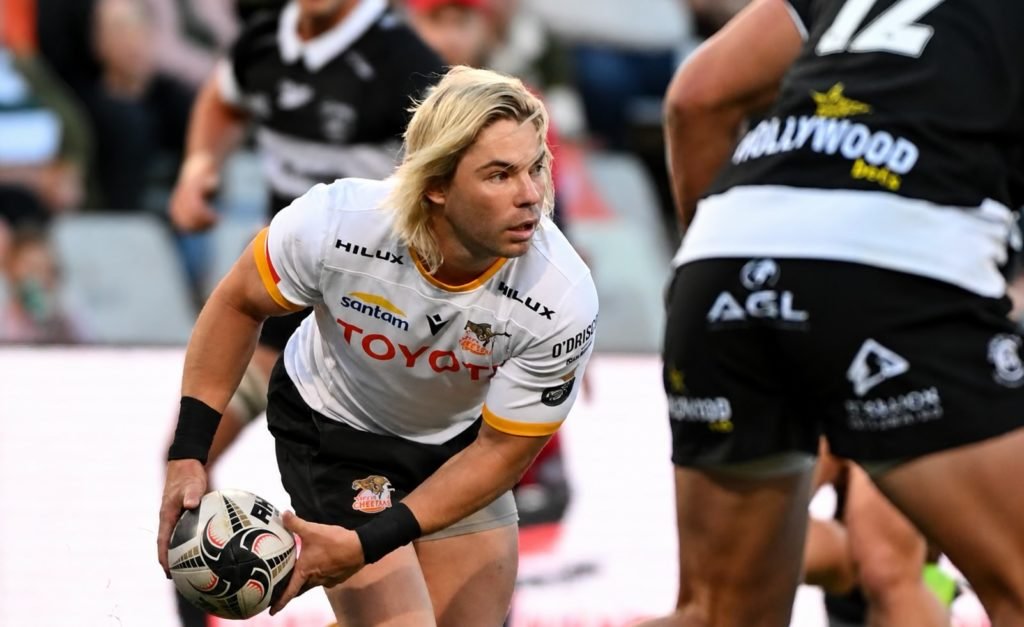
Faf de Klerk Delivers Another Masterclass
The Currie Cup has long served as a proving ground for South African rugby talent, and Faf de Klerk’s return to domestic action underscores how the competition continues to reward experience blended with flair. At 35, de Klerk’s decision to feature for the Cheetahs reflects a broader trend of Springboks veterans using the tournament to maintain match sharpness while mentoring younger players in a high-pressure environment. His ability to dictate tempo from the base of the scrum remains unmatched, turning routine phases into attacking opportunities that stretch defences thin.
Tactically, de Klerk’s quick ball distribution and intelligent kicking game expose the vulnerabilities in modern defensive alignments that prioritise width over central coverage. By opting for a grubber rather than a conventional pass, he forced the Sharks XV into reactive positioning, highlighting how veteran scrumhalves can still outthink structured systems. This performance also revives memories of his 2019 Rugby World Cup heroics, where similar sniping runs and support play proved decisive on the biggest stage.
If there was any question about Faf de Klerk's enduring class at 35 years old, his performance in Bloemfontein on Friday night put those doubts emphatically to rest. The Springboks scrumhalf was at his electric best, scoring a brace of tries and earning Man of the Match honours as the Cheetahs powered past the Sharks XV 43-21 in round two of the Currie Cup.
De Klerk's first try came from his own grubber kick through the Sharks defence, with winger Prince Nkabinde chasing hard before the scrumhalf dotted down under the posts. His second — a snipe from close range — showcased the sharp rugby brain and quick service that made him a World Cup winner with the Springboks in 2019 and 2023. At an age when most scrumhalves are winding down, De Klerk is proving that class is permanent.
Cheetahs Late Surge Turns the Game
Historically, the Currie Cup has rewarded teams that maintain composure during periods of numerical disadvantage, a trait the Cheetahs displayed vividly after Curtly Thomas’s yellow card. Such moments test not only physical resilience but also the tactical discipline instilled by coaching staffs that emphasise structured defence even when short-handed. The ability to absorb pressure and then counter-attack speaks to the depth of preparation that separates contenders from mid-table sides in this competition.
From a strategic standpoint, the Cheetahs’ decision to keep the ball alive through offloads during the sin-bin period disrupted the Sharks XV’s rush defence, creating space for Nkabinde’s subsequent finishes. This approach echoes successful Currie Cup campaigns of the past where adaptability under fatigue proved decisive. The late bonus-point surge also illustrates how modern provincial rugby values attacking width once the game opens up in the final quarter.
The match was locked at 14-14 at half-time, with neither side able to seize control. The Cheetahs struck early through Nkabinde's first try, but the Sharks answered each time — centre Janco Purchase, prop Simphiwe Ngobese, and centre Marnus Potgieter all crossing the whitewash to keep the visitors in the contest.
The turning point came early in the second half when De Klerk took a quick tap penalty and sent flank Juan Venter over for a try. But the Cheetahs then lost lock Curtly Thomas to a yellow card for a head-contact tackle, and the Sharks immediately capitalised through Potgieter's try. With 14 men, the Cheetahs showed championship character — Nkabinde scored his second, then his third after the team returned to full strength. In the final five minutes, with Sharks hooker Bryce Calvert in the sin bin for a cynical breakdown infringement, Venter and De Klerk both scored their second tries to seal the bonus-point victory.
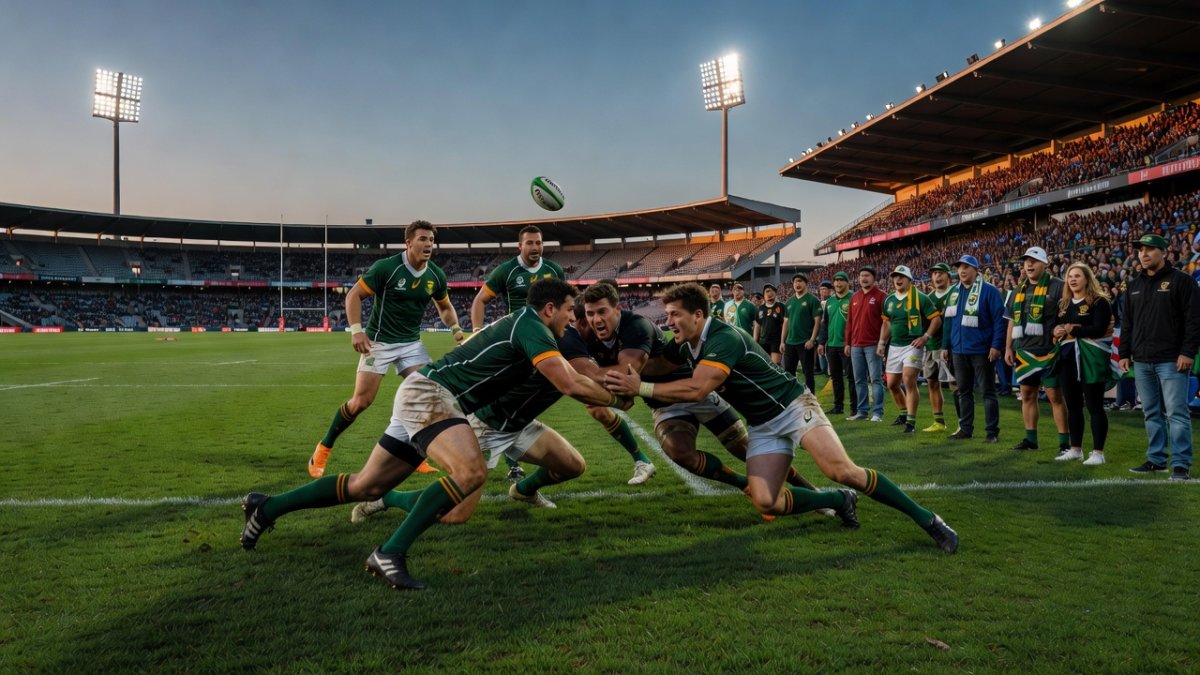
Prince Nkabinde and the Face of Transformation
South African rugby’s transformation agenda has evolved from policy into tangible on-field results, and Prince Nkabinde’s hat-trick embodies the success of targeted development pathways at provincial level. The Currie Cup’s structure allows unions like the Cheetahs to fast-track players from amateur ranks into professional environments where they face senior opposition weekly. This exposure accelerates growth far beyond what academy drills alone can achieve.
Contextually, Nkabinde’s emergence aligns with a generation of wingers who combine traditional speed with improved decision-making under the high ball. His finishing instincts mirror those of past Cheetahs products who progressed to Springboks honours, reinforcing the competition’s role as a national talent filter. Coaches now prioritise such profiles because they offer both immediate impact and long-term international potential.
Prince Nkabinde's hat-trick was more than just a statistical achievement. The young winger represents exactly what South African rugby's transformation agenda aims to produce — raw talent given the platform to shine at professional level. His first try, chasing down De Klerk's grubber, showed pace and determination. His second and third demonstrated finishing instinct that will have Springboks selectors taking note.
For a Cheetahs side that has historically been a breeding ground for talent that often moves to wealthier unions, keeping a player of Nkabinde's calibre in Bloemfontein is a statement of intent under coach Frans Steyn. The Currie Cup's role in developing the next generation of Springboks cannot be overstated, and Nkabinde is the latest example of the competition fulfilling that mission.
Sharks XV Show Fight but Lack Cutting Edge
The Sharks XV’s participation in the Currie Cup serves as an essential bridge between the United Rugby Championship and emerging talent, yet this fixture exposed recurring issues in game management that have plagued development sides. When senior players are unavailable, the pressure on young forwards to maintain breakdown discipline becomes acute, and Bryce Calvert’s late yellow card highlighted how one lapse can unravel structured plans.
Analytically, the Sharks XV struggled to adapt their attacking shape once the Cheetahs began dominating the gainline through quick ruck ball. Historical parallels exist with previous Sharks development teams that excelled in open play but faltered when matches turned attritional. For coach John Plumtree, these results provide data points on where to refine defensive alignment and decision-making drills ahead of tougher fixtures.
The Sharks XV came into this fixture having won their opening Currie Cup match, but they were ultimately outclassed in the second half. Hooker Bryce Calvert's yellow card in the 75th minute effectively ended their hopes of a comeback, but the warning signs were there earlier — the Sharks struggled to contain the Cheetahs' offloading game and were caught narrow in defence on multiple occasions.
With the senior Sharks squad competing in the United Rugby Championship, the XV side provides crucial game time for emerging talent. Janco Purchase, Simphiwe Ngobese, and Marnus Potgieter all showed glimpses of quality, but the team lacked the composure to close out tight moments. For coach John Plumtree's development system, this game will be studied as a lesson in game management under pressure.
Frans Steyn Builds Momentum at the Cheetahs
Frans Steyn’s appointment at the Cheetahs represents a deliberate shift toward a playing identity rooted in his own illustrious career, where tactical intelligence and attacking ambition defined his contributions to multiple World Cup victories. By integrating de Klerk into the squad, Steyn has created a mentorship model that accelerates the learning curve for emerging halfbacks and forwards alike. This approach mirrors successful provincial rebuilds seen in earlier decades of Currie Cup history.
The recruitment philosophy also addresses the Free State’s traditional challenge of retaining talent amid competition from wealthier unions. Steyn’s emphasis on giving young players meaningful minutes alongside proven Springboks fosters loyalty and on-field cohesion that pure financial incentives cannot replicate. Early results suggest this blend is producing a side capable of sustained pressure across eighty minutes.
Frans Steyn — himself a World Cup winner with the Springboks in 2007, 2019, and 2023 — is quietly building something special in Bloemfontein. His Cheetahs side plays with a freedom and attacking intent that reflects his own playing philosophy. The decision to bring Faf de Klerk back to the Free State has proven masterful, giving the squad a world-class general on the field while younger players learn from one of the best.
The Cheetahs' recruitment strategy under Steyn has been smart — blending experienced Springboks like De Klerk with hungry young talent like Nkabinde and Venter. The result is a team that can compete with anyone in the Currie Cup and is building toward something bigger.
Round Three Fixtures Set Up Fresh Challenges
The upcoming round three fixtures continue the Currie Cup’s tradition of pitting developing sides against each other in environments that demand rapid adaptation. Griquas, playing at home in Kimberley, will look to exploit any travel fatigue the Cheetahs carry, while the Stormers XXIII at Newlands present a stern examination of the Sharks XV’s defensive structures against a historically attack-minded franchise.
Beyond immediate results, these matches feed directly into the broader Springboks selection ecosystem. Performances in the Currie Cup often influence national squad depth charts, particularly for positions where experience is balanced against raw athleticism. As the competition progresses, the tactical lessons from round two will shape preparations and highlight which players possess the temperament required for higher honours.
In round three of the Currie Cup, the Cheetahs travel to Kimberley to take on Griquas — a side that will be smarting after their own round two result. The Sharks XV, meanwhile, face a daunting trip to Cape Town to meet the Stormers XXIII at Newlands. Both fixtures will test the depth and resilience of these young squads.
The Currie Cup remains the backbone of South African rugby development. Every scrum, every lineout, every try scored in this competition feeds directly into the Springboks system. As the Cheetahs and Sharks XV prepare for round three, one thing is certain — the passion for provincial rugby in South Africa burns as brightly as ever.
Tags: Faf de Klerk, Cheetahs, Sharks XV, Currie Cup, Prince Nkabinde, Frans Steyn, Juan Venter, Bloemfontein, South African rugby
By Dante Williams, Staff Writer
This article was produced with AI-assisted research and editorial support. Reporting is based on sources cited in the article.
What's Your Reaction?
 Like
0
Like
0
 Dislike
0
Dislike
0
 Love
0
Love
0
 Funny
0
Funny
0
 Wow
0
Wow
0
 Sad
0
Sad
0
 Angry
0
Angry
0

Breaking News and Investigations Correspondent at Global1.News. Based in London, covering global breaking news, security, and investigative stories. Known for digging deeper and connecting the dots across continents.














Comments (0)