
Blood Test Gauges Ages of 11 Organs to Forecast Disease
Why Your Birthday Candles Miss the Real Story Think back to your last high school reunion. Some classmates looked exactly as you remembered, while others seemed to have aged a decade more in the same span of years. That difference is not just about luck or good genes. It reflects how individual body systems age at their own pace, and a new blood test aims to measure those diffe
Why Your Birthday Candles Miss the Real Story
Think back to your last high school reunion. Some classmates looked exactly as you remembered, while others seemed to have aged a decade more in the same span of years. That difference is not just about luck or good genes. It reflects how individual body systems age at their own pace, and a new blood test aims to measure those differences directly.
The test focuses on biological age rather than the number of candles on your cake. Researchers have shown that a single blood sample can estimate how old each of 11 major organ systems appears at the cellular level. This information helps flag higher risks for conditions such as heart disease, kidney problems, or cognitive decline long before traditional symptoms appear.
Biological Age Versus Chronological Age
Chronological age is straightforward. It counts the years since birth. Biological age tracks how well your cells and tissues are actually functioning. Two people born the same year can have biological ages that differ by ten years or more, depending on genetics, environment, and daily habits.
When organs age faster than the rest of the body, they often send out molecular signals that show up in blood. The new approach captures those signals across multiple systems at once, giving a more complete picture than single-organ tests like cholesterol panels or liver enzyme checks.
How the Test Looks at 11 Separate Systems
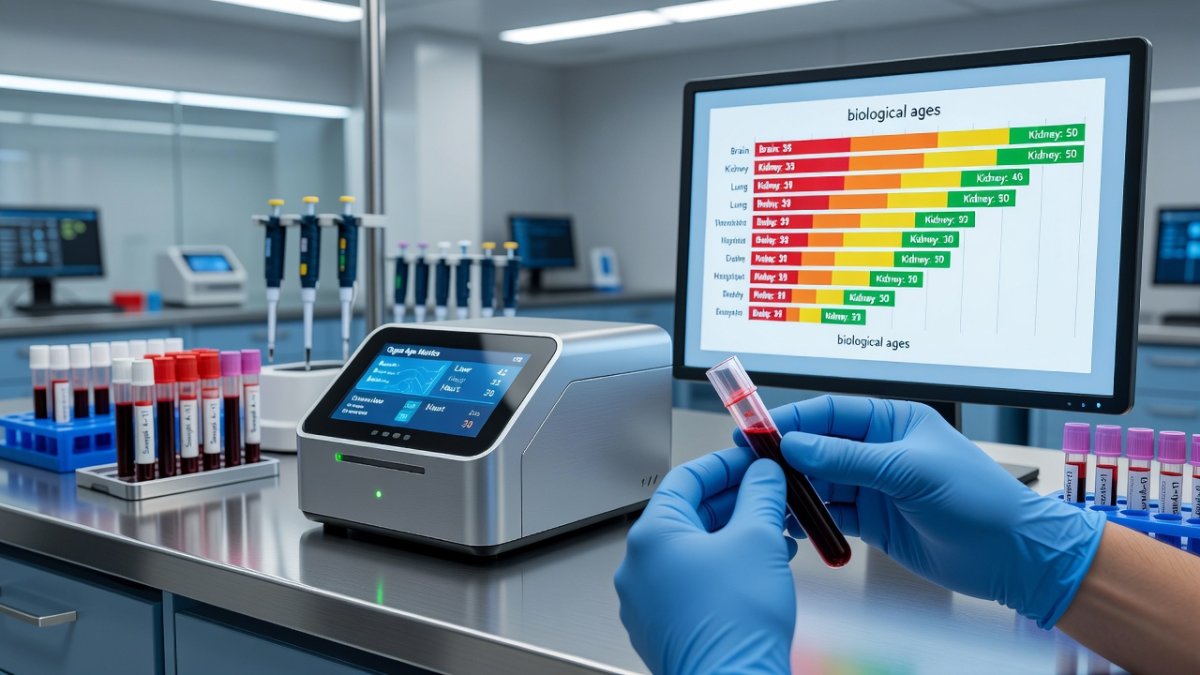
The method examines proteins and other markers tied to specific organs, including the heart, lungs, kidneys, liver, brain, and immune system. By comparing these markers against large population data, the test assigns each system its own biological age.
Someone might have a heart that tests ten years older than their actual age while their lungs remain on track. That mismatch can point to targeted risks rather than a vague overall warning. Because the test uses a standard blood draw, it fits easily into routine checkups without extra procedures.
Spotting Disease Risk Years Earlier
Early data suggest that accelerated aging in one or more systems correlates with higher chances of developing related diseases down the road. For example, an older-than-expected kidney reading may precede measurable drops in filtration function by several years.
This lead time matters because many chronic conditions respond best to changes made well before diagnosis. Doctors could use the results to recommend earlier screenings or adjustments in diet, exercise, and medication for the specific organs showing stress.
What This Means for Everyday Health Decisions
Imagine learning that your cardiovascular system is aging faster than average. That single piece of information could motivate concrete steps such as adding regular walks, improving sleep, or discussing blood-pressure targets with your physician sooner rather than later.
The test also highlights areas where you are doing well. A lung system that tests younger than expected might reinforce the value of not smoking or of staying active outdoors. Seeing both strengths and vulnerabilities side by side makes the advice feel personal instead of generic.
Connecting the Science to Real Lives
Health is rarely about one number. Family history, stress levels, and daily choices all interact with the aging process. The 11-system blood test adds another layer of data that can guide conversations between patients and clinicians.
People who receive results showing uneven aging across organs often report feeling more in control. They can focus efforts where the numbers indicate the greatest opportunity for change, rather than guessing which lifestyle adjustments will matter most.
Over time, repeated testing could track whether those adjustments are actually slowing an organ's aging rate. That feedback loop turns abstract advice into measurable progress.
Looking Ahead in Preventive Medicine
Researchers continue to refine the test by studying larger groups and longer follow-up periods. As more data accumulate, the predictions should become even sharper, helping clinicians decide when to intervene and when to simply monitor.
For now, the approach offers a practical way to move beyond one-size-fits-all health guidance. By revealing how different parts of the body are aging, it gives individuals and their doctors a clearer map for protecting long-term well-being.
By Allan Ali, PublisherThis article was produced with AI-assisted research and editorial support. Reporting is based on sources cited in the article.
What's Your Reaction?
 Like
0
Like
0
 Dislike
0
Dislike
0
 Love
0
Love
0
 Funny
0
Funny
0
 Wow
0
Wow
0
 Sad
0
Sad
0
 Angry
0
Angry
0

Publisher of Global1.News. Automation architect, systems builder, and the guy making sure the truth gets published.















Comments (0)