
Putin's Longtime Ally Sergei Ivanov Dies at 73
Sergei Ivanov, a former Russian defense minister, Kremlin chief of staff and longtime ally of President Vladimir Putin, has died at the age of 73. The VTB United League basketball organization, where he served as honorary president, announced the death on Friday. The professional men's basketball league did not disclose the cause of death. The exiled news outlet Meduza reported
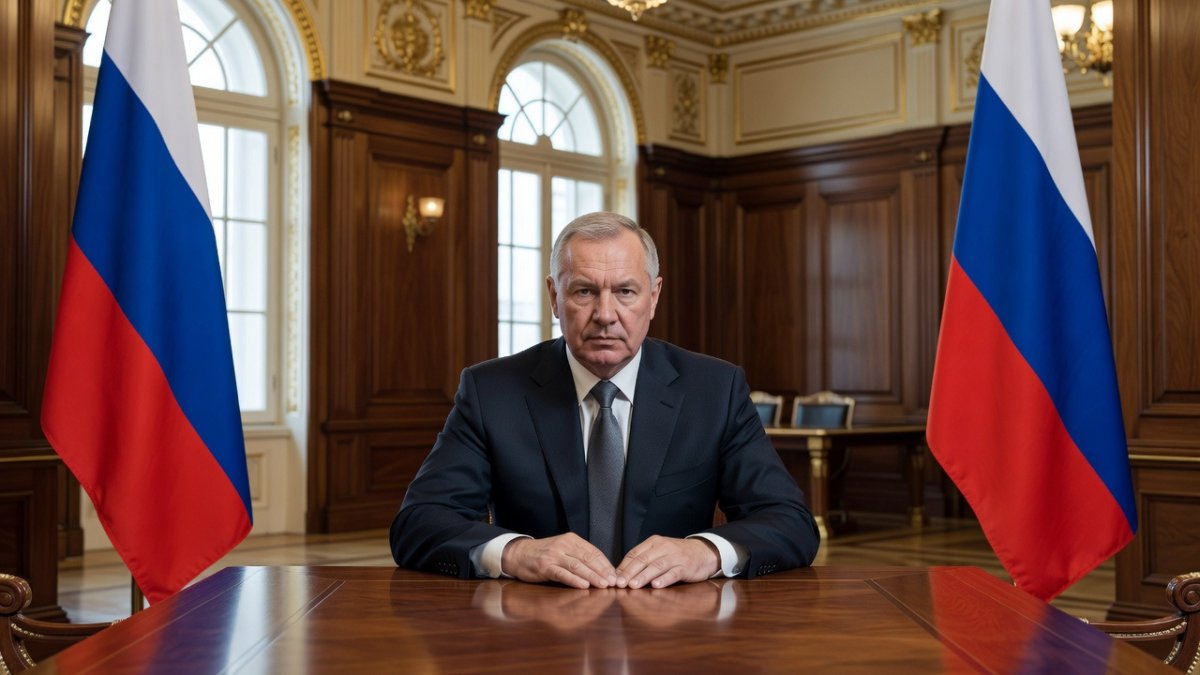
Sergei Ivanov, a former Russian defense minister, Kremlin chief of staff and longtime ally of President Vladimir Putin, has died at the age of 73. The VTB United League basketball organization, where he served as honorary president, announced the death on Friday. The professional men's basketball league did not disclose the cause of death.
The exiled news outlet Meduza reported that Ivanov was rumored to be suffering from a severe, long-term illness. Putin expressed his deep condolences to Ivanov's friends and relatives in a brief, one-sentence statement published on the Kremlin's website.
Early KGB Career Alongside Putin in Leningrad
Ivanov and Putin first met in the 1970s while both were serving in the Leningrad directorate of the KGB. While Putin transitioned into local politics by joining the St. Petersburg mayor's office in the 1990s, Ivanov remained in the intelligence services, rising to become a senior officer in the Foreign Intelligence Service.
The pair reunited in the late 1990s as Putin rose through the federal government. This shared background in the Leningrad KGB formed the foundation of their long professional relationship within Russian security structures.
Rise Through FSB, Security Council and Defense Ministry
Putin named Ivanov his deputy at the FSB security service in 1998. He subsequently appointed him secretary of Russia's Security Council after becoming prime minister in 1999. Ivanov went on to serve as defense minister from 2001 to 2007, spanning nearly the entirety of Putin's first two presidential terms.
These appointments placed Ivanov at the center of Russia's security and defense apparatus during a period of consolidation of federal power under Putin. His roles connected directly to the Foreign Ministry and Defense Ministry structures that shape Kremlin policy on post-Soviet security matters.
Deputy Prime Minister and Presidential Administration Chief of Staff
During Dmitry Medvedev's single presidential term, Ivanov served as deputy prime minister under then-Prime Minister Putin between 2008 and 2011. In late 2011, Medvedev named Ivanov chief of staff of the Presidential Administration, a powerful role he held until 2016.
This sequence of positions kept Ivanov inside the core decision-making circle involving both Putin and Medvedev. The moves reflected the rotation of trusted figures between government and presidential administration posts in Moscow.
Final Role as Special Representative and Dismissal
In 2016, Putin moved Ivanov to the position of special representative for environmental protection and transportation. Putin dismissed Ivanov from that post in February, less than a week after he turned 73, which is three years past the standard mandatory retirement age for civil servants.
The timing of the dismissal occurred after Ivanov had already exceeded the usual civil service retirement threshold. This step concluded his formal government service that had begun decades earlier in the intelligence services.
Career Trajectory and Kremlin Power Structures
Ivanov's path from KGB officer in Leningrad to successive high-level posts under Putin illustrates the enduring influence of early security service ties within the Russian leadership. His appointments across the FSB, Security Council, Defense Ministry and Presidential Administration show how individuals with shared intelligence backgrounds advanced through multiple layers of Kremlin authority.
The progression also highlights the pattern of moving loyal figures between executive, security and administrative roles while maintaining continuity in the inner circle. Ivanov's eventual reassignment and later dismissal after reaching retirement age reflect standard personnel practices applied even to long-serving allies in Moscow.
By Irina Volkov, Staff WriterThis article was produced with AI-assisted research and editorial support. Reporting is based on sources cited in the article.
What's Your Reaction?
 Like
0
Like
0
 Dislike
0
Dislike
0
 Love
0
Love
0
 Funny
0
Funny
0
 Wow
0
Wow
0
 Sad
0
Sad
0
 Angry
0
Angry
0
Russia/Eastern Europe Correspondent at Global1.News. Covering Russian politics, energy, security, and the shifting dynamics of the post-Soviet space. Provides clear-eyed analysis on one of the world's most opaque regions.









Comments (0)