
Nicolas Cage names the hit TV show that convinced him to pivot away from movies
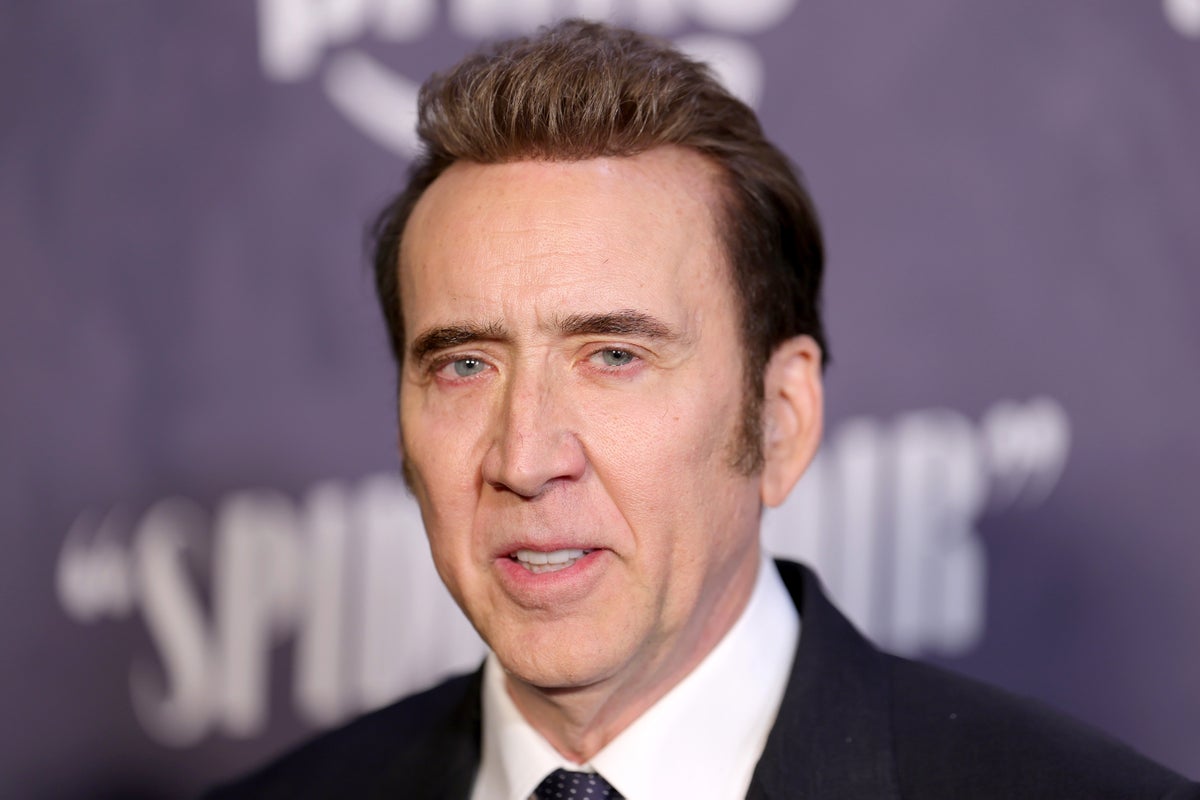
Nicolas Cage names the hit TV show that convinced him to pivot away from movies
In a candid revelation that has sent ripples through Hollywood, Nicolas Cage has credited Bryan Cranston’s mesmerising turn in Breaking Bad as the catalyst for his decision to step back from feature films and explore television. Speaking during a promotional appearance for his forthcoming project, the 60-year-old actor described how the pandemic-forced lockdown gave him the time to absorb the series in its entirety, fundamentally altering his view of long-form storytelling.
The lockdown viewing that changed everything
Cage, whose filmography spans more than four decades and includes such iconic roles as in Leaving Las Vegas and the National Treasure franchise, admitted he had previously resisted the pull of prestige television. “I was always a cinema man,” he told interviewers. “But during those strange months when the world stopped, I found myself completely absorbed by Cranston’s Walter White. The depth, the moral descent, the sheer commitment—it made me reconsider what an actor can achieve when given the space of multiple episodes.”
Industry insiders note that Cage’s comments arrive at a moment when streaming platforms are aggressively courting established film stars for limited series. His remarks underscore a broader recalibration: actors who once measured success by box-office receipts now weigh critical prestige and narrative ambition on the small screen.
From action hero to arthouse enigma
To understand the weight of this pivot, one must trace Cage’s remarkable trajectory. Born Nicolas Coppola, he adopted his stage name to forge an independent path away from his famous uncle, Francis Ford Coppola. Early breakthroughs in films such as Raising Arizona showcased his elastic comic timing, while the 1995 Oscar-winning performance in Leaving Las Vegas cemented his reputation as a fearless dramatic actor willing to inhabit broken characters.
Yet the 2010s brought a period of prolific, often low-budget output. Between 2018 and 2022 alone, Cage appeared in more than a dozen features, many straight-to-video. Analysts attribute this phase to a combination of financial obligations and a desire to keep working. Data from industry tracking firm Comscore shows that Cage’s theatrical releases during this period grossed under £40 million worldwide combined, despite his enduring name recognition.
Breaking Bad’s enduring masterclass
Breaking Bad, which ran from 2008 to 2013 on AMC, transformed Bryan Cranston from a sitcom veteran into a dramatic heavyweight. The series chronicled chemistry teacher Walter White’s transformation into a methamphetamine kingpin, earning 16 Emmys and reshaping expectations for cable drama. Cranston’s performance, in particular, demonstrated how a single character could evolve across 62 episodes with granular psychological detail rarely afforded in a two-hour film.
Cage’s appreciation appears rooted in this structural freedom. “Film gives you two hours to make an impression,” he observed. “Television lets the audience live with the consequences.” Media scholars at the London School of Economics have long argued that the pandemic accelerated audience migration toward such character-driven series, with UK streaming subscriptions rising 28 per cent between March 2020 and December 2021 according to Ofcom figures.
Expert perspectives on the shifting landscape
Television producer and former BBC drama commissioner Jane Tranter told Global1 News that Cage’s comments reflect a genuine sea change. “Actors of his calibre no longer view television as a step down. They see it as an opportunity to explore moral complexity without the commercial pressures of a $150 million opening weekend,” she said. Tranter pointed to recent high-profile transitions by actors such as Oscar Isaac and Mahershala Ali as evidence of the same recalibration.
Box-office analyst Anita Elberse of Harvard Business School adds important context. “Pre-pandemic, the theatrical window was still sacred for major stars. Post-pandemic, the economics have tilted toward platforms that can guarantee global reach and repeat viewings. A well-received series can generate years of residual value.”
Implications for audiences and the industry
For viewers, Cage’s potential move into television promises richer character studies. His distinctive screen presence—equal parts vulnerability and volatility—could thrive in formats that reward slow-burn tension rather than explosive set pieces. Streaming executives are reportedly already circling projects that might pair him with showrunners known for morally ambiguous protagonists.
Yet the transition carries risks. Film stars sometimes struggle with the collaborative, months-long shoots required for series television. Moreover, the British market, where public-service broadcasters still dominate prestige drama, may offer fewer immediate opportunities than American streamers. Nevertheless, Cage’s remarks suggest he is prepared to embrace the discipline that long-form demands.
Whether this signals the beginning of a sustained television chapter or merely a flirtation remains to be seen. What is clear is that one of cinema’s most unpredictable performers has found new inspiration in a medium he once overlooked—and that Breaking Bad continues to exert influence long after its finale.
This is Erica Thornton for Global1 News, reporting from London. 🇬🇧
This article was produced with AI-assisted research and editorial support. Reporting is based on sources cited in the article.
What's Your Reaction?
 Like
0
Like
0
 Dislike
0
Dislike
0
 Love
0
Love
0
 Funny
0
Funny
0
 Wow
0
Wow
0
 Sad
0
Sad
0
 Angry
0
Angry
0

US Politics and Policy Correspondent at Global1.News. Based in Washington DC, covering American politics, policy, elections, and the courts. Knows how the system works and tells you what it actually means.













Comments (0)