
Mt. Fuji Summit Research Station in NHK Science View Episode
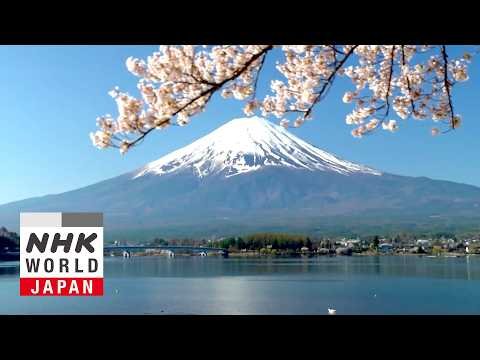
The NHK Science View Episode on Mt. Fuji's Research Facility The NHK WORLD-JAPAN Science View program aired an episode on June 18, 2026, that examined scientific activities at the Mount Fuji Research Station located at the 3,776-meter summit of Mt. Fuji. The segment focused on studies of clouds, lightning, and climate conducted at the facility, which operates only during the su
The NHK Science View Episode on Mt. Fuji's Research Facility
The NHK WORLD-JAPAN Science View program aired an episode on June 18, 2026, that examined scientific activities at the Mount Fuji Research Station located at the 3,776-meter summit of Mt. Fuji. The segment focused on studies of clouds, lightning, and climate conducted at the facility, which operates only during the summer months of July and August each year.
The program presented the station as a site where researchers access the free troposphere for direct atmospheric measurements. It highlighted the NPO Mount Fuji Research Station's role in continuing high-altitude observations after the Japan Meteorological Agency closed the manned weather station in October 2004.
Historical Development of the Mount Fuji Research Station
The Mount Fuji Research Station originated as the Mount Fuji Weather Station, established by the Japan Meteorological Agency in 1932. Earlier efforts included Nonaka Itaru and Chiyoko's 1895 mountaintop observations and Satō Jun'ichi's 1930 midwinter measurements. The facility later hosted the Mount Fuji Radar System, installed in 1964 following the Isewan Typhoon of 1959 that killed over 5,000 people. This radar provided an 800-kilometer range and remained the world's highest weather radar station for years until its decommissioning in 1999 due to the Himawari satellite series.
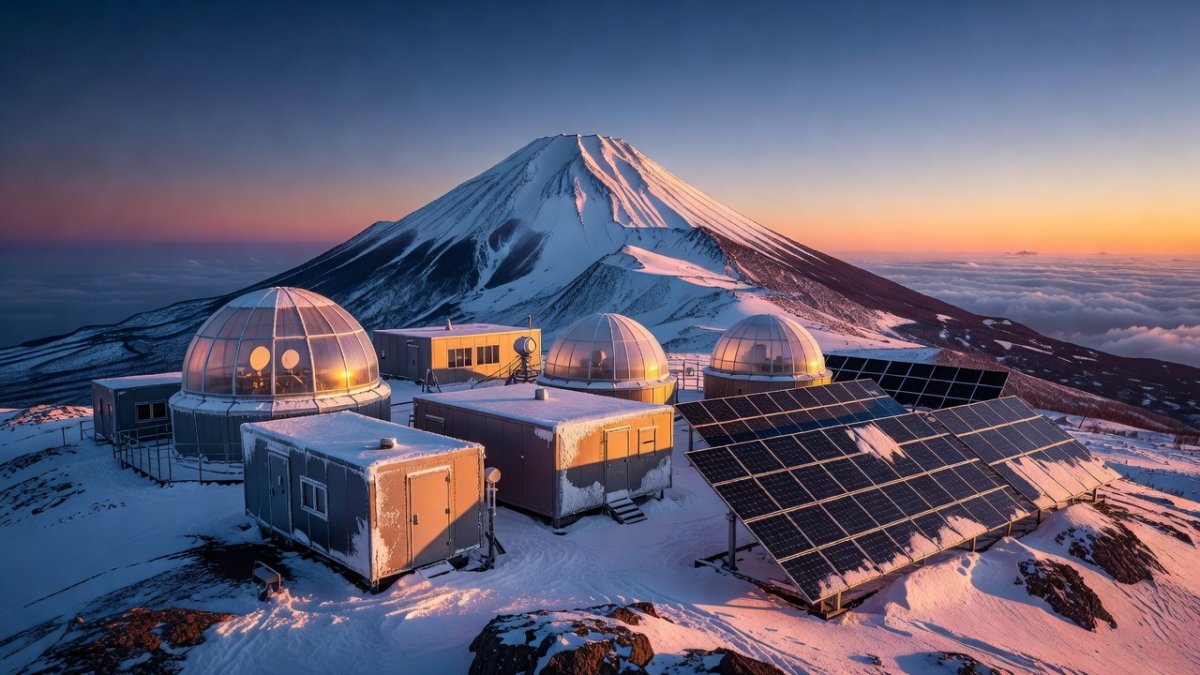
The NPO Mount Fuji Research Station was formed in 2007 to lease the site from the Japan Meteorological Agency. It now conducts research exclusively during the July-August season and maintains a membership exceeding 250 researchers and mountaineers. The organization operates without public funding or government subsidy, relying on user fees, donations, and competitive research funds with an annual budget of approximately ¥45 million.
Ongoing Research Initiatives at the Summit
Current projects at the station include atmospheric chemistry, greenhouse gas monitoring, PM2.5 and acid rain studies, high-altitude medicine, physical training, lightning research, cosmic rays, astronomy, and telecommunications. The location in the free troposphere allows measurements free from ground-level pollution interference. Westerly winds transport substances from the Eurasian continent, positioning the station as a key point for monitoring East Asian atmospheric conditions.
By 2019, more than 5,000 individuals had utilized the facility since 2007. During the 2019 season alone, 42 research projects were active. Battery-powered instruments collect data year-round, while Japan's highest live webcam operates during summer to supply cloud formation observations.
Japan's Strategic Role in High-Altitude Atmospheric Studies
The Mount Fuji Research Station helps preserve Japan's tradition of high-altitude scientific observation, comparable to the Mauna Loa Observatory in Hawaii and Jungfraujoch in Switzerland. Its placement enables continuous tracking of transboundary air pollutants carried by westerly winds, supporting regional atmospheric monitoring across the Asia Pacific.
Research conducted here contributes to understanding greenhouse gases and particulate matter that affect broader climate patterns. The Japan Meteorological Agency's historical involvement underscores the station's integration into national meteorological infrastructure, even after the shift to NPO management.
Operational Challenges at 3,776 Meters Elevation
Maintaining operations at 3,776 meters presents logistical demands, including seasonal access limited to July and August and reliance on self-generated power for instruments during the rest of the year. The NPO manages these constraints through private funding sources while sustaining over 250 members who combine research expertise with mountaineering skills.
The absence of government subsidies requires the organization to secure competitive grants and user fees to support its activities. These conditions have allowed the facility to continue legacy observations that began in the 1930s under the Japan Meteorological Agency.
Broader Impacts on Climate Monitoring and Regional Preparedness
Data from the station inform climate science through direct sampling in the free troposphere and contribute to disaster preparedness by extending the historical record of atmospheric monitoring that began after the 1959 Isewan Typhoon. The facility's position supports Asia Pacific atmospheric monitoring by capturing pollutants transported from the Eurasian continent.
Studies of lightning, cosmic rays, and high-altitude medicine provide additional insights relevant to both scientific understanding and practical applications in extreme environments. The NPO's efforts ensure that these measurements remain available for ongoing analysis of regional air quality and climate trends.
By Kenji Tanaka, Staff Writer
This article was produced with AI-assisted research and editorial support. Reporting is based on sources cited in the article.
What's Your Reaction?
 Like
0
Like
0
 Dislike
0
Dislike
0
 Love
0
Love
0
 Funny
0
Funny
0
 Wow
0
Wow
0
 Sad
0
Sad
0
 Angry
0
Angry
0

Japan Correspondent at Global1.News. Tokyo-based voice covering Japanese politics, technology, economy, and culture. Tracks the intersection of tradition and innovation in one of the world's most dynamic societies.















Comments (0)