
Japan's Autonomous Rice-Planting Drone Advances Smart Agriculture
The Innovation in Rice Cultivation Japan has introduced an autonomously navigated rice-planting drone developed through collaboration between industry and research partners. The system allows operators to sow rice seeds with minimal human intervention across paddy fields. This development targets one of the most labor-intensive stages of rice cultivation by replacing manual planting with automated aerial distribution.
The Innovation in Rice Cultivation
Japan has introduced an autonomously navigated rice-planting drone developed through collaboration between industry and research partners. The system allows operators to sow rice seeds with minimal human intervention across paddy fields. This development targets one of the most labor-intensive stages of rice cultivation by replacing manual planting with automated aerial distribution.
The drone uses autonomous navigation to fly predetermined routes over flooded paddies while releasing seeds at precise intervals. Early demonstrations show consistent coverage without the need for constant manual control. Farmers can program flight paths in advance, reducing the physical demands traditionally associated with transplanting seedlings by hand.
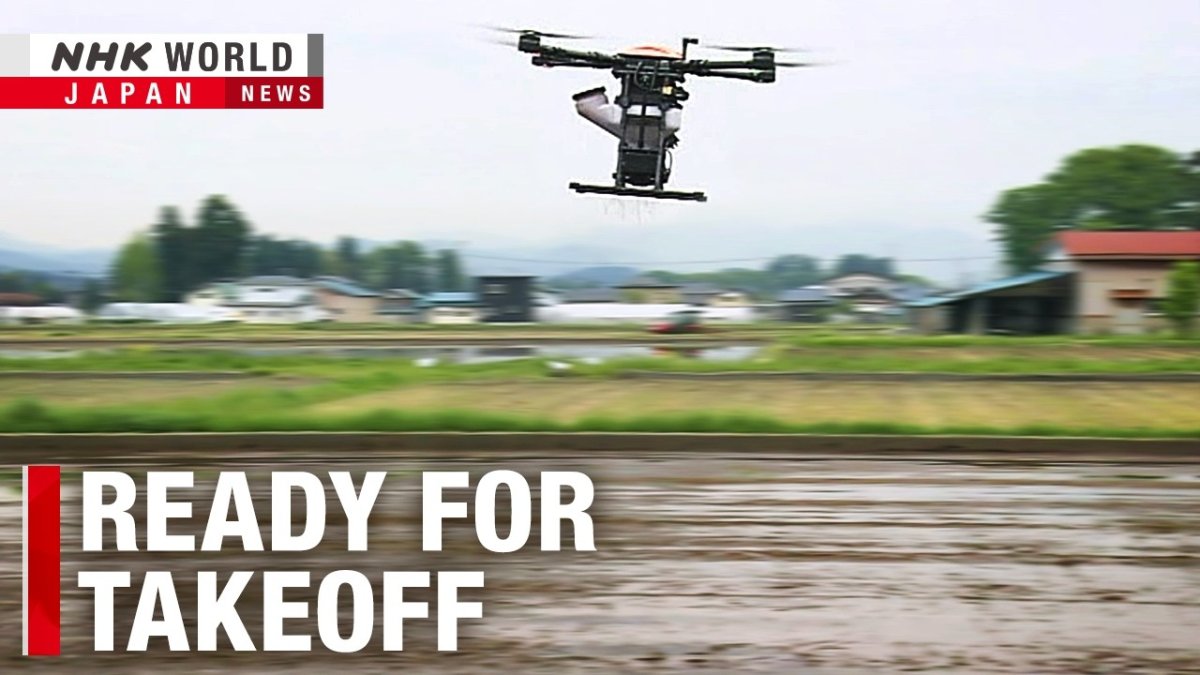
The development reflects broader patterns in Japanese agriculture where labor-intensive tasks are gradually shifted toward mechanized alternatives. Rice cultivation in Japan has long relied on precise timing for seed placement in flooded paddies, a process that traditionally demands coordinated manual effort across extended periods. Autonomous systems address this by enabling pre-planned operations that align with seasonal cycles without requiring constant on-site presence.
Industry and research collaborations in this area draw on established expertise in sensor integration and aerial systems, adapting them to the specific constraints of wet-field environments. This approach builds on prior mechanization efforts in Japanese farming while focusing on the transition from seedling transplanting to direct seeding methods. Such shifts can influence overall field management practices over multiple growing seasons.
Technical Capabilities of the Drone
The drone distributes rice seeds through precision mechanisms that maintain even spacing and depth. Autonomous navigation relies on integrated sensors and GPS to follow field boundaries accurately. This approach minimizes overlap and gaps that can occur during manual operations.
Developers designed the platform specifically for paddy conditions common in Japanese rice production. The system handles the transition from dry seed storage to aerial release while accounting for wind and terrain variations. Such features represent incremental progress in adapting drone technology to wet-field agriculture rather than broad claims of full autonomy.
Precision mechanisms in the drone account for variables such as seed flow rates and environmental factors encountered during flight over paddies. Navigation systems integrate boundary mapping with real-time adjustments to maintain consistent distribution patterns across irregular field shapes common in Japanese rice production. These features support incremental improvements in operational consistency rather than complete replacement of human oversight.
Adaptation to paddy conditions involves considerations for moisture levels and terrain that differ from dryland applications seen in other agricultural contexts. The platform incorporates safeguards for payload handling during transitions between storage and release phases. Ongoing refinements focus on compatibility with varying wind conditions and field sizes encountered in regional production areas.
Comparisons with international agri-tech efforts highlight Japan's emphasis on integration with existing small-scale farm structures, where equipment must operate within fragmented land holdings rather than expansive commercial operations.
Addressing Japan's Agricultural Labor Crisis
Japan's farming sector faces an aging workforce crisis, with the average farmer age exceeding 67 years. Declining rural populations have reduced the available labor pool for seasonal tasks such as rice planting. The introduction of this drone offers one tool to offset these demographic pressures.
By automating seed distribution, the technology lowers the physical requirements for field preparation. Smaller family farms and cooperatives may find it easier to maintain production levels without recruiting additional workers. This aligns with ongoing efforts to sustain output despite fewer hands available during peak planting periods.
Demographic trends in rural Japan have intensified pressure on seasonal workflows, particularly during peak periods when tasks like field preparation coincide with limited workforce availability. Automated seed distribution offers a means to redistribute labor demands, allowing remaining operators to focus on monitoring and decision-making aspects of cultivation. This aligns with efforts to sustain production continuity amid shrinking rural populations.
Smaller family operations and cooperatives stand to benefit from reduced physical strain associated with traditional transplanting methods. The technology supports scenarios where fewer individuals manage larger effective areas through scheduled autonomous runs. Policy discussions around agricultural viability increasingly reference such tools as part of strategies to maintain output levels without proportional increases in human resources.
Government Support and Smart Agriculture Push
The Ministry of Agriculture, Forestry and Fisheries (MAFF) has promoted smart agriculture technologies to modernize operations. This drone fits within that framework by targeting a core production bottleneck. MAFF initiatives encourage adoption of robotics and data-driven tools across crops.
Funding and research partnerships have supported prototype testing and refinement. The collaboration model between private firms and public research institutions mirrors patterns seen in other Japanese technology sectors. Practical deployment will depend on cost reductions and training programs for operators.
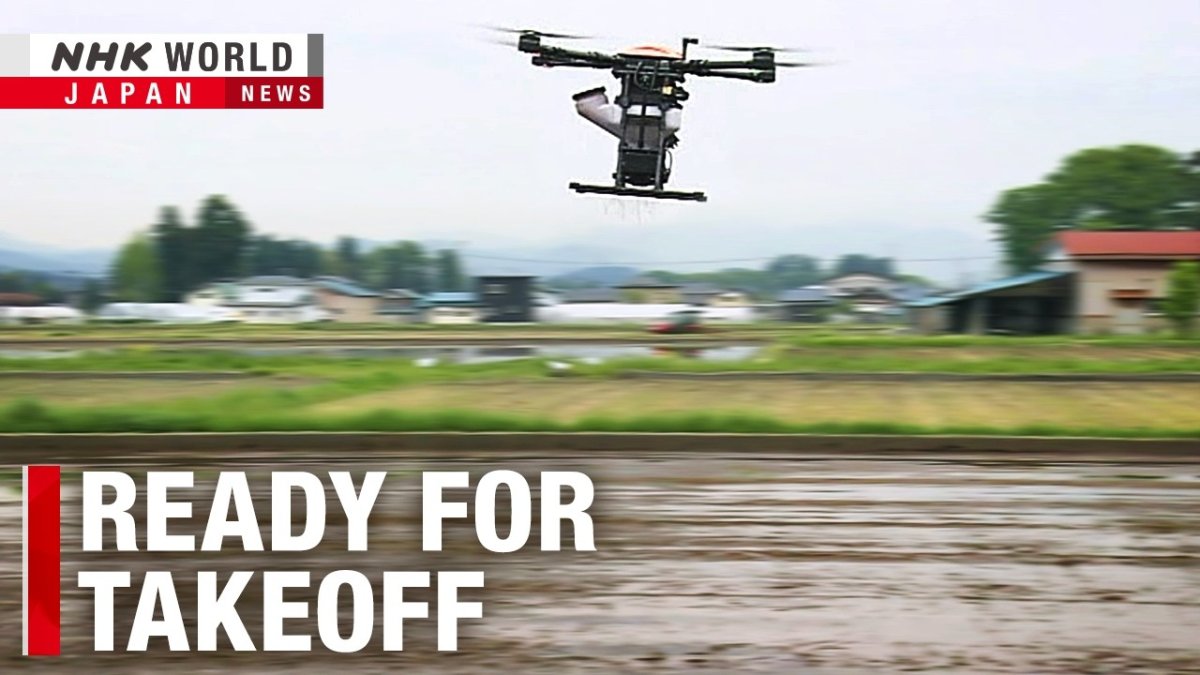
MAFF initiatives have emphasized the incorporation of robotics and data tools into core production processes, positioning developments like this drone within national modernization frameworks. Research partnerships between public institutions and corporate entities facilitate prototype evaluation under conditions representative of Japanese paddy systems. These arrangements mirror collaborative models observed across other technology domains in Japan.
Deployment considerations include the need for operator training and infrastructure adjustments to accommodate aerial equipment in agricultural settings. Funding mechanisms have supported phased testing that gathers operational feedback from diverse field environments. METI involvement in related smart technology programs provides complementary support for component development and system interoperability.
Implications for Society 5.0 and Food Security
Japan's Society 5.0 initiative identifies agricultural transformation as a priority area. Integration of robotics and AI into farming supports broader goals of efficient resource use and reduced environmental impact. The rice-planting drone contributes to these objectives by enabling more controlled input application.
Food security concerns have grown amid global supply uncertainties. Maintaining domestic rice production capacity remains important for self-sufficiency targets. Automated systems like this drone can help preserve output levels even as the number of active farmers continues to fall.
Society 5.0 objectives frame agricultural automation as a pathway toward optimized resource allocation and reduced environmental pressures through more targeted input application. The rice-planting drone contributes to these aims by enabling controlled seed placement that can limit excess material use across flooded fields. Integration with broader data platforms supports monitoring of production metrics over time.
Food security considerations in Japan underscore the importance of preserving domestic capacity amid external supply fluctuations. Automated systems assist in maintaining cultivation areas even as active farmer numbers decline, contributing to self-sufficiency goals outlined in national policy documents. This aligns with efforts to balance technological adoption with the preservation of traditional crop systems.
Future Prospects for Japanese Farming
Further scaling of autonomous drones will require regulatory clarity on flight operations over agricultural land and integration with existing farm management software. Pilot projects are expected to expand in coming seasons as manufacturers gather performance data from varied field conditions.
Japanese equipment makers and research centers continue to refine sensor accuracy and payload capacity. These incremental improvements could extend the technology to other crops and tasks. The rice-planting drone marks one step in a longer transition toward data-centric agriculture that supports both economic viability and national food policy goals.
By Kenji Tanaka, Staff Writer
Expansion of autonomous drone use will depend on evolving regulatory frameworks governing agricultural airspace and data integration standards. Pilot initiatives are anticipated to yield performance insights across multiple seasons, informing adjustments to flight protocols and payload specifications. Equipment manufacturers continue to explore enhancements in sensor reliability suited to variable field conditions.
Potential extensions to additional crops and tasks reflect ongoing corporate research priorities in precision agriculture. These developments occur within the context of corporate Japan’s focus on scalable solutions that address both economic and demographic challenges. The rice-planting drone represents one element in a gradual shift toward management approaches that combine automation with established farming knowledge.
This article was produced with AI-assisted research and editorial support. Reporting is based on sources cited in the article.
What's Your Reaction?
 Like
0
Like
0
 Dislike
0
Dislike
0
 Love
0
Love
0
 Funny
0
Funny
0
 Wow
0
Wow
0
 Sad
0
Sad
0
 Angry
0
Angry
0

Japan Correspondent at Global1.News. Tokyo-based voice covering Japanese politics, technology, economy, and culture. Tracks the intersection of tradition and innovation in one of the world's most dynamic societies.













Comments (0)