
Lee Jae-myung Meets Pope Leo XIV at Vatican on Peace
On June 15, 2026, South Korean President Lee Jae-myung held a private audience with Pope Leo XIV at the Apostolic Palace in Vatican City. The roughly thirty-minute discussion centered on Seoul’s ongoing peace initiatives for the Korean Peninsula and included a formal invitation for the pontiff to attend World Youth Day 2027 in Seoul. National Security Adviser Wi Sung-lac later
On June 15, 2026, South Korean President Lee Jae-myung held a private audience with Pope Leo XIV at the Apostolic Palace in Vatican City. The roughly thirty-minute discussion centered on Seoul’s ongoing peace initiatives for the Korean Peninsula and included a formal invitation for the pontiff to attend World Youth Day 2027 in Seoul. National Security Adviser Wi Sung-lac later briefed reporters on the substance of the exchange, while a Blue House official described the Vatican’s message of reconciliation as “very meaningful.”
The timing carried additional symbolic weight. June 15 marked the twenty-sixth anniversary of the first inter-Korean summit in 2000, an event that produced the June 15 Joint Declaration and remains a reference point in official South Korean diplomacy. President Lee’s itinerary continued immediately afterward with travel to Évian-les-Bains, France, for the G7 summit, before his return to Seoul on June 18.
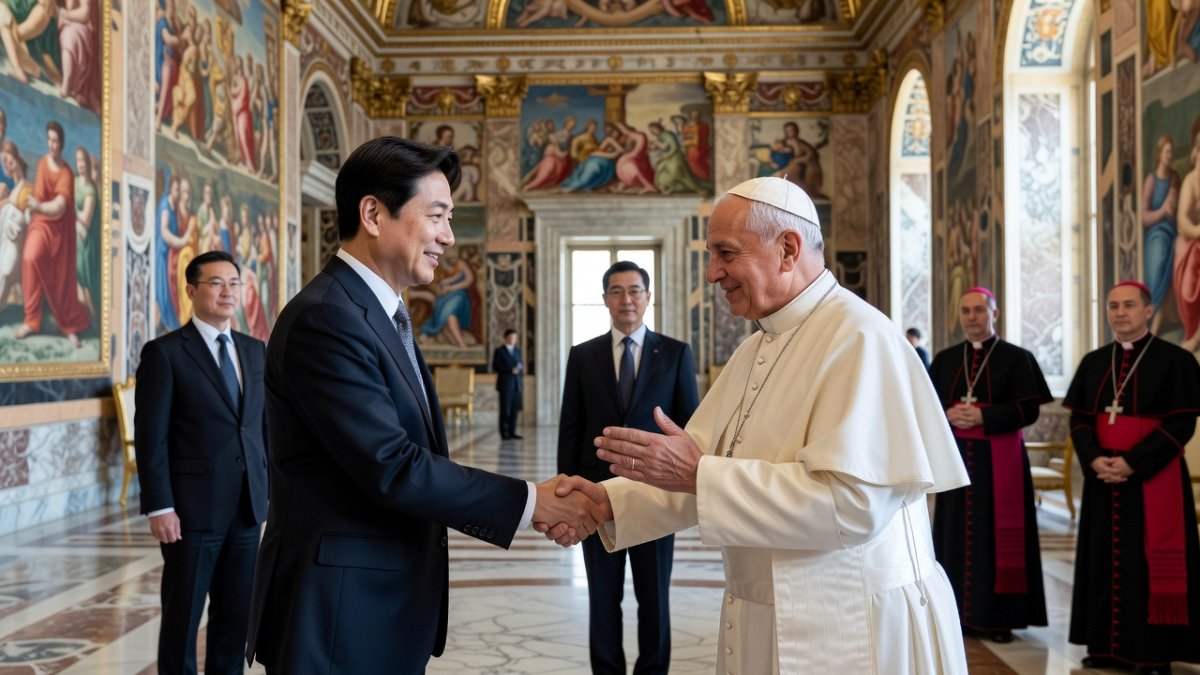
Context of the Vatican Audience
The meeting occurred within a long-standing pattern of South Korean presidential engagement with the Holy See. Successive administrations have sought Vatican support for inter-Korean dialogue, viewing the Catholic Church’s emphasis on reconciliation as complementary to Seoul’s policy objectives. Cardinal Lazarus You Heung-sik, the Korean prelate serving at the Vatican, played a facilitating role in arranging aspects of the discussions, underscoring the institutional links between the Korean Catholic community and the Roman Curia.
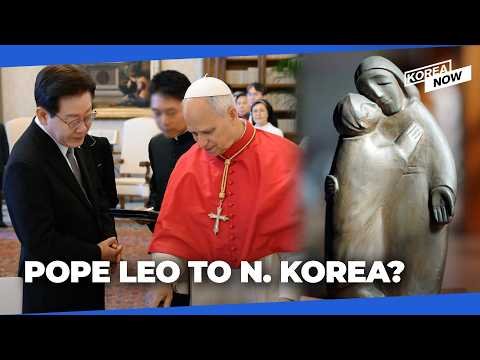
Pope Leo XIV, the first American-born pontiff, received President Lee together with Cardinal Secretary of State Pietro Parolin. The presence of both the pope and the secretary of state signaled the Vatican’s institutional interest in developments on the Korean Peninsula rather than a purely ceremonial encounter.
Peace Initiatives and Inter-Korean Symbolism
President Lee briefed the pope on Seoul’s current approach to reducing tensions and advancing dialogue with Pyongyang. The briefing aligned with established South Korean policy that combines deterrence with conditional engagement. The Vatican’s subsequent statement reaffirmed its “unwavering support for peace and reconciliation on the Korean Peninsula,” language consistent with previous Holy See positions but delivered in the context of renewed South Korean outreach.
Lee’s use of the biblical phrase “Knock and the door will be opened to you” during the conversation evoked both scriptural tradition and the practical diplomacy of sustained contact. Korean officials have historically framed inter-Korean engagement in moral as well as strategic terms; the quotation reinforced that framing for an audience attuned to religious diplomacy.
World Youth Day 2027 and the Papal Invitation
A central deliverable of the visit was the formal invitation extended to Pope Leo XIV to attend World Youth Day 2027, scheduled to take place in Seoul. The event represents the largest international Catholic youth gathering and will mark the first time the festival is hosted on the Korean Peninsula. South Korean authorities anticipate significant logistical and diplomatic preparation, including coordination with the Korean Catholic Church and relevant government ministries.
Reports also indicate that President Lee renewed discussion of a possible papal visit to North Korea. Such a visit would require separate arrangements with Pyongyang and remains subject to the prevailing political and security environment. Past proposals for papal travel to the North have not materialized, yet they continue to surface in South Korean diplomatic messaging as gestures toward inclusive reconciliation.
Strategic Implications for Northeast Asian Security
The Vatican encounter forms part of a broader European diplomatic sequence that included the subsequent G7 meetings. For Seoul, engagement with the Holy See serves multiple functions: it signals continuity in peace policy, mobilizes international moral support, and provides a distinct channel less entangled in great-power competition than direct bilateral or multilateral security forums.
Cardinal Parolin’s participation alongside the pope highlighted the Secretariat of State’s role in monitoring developments that affect Catholic communities and regional stability. Korean analysts note that Vatican statements on the Peninsula have historically emphasized humanitarian concerns and dialogue, positions that can complement rather than contradict Seoul’s official line.
Domestic and Regional Reception
Upon his return to South Korea on June 18, President Lee’s administration presented the Vatican meetings as evidence of active multilateral diplomacy. The Blue House characterization of the Vatican’s message as “very meaningful” reflected an effort to link religious diplomacy with the June 15 anniversary narrative. Domestic Catholic organizations welcomed the World Youth Day announcement, anticipating increased visibility for the Korean Church.
Regionally, the visit occurs against the backdrop of persistent North Korean missile activity and stalled nuclear negotiations. While a single papal audience does not alter the material balance of forces on the Peninsula, it contributes to the diplomatic atmosphere in which future confidence-building measures might be discussed. The presence of Cardinal You Heung-sik as an interlocutor further illustrates how Korean personnel within Vatican structures can facilitate communication that might otherwise remain confined to state-to-state channels.
By Prof. David Park, Staff Writer
This article was produced with AI-assisted research and editorial support. Reporting is based on sources cited in the article.
What's Your Reaction?
 Like
0
Like
0
 Dislike
0
Dislike
0
 Love
0
Love
0
 Funny
0
Funny
0
 Wow
0
Wow
0
 Sad
0
Sad
0
 Angry
0
Angry
0
East Asia/Technology Correspondent at Global1.News. Seoul-based voice covering Korean politics, technology, business, and culture. Analyzes how technology and geopolitics intersect across East Asia.










Comments (0)