
Miss Palestine Nadeen Ayoub Breaks Silence on Smear Campaign and Attacks Over Her Palestinian Identity
Historic participation and meaning of Palestinian representation In her recent Middle East Eye Real Talk interview with Mohamed Hashem, Nadeen Ayoub, 27, described the weight of becoming the first Miss Palestine to compete at Miss Universe 2025 in Thailand in November 2025. Crowned Miss Palestine in 2022, the Palestinian-American who splits her time between Ramallah and Dubai v
Historic participation and meaning of Palestinian representation
In her recent Middle East Eye Real Talk interview with Mohamed Hashem, Nadeen Ayoub, 27, described the weight of becoming the first Miss Palestine to compete at Miss Universe 2025 in Thailand in November 2025. Crowned Miss Palestine in 2022, the Palestinian-American who splits her time between Ramallah and Dubai viewed the platform as an opportunity to carry the voice of a people who refuse to be silenced. Her participation marked a rare instance of official Palestinian representation on an international stage long dominated by other nations.
The Palestinian Authority's Ministry of Youth and Sports issued a formal statement endorsing Ayoub's candidacy, emphasizing how her presence challenged decades of exclusion from global cultural platforms. Officials in Ramallah coordinated with the Miss Palestine organizing committee to ensure her preparation aligned with national priorities of cultural preservation amid ongoing occupation. This backing came as the Authority highlighted similar efforts by Palestinian athletes at recent Olympic Games.
Ayoub prepared for the competition while navigating restrictions on movement from the occupied West Bank. She highlighted how daily life in Ramallah shaped her understanding of resilience under occupation. The title itself emerged from a national pageant organized to affirm Palestinian identity amid ongoing displacement and political fragmentation.
Women's organizations such as the Palestinian Women's Union provided mentorship sessions for Ayoub, drawing on their work supporting female leaders in Gaza and the West Bank. These groups stressed the importance of visibility for Palestinian women facing movement restrictions enforced by Israeli checkpoints. Ayoub credited their guidance for helping her articulate messages of heritage during rehearsals.
Palestinian cultural symbols accompanied her throughout the process. Traditional embroidery and references to heritage formed part of her presentation, connecting the pageant to broader efforts at preserving identity. Ayoub noted that such visibility countered decades of erasure in global media narratives.
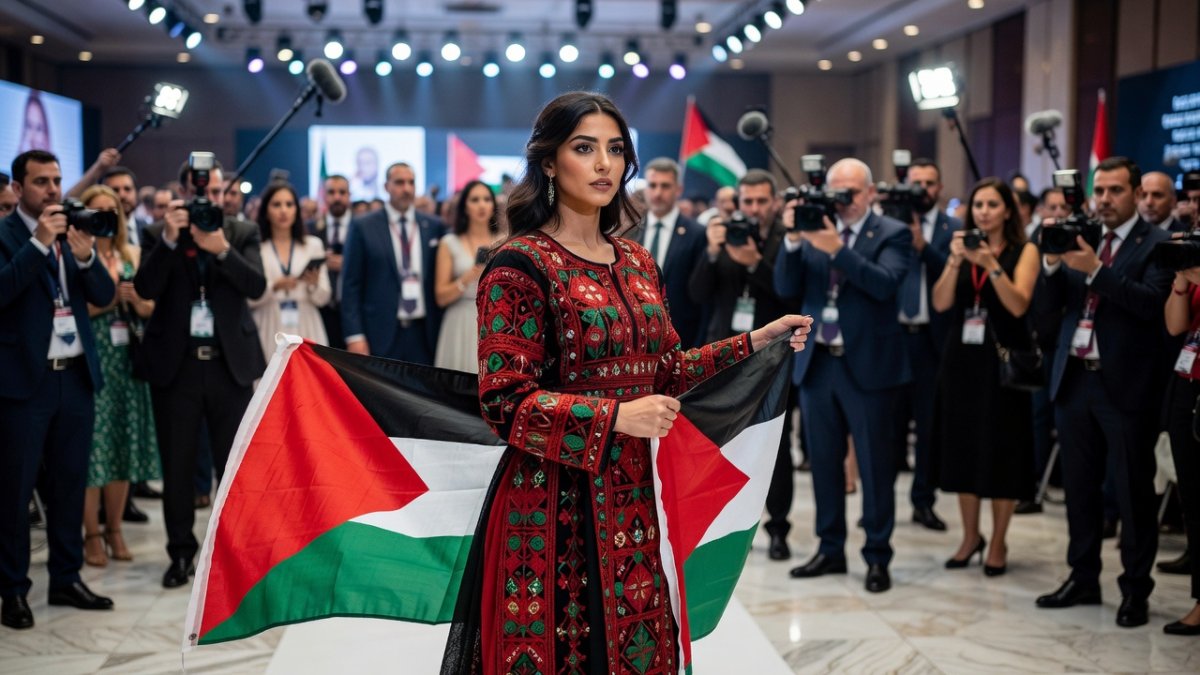
The Miss Universe 2025 experience and on-stage tensions with Miss Israel
Ayoub arrived in Thailand for the November 2025 Miss Universe competition facing immediate scrutiny from multiple delegations. She competed alongside representatives from dozens of countries, yet interactions with Miss Israel, Melanie Shiraz, stood out for their visible strain. Organizers placed the two contestants in proximity during rehearsals and preliminary events.
Miss Universe organizers released a brief statement affirming their commitment to neutrality and urging contestants to focus on shared values rather than political differences. The statement followed reports of scheduling conflicts that limited Ayoub's access to certain promotional events compared with other participants. Officials avoided direct commentary on the interpersonal tensions but emphasized adherence to competition rules.
The Palestinian contestant maintained focus on her advocacy goals despite the charged atmosphere. Ayoub used available opportunities to speak about conditions in the West Bank and Gaza, drawing from her own experiences living between Ramallah and Dubai. Security protocols and media access differed markedly for her compared with other participants.
Palestinian diaspora communities in Dubai organized virtual watch parties through local cultural centers, streaming the events live to supporters across the UAE. These gatherings featured traditional music and discussions led by community elders who connected Ayoub's journey to broader themes of steadfastness. Similar events took place in Jordan and Lebanon, amplifying messages of solidarity.
Behind-the-scenes coordination revealed uneven treatment in scheduling and promotional materials. Ayoub documented instances where her national title faced repeated challenges from staff and fellow contestants before the main event. These frictions underscored the political dimensions that often accompany Palestinian participation in international forums.
The viral side-eye moment and its aftermath
A widely circulated clip from the competition stage captured Miss Israel, Melanie Shiraz, directing a prolonged hostile side-eye glare toward Ayoub. The footage spread rapidly across social media platforms and drew commentary from outlets including Middle East Eye. Ayoub later addressed the incident as emblematic of broader hostility she encountered.
Melanie Shiraz later commented in an interview that references to alleged terror ties made her skin crawl, a remark that fueled further online division. The statement drew condemnation from Palestinian civil society groups who viewed it as an attempt to delegitimize Ayoub's identity. Social media platforms faced criticism for inconsistent moderation, with some posts amplifying the comments while others were flagged.
Following the moment, online discussions intensified around the interaction. Ayoub received messages of support from Palestinians worldwide alongside coordinated criticism from opposing accounts. The glare became a focal point in coverage that examined interpersonal dynamics at the pageant.
Palestinian women's organizations including the General Union of Palestinian Women issued statements denouncing the personal attacks, framing them as part of a pattern targeting female representatives. These groups highlighted how such incidents echoed challenges faced by Palestinian artists in events like the Eurovision Song Contest. Ayoub expressed gratitude for their public solidarity during follow-up interviews.
Ayoub described the encounter as one of several uncomfortable exchanges during the event. She emphasized that such incidents did not deter her from completing the competition and fulfilling her representational duties. The video continued to circulate months afterward, prompting further reflection on the intersection of pageantry and geopolitics.
Organized smear campaigns by pro-Israel groups
After the Middle East Eye interview aired, pro-Israel organizations initiated coordinated online efforts targeting Ayoub. These groups circulated claims linking her to alleged terror ties without providing verifiable evidence. The campaigns sought to undermine her legitimacy as Miss Palestine through social media amplification and direct appeals to pageant officials.
Groups such as StandWithUs and the Israel on Campus Coalition were identified in reports as key amplifiers of the content, using established networks in the United States and Europe to coordinate posts. Middle East Eye documented how these efforts included mass reporting of Ayoub's profiles and the creation of dedicated videos questioning her background. The volume of attacks increased sharply following her public statements about Palestinian experiences.
Middle East Eye reported on the specific tactics employed, including mass reporting of her accounts and the creation of dedicated content questioning her background. Ayoub noted that the volume of attacks increased sharply following her public statements about Palestinian experiences. Organizers of the campaigns included established advocacy networks operating in the United States and Europe.
The Miss Universe organization responded by reviewing complaints but maintained that all contestants met eligibility criteria, avoiding deeper engagement with the political claims. This approach drew mixed reactions from observers tracking digital harassment patterns against Palestinian voices. Ayoub's team worked with digital rights advocates to document the moderation failures on major platforms.
The efforts extended to direct pressure on sponsors and media partners associated with Miss Universe. Ayoub documented how these actions affected her ability to engage freely with audiences during and after the competition. Palestinian civil society organizations tracked the patterns as part of wider documentation of digital targeting.
Questioning of her Palestinian identity and title legitimacy
The New York Post published an article that questioned the legitimacy of Ayoub's Miss Palestine title shortly after her competition appearance. The piece echoed assertions from pro-Israel sources regarding the pageant's standing. Ayoub responded by detailing the formal selection process conducted in 2022 under recognized Palestinian organizational structures.
The Palestinian Authority's foreign ministry condemned the New York Post article as an extension of efforts to erase Palestinian identity, calling for international bodies to uphold fair representation standards. Officials referenced similar scrutiny faced by Palestinian teams in FIFA and Olympic contexts. This response underscored ongoing diplomatic efforts to counter narrative attacks.
Throughout the period, Ayoub faced repeated demands to prove her Palestinian identity through documentation and personal history. She addressed these challenges in the Middle East Eye interview, explaining her family connections to historic Palestine and her residence in Ramallah. Such scrutiny rarely applied to contestants from other nations.
Comparisons emerged to other Palestinian cultural milestones, such as the participation of artists in international biennales and musicians at global festivals, where identity challenges also surfaced. Ayoub drew strength from these precedents, noting how they reinforced collective resilience. Diaspora supporters in Europe amplified these parallels through online campaigns.
Voting irregularities appeared on the official Miss Universe app, with reports of 20,000 votes materializing within two minutes during the public voting window. Ayoub and her team raised concerns about the transparency of the process. These developments compounded existing pressures on her participation.
Broader context of Palestinian cultural representation
Palestinian efforts to maintain cultural presence on global stages have persisted despite systemic barriers. Ayoub's participation built on earlier attempts by artists, athletes, and activists to secure recognition. Organizations such as the Palestinian Ministry of Culture have supported initiatives that link heritage preservation with international outreach.
Support networks in Dubai's Palestinian community, including business leaders and cultural associations, provided logistical aid during Ayoub's preparation, reflecting the UAE's role as a hub for diaspora resilience. These efforts mirrored assistance given to Palestinian students and professionals navigating regional challenges. Community events celebrated her achievements as symbols of continuity.
Daily realities in Ramallah and other West Bank cities inform the content of such representations. Ayoub referenced restrictions on movement, economic pressures, and community resilience as central to her message. These elements distinguish Palestinian visibility from purely ceremonial pageant appearances.
Palestinian women's organizations coordinated petitions urging equitable treatment, linking Ayoub's case to broader advocacy for female voices from conflict zones. Their statements highlighted the intersection of gender and national identity in international forums. This work built on decades of grassroots organizing in the occupied territories.
Support from Palestinian communities in the diaspora, including those in Dubai, reinforced Ayoub's platform. Local groups in the occupied territories organized viewings and discussions around her competition. This grassroots engagement highlighted the connection between individual achievements and collective aspirations for recognition.

Analysis: what this means for Palestinian visibility on global stages
Ayoub's experience illustrates the additional obstacles Palestinian representatives encounter when entering international competitions. The combination of on-stage tensions, media scrutiny, and organized campaigns reveals patterns that extend beyond a single pageant. Observers note that similar dynamics have affected Palestinian participants in other sporting and cultural events.
Social media platforms' handling of the content, including delayed responses to coordinated reporting, raised questions about algorithmic biases affecting marginalized voices. Ayoub's team collaborated with digital rights groups to advocate for better protections. These issues parallel challenges documented in coverage of Palestinian journalists and activists online.
The episode also demonstrates the role of digital platforms in amplifying both support and opposition. Ayoub's statements about carrying the voice of a people who refuse to be silenced resonated with audiences tracking the coverage. Future Palestinian entrants may draw on these lessons when preparing for comparable platforms.
Longer-term implications involve sustained advocacy for equitable treatment within international organizations. Ayoub concluded her reflections by underscoring the importance of continued presence despite resistance. Palestinian civil society continues to monitor how such cases influence broader access to global stages.
By Fatima Al-Rashid, Staff WriterThis article was produced with AI-assisted research and editorial support. Reporting is based on sources cited in the article.
What's Your Reaction?
 Like
0
Like
0
 Dislike
0
Dislike
0
 Love
0
Love
0
 Funny
0
Funny
0
 Wow
0
Wow
0
 Sad
0
Sad
0
 Angry
0
Angry
0
Gulf/MENA Correspondent at Global1.News. Based in Doha, covering Gulf politics, energy markets, diplomacy, and development across the Middle East and North Africa. Tracks the economic transformation of the Gulf states.













Comments (0)