
The Human Rights Crisis Facing Displaced Women in Yemen
The Human Rights Crisis Facing Displaced Women in Yemen Displacement in Yemen has created acute vulnerabilities for women who once enjoyed relative freedoms in urban centers. The case of families fleeing Taiz illustrates how conflict strips away protections and exposes women to harassment in unfamiliar rural settings. International human rights standards require states and loca
The Human Rights Crisis Facing Displaced Women in Yemen
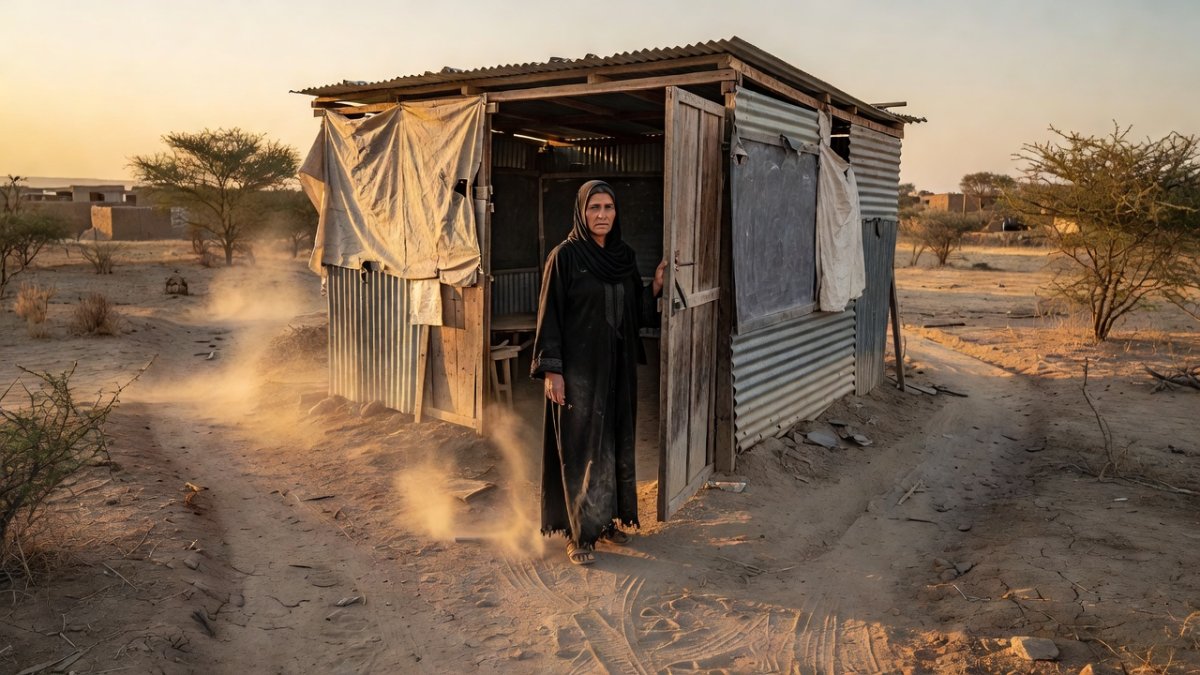
Displacement in Yemen has created acute vulnerabilities for women who once enjoyed relative freedoms in urban centers. The case of families fleeing Taiz illustrates how conflict strips away protections and exposes women to harassment in unfamiliar rural settings. International human rights standards require states and local actors to safeguard displaced populations, yet the experiences documented in al-Safia camps show systematic failures. Women who previously moved independently now face restrictions that amount to de facto confinement, violating their rights to freedom of movement and personal security.
Yemen's civil war has driven millions from their homes, with Taiz serving as a flashpoint due to its strategic location. Families like that of Afnan al-Soroori left behind established lives when Houthi forces advanced. The shift from city apartments equipped with modern appliances to makeshift school shelters highlights the abrupt loss of dignity and autonomy. Human rights organizations have long noted that women in displacement bear disproportionate burdens, including increased risks of gender-based violence when traditional support structures collapse.
Afnan al-Soroori's Testimony of Lost Independence
Afnan al-Soroori, 22, described her previous middle-class life in Taiz as one of relative ease and opportunity. As a university student, she balanced studies with household responsibilities made manageable by electric appliances. The family's flight to a camp 65 kilometers away in the al-Safia area ended that existence. Without her father's ability to work and with all possessions abandoned, daily survival tasks consume every hour from dawn onward.
Soroori recounted the particular hardship of being unable to leave the camp gates. Youths gather outside to shout abuse or make sexual advances, forcing her to remain inside. She noted that her urban style of dress, including fitted abayas common among Taiz women, marks her as an outsider. Appeals by her father to local tribal elders and mosque leaders yielded no protection; instead, the women faced criticism for their clothing and voices. Soroori concluded that the family has no choice but to accept confinement by rural norms, even as she longs to walk in the surrounding green land.
Mariam Abdul-Qader and the Limits of Adaptation
Mariam Abdul-Qader, 23, also resides in the same al-Safia camp. She attempted to adopt the more conservative dress of local rural women, yet harassment persisted. Local youths identified her by details such as her sandals rather than the plastic shoes typical in the area. Even when groups of displaced women venture out together, name-calling and aggressive gestures continue unabated.
Abdul-Qader expressed deep resentment toward the war that forced her family into this environment. She described the local community as unwilling to recognize the suffering of newcomers. Her account underscores how superficial changes in appearance fail to shield women when underlying prejudices remain. The collective experience of camp residents has forged bonds among the women, yet these provide only partial defense against daily indignities.
Class, Urban-Rural Divides, and Shifting Cultural Norms
The intersection of class background and geographic origin intensifies the harassment faced by displaced women. Urban women from Taiz maintained styles of dress and movement shaped by city life, where abayas often feature fitted cuts and varied colors. In contrast, rural customs in al-Safia demand fuller coverage, including face veils. This mismatch turns everyday clothing into a source of conflict rather than personal expression.
Displaced families reject the notion that their habits contradict Islamic or Yemeni values, viewing rural interpretations as overly rigid. Local residents, however, perceive the newcomers as disruptive to longstanding customs. Sheikh Mohammed Gobah acknowledged rising harassment but attributed it to the immodesty of city women, revealing how blame shifts onto victims rather than perpetrators. Such dynamics illustrate how displacement imports new social tensions into established communities.
Failures of Tribal Elders and Local Authorities
Fathers in the camp approached tribal elders and religious figures in village mosques seeking intervention against the harassment. These appeals were dismissed, with leaders instead condemning the women's conduct. The absence of accountability from traditional power structures leaves displaced families without recourse. Local sheikhs hold significant influence in rural Yemen, yet their response has reinforced rather than alleviated the women's isolation.
This institutional silence reflects broader patterns in conflict zones where informal governance mechanisms prioritize preserving existing hierarchies over protecting outsiders. Without formal state presence in many displacement areas, women remain dependent on the very authorities who have proven unresponsive. The result is sustained confinement that compounds the trauma of war-induced flight.
Broader Patterns of Displacement and Gendered Abuse
Conflict-driven displacement across the region repeatedly exposes women to novel forms of abuse as they navigate unfamiliar social landscapes. In Yemen, the movement from cities like Taiz to rural camps mirrors experiences elsewhere where class and cultural differences become flashpoints. Women lose the anonymity and support networks of urban life, becoming visible targets in tight-knit communities governed by conservative codes.
The al-Safia cases connect to wider regional realities in which war uproots populations and erodes safeguards. Palestinian communities have documented similar vulnerabilities during repeated displacements, where women face harassment amid shifting power dynamics and weakened protections. These patterns demand sustained attention from human rights advocates to ensure that displacement does not equate to the forfeiture of basic dignities.
By Fatima Al-Rashid, Staff WriterThis article was produced with AI-assisted research and editorial support. Reporting is based on sources cited in the article.
What's Your Reaction?
 Like
0
Like
0
 Dislike
0
Dislike
0
 Love
0
Love
0
 Funny
0
Funny
0
 Wow
0
Wow
0
 Sad
0
Sad
0
 Angry
0
Angry
0
Gulf/MENA Correspondent at Global1.News. Based in Doha, covering Gulf politics, energy markets, diplomacy, and development across the Middle East and North Africa. Tracks the economic transformation of the Gulf states.













Comments (0)