
Maharashtra TET Paper Leak Exposes Deep Flaws in India's Examination Security Framework
Keywords: maharashtra tet paper leak, tet exam postponed, bhiwandi raid, 6.12 lakh candidates, neet paper leak comparison, devendra fadnavis, education department investigation, teacher eligibility test security The postponement of the Maharashtra Teacher Eligibility Test (TET) scheduled for June 28, 2026, has disrupted the aspirations of 6.12 lakh candidates across 37 centres,
The postponement of the Maharashtra Teacher Eligibility Test (TET) scheduled for June 28, 2026, has disrupted the aspirations of 6.12 lakh candidates across 37 centres, underscoring persistent vulnerabilities in India's public examination framework. What began as a routine recruitment gateway for government school teaching positions has evolved into another chapter of systemic failure, where confidential papers reached criminal networks before candidates could even enter examination halls. This incident mirrors broader challenges in maintaining integrity across high-stakes assessments that determine career trajectories for millions of young Indians annually. With rural and semi-urban aspirants disproportionately affected due to limited resources for repeated preparation, the leak raises urgent questions about equity in access to stable public-sector employment. The episode also highlights how repeated breaches erode confidence in merit-based selection processes essential for building a competent teaching workforce.
Headline: Maharashtra TET Paper Leak: Systematic Failure in Examination Security Hits 6.12 Lakh Aspirants
New Delhi, India – June 27, 2026 — Authorities postponed the Maharashtra TET after police recovered leaked question papers during a raid in Bhiwandi, Thane district. Three suspects were arrested with documents later verified by the education department as matching the official set. The incident has affected 612,000 registered candidates and forced rescheduling within three weeks without additional fees. Investigation now focuses on possible internal collusion within the examination machinery.
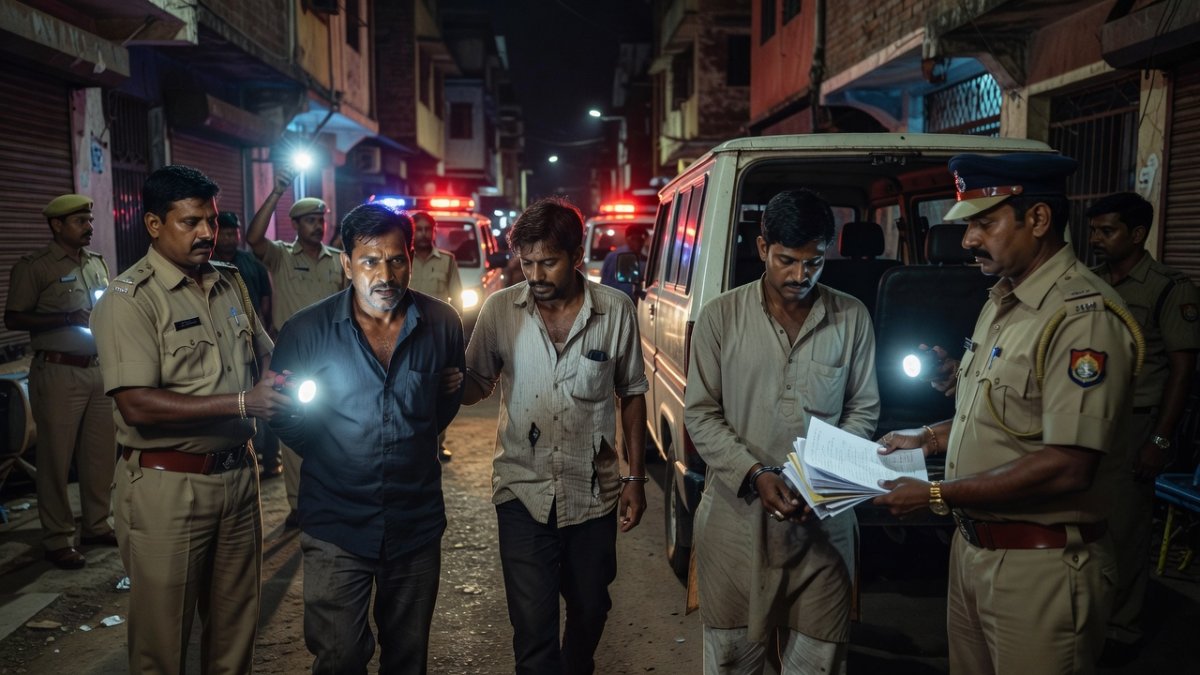
The Bhiwandi Raid and Arrests
Acting on a specific tip-off, Thane police conducted a swift raid at a location in Bhiwandi where they apprehended three individuals in possession of printed Maharashtra TET question papers. The recovered materials underwent immediate verification by education department officials, who confirmed an exact match with the official examination set prepared by the Maharashtra State Council of Examination. This rapid authentication eliminated doubts about the documents' authenticity and confirmed the breach's severity.
Investigators are now examining the entire supply chain, including printing press security protocols, transport logistics from the press to storage facilities, and final distribution mechanisms to examination centres. Preliminary findings suggest that standard safeguards such as sealed containers, GPS-tracked vehicles, and restricted access storage were either bypassed or inadequately monitored. The Maharashtra State Council of Examination has been asked to furnish detailed logs of every individual who handled the papers during production and transit.
The widening probe is prioritising potential internal links within the education system rather than external hacking attempts. Officials believe that unauthorised access likely occurred at the printing or storage stage, pointing to collusion involving staff entrusted with confidential materials. Such internal vulnerabilities have repeatedly surfaced in past incidents, making them the focal point of current inquiries.
Police teams are also tracing communication records and financial transactions of the arrested suspects to identify any larger network involved in selling or circulating the papers. The education department has suspended all personnel associated with the printing and custody process pending further investigation. This methodical approach aims to prevent similar leaks in the rescheduled examination.
Authorities have assured that enhanced security measures, including independent observers at every stage, will be implemented before the next attempt. The Bhiwandi case has already prompted a review of existing Standard Operating Procedures across all state-level recruitment examinations.
Impact on 6.12 Lakh Aspirants
The postponement directly affects 612,000 candidates who had invested significant time and money preparing for the June 28 examination. Many travelled from distant rural districts and incurred accommodation and travel expenses that cannot be recovered. For candidates from economically weaker sections, these sunk costs represent a substantial burden that compounds existing financial pressures associated with competitive test preparation.
The three-week rescheduling window has disrupted carefully planned study schedules. Candidates who had reached peak preparation momentum now face the challenge of maintaining focus without losing valuable revision time. Psychological stress is particularly acute among first-time aspirants who viewed the TET as a critical step toward stable government employment in Maharashtra schools.
While the decision to waive fresh examination fees provides some financial relief, it does not address the opportunity costs and lost wages for working candidates who had taken leave to appear for the test. Rural aspirants, who often rely on shared transport arrangements and limited coaching resources, face additional disadvantages in readjusting their timelines.
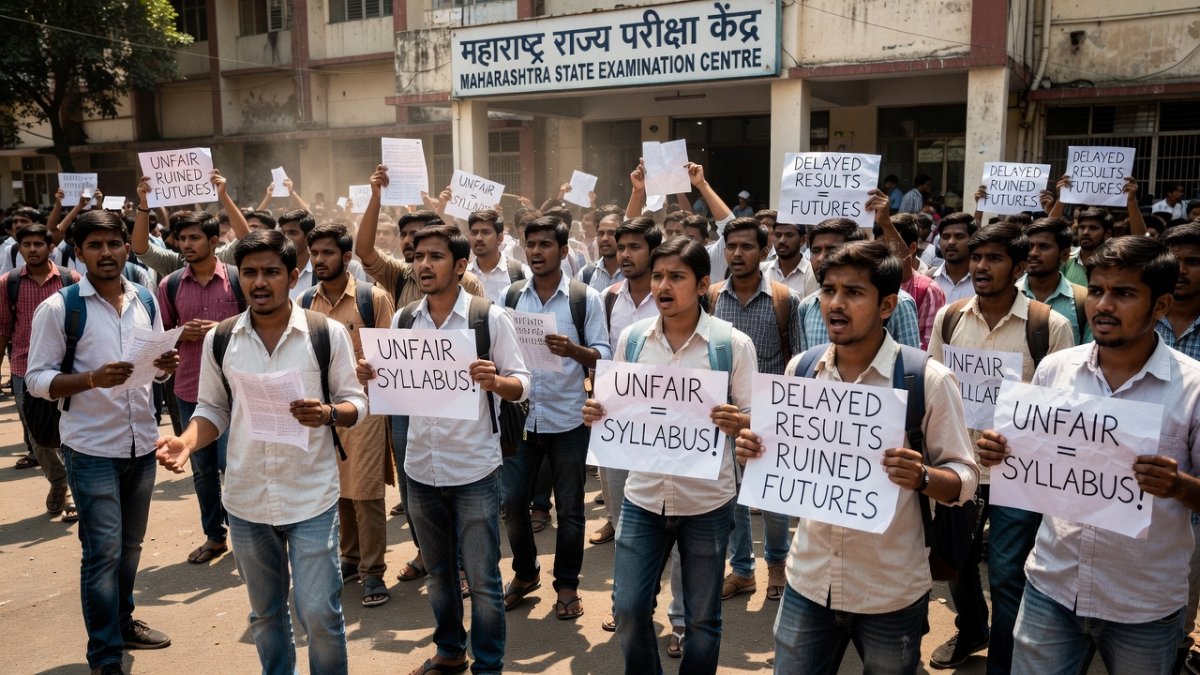
The delay also slows the overall teacher recruitment pipeline for Maharashtra government schools. Vacancies that were expected to be filled through this cycle will now remain open longer, potentially affecting classroom staffing in the upcoming academic session. This creates downstream consequences for students in underserved regions already facing teacher shortages.
Uncertainty surrounding the revised date continues to affect mental well-being, with many candidates expressing anxiety over repeated postponements becoming a recurring pattern in state-level examinations.
Political Earthquake
NCP-SCP MLA Rohit Pawar drew direct parallels between the Maharashtra TET leak and the 2026 NEET paper leak, demanding immediate accountability from the state government. He highlighted that both incidents reveal similar weaknesses in handling sensitive examination materials and called for a thorough audit of all agencies involved in paper setting and distribution.
Aaditya Thackeray criticised the BJP-led administration for its repeated inability to prevent such breaches, arguing that the pattern reflects administrative complacency rather than isolated incidents. He questioned the competence of officials responsible for overseeing examination integrity and urged the Chief Minister to treat the matter with utmost seriousness.
Chief Minister Devendra Fadnavis now faces mounting pressure from opposition parties to constitute a high-level committee with judicial oversight. The issue has quickly become a political flashpoint, with critics using it to question the government's broader governance record on education and public recruitment processes.
Opposition leaders have also demanded compensation for affected candidates and transparent disclosure of investigation progress. The controversy risks damaging the ruling coalition's image ahead of future electoral cycles, particularly among youth voters who view fair examinations as essential for social mobility.
Political analysts note that sustained public attention on this issue could force structural reforms that previous leaks failed to trigger, provided opposition pressure remains consistent.
India's Recurring Examination Crisis
The Maharashtra TET incident fits into a troubling national pattern of paper leaks that includes the 2026 NEET controversy and multiple state TET breaches in recent years. These repeated failures point to fundamental weaknesses in the National Testing Agency's operational framework and similar bodies at the state level. Despite technological advancements, core processes remain susceptible to human interference.
Vulnerabilities persist across printing, secure storage, and transport stages. Even when external threats are mitigated through digital measures, internal collusion continues to undermine safeguards. The cost of rescheduling examinations, including reprinting papers and redeploying staff, places additional strain on public finances already stretched by expanding education budgets.
Each leak further erodes public trust in merit-based selection systems that millions rely upon for employment and educational advancement. When candidates perceive the process as compromised, motivation to prepare rigorously diminishes, ultimately affecting the quality of selected teachers and other professionals.
Comparative analysis with more secure logistics models used by defence and research organisations reveals that education bodies have been slow to adopt end-to-end tracking and independent auditing mechanisms. This lag leaves high-volume examinations particularly exposed.
Without systemic intervention, the cycle of leaks, postponements, and eroded credibility is likely to continue across states.
What This Means for India
The implications extend beyond immediate candidates to India's broader education ecosystem and taxpayer resources. Future teachers entering the system through compromised processes risk lowering instructional quality in government schools, directly affecting student outcomes in underserved areas. Taxpayers ultimately bear the recurring costs of rescheduling and enhanced security measures that should have been standard from the outset.
Adoption of end-to-end encryption for digital paper handling, biometric verification at every access point, and real-time tracking of physical documents could significantly reduce risks. The Education Ministry must mandate uniform standards across states rather than allowing fragmented protocols that vary in rigour.
Lessons from DRDO and ICMR secure logistics frameworks, which successfully protect sensitive materials through layered controls, offer practical templates. Legislative intervention establishing strict liability for examination authorities and mandatory independent audits would institutionalise accountability currently lacking in the system.
Failure to implement these safeguards will perpetuate disadvantages for rural and economically marginalised aspirants who depend most heavily on transparent public recruitment.
The Bottom Line
With three suspects already in custody and the investigation expanding to internal networks, authorities have a narrow window to demonstrate credible reform before the rescheduled TET. The episode presents an opportunity to overhaul outdated security practices rather than merely restoring the status quo.
Meaningful change requires legislative backing, technological upgrades, and cultural shifts within examination bodies to prioritise integrity over procedural convenience. Inaction will only invite further leaks and deepen public scepticism toward merit-based opportunities.
The coming weeks will reveal whether this incident catalyses lasting improvements or simply becomes another entry in India's growing list of compromised examinations.
— By Dr. Raj Patel, Staff WriterThis article was produced with AI-assisted research and editorial support. Reporting is based on sources cited in the article.
What's Your Reaction?
 Like
0
Like
0
 Dislike
0
Dislike
0
 Love
0
Love
0
 Funny
0
Funny
0
 Wow
0
Wow
0
 Sad
0
Sad
0
 Angry
0
Angry
0

India/South Asia Correspondent at Global1.News. Analytical voice with a background in science and health journalism. Based in New Delhi, covering Indian politics, education, healthcare, technology, and policy. Breaks down complex data into clear, actionable reporting.














Comments (0)