
PM Modi Meets World's Oldest Living Land Animal During Seychelles Visit
Introduction: PM Modi Meets Jonathan — A Historic Encounter in Seychelles According to NDTV reporting dated June 27, 2026, Prime Minister Narendra Modi met Jonathan, the world's oldest living land animal, during his official visit to Seychelles. The NDTV article, titled "PM Modi Meets World's Oldest Living Land Animal During Seychelles Visit," confirms that the encounter occurr
Introduction: PM Modi Meets Jonathan — A Historic Encounter in Seychelles
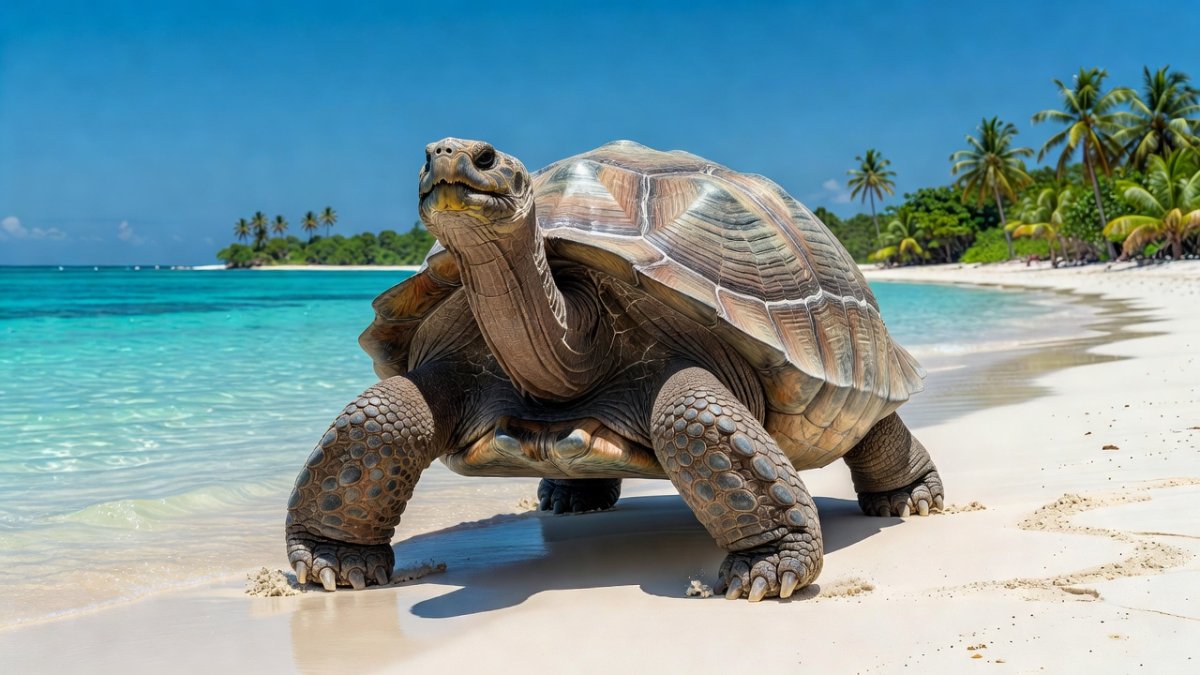
According to NDTV reporting dated June 27, 2026, Prime Minister Narendra Modi met Jonathan, the world's oldest living land animal, during his official visit to Seychelles. The NDTV article, titled "PM Modi Meets World's Oldest Living Land Animal During Seychelles Visit," confirms that the encounter occurred as part of a special conservation event. Jonathan, a giant tortoise estimated at approximately 194 years old, was brought to Seychelles for this occasion. NDTV further reports that Jonathan remains in great health despite his advanced age. Guinness World Records recognizes him as the oldest living land animal. This meeting underscores the intersection of diplomacy and wildlife conservation in the Indian Ocean region.
Who is Jonathan? From the Seychelles to Saint Helena and Back
Jonathan hatched around 1832 in the Seychelles archipelago, making him approximately 194 years old. In 1882 he was relocated to Saint Helena, a British Overseas Territory in the South Atlantic, where he has lived continuously for 144 years. For the June 2026 conservation event coinciding with Prime Minister Modi's visit, Jonathan was temporarily returned to Seychelles. According to NDTV, this marked a rare homecoming that highlighted global efforts to protect long-lived species. Guinness World Records has formally recognized Jonathan's status as the oldest living land animal. NDTV reporting emphasizes that Jonathan arrived in excellent condition and participated in the event without apparent stress from the journey.
India-Seychelles Relations: Conservation Diplomacy in the Indian Ocean
India and Seychelles maintain longstanding cooperation on maritime security, sustainable development, and biodiversity protection across the Indian Ocean. Prime Minister Modi's June 2026 visit built on this foundation by incorporating a high-profile conservation component centered on Jonathan. The temporary return of the tortoise to Seychelles for the event illustrates how bilateral engagements can advance shared environmental priorities. India's outreach in the region aligns with its broader strategy of fostering partnerships that combine diplomatic presence with tangible support for island ecosystems. NDTV coverage of the meeting positions the encounter as a symbol of this evolving relationship, where wildlife conservation serves as a visible bridge between the two nations.
India's Conservation Record: From Project Cheetah to Giant Tortoise Protection
India's domestic conservation portfolio provides context for the Seychelles engagement. Project Cheetah has successfully reintroduced the species to Indian habitats after decades of absence, demonstrating the country's capacity for large-scale species recovery. Parallel efforts under the Wildlife Protection Act have strengthened legal safeguards for endangered fauna, while dedicated programs in the Andaman and Nicobar Islands focus on the protection and monitoring of native giant tortoise populations. The International Solar Alliance, launched under Prime Minister Modi's leadership, further extends India's environmental influence by promoting renewable energy solutions that reduce pressure on natural habitats. These initiatives collectively reflect a sustained policy framework that links species protection with climate resilience. The Seychelles meeting with Jonathan therefore resonates with India's established record of integrating conservation into both national and international agendas.
The Science of Longevity: What Giant Tortoises Teach Us
Giant tortoises such as Jonathan exhibit metabolic rates significantly lower than those of most vertebrates, enabling cellular repair mechanisms that persist across centuries. Their low-energy lifestyle, combined with efficient resource utilization, offers researchers valuable data on aging processes and resilience. Conservation programs benefit from these biological insights by informing strategies for habitat management and population monitoring. India's tortoise protection work in the Andaman and Nicobar Islands applies similar principles of long-term observation and minimal intervention. NDTV reporting on Jonathan's robust health during the June 2026 event reinforces the scientific value of studying individuals that have survived nearly two centuries, providing empirical reference points for broader ecological models.
The Bottom Line: Conservation as Diplomacy
The June 2026 encounter between Prime Minister Modi and Jonathan, as documented by NDTV, illustrates how conservation milestones can enhance India's soft power in the Indian Ocean. By supporting events that spotlight species longevity and habitat protection, India reinforces its role as a constructive partner in regional environmental governance. Sustained frameworks such as the Wildlife Protection Act, Project Cheetah, and the International Solar Alliance demonstrate that policy continuity yields measurable outcomes. The temporary return of Jonathan to Seychelles for this diplomatic occasion further shows that targeted, science-informed actions can strengthen bilateral ties while advancing global biodiversity goals.
Source: NDTV
— By Dr. Raj Patel, Staff WriterThis article was produced with AI-assisted research and editorial support. Reporting is based on sources cited in the article.
What's Your Reaction?
 Like
0
Like
0
 Dislike
0
Dislike
0
 Love
0
Love
0
 Funny
0
Funny
0
 Wow
0
Wow
0
 Sad
0
Sad
0
 Angry
0
Angry
0

India/South Asia Correspondent at Global1.News. Analytical voice with a background in science and health journalism. Based in New Delhi, covering Indian politics, education, healthcare, technology, and policy. Breaks down complex data into clear, actionable reporting.














Comments (0)