
Colombia Amazon Fires Spark Air Pollution Crisis
Colombia's Amazon is on fire — and the smoke is reaching Bogotá. As deforestation pushes deeper into the rainforest and El Niño threatens to intensify drought conditions, a public health crisis is unfolding across the nation. With 72,409 hectares lost in the Colombian Amazon in 2025 alone and PM2.5 particulates choking urban populations, the intersection of forest destruction and human health has never been clearer.
Colombia's Amazon is on fire — and the smoke is reaching Bogotá. As deforestation pushes deeper into the rainforest and El Niño threatens to intensify drought conditions, a public health crisis is unfolding across the nation. With 72,409 hectares lost in the Colombian Amazon in 2025 alone and PM2.5 particulates choking urban populations, the intersection of forest destruction and human health has never been clearer. This is the story of a frontline where environmental crime and respiratory disease meet.
Colombia's Amazon Fires Spark a Public Health Crisis Across the Nation
Bogotá, Colombia — July 15, 2026 —
The Amazon in Flames — Colombia's Burning Frontier
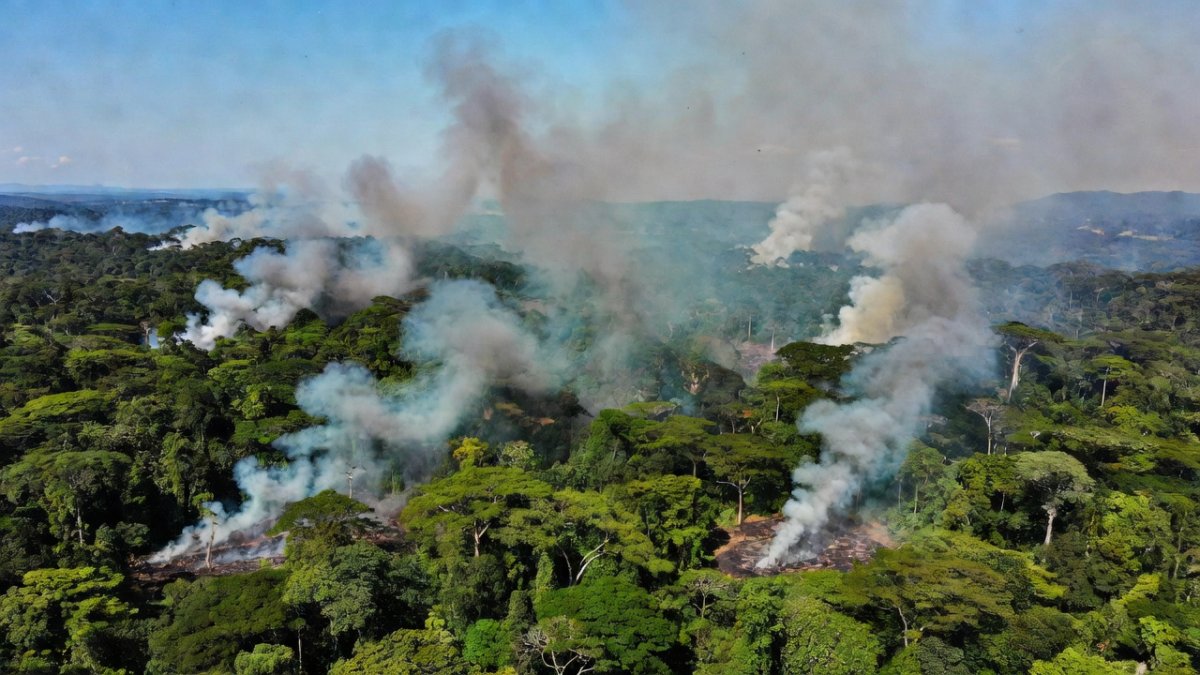
The Colombian Amazon is burning at an alarming rate, releasing vast plumes of smoke that choke communities and transform one of the planet's most vital ecosystems into a source of toxic air. In 2025, IDEAM recorded 72,409 hectares deforested across the Colombian Amazon, marking roughly a 6 percent increase over the 77,124 hectares lost in 2024. This vast basin, spanning 483,000 square kilometers and covering 42 percent of national territory, now accounts for more than 60 percent of Colombia's total forest loss. The fires are not random; they are the direct result of deliberate clearing for cattle ranching, land grabbing, illegal mining, and coca cultivation.
Authorities including IDEAM, MinAmbiente, and CONALDEF issue early warning bulletins, yet the destruction continues. The Amazon rainforest is approaching a dangerous tipping point where it could shift from carbon sink to carbon source, accelerating global climate chaos. Government claims of a 37 percent reduction against the 2021 baseline ring hollow when measured against the relentless advance of flames and axes. These blazes release massive quantities of PM2.5 particulates that travel hundreds of kilometers, turning pristine skies into hazardous gray veils. The scale of loss demands urgent recognition that Colombia's frontier is not merely shrinking but actively poisoning the air millions breathe.
The El Niño Accelerant — A Climate Crisis Intensifies
El Niño is returning with terrifying probability. Forecasts place an 80 to 97 percent chance of a strong event developing between late 2026 and 2027. Historical precedents from 1997-1998 and 2015-2016 show how these cycles trigger severe drought and uncontrolled fires across the Amazon. WWF Colombia has issued stark warnings that the coming El Niño threatens water supplies, energy stability, and air quality simultaneously. Colombia, which depends on hydropower for 70 percent of its electricity, faces the prospect of blackouts and rationing if reservoirs drop to critical levels.
Drier conditions will desiccate vegetation, making even small sparks explode into infernos. The combination of ongoing deforestation and this climate driver creates a feedback loop that intensifies both fire frequency and smoke output. IDEAM monitoring through CONALDEF provides critical data, yet without aggressive prevention the next El Niño could dwarf previous disasters. Communities already struggling with respiratory illness will confront even higher pollution loads. The Amazon's vulnerability to these oscillations underscores why immediate action on deforestation is not optional but essential for national resilience.
When Smoke Crosses Borders — Air Pollution Reaches Bogotá
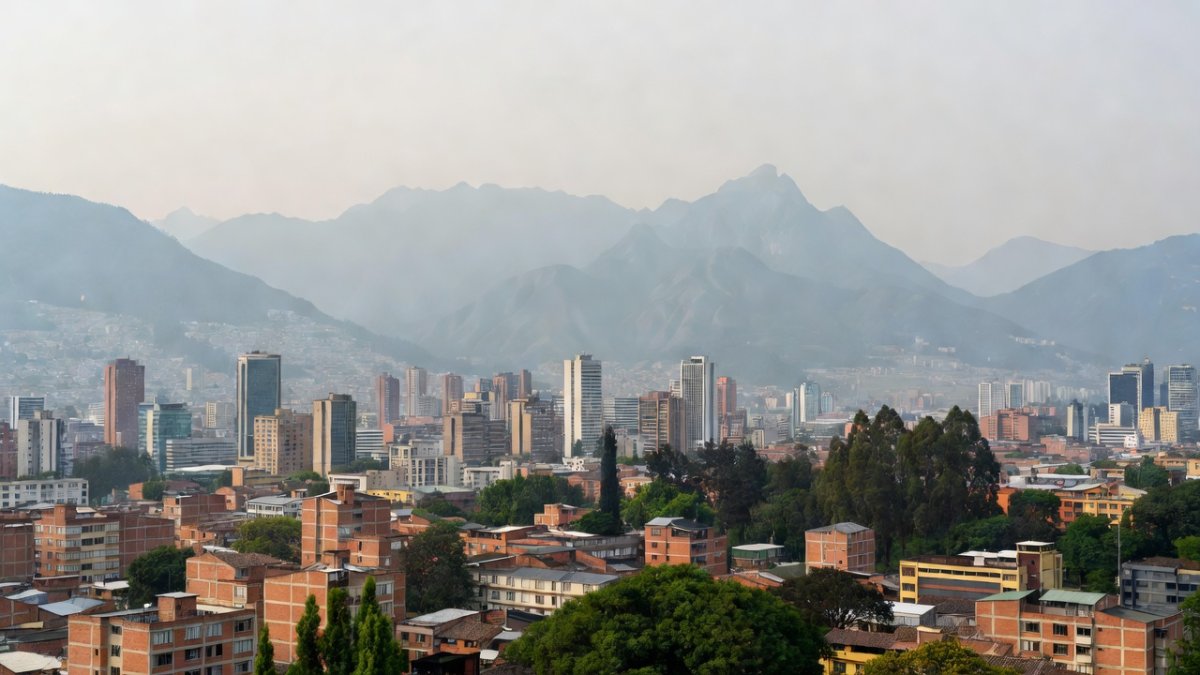
Smoke from Amazon fires does not respect departmental boundaries. It drifts northwest, blanketing Bogotá with dangerous levels of PM2.5 that trigger asthma attacks, exacerbate COPD, and elevate cardiovascular disease risk. The Secretaría de Ambiente de Bogotá tracks these intrusions, revealing how distant blazes directly degrade the capital's air. Southwest neighborhoods such as Bosa bear 37 percent of the pollution burden, placing low-income residents on the front lines of exposure.
Mayor Carlos Galán has launched air quality programs and supported the ZUMA initiative, which promotes greening projects and large-scale tree planting to mitigate urban pollution. Yet these local efforts cannot fully offset the regional smoke influx. Universidad Nacional studies link such pollution episodes to thousands of premature deaths annually. When Amazon fires peak, Bogotá's air quality index spikes, forcing school closures and outdoor activity restrictions. The crisis demonstrates that protecting the rainforest is inseparable from safeguarding urban health across Colombia.
The Human Toll — Respiratory Health on the Frontline
The human cost is measured in avoidable deaths and chronic illness. A Universidad Nacional study attributes 2,368 premature deaths in Bogotá each year to air pollution, with Amazon smoke contributing significantly during fire seasons. PM2.5 particulates penetrate deep into lungs, inflaming airways and triggering asthma, COPD, and heart disease. Children and the elderly suffer most, their bodies unable to withstand repeated exposure.
In Amazonian communities and downwind cities alike, hospitals report surges in respiratory admissions when fires rage. The burden falls heaviest on vulnerable populations already facing limited healthcare access. Bosa's 37 percent share of Bogotá's pollution load highlights stark environmental injustice. While ZUMA greening projects and Mayor Carlos Galán's programs offer hope, they cannot replace the urgent need to extinguish the fires at their source. Every hectare burned translates into measurable human suffering that Colombia can no longer afford to ignore.
Deforestation's Vicious Cycle — Cattle, Coca, and Criminal Economies
Behind every fire lies a web of criminal and economic drivers. Cattle ranching, known locally as ganadería extensiva, remains the dominant force, converting rainforest into pasture at astonishing speed. Land grabbing, illegal mining in areas such as the Caroní watershed, and coca cultivation compound the damage. These activities not only clear forests but also degrade soils and waterways, making regeneration nearly impossible. The 2025 national deforestation total reached 113,608 hectares, with the Amazon driving the majority of losses.
Organized crime profits from these frontiers, using fire as a tool to claim territory and launder money. IDEAM data reveals how quickly gains from enforcement evaporate when economic incentives favor destruction. Without dismantling these criminal economies, fire seasons will grow longer and more intense. The cycle is self-reinforcing: cleared land invites more ranching and mining, which in turn demands more fire. Breaking this pattern requires coordinated action against the root economic forces rather than treating symptoms alone.
What This Means for Colombia's Energy and Water Future
Colombia’s heavy reliance on hydropower makes the Amazon fires and El Niño a direct threat to energy security. With 70 percent of electricity generated by dams, prolonged drought could trigger rationing and economic disruption. WWF Colombia warns that degraded watersheds from deforestation reduce water retention, amplifying drought impacts. The same forests that once regulated rainfall now release smoke instead of moisture, threatening both energy production and drinking water supplies.
Historical El Niño events demonstrated how quickly reservoirs can fall to dangerous levels. Future episodes, potentially stronger, could coincide with peak fire seasons, creating simultaneous crises in air quality, energy, and water. Authorities must recognize that forest protection is infrastructure protection. Investing in early warning systems through CONALDEF and aggressive reforestation offers far greater returns than emergency responses after reservoirs run dry. The Amazon is not a distant wilderness but the foundation of Colombia’s climate resilience.
Voices from the Ground — Activists, Scientists, and Communities Fight Back
Across the Amazon and in Bogotá, scientists, activists, and local leaders refuse to surrender. IDEAM researchers continue publishing rigorous data despite political pressure. WWF Colombia amplifies warnings about El Niño and tipping points. Community monitors in fire-prone zones document illegal activities and demand accountability from MinAmbiente. In the capital, residents of Bosa organize around air quality alerts while Mayor Carlos Galán advances the ZUMA initiative’s tree-planting campaigns.
These voices insist that solutions exist: stronger enforcement against cattle ranching and mining, support for sustainable livelihoods, and international cooperation to address coca economies. Historical lessons from past El Niño disasters show that preparation saves lives. Yet passion alone is insufficient without resources and political will. The fight to protect the Amazon is also a fight for breathable air in every Colombian city, uniting distant communities in a shared struggle for survival.
The Bottom Line — Can Colombia Break the Cycle?
Colombia stands at a crossroads. The data is unambiguous: 72,409 hectares lost in the Amazon in 2025, PM2.5 killing thousands, El Niño looming with 80-97 percent probability. The rainforest is nearing its tipping point, and every additional fire pushes it closer to irreversible change. Government claims of progress must be measured against the lived reality of smoke-filled skies and rising respiratory disease.
Breaking the cycle demands confronting cattle ranching, illegal mining, and land grabbing with the same urgency applied to energy planning. Mayor Carlos Galán’s air quality programs and ZUMA greening offer models that must scale nationally. The Amazon basin’s 483,000 square kilometers represent not just biodiversity but the lungs and water towers of an entire nation. Colombia can still choose a different path, but only if it treats forest protection as the public health and climate imperative it truly is. The fires will not wait.
By Elena Vasquez, Staff WriterThis article was produced with AI-assisted research and editorial support. Reporting is based on sources cited in the article.
What's Your Reaction?
 Like
0
Like
0
 Dislike
0
Dislike
0
 Love
0
Love
0
 Funny
0
Funny
0
 Wow
0
Wow
0
 Sad
0
Sad
0
 Angry
0
Angry
0

Latin America Correspondent at Global1.News. Based in Mexico City, covering politics, economics, energy, and culture across the region. Brings an on-the-ground perspective to stories spanning from the Rio Grande to Patagonia.











Comments (0)