
Pantanal Fires: Brazil's Wetland Burns Amid Record Drought
The Pantanal, Latin America's beating heart of biodiversity, is vanishing before our eyes. A groundbreaking UNESP study released in July 2026 documents an 80% loss of surface water across the wetland over just 38 years, pushing this irreplaceable ecosystem toward an irreversible tipping point. Record wildfires now threaten to transform the world's largest tropical wetland into a savanna-like landscape. Pantanal on Fire: 80% Water Loss Ignites Record Blazes Across Brazil's Vit
The Pantanal, Latin America's beating heart of biodiversity, is vanishing before our eyes. A groundbreaking UNESP study released in July 2026 documents an 80% loss of surface water across the wetland over just 38 years, pushing this irreplaceable ecosystem toward an irreversible tipping point. Record wildfires now threaten to transform the world's largest tropical wetland into a savanna-like landscape.
Pantanal on Fire: 80% Water Loss Ignites Record Blazes Across Brazil's Vital Wetland
Brasília, Distrito Federal – July 17, 2026 — As flames consume tens of thousands of hectares in the Pantanal, new data from UNESP confirms the wetland has shed 80% of its surface water in 38 years, accelerating a climate-driven catastrophe that endangers jaguars, macaws, and millions of Latin Americans who depend on its rhythms. The crisis demands urgent regional action from Brazil, Bolivia, and Paraguay.
The Drying of the World's Largest Wetland
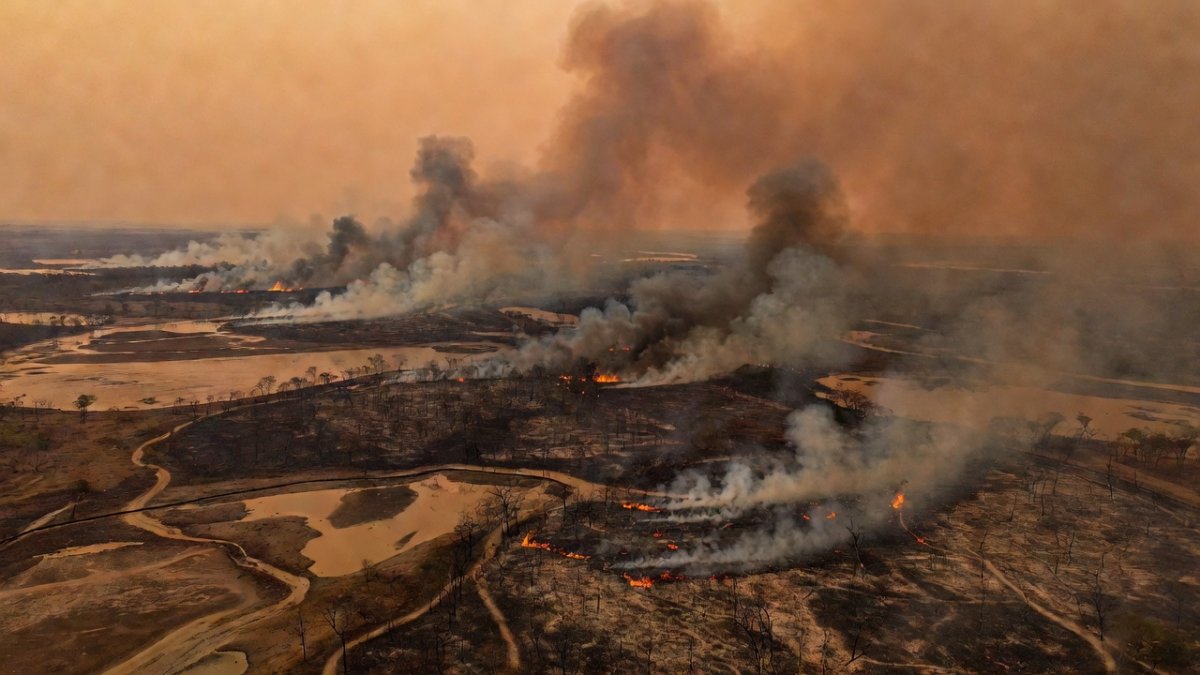
The Pantanal spans more than 150,000 square kilometers across Brazil, Bolivia, and Paraguay, yet UNESP researchers now warn that 80% of its surface water has disappeared over 38 years. This hydrological collapse, documented through satellite imagery and field measurements, signals a dangerous shift from wetland to drier savanna. Without immediate intervention by IBAMA and MMA, the biome risks crossing an irreversible threshold where seasonal floods no longer sustain its unique ecology.
Between July 1 and July 6, 2026 alone, roughly 30,000 hectares burned, marking the second-worst early-season fire period on record. That figure represents a staggering 132% increase compared with the same days in 2025. INPE satellite monitoring captured the rapid spread, while ICMBio teams on the ground reported flames advancing faster than containment lines could be established. Latin American scientists emphasize that this water loss is not merely local; it disrupts rainfall patterns that feed agriculture across the continent.
Prevfogo specialists note that reduced river flows concentrate wildlife and cattle in shrinking refuges, heightening both fire ignition risks and human-wildlife conflict. The 38-year trend documented by UNESP leaves little doubt: the Pantanal's famed flood pulse is weakening, threatening food security for riverside communities in Mato Grosso and Mato Grosso do Sul. Regional cooperation remains essential if Latin America hopes to preserve this UNESCO-recognized treasure.
Record Fires and a Climate Emergency
El Niño-driven heat and historically low humidity have turned the Pantanal into a tinderbox. INPE satellite data recorded seven active fire fronts during the first week of July 2026, with hotspots concentrated along the Paraguay River corridor that links Brazil to its neighbors. July traditionally marks the onset of the dry season, yet this year's extreme drought has compounded decades of water loss, creating conditions unseen in modern records.
Global climate change amplifies these local pressures. Rising temperatures across Latin America have shortened the rainy season and intensified evapotranspiration rates, leaving soils parched. IBAMA reports that fire detection algorithms flagged anomalies weeks earlier than in previous decades. The combination of anthropogenic warming and regional deforestation creates a feedback loop that MMA officials describe as a climate emergency requiring cross-border strategies.
Prevfogo coordination centers in Cuiabá now operate around the clock, integrating real-time INPE alerts with ground reports from ICMBio rangers. Latin American climate models project that without drastic emissions reductions, such fire seasons will become the norm rather than the exception. The Pantanal's plight mirrors crises unfolding in the Amazon and Cerrado, underscoring the need for unified continental policy responses.
Wildlife at the Front Line of the Flames
The hyacinth macaw has been returned to the endangered species list after fire advances destroyed critical nesting trees throughout the northern Pantanal. Populations already stressed by habitat fragmentation now face direct mortality from smoke inhalation and nest loss. ICMBio monitoring teams documented entire breeding colonies wiped out in a single week, reversing years of conservation gains achieved through community-led nest protection programs.
Jaguar recovery efforts suffered a symbolic blow when images of burned paws circulated widely, yet the famous survivor Ousado, rescued in 2020 with severe third-degree burns, continues to thrive in 2026. Wildlife veterinarians report that Ousado adapted by developing an underwater hunting technique that allows him to ambush fish in remaining deep pools. His story offers hope, but mass mortality among snakes, caimans, and amphibians tells a darker tale of ecosystem collapse.
Biodiversity loss in the Pantanal reverberates across Latin America. These wetlands serve as critical stopover points for migratory birds traveling between the Andes and the Atlantic coast. When amphibians disappear, insect populations surge, affecting both ranching operations and public health. UNESP biologists warn that continued fire pressure could trigger cascading extinctions that no single nation can reverse alone.
Government Response: R$600 Million and a Record Force
In June 2026, the Brazilian federal government announced R$600 million in emergency funding specifically targeting El Niño-driven fire and drought risks in the Pantanal and surrounding biomes. The package includes expanded aerial surveillance and rapid-response teams coordinated by IBAMA and Prevfogo. Officials describe the allocation as the largest single-year investment in wetland fire prevention in Brazilian history.
A record 4,385 brigadistas were hired for the 2026 season, representing a 26% increase over 2025 staffing levels. These firefighters, many recruited from local communities in Mato Grosso do Sul, receive specialized training in wetland fire behavior. The Amazon Fund contributed an additional R$150 million for equipment, vehicles, and drones dedicated to Pantanal and Cerrado operations, strengthening ICMBio's capacity to reach remote fire fronts.
Environment Minister Marina Silva highlighted that burned area in 2025 had already fallen 32% below the ten-year average thanks to integrated prevention. Yet she cautioned that sustained funding and regional diplomacy with Bolivia and Paraguay remain vital. MMA programs now emphasize community-based early warning systems that incorporate traditional knowledge alongside INPE satellite feeds, creating a model other Latin American nations can adapt.
Indigenous Communities and Local Livelihoods at Stake
The Pantanal's fires directly threaten fishing communities in Mato Grosso and Mato Grosso do Sul whose livelihoods depend on seasonal floods that concentrate fish stocks. With 80% less surface water, catches have plummeted, forcing families to travel farther or abandon traditional practices. Riverside populations endure choking smoke that triggers respiratory illnesses, particularly among children and elders.
Tourism operators and ranchers face parallel crises. Boat excursions that once showcased jaguars and macaws now navigate shrinking channels, while cattle ranchers lose pasture to both flames and drought. Traditional knowledge of controlled burning, long practiced by Indigenous groups, offers valuable lessons that ICMBio and Prevfogo are beginning to integrate into official protocols.
Latin American Indigenous leaders from Bolivia and Paraguay have joined Brazilian counterparts in calling for stronger land rights and fire-management autonomy. These communities possess generational understanding of the Pantanal's hydrology that modern institutions often overlook. Their inclusion in decision-making processes is essential for culturally appropriate and effective responses to the unfolding disaster.
The Tipping Point: What Happens If the Pantanal Collapses
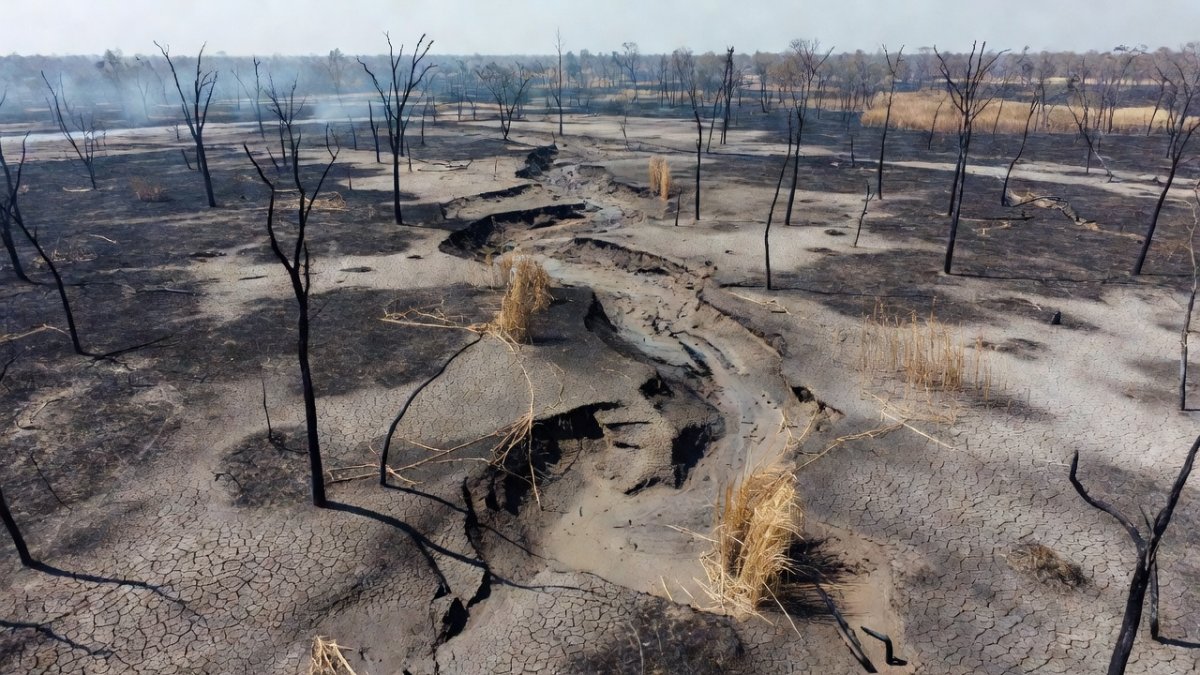
UNESP researchers warn that continued water loss and fire pressure could transform the Pantanal into a savanna-like landscape within decades. Such a shift would eliminate the flood pulse that defines the biome, releasing stored carbon and altering regional rainfall patterns that sustain agriculture across central South America. The 80% surface-water reduction already documented leaves the system dangerously close to this threshold.
Hydrological disruption would extend far beyond Brazil's borders. The Pantanal acts as a natural sponge that moderates floods and droughts for downstream communities in Paraguay and Bolivia. Its collapse would intensify extreme weather events felt throughout the continent. Carbon emissions from peat and vegetation fires add to the global climate burden while destroying a UNESCO-recognized biome of incalculable value.
Comparisons to the Amazon tipping point are unavoidable. Both ecosystems demonstrate how deforestation and climate change interact to push vast landscapes past recovery points. IBAMA and MMA scientists stress that prevention today costs far less than restoration tomorrow. Latin America cannot afford to lose another critical carbon sink and biodiversity reservoir.
The Bottom Line — A Race Against Time for Latin America's Vital Wetland
The Pantanal's survival hinges on sustained prevention, restoration of natural water flows, and dramatic reductions in regional deforestation. Integrated fire management that combines INPE monitoring, Prevfogo brigades, and Indigenous expertise offers the clearest path forward. Brazil, Bolivia, and Paraguay must deepen cooperation to protect a wetland that belongs to all of Latin America.
Climate justice demands that the communities least responsible for global emissions receive support to adapt and defend their territories. Just transitions for ranchers, fishers, and tourism workers can turn crisis into opportunity if governments prioritize long-term resilience over short-term extraction. The R$600 million commitment and record brigadista force represent important steps, yet they must be maintained and expanded.
Readers across the hemisphere can act by supporting organizations working on wetland conservation, demanding stronger enforcement from IBAMA and ICMBio, and amplifying Indigenous voices. The Pantanal's fate will reveal whether Latin America can unite to confront the climate emergency before more irreplaceable ecosystems are lost to flame. Time is measured now in fire seasons, not decades.
By Elena Vasquez, Staff WriterThis article was produced with AI-assisted research and editorial support. Reporting is based on sources cited in the article.
What's Your Reaction?
 Like
0
Like
0
 Dislike
0
Dislike
0
 Love
0
Love
0
 Funny
0
Funny
0
 Wow
0
Wow
0
 Sad
0
Sad
0
 Angry
0
Angry
0

Latin America Correspondent at Global1.News. Based in Mexico City, covering politics, economics, energy, and culture across the region. Brings an on-the-ground perspective to stories spanning from the Rio Grande to Patagonia.















Comments (0)