
Korean Peninsula Symposium 2026: Global Complex Crises and the Korean Peninsula
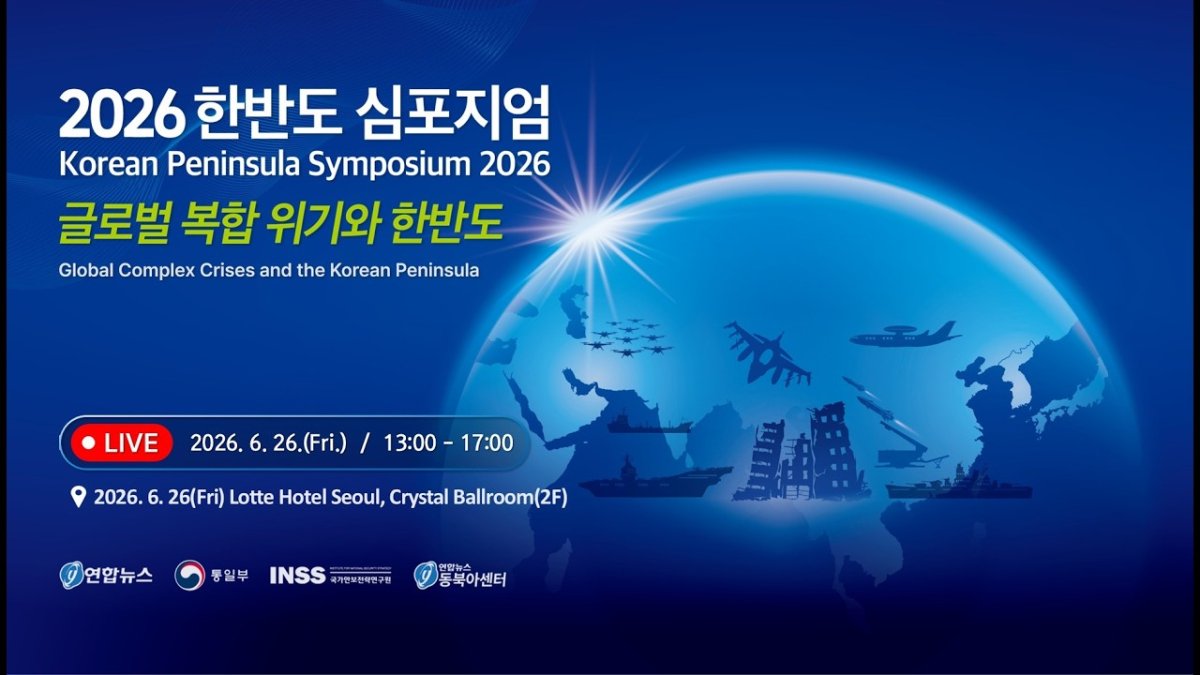
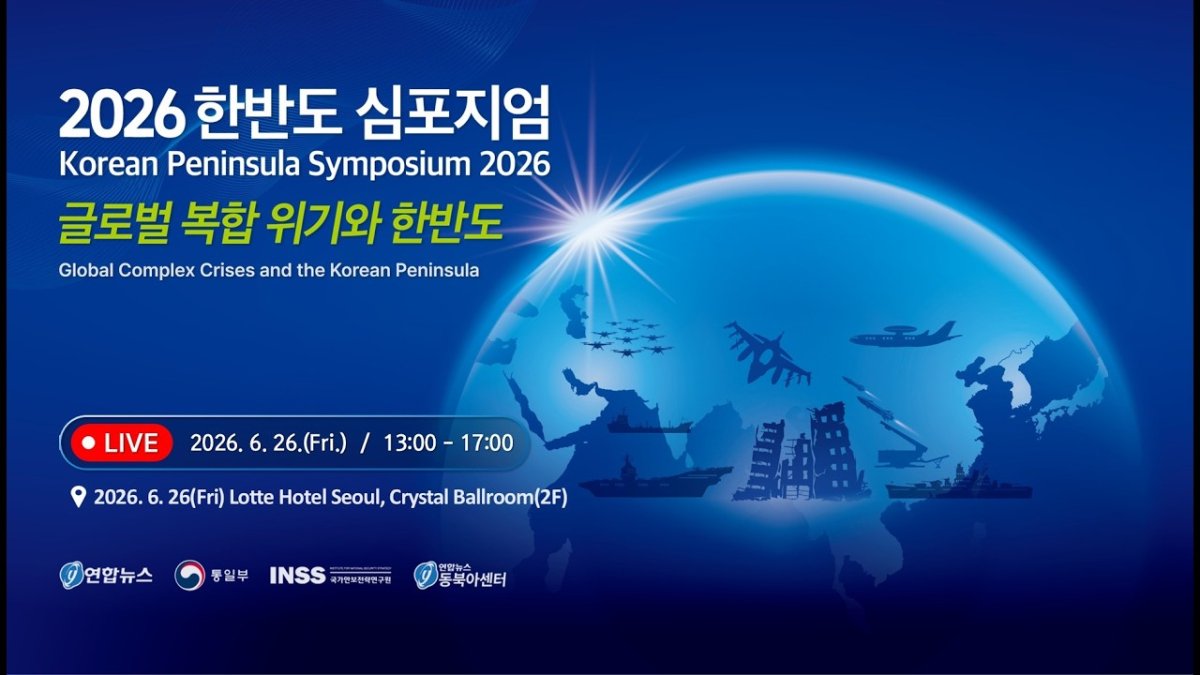
Introduction The Korean Peninsula Symposium 2026, scheduled for 13:00 to 17:00 KST on 26 June 2026 in Seoul, brings together government ministries, research institutes, and media organizations to assess the intersection of worldwide crises and peninsula stability. Co-hosted by Yonhap News Agency, the Ministry of Unification, the Institute for National Security Strategy, and the
Introduction
The Korean Peninsula Symposium 2026, scheduled for 13:00 to 17:00 KST on 26 June 2026 in Seoul, brings together government ministries, research institutes, and media organizations to assess the intersection of worldwide crises and peninsula stability. Co-hosted by Yonhap News Agency, the Ministry of Unification, the Institute for National Security Strategy, and the Yonhap News Northeast Asia Center, the event operates under the theme “Global Complex Crises and the Korean Peninsula.” Simultaneous Korean-English interpretation ensures accessibility for both domestic and international participants. The symposium occurs against a backdrop of stalled diplomatic engagement following the collapse of earlier US-North Korea talks, continued North Korean ballistic missile activity, and shifting alignments involving China and Russia.
Building on earlier Track 1.5 dialogues hosted by the Institute for National Security Strategy since 2018, the 2026 gathering situates peninsula issues within the wider Northeast Asian security architecture. Analysts from the Asan Institute for Policy Studies have noted that post-Hanoi summit dynamics have produced a durable stalemate, compelling Seoul to recalibrate its approach to extended deterrence and economic statecraft simultaneously.
The Symposium Framework
Official sponsorship extends across nine ministries and agencies, including the Ministry of Economy and Finance, Ministry of Foreign Affairs, Ministry of National Defense, Ministry of Culture, Sports and Tourism, Ministry of Trade, Industry and Energy, Ministry of Land, Infrastructure and Transport, Ministry of SMEs and Startups, Ministry of Patriots and Veterans Affairs, and The Peaceful Unification Advisory Council. Yonhap News TV serves as an additional media sponsor. This broad institutional participation reflects the Korean government’s integrated approach linking security, economic, and unification policy communities. The structure deliberately connects research output from the Institute for National Security Strategy with operational perspectives from the Ministry of Unification and economic agencies.
Coordination of this scale echoes the inter-ministerial mechanisms established after the 1998 launch of the Sunshine Policy and later refined under the 2018–2019 Panmunjom and Pyongyang declarations. Korea Institute for International Economic Policy (KIEP) scholars have documented how such frameworks enable consistent sanctions monitoring while preserving contingency planning for future economic cooperation corridors.
Global Complex Crises
Discussions will address supply-chain disruptions, energy security pressures, and climate-related shocks that have intensified since 2022. These macro-level stresses compound existing peninsula tensions rather than replace them. Participants are expected to map how global inflation and commodity volatility affect South Korea’s defense budgeting and inter-Korean economic planning. The symposium format allows comparison between peninsula-specific risks and wider Indo-Pacific dynamics. Analysts will examine whether current global crises accelerate or constrain North Korea’s weapons programs and how South Korea’s export-oriented economy absorbs external shocks while maintaining alliance commitments.
Korea Development Institute (KDI) working papers from 2023–2025 highlight that semiconductor and battery supply-chain realignments under the US CHIPS Act and EU Carbon Border Adjustment Mechanism have raised South Korea’s input costs by an estimated 4–7 percent. Symposium panels will therefore juxtapose these structural pressures against North Korea’s growing reliance on Chinese and Russian energy and technology transfers.
Korean Peninsula Security Dynamics
North Korea’s continued ballistic missile tests and the deepening of China-North Korea strategic coordination under Kim Jong Un form central reference points. Reported Russia-North Korea arms transfers linked to the Ukraine conflict add another layer of complexity to regional threat assessments. The US-ROK alliance continues to adapt to evolving American strategic priorities across the Indo-Pacific. South Korea’s institutionalization of trilateral security cooperation with the United States and Japan, formalized at Camp David in August 2023, remains a key reference for evaluating extended deterrence and intelligence-sharing mechanisms.
Asan Institute researchers have tracked a measurable uptick in trilateral tabletop exercises and real-time intelligence exchanges since 2023, yet they caution that Beijing’s economic leverage over Seoul remains a constraining factor. Historical comparison with the 2010–2012 period of heightened Sino-DPRK military consultations suggests that current alignments may prove more durable given Russia’s wartime isolation.
Economic and Diplomatic Dimensions
The Ministry of Unification’s “audacious ideas” framework for North Korean denuclearization, maintained under the Yoon administration, faces persistent challenges in generating sustained inter-Korean dialogue. Symposium panels will likely evaluate whether economic incentives retain leverage amid North Korea’s tightened alignment with Beijing and Moscow. Ministries responsible for trade, industry, and SMEs will contribute analysis on how sanctions regimes and supply-chain realignments affect potential future economic cooperation projects. Discussions are expected to remain grounded in existing policy parameters rather than project near-term breakthroughs.
KIEP policy briefs published in 2024 emphasize that any revival of inter-Korean economic projects would require verifiable denuclearization milestones to satisfy both US secondary sanctions and domestic political constraints. The Yoon administration’s linkage of economic inducements to phased disarmament steps thus mirrors earlier proposals advanced during the 2005–2008 Six-Party Talks era, albeit under markedly different geopolitical conditions.
Expert Perspectives and Policy Implications
Researchers from the Institute for National Security Strategy are positioned to present scenario-based assessments that integrate military, economic, and diplomatic variables. Their contributions will be weighed against operational perspectives from the Ministry of National Defense and the Ministry of Foreign Affairs. Policy implications will focus on maintaining alliance cohesion while preserving diplomatic channels. Participants will consider how South Korea can calibrate responses to North Korean provocations without undermining longer-term unification objectives or regional economic stability.
Comparative analysis with Asan Institute simulation models indicates that calibrated sanctions enforcement combined with selective humanitarian engagement yields marginally higher prospects for dialogue resumption than either maximalist pressure or unconditional engagement. Such findings will likely inform working-level recommendations circulated among the nine sponsoring agencies after the symposium concludes.
Looking Ahead
The symposium provides a structured venue for aligning research agendas with governmental planning cycles ahead of potential shifts in regional leadership and alliance postures. Outcomes are anticipated to inform working-level coordination among the co-hosting institutions rather than generate immediate policy announcements. By situating peninsula issues within wider global crises, the event underscores the Korean government’s emphasis on comprehensive security that encompasses economic resilience and alliance management alongside traditional defense concerns.
Looking toward 2027–2030, KDI and KIEP scenario exercises project that sustained trilateral institutionalization could offset some effects of US policy volatility, provided Seoul maintains credible economic statecraft options vis-à-vis both Pyongyang and Beijing. The June 2026 symposium therefore serves as an early calibration point for these medium-term contingencies.
By Prof. David Park, Staff Writer
By Prof. David Park, Staff Writer
This article was produced with AI-assisted research and editorial support. Reporting is based on sources cited in the article.
What's Your Reaction?
 Like
0
Like
0
 Dislike
0
Dislike
0
 Love
0
Love
0
 Funny
0
Funny
0
 Wow
0
Wow
0
 Sad
0
Sad
0
 Angry
0
Angry
0
East Asia/Technology Correspondent at Global1.News. Seoul-based voice covering Korean politics, technology, business, and culture. Analyzes how technology and geopolitics intersect across East Asia.








Comments (0)