
Kremlin Rejects Trump's Election Interference Claim as U.S. Declassifies Intelligence on Foreign Threats
Kremlin firmly rejects Trump's election interference claims after U.S. declassifies intelligence on foreign threats. Peskov denies allegations, China calls claims fabricated. Dispute escalates tensions ahead of U.S. midterms.
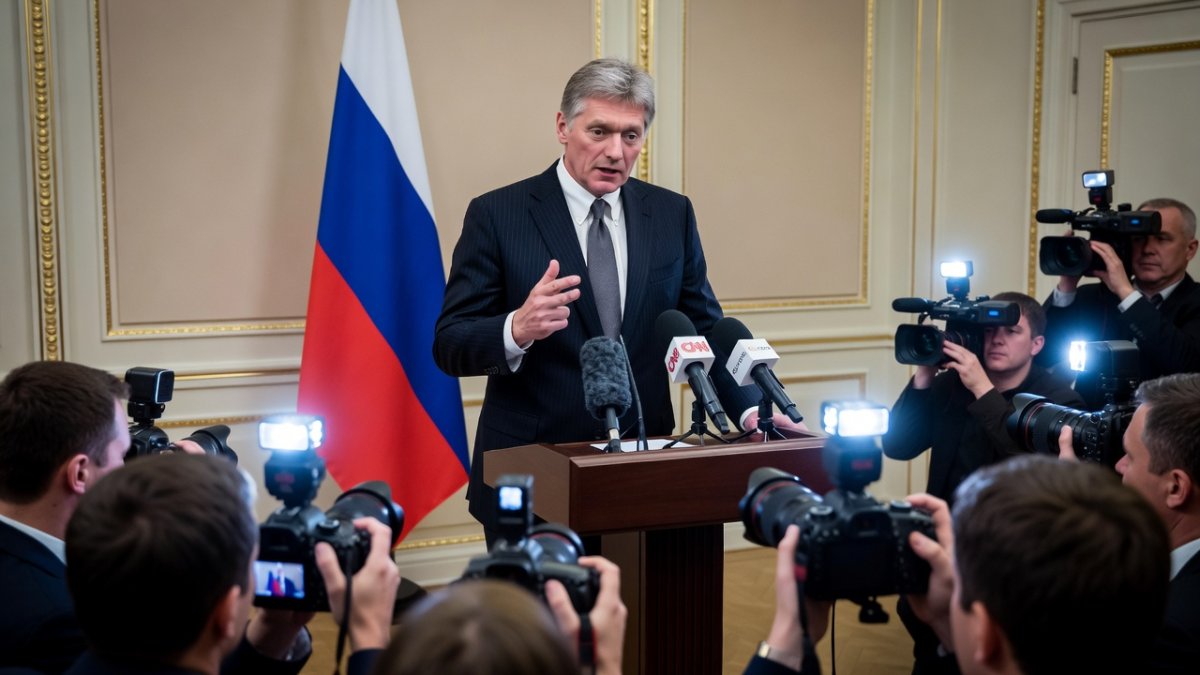
The Kremlin on Friday issued a categorical denial of accusations that Russia has meddled in American elections, pushing back against U.S. President Donald Trump's newly declassified intelligence documents alleging foreign powers have the capability to compromise American electoral infrastructure.
Kremlin Rejects Trump's Election Interference Claim as U.S. Declassifies Intelligence on Foreign Threats
Moscow, Russia — In a sharp exchange that threatens to further deteriorate already strained U.S.-Russia relations, Kremlin spokesman Dmitry Peskov told reporters on Friday that Moscow "firmly" rejects the findings of American intelligence assessments alleging Russia's efforts to interfere in U.S. elections. The rebuke came just one day after Trump delivered a 25-minute primetime address from the White House, declassifying intelligence documents he said reveal the capabilities of foreign adversaries to target U.S. election systems.
Trump's Primetime Address and Declassification
Speaking from the East Room of the White House on Thursday, Trump outlined what he described as "five major areas of concern" regarding election integrity, pointing to newly declassified intelligence demonstrating that U.S. adversaries including Russia, China, Iran, and North Korea possess the technical capability to compromise American election infrastructure. The president announced the declassification of intelligence documents outlining the capabilities foreign governments have "to compromise U.S. election infrastructure," according to reports from the White House.
The address, which drew sharp criticism from Democrats and election security experts, revisited long-disputed claims about vulnerabilities in the American electoral process. Trump used the platform to push for stricter voting laws, including the SAVE Act, which would impose new identification requirements for voter registration. Critics argue the legislation would disenfranchise millions of eligible voters.
Kremlin's Categorical Denial
In response to the allegations, Peskov was unequivocal. "Russia has never interfered in the domestic affairs of other countries," the Kremlin spokesman said during his daily briefing on Friday. "And we expect that no one will attempt to interfere in ours." Peskov characterized the American intelligence findings as "unattributed, unsubstantiated information" and claimed that previous U.S. investigations into Russian electoral interference had found no wrongdoing.
The spokesman's dismissal follows a long pattern of Kremlin denial on the issue. Since U.S. intelligence agencies first formally accused Russia of interfering in the 2016 presidential election, Moscow has consistently rejected the findings, often pointing to what it describes as a lack of concrete evidence while accusing Washington of waging an information war against Russia.
Intelligence Community Assessment
U.S. intelligence agencies have maintained for nearly a decade that Russia engaged in a multifaceted campaign to influence American elections, including hacking political email systems, weaponizing social media platforms, and conducting covert influence operations targeting U.S. voters. The Office of the Director of National Intelligence has assessed that Moscow views election interference as a tool of statecraft aimed at undermining faith in democratic institutions.
However, multiple news organizations including CNN and Politico reported that none of the newly declassified information released by Trump supports his long-running claims that previous election results — including the 2020 presidential contest — were manipulated by foreign interference. The documents focus on capabilities rather than specific instances of manipulation, a distinction that election security experts say is critical.
China Also Rejects Allegations
Beijing likewise moved swiftly to reject Trump's claims. Chinese officials slammed the president's assertion that China had acquired data on roughly 220 million American voters, calling the allegation "totally fabricated and a malicious smear." The Chinese Foreign Ministry issued a statement denouncing what it described as unsubstantiated accusations designed to deflect attention from domestic political challenges facing the Trump administration.
The dual rejection from Moscow and Beijing underscores the diplomatic standoff triggered by Trump's speech. Both nations have long viewed American accusations of election interference as politically motivated narratives intended to stigmatize their governments on the international stage.
Political Context and Domestic Reaction
Trump's primetime address comes at a politically precarious moment for the administration. With midterm elections looming in November, multiple polls show the president's approval rating weighed down by the ongoing U.S. military engagement with Iran and persistent economic concerns. His opponents have characterized Thursday's speech as an attempt to preemptively sow doubt about the integrity of the upcoming midterm elections.
"This is not about election security — it's about creating a narrative that allows the president and his party to question results they don't like," one Democratic strategist told reporters, speaking on condition of anonymity. Democratic leaders in Congress have called for bipartisan election security measures that focus on hardening infrastructure against genuine threats rather than imposing restrictive voting laws.
Analysis: What This Means for U.S.-Russia Relations
The timing of this diplomatic exchange is particularly significant. Russia and the United States have maintained limited channels of communication amid the ongoing war in Ukraine, with occasional cooperation on strategic issues such as the International Space Station and arms control. However, the election interference dispute threatens to further corrode what remains of bilateral dialogue.
Analysts suggest the Kremlin views Trump's election integrity push through a dual lens. On one hand, any narrative that undermines confidence in American democratic processes serves Russian strategic interests by diminishing Washington's moral authority to criticize governance in other countries. On the other, Moscow remains wary of any escalation in tensions that could trigger new sanctions or reduce the already limited diplomatic bandwidth between the two nuclear powers.
Russian state media has amplified Trump's claims about election vulnerabilities, framing them as evidence that American democracy is fundamentally compromised — a mirror of Western criticisms of Russia's political system. This information ecosystem, which Russian officials deny orchestrating, has been a persistent feature of Moscow's approach to Western political discourse.
Implications for the Global Order
The dispute carries implications far beyond U.S.-Russia bilateral relations. European allies, already alarmed by the direction of American foreign policy under Trump, have watched the election integrity debate warily. Many European governments have invested heavily in protecting their own electoral processes from foreign interference, including from Russia, and view Washington's mixed messaging on the issue with concern.
NATO member states have privately expressed frustration with what they see as the Trump administration's inconsistent approach to countering foreign influence operations. While the U.S. intelligence community continues to warn about Russian interference activities globally, the political leadership's public posture has at times appeared to downplay or contradict those warnings.
For ordinary Russians, the back-and-forth over election interference has become a familiar feature of the geopolitical landscape. State television coverage of the dispute predictably emphasizes the Kremlin's denials while highlighting what it portrays as American hypocrisy and political dysfunction. The narrative of a declining, divided West remains a central pillar of Kremlin domestic messaging.
The SAVE Act and Trump's broader push for voting restrictions are likely to remain contentious issues through the November midterms. Whether the president's claims about foreign interference will mobilize his base or further polarize an already divided electorate remains an open question. What is clear is that the battle over election integrity — both real and perceived — will continue to shape American politics and its relationship with Russia for the foreseeable future.
By Irina Volkov, Staff Writer
This article was produced with AI-assisted research and editorial support. Reporting is based on sources cited in the article.
What's Your Reaction?
 Like
0
Like
0
 Dislike
0
Dislike
0
 Love
0
Love
0
 Funny
0
Funny
0
 Wow
0
Wow
0
 Sad
0
Sad
0
 Angry
0
Angry
0
Russia/Eastern Europe Correspondent at Global1.News. Covering Russian politics, energy, security, and the shifting dynamics of the post-Soviet space. Provides clear-eyed analysis on one of the world's most opaque regions.












Comments (0)