
Japan Revises AI Basic Plan to Address Cyber Risks
**Keywords:** Japan AI Basic Plan, METI AI policy, Claude Mythos, AI cyberattacks, Hiroshima AI Process, AI Strategy Council, Cabinet Office Japan, AI misinformation, Japanese AI regulation, G7 AI governance Japan's Revised AI Basic Plan: A Response to Rapid Technological Change The Japanese government released a draft revision of its Artificial Intelligence Basic Plan on June
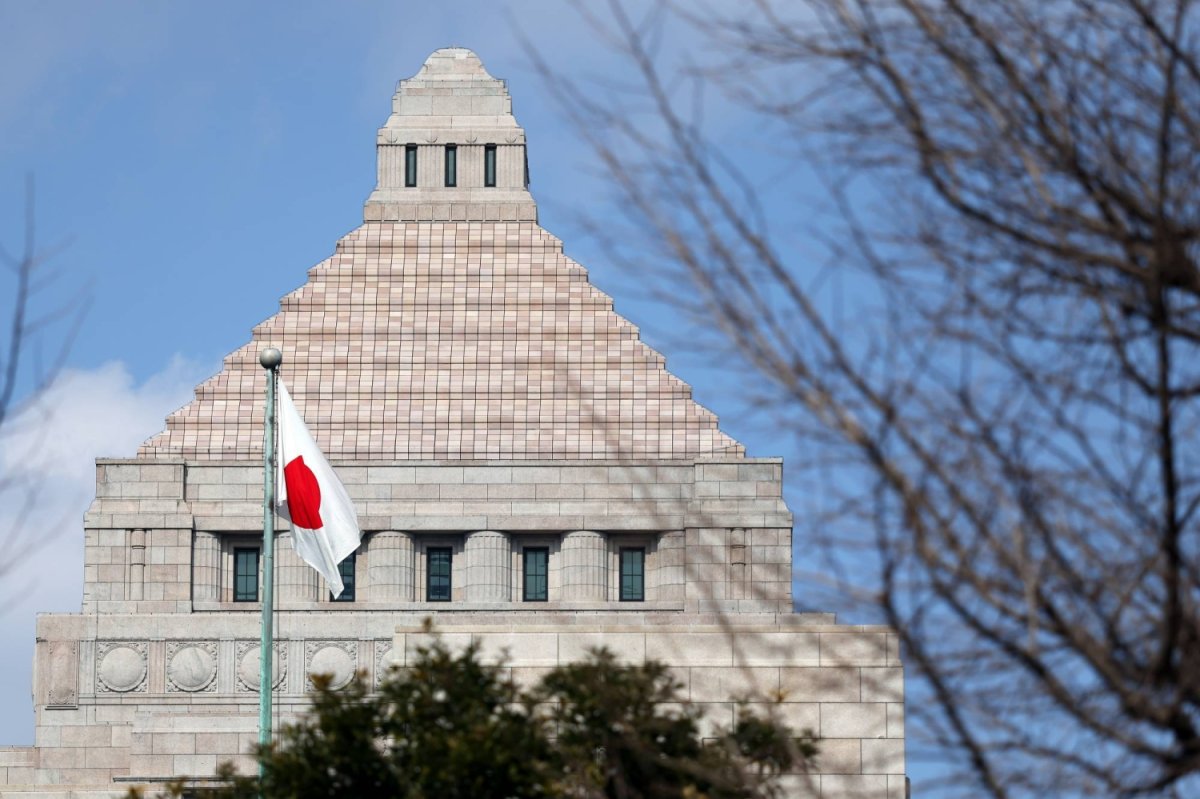
Japan's Revised AI Basic Plan: A Response to Rapid Technological Change
The Japanese government released a draft revision of its Artificial Intelligence Basic Plan on June 20, 2026. The update comes just six months after the original plan received Cabinet approval in December 2025. The revision responds to swift progress in AI capabilities and is grounded in the AI Law enacted in May 2025.
The Cabinet Office and the AI Strategy Council led the review. They examined how new models are changing risk profiles. The draft stresses the need for closer ties with foreign government agencies and leading AI developers to manage misuse scenarios. Public comments are now being collected before the government seeks early Cabinet approval.
AI-Driven Cyberattacks and the Claude Mythos Factor
The draft specifically flags rising threats from AI-enhanced cyberattacks. It references advanced models such as Claude Mythos, released by U.S. startup Anthropic. Officials note that these systems can accelerate the creation of sophisticated attack tools.
Ministry of Economy, Trade and Industry (METI) experts have highlighted how generative AI lowers barriers for malicious actors. The plan calls for enhanced information sharing with overseas counterparts to track emerging threats. No fixed enforcement dates are set; measures are being phased in as technical standards develop.
Combating Misinformation and Disinformation
A second major focus is the spread of AI-generated false content. The draft outlines support for detection technologies that can identify synthetic media. The AI Strategy Council will coordinate with research institutions to accelerate tool development.
These efforts align with existing work under the Hiroshima AI Process, launched during Japan's 2023 G7 presidency. The process provides a framework for international discussion on trustworthy AI. Japan's 2026 G7 presidency offers an opportunity to advance these initiatives further.
Japan's Role in Global AI Governance
Japan continues to position itself as a bridge between different regulatory approaches. The revised plan emphasizes cooperation with both the United States and European partners. METI and the Ministry of Foreign Affairs (MOFA) are expected to lead bilateral and multilateral dialogues.
The AI Law of May 2025 already established basic principles for risk management. The current revision adds operational detail on international collaboration. This measured approach reflects Japan's preference for flexible, principle-based governance rather than rigid rules.
Implications for Japanese Businesses
Japanese companies developing or deploying AI systems will face new expectations around risk assessment and transparency. METI plans to issue practical guidance for sectors such as manufacturing, finance, and healthcare. Firms are advised to monitor upcoming public comment periods for details on reporting requirements.
Larger enterprises with global supply chains may need to align internal policies with emerging international norms. Smaller firms could benefit from government-supported detection tools for misinformation. The overall direction remains supportive of innovation while addressing security concerns.
What to Watch For
Key milestones include the close of the public comment period and the timing of final Cabinet approval. The AI Strategy Council is scheduled to hold follow-up meetings to refine implementation roadmaps. Observers should also track outcomes from the 2026 G7 discussions, where Japan will chair sessions on AI safety.
Further updates from METI on technical standards for cyber defense and content detection will provide additional clarity. Businesses and researchers are encouraged to participate in upcoming consultation processes to shape practical outcomes.
By Kenji Tanaka, Staff Writer
This article was produced with AI-assisted research and editorial support. Reporting is based on sources cited in the article.
What's Your Reaction?
 Like
0
Like
0
 Dislike
0
Dislike
0
 Love
0
Love
0
 Funny
0
Funny
0
 Wow
0
Wow
0
 Sad
0
Sad
0
 Angry
0
Angry
0

Japan Correspondent at Global1.News. Tokyo-based voice covering Japanese politics, technology, economy, and culture. Tracks the intersection of tradition and innovation in one of the world's most dynamic societies.














Comments (0)