
BTL Plant Closure in Nahariya Signals Deeper Strains on Northern Industry
This week, 450 families in Nahariya and the surrounding western Galilee received news that will reshape their economic reality. The BTL plant — Biomass Technology Ltd., a bio-chemical products manufacturer operating in the Tefen industrial zone — announced its closure following months of negotiations between management and labor representatives. While two departments will remai
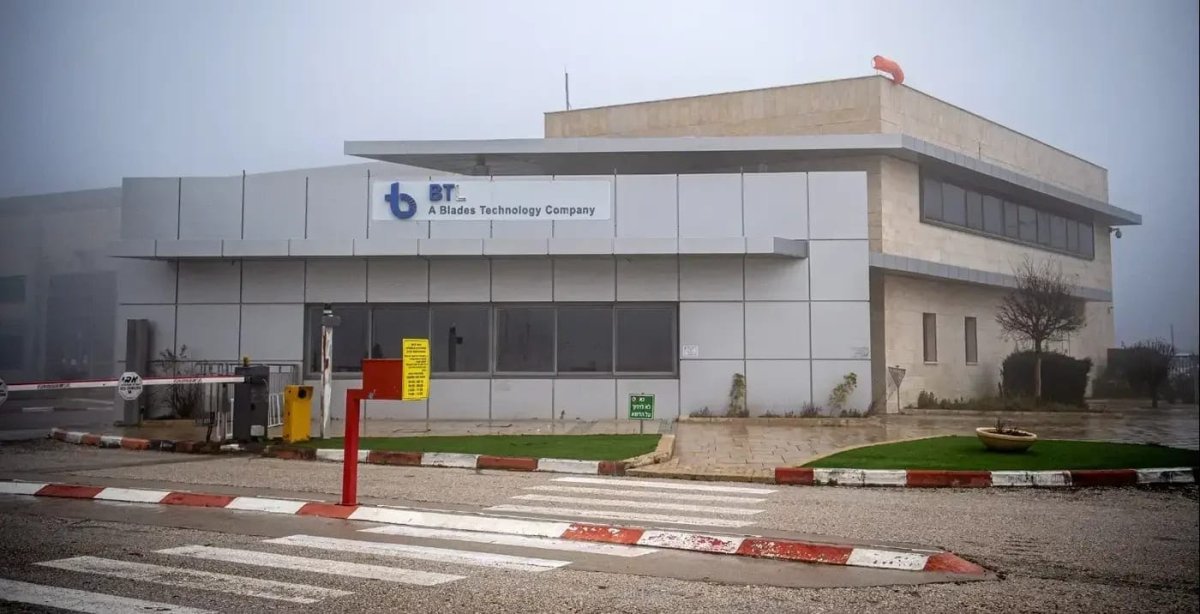
This week, 450 families in Nahariya and the surrounding western Galilee received news that will reshape their economic reality. The BTL plant — Biomass Technology Ltd., a bio-chemical products manufacturer operating in the Tefen industrial zone — announced its closure following months of negotiations between management and labor representatives. While two departments will remain operational as part of a last-minute compromise, the decision marks a significant blow to a region already navigating the compounding pressures of security tensions along the northern border and broader challenges to Israel's industrial sector.
Negotiations and the Partial Compromise
The talks between BTL management and employee representatives stretched across several months in 2024, with the Histadrut labor federation playing a central role in mediating disputes over severance packages and operational continuity. Union officials from the Histadrut’s northern district repeatedly pressed for guarantees that would limit the scale of layoffs, citing collective agreements that cover industrial workers in the Tefen zone. Management countered that sustained losses in global bio-chemical markets, combined with rising energy costs, left no alternative to full closure without external intervention.
By late October, negotiators reached a narrow agreement that preserved two departments within the facility. These units, focused on specialized research activities and quality assurance processes, will continue with a reduced workforce drawn from the original staff. The compromise avoided an immediate total shutdown but left the majority of production lines slated for dismantling by the end of the first quarter of 2025.
Histadrut representatives described the outcome as a partial victory achieved under difficult conditions, noting that the retained positions include commitments to maintain certain pension contributions for an additional twelve months. Company executives emphasized that the decision reflected broader corporate restructuring rather than local performance issues alone. Both sides acknowledged that further government incentives would be required to stabilize the remaining operations.
Throughout the process, labor leaders highlighted the precedent this case could set for other manufacturers operating near the Lebanese border. They argued that security-related disruptions, including periodic rocket alerts that halt shifts, had compounded the financial strain already visible in quarterly reports. Ministry of Economy observers attended several sessions as observers but stopped short of offering direct financial bridging support during the talks.
Impact on Nahariya and Western Galilee Communities
The loss of 450 positions at the Tefen site will directly affect households across Nahariya, Ma’alot-Tarshiha, and smaller moshavim in the western Galilee. Many of these families have relied on steady industrial wages for decades, with second earners often working in tourism or agriculture that have themselves faced volatility since October 2023. Local grocery stores and service providers in Nahariya’s city center are already reporting early signs of reduced foot traffic as households tighten spending.
Commuting patterns in the region will shift noticeably once the layoffs take full effect. Workers who previously traveled short distances to Tefen may now seek opportunities in Haifa’s larger industrial parks or even further south, increasing daily travel times and fuel costs. Retraining programs coordinated through the Ministry of Labor are expected to prioritize skills in renewable energy installation and advanced manufacturing, yet enrollment capacity in the north remains limited.
Community organizations in Nahariya have begun mapping support networks, including food assistance and mental health services, anticipating heightened demand in the coming winter months. The western Galilee’s relatively high proportion of new immigrants and multi-generational households means that economic shocks can quickly translate into wider social strain. Municipal leaders have requested expedited access to national emergency funds traditionally reserved for communities directly affected by rocket fire.
Real estate values in nearby residential areas may soften if families relocate for work, though analysts caution against overestimating immediate effects given the persistent housing shortage across northern Israel. Schools in the region are preparing counseling resources for children whose parents face unemployment, recognizing that economic uncertainty often surfaces first in classroom behavior and attendance patterns.
Northern Israel's Industrial Landscape Under Pressure
The Tefen industrial zone has long served as a cornerstone of manufacturing employment in the north, hosting firms that produce components for both domestic and export markets. Its proximity to the Lebanese border, however, has exposed operations to repeated interruptions from Hezbollah rocket threats, particularly since the escalation that began in October 2023. Several other plants in the same zone have reported similar cost pressures, though none have yet announced closures on the scale of BTL.
Broader economic trends affecting Israeli industry include elevated interest rates, global supply chain realignments, and competition from lower-cost producers in Asia. The bio-chemical sector, in particular, has seen fluctuating demand for sustainable materials, leaving mid-sized facilities like BTL vulnerable when export orders decline. Security considerations add another layer: frequent siren activations force temporary halts in production, raising insurance premiums and deterring new capital investment.
Regional development authorities have documented a gradual shift of some industrial activity toward the center of the country, where logistics costs are lower and security disruptions rarer. This movement threatens the long-standing policy goal of maintaining a robust economic presence in the Galilee. Officials at the Ministry for the Development of the Periphery have warned that without targeted incentives, the north risks becoming a net exporter of skilled labor rather than finished goods.
Local business associations note that the cumulative effect of security incidents and macroeconomic headwinds has already reduced foreign direct investment inquiries directed at northern sites. While the government maintains programs offering tax benefits for companies locating in national priority areas, uptake has slowed amid uncertainty over the duration of the current conflict with Hezbollah.
Government Response and Support Mechanisms
The Ministry of Economy has indicated it will activate existing retraining frameworks through the Israel Employment Service, focusing on sectors such as medical device assembly and logistics technology that continue to recruit in the north. Officials have also signaled willingness to consider one-time grants for affected workers who agree to participate in certified vocational courses lasting at least six months. Coordination with the Histadrut will determine eligibility criteria for supplemental income support during the transition period.
Regional development initiatives administered by the Ministry for the Development of the Periphery include infrastructure upgrades at industrial zones that could attract replacement employers to Tefen. These projects encompass improved road access and expanded high-speed internet, measures intended to offset the geographic disadvantages of northern locations. Budget allocations for 2025 remain under discussion in the Knesset Finance Committee.
Local authorities in Nahariya have requested accelerated permitting for new commercial projects that could absorb some displaced workers. The Ministry of Labor has deployed additional caseworkers to the western Galilee to assist with unemployment registration and job matching, though processing times have lengthened due to the volume of claims from multiple sectors. Early intervention programs targeting workers over age 50 are being prioritized given the age profile of BTL’s workforce.
While no new legislation has been introduced specifically for this closure, existing laws governing mass layoffs require companies to provide advance notice and severance calculations that the Histadrut continues to monitor. Government statements emphasize that support will be delivered through established channels rather than ad-hoc measures, reflecting fiscal constraints amid ongoing security expenditures.
The Broader Challenge for Israel's Periphery
Development of the Galilee has remained a stated national priority for successive governments, yet implementation has often lagged behind rhetoric. National priority area designations provide tax and grant advantages, but these have proven insufficient to fully counter security risks and infrastructure gaps that deter investors. The BTL closure underscores how peripheral regions absorb disproportionate impacts when global markets tighten or regional tensions rise.
Balancing security requirements with economic investment presents persistent policy dilemmas. Expanded military deployments along the Lebanese border, while necessary for civilian protection, can temporarily restrict access to industrial zones and complicate supply deliveries. Policymakers must weigh these operational realities against long-term goals of population retention in the north.
Advocacy groups focused on peripheral development argue that greater coordination between defense planning and economic ministries could mitigate some effects. They point to successful models in the south, where targeted industrial parks have attracted high-tech tenants despite similar security challenges. Replicating such outcomes in the Galilee would require sustained multi-year funding commitments beyond annual budget cycles.
Demographic trends add urgency: younger residents continue to migrate toward central Israel for education and career opportunities, leaving an aging workforce in many northern communities. Reversing this pattern depends on creating stable industrial and service-sector jobs that can compete with opportunities available in Tel Aviv and its environs.
Looking Ahead: What Comes Next for the Affected Workers
The job market in northern Israel currently offers limited openings in bio-chemical manufacturing, pushing many former BTL employees toward adjacent fields such as food processing and pharmaceutical packaging. The Israel Employment Service maintains an active database of positions in Haifa and Karmiel, yet matching requires workers to acquire new certifications that may take several months to complete.
Alternative employment timelines vary by age and skill level. Younger workers with technical backgrounds may transition more quickly into roles at expanding medical technology firms near the border, while those with longer tenure at BTL face steeper retraining curves. Government-supported apprenticeship programs are expected to begin accepting applications in early 2025.
Local economic development agencies are exploring whether portions of the Tefen facility could be repurposed for smaller start-ups specializing in green chemistry, potentially creating a modest number of new positions. Such plans remain preliminary and would require private-sector partners willing to assume the security-related operating risks.
Over the longer term, the experience of the 450 laid-off workers will serve as a test case for how effectively national support systems respond to industrial contraction in conflict-adjacent regions. Outcomes will influence future negotiations between labor, management, and government when similar pressures emerge at other northern sites.
By Hannah Berg, Staff WriterThis article was produced with AI-assisted research and editorial support. Reporting is based on sources cited in the article.
What's Your Reaction?
 Like
0
Like
0
 Dislike
0
Dislike
0
 Love
0
Love
0
 Funny
0
Funny
0
 Wow
0
Wow
0
 Sad
0
Sad
0
 Angry
0
Angry
0

Israel Correspondent at Global1.News. Based in Tel Aviv, covering Israeli politics, security, technology, and society. Provides balanced, deeply-sourced reporting on one of the most closely-watched regions in the world.















Comments (0)